


Armored vehicle manufacturers sell into a market where the buyer might be a defense ministry, a private security firm, or an executive protection detail, and where a single contract can be worth more than a year of typical B2B pipeline. That reality shapes the whole marketing mix: trade shows and industry publications build the relationships and credibility that get a manufacturer shortlisted, direct mail and email keep dormant accounts warm through long procurement cycles, and SEO builds visibility with researchers who won't talk to sales for months. Google Ads sits in the middle of that system, catching buyers at the moment they search for a specific capability, certification, or vehicle class. Miss those prospects, or fail to track them in a CRM once they land on your site, and a real opportunity slips away anonymously. Google Ads for armored vehicle manufacturers gives marketers the precision to reach procurement officers and security directors while they're actively evaluating vendors, and to connect that moment back to the trade show conversation or direct mail piece that started the relationship.
How to Generate Armored Vehicle Manufacturer Leads with Google Ads: A Step-by-Step Guide

B2B marketers targeting armored vehicle buyers operate in a high-value, niche market that demands precision and efficiency from every advertising dollar. Leveraging Google Ads for Armored Vehicle Manufacturers enables revenue teams to rapidly surface and pursue organizations actively searching for advanced security vehicles, military-grade solutions, or luxury armored transport. To maximize compliance and campaign eligibility, marketers should familiarize themselves with Google Merchant Center's vehicle ad requirements, ensuring ad policies are met from the outset.
Traditional digital campaigns often leave a gap in lead visibility, particularly when anonymous visitors engage with landing pages but never fill out a form. Sona's Identity Resolution helps reveal these previously invisible prospects by matching site visits to the companies behind them, allowing sales to prioritize outreach and retargeting toward organizations already showing intent. This closes the gap between paid search spend and actual pipeline.
Pairing Google Ads with real-time data enrichment unlocks targeting that generic campaign setups can't match. Combining precise audience intelligence, custom affinity audiences, and conversion-focused landing pages helps B2B marketers reach decision-makers across government, private security, and high-net-worth segments. Continuous optimization, backed by dynamic audience updates and marketing attribution insights, keeps every touchpoint, online or offline, tied to measurable pipeline and revenue. For teams ready to streamline lead generation and maximize ad ROI, get started for free with Sona.
Why Google Ads Matter for Armored Vehicle Manufacturers Businesses
Armored vehicle manufacturers operate in a sector where procurement cycles are long, buying committees are complex, and every sales-qualified lead represents significant revenue potential. Google Ads enables direct access to decision-makers in purchasing, defense, and security roles at the precise moment they are evaluating advanced vehicle solutions, bypassing the noise of general advertising channels. To optimize ad compliance and reach, understanding Google Merchant Center's vehicle ad requirements is essential for automotive digital marketers.
Unlike channels built for brand awareness, Google Ads lets manufacturers retarget high-value prospects who've shown interest but haven't converted, an engineer who downloaded a spec sheet, a procurement officer who requested a quote and went quiet. Sona's Audiences tool helps address objections, reinforce trust, and pull those prospects back into the funnel, countering the common pattern of strong demo interest that stalls before a signed contract.
High-margin contracts often originate from prospects outside the existing pipeline. With Google Ads, manufacturers capture demand from untapped accounts, whether these buyers are in emerging markets or new industry verticals. The platform's precision targeting allows agile adjustments to campaigns, facilitating rapid shifts in focus to regions or segments where procurement demand spikes unexpectedly.
Visibility in underserved or developing regions matters for growth. Traditional marketing often misses secondary metros and emerging markets, but Google Ads uses geotargeting, paired with Sona's Intent Signals, to pinpoint prospects in these growth areas. That keeps ad spend focused on the regions actually generating procurement activity.
Data integration is the backbone of a unified revenue strategy. Google Ads not only tracks engagement from click to contract but also feeds conversion data back into your analytics stack. By integrating ad data with Sona's Destinations feature, manufacturers gain a closed-loop view of which campaigns, keywords, and audiences drive real-world sales outcomes, refining strategy across all digital touchpoints. To streamline your approach, get started for free with Sona and unify your revenue operations for better marketing results.
Common Types of Google Ads Campaigns for Armored Vehicle Manufacturers

- Search Campaigns: Armored vehicle manufacturers benefit from high-intent search campaigns built around urgent, specific queries, "military vehicle procurement," "bulletproof SUV quotes," "VR7 certified transport vehicle." These campaigns catch bottom-funnel buyers who already know their spec and are pricing vendors, so budget isn't wasted on casual browsers. When marketing and sales data are unified, marketers can map keywords to real buyer stages, government tender research versus private buyer comparison shopping, and shift budget toward accounts showing genuine purchase signals using Sona's Identity Resolution.
- Display Ads: Display placements reinforce brand presence on industry news sites and security publications, ensuring that security officers and procurement managers see consistent messaging. Tailored creative can highlight unique certifications, vehicle armor levels, and after-sales service, nurturing buyers who may not yet be ready to engage. With real-time audience data, display audiences can be updated as prospects engage with content or move deeper into the sales funnel.
- Video Ads: Complex armored vehicle features are best demonstrated through rich media. Video ads allow manufacturers to showcase ballistic testing, customization options, and digital protection features like encrypted Wi-Fi or advanced defense systems. Integrating real-time buyer insights ensures that high-value accounts see relevant video content at the optimal moment in their journey. For a compelling example of product demonstrations in this space, see this video overview of INKAS Armored Vehicle Manufacturing.
- Remarketing: Re-engaging past website visitors or those who started a quote request but did not convert is critical in the high-consideration armored vehicle space. Remarketing campaigns can deliver tailored offers, technical data sheets, or testimonials from government clients. By connecting CRM and site analytics with Google Ads, remarketing audiences automatically adjust as prospects progress or re-engage, keeping campaigns efficient and relevant with Sona Destinations.
- Assets: Ad assets add crucial trust signals to armored vehicle ads, including ISO certifications, rapid response times, and security feature callouts. These elements back up claims made on landing pages and set a manufacturer apart from competitors. To ensure ad compliance and maximize effectiveness, review Google Merchant Center's requirements for vehicle ads. When all marketing touchpoints are orchestrated centrally, assets can be personalized based on the prospect's industry or previous interactions, increasing click-through and conversion rates.
Where to Find Growth Opportunities?

Armored vehicle manufacturers hit a ceiling with traditional channels fast: the buyer pool is small, transactions are large, and procurement criteria are strict enough that broad-reach tactics waste money. The teams that keep growing pipeline supplement existing paid and organic work with targeted, data-driven tactics that surface buyer demand nobody else is chasing and move prospects through a long funnel efficiently.
- Vertical keyword targeting: Expand your keyword portfolio beyond brand and product to capture search intent tied to vehicle specifications, compliance standards, or operational use-cases. This approach ensures visibility at every stage of the research journey, especially for buyers comparing armored vehicles against luxury or security alternatives.
- Competitor gap analysis: Using auction insights reports or advanced tools, assess where rival campaigns are missing or under-serving the market. Identify keyword clusters, geographies, or buyer personas with low competitive density and tailor creative to fill those gaps. Dynamic audience building, powered by unified go-to-market data, ensures your ads reach not only new buyers but also companies exhibiting intent signals across industry-specific placements.
- Industry-specific placements: Armored vehicle buyers frequently engage on trade forums, defense procurement directories, and niche business media. By placing ads in these environments, you reach decision-makers who may never see your organic content. Enriching your outreach with company-level visitor identification means you can prioritize follow-up and route sales resources where engagement is highest.
- Engagement-driven retargeting: Businesses risk churn or missing upsell opportunities without clear signals of account-level engagement. Leveraging behavioral data, such as trial user activity or content consumption, lets you trigger automated, hyper-relevant offers. For example, retargeting users who recently downloaded a compliance checklist with ads for a spec sheet or case study helps accelerate consideration among qualified accounts. Learn more about Google Merchant Center's requirements to ensure your campaigns remain compliant and effective.
- Content-powered nurture: Drive ongoing engagement by aligning your retargeting assets, whitepapers, technical guides, or demo videos, with your content marketing calendar. Real-time audience updates let you adapt messaging as prospects move from initial research to procurement, keeping relevance high and conversion rates up across a long sales journey.
How to Apply Audience Segmentation for Armored Vehicle Manufacturers
Audience segmentation is the cornerstone of effective digital campaigns for armored vehicle manufacturers. When tailored precisely, segmentation helps teams deliver relevant messaging and maximize ROI across high-value procurement cycles. For foundational strategies and industry-specific guidance, explore our B2B marketing insights.
- Define Segments: Begin by creating clear, actionable audience groups based on core business distinctions. For armored vehicle manufacturers, meaningful divides include civilian versus military buyers, government agencies, law enforcement, or private security firms. Within these, further refine by product tier: luxury versus standard, custom builds versus off-the-shelf inventory. This enables messaging and creative to speak directly to the needs, budgets, and purchase drivers of each segment, and for additional inspiration, see military advertising examples.
- Overlay Intent Signals: Surface real-time digital behaviors that reveal where prospects are in their buying journey. For example, procurement teams searching for specific vehicle ad setup requirements signal an active project, while visitors researching luxury armored vehicles may be exploring high-margin, discretionary purchases. Sona surfaces intent signals that identify not just the company visiting, but what they're likely trying to solve, helping teams prioritize spend and personalize outreach for accounts most likely to convert.
- Create Ad Groups by Segment: Build dedicated ad groups within Google Ads for each segment, aligning creative, offers, and budgets to segment-specific priorities. For instance, feature advanced safety and compliance specs for military or security audiences, while emphasizing comfort, customization, and discreet protection to luxury buyers. With dynamic audience capabilities, these segments can update automatically as companies progress through the funnel or as new firmographic or intent data becomes available.
- Validate Conversion Paths: Ensure every key conversion, whether a quote request, phone call, or form fill, is tracked accurately and reconciled with your CRM. This enables granular measurement of which segments and campaigns drive revenue, not just clicks or leads. Integrating visitor identification with conversion tracking uncovers which businesses are engaging, allowing for targeted follow-up and retargeting.
Precise segmentation, backed by real-time data and intent analysis, lets armored vehicle manufacturers put the right message in front of the right decision-maker without wasting spend on buyers who will never be a fit. If you're ready to run segmentation that adapts as prospects move through the funnel, get started for free with Sona.
This is also where measurement changes the economics. Sona Marketing Measurement identifies the companies behind your ad clicks, not just anonymous sessions, using first-party data, and segments audiences by which of those companies actually become customers. That lets you build bid adjustments and audience signals around the segments that convert and de-prioritize the ones that don't, so you feed Google's algorithms "this click became a paying armored vehicle manufacturers customer" instead of just "someone filled out a form."
Keyword Strategy & Sample Target Terms
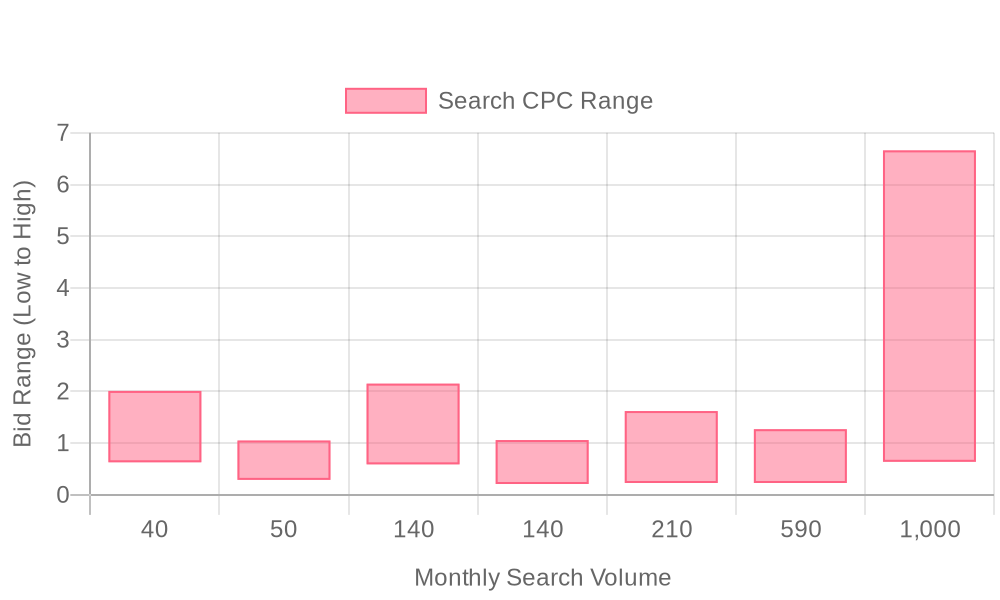
| Industry | Keyword | Monthly Search Volume | Competition Level | Low Bid | High Bid |
| Armored Vehicle Manufacturers | bulletproof car company | 40 | LOW | 0.63 | 2.01 |
| Armored Vehicle Manufacturers | inkas armored car price | 50 | LOW | 0.29 | 1.05 |
| Armored Vehicle Manufacturers | armored vehicle manufacturers | 140 | LOW | 0.59 | 2.15 |
| Armored Vehicle Manufacturers | inkas car | 140 | LOW | 0.21 | 1.06 |
| Armored Vehicle Manufacturers | inkas armored car | 210 | LOW | 0.23 | 1.62 |
| Armored Vehicle Manufacturers | inkas armored vehicle price | 590 | LOW | 0.23 | 1.27 |
| Armored Vehicle Manufacturers | armored car companies | 1000 | LOW | 0.64 | 6.66 |
Armored vehicle buyers and procurement specialists conduct thorough research before making purchasing decisions. To connect with this high-value audience, marketers must align keyword strategies with the intent and language used by buyers at each stage of their journey.
Effective armored vehicle marketing strategies start with mapping primary and secondary keywords. At the awareness stage, terms like "armored vehicles for sale," "bulletproof vehicles," and "military vehicle manufacturers" capture broad interest from prospective buyers. For consideration and decision phases, focus shifts to more specific and high-intent phrases. Incorporating local modifiers, city, state, or region, helps attract relevant, in-market leads, while negative keywords prevent wasted spend on unqualified traffic such as "toy armored cars" or "armored vehicle repair." For additional inspiration on keyword positioning, review these military advertising campaign examples.
To drive qualified inquiries, prioritize keywords with high commercial intent and measurable search volume. Analyze historical campaign data and search trends to fine-tune the keyword list, ensuring ongoing relevance as industry language evolves. Dynamic audience solutions allow marketers to adapt targeting as leads progress from research to purchase, ensuring ad dollars are always focused on the most conversion-ready accounts. Unified data platforms further enable identification of anonymous site visitors searching for these terms, surfacing actionable insights for sales outreach and personalized engagement.
Step-by-Step Campaign Execution Framework
A precision-focused approach to Google Ads for armored vehicle manufacturers empowers teams to capture high-intent buyers and specifiers at every funnel stage. Effective campaign execution hinges on tailored targeting, compelling creative, and measurable outcomes that drive both qualified leads and real ROI. For deeper insights into marketing, attribution, and revenue operations, visit the Sona blog.
Aligning ad strategy with deep audience insights, real-time engagement data, and unified CRM enrichment helps maximize marketing impact. Each step below is engineered to help B2B revenue teams harness data-driven tactics, minimize wasted spend, and stay far ahead of the competition. Get started for free with Sona to unlock advanced campaign management capabilities.
Step 1: Build Targeted Keyword Lists
- Vehicle and market segmentation: Cluster keywords by armored vehicle type, such as military vehicles, luxury armored SUVs, and security vehicles, to ensure ads match the buyer's specific intent. Further segment by target markets, for example, government procurement, law enforcement, or high-net-worth individuals seeking personal protection.
- Localized reach: Integrate country, region, or city modifiers to attract buyers searching for armored vehicle solutions in specific geographies. This not only improves relevance but also optimizes budget allocation.
- Long-tail and model-based queries: Include branded, model-specific, and feature-driven phrases such as "VR6 certified armored Mercedes" or "blast-resistant cash-in-transit van" to capture high-converting, bottom-funnel traffic.
- Negative keyword controls: Apply filters to exclude irrelevant or low-intent searches, such as those targeting video game vehicles or unrelated aftermarket parts, thus ensuring only qualified leads enter your funnel.
Using advanced visitor identification, teams can pinpoint anonymous site traffic and match them to real companies or buying groups. For digital marketers concerned with ad compliance, Google's vehicle ads requirements offer foundational guidelines for campaign setup.
The upgrade most armored vehicle manufacturers advertisers miss is going beyond raw keyword volume to layer in intent and identity signals. By connecting website-visitor data and CRM records with Sona Marketing Measurement, you can see which specific search terms bring in the accounts and customers that actually convert, and weight your keyword and bidding strategy toward those rather than the terms with the highest search volume alone.
Step 2: Develop Compelling Ad Copy
- Unique selling point focus: Craft headlines and descriptions that spotlight the manufacturer's differentiators, such as certified ballistic protection, advanced anti-hacking features, or rapid delivery timelines.
- Trust and credibility markers: Include recognizable safety certifications, industry awards, or buyer endorsements within the copy. These trust signals assure buyers of product quality and reliability.
- Urgency and incentive messaging: Leverage offers like limited-time discounts for government contracts, complimentary consultation sessions, or product demos to accelerate engagement and response rates.
Integrating real-time intent data allows marketers to dynamically tailor ad messaging to match the prospect's stage in the buying journey. Explore military advertising campaign examples for further inspiration when targeting specialized audiences.
Step 3: Design Effective Landing Pages
- Keyword-to-ad-to-page alignment: Ensure each landing page directly reflects the ad's promise and the user's search intent, whether for armored SUVs, military vehicles, or security transport solutions.
- Trust-building elements: Prominently display third-party safety certifications, customer testimonials, security badges, and an FAQ addressing technical or compliance concerns.
- Conversion-focused layouts: Keep calls-to-action (CTAs) clear and persistent, streamline mobile navigation, and minimize distractions to encourage form completions or quote requests.
With dynamic audience updates, as leads or accounts engage with landing pages, their status is automatically reflected in retargeting and nurture workflows. For product positioning inspiration, see BRABUS INVICTO luxury armored vehicles.
Step 4: Implement Data-Driven Optimizations
- Conversion tracking and analytics: Deploy robust tracking for online form fills, downloads, or direct inquiries. Continuously review attribution paths to understand which keywords, ads, and touchpoints drive the best outcomes.
- Smart bidding and automation: Use automated bidding strategies that prioritize high-value conversions and adjust in real time based on in-market activity and lead scoring.
- A/B testing and iteration: Regularly split test ad headlines, creative, and landing page layouts to optimize for engagement and conversion rates. Rapidly deploy winning variants for ongoing improvement.
- Offline and CRM integration: Import offline conversions from sales or CRM systems to close the loop on attribution. Sync enriched leads and audience segments directly into Google Ads, ensuring both marketing and sales teams act on the most accurate, up-to-date data.
By unifying online and offline data sources, marketers achieve true ROI measurement and can confidently scale campaigns that drive pipeline and revenue for armored vehicle manufacturers. This integrated approach transforms digital advertising from a siloed channel into a strategic growth engine for the entire go-to-market organization. For additional tactics on nurturing prospects throughout the funnel, review retargeting strategies for B2B buyers in high-consideration markets.
Sona Marketing Measurement closes the gap between clicks and revenue. It captures every ad click with first-party measurement, ties that click through UTM capture and ad-platform APIs to the actual record in your CRM, and reports ROAS by keyword and campaign instead of by last-click form fill. Feeding that revenue signal back into Smart Bidding and Performance Max compounds over time: the algorithms optimize toward booked armored vehicle manufacturers revenue, not cheap leads.
Tips on Expanding Your Armored Vehicle Manufacturer Presence

Expanding the digital presence of armored vehicle manufacturers requires a combination of targeted engagement, strategic partnerships, and data-driven content. Modern B2B buyers expect relevant, timely interactions that reflect their unique interests and industry needs. Leveraging real-time audience insights can help you tailor your messaging for better resonance across key verticals.
Cross-promoting educational assets in retargeting campaigns can significantly boost content marketing outcomes. By serving technical whitepapers, security guides, or case studies to high-intent visitors who have already interacted with your brand, manufacturers can accelerate lead nurturing and drive deeper engagement. When retargeting audiences are dynamically updated with CRM data, such as buyer stage or regional preferences, marketers can seamlessly upsell related services to the right segments at the right time. For further inspiration on military-focused campaigns, review these military advertising campaign examples.
Advanced tools have enabled manufacturers to collaborate with industry associations, facilitating co-branded advertising efforts and referral partnerships. These initiatives generate fresh inbound opportunities and build credibility with key decision-makers. Localizing campaigns by region is critical for increasing share-of-voice in priority markets, leveraging region-specific messaging, compliance highlights, or language variants ensures relevance and drives higher conversion rates. For more actionable strategies, explore our library of demand generation playbooks.
Regular analysis of search query data reveals emerging topics and pain points within the armored vehicle space. By mapping these insights into content development, manufacturers can publish resources that directly address shifting buyer concerns, from advancements in vehicle armoring technology to procurement best practices for military and security fleets. This approach not only increases organic traffic but also strengthens authority across military vehicles and luxury/security vehicle segments. For teams using unified go-to-market platforms, visitor identification and real-time intent signals help prioritize spend on the most promising accounts within these niches, optimizing both paid and organic tactics for sustainable growth. Ready to accelerate your digital presence? Get started for free with Sona.
Beyond Google Ads: Winning the AI Answers Armored Vehicle Manufacturers Buyers Now Trust
Paid search captures demand at the moment someone types a query. But a fast-growing share of armored vehicle manufacturers buyers no longer start at Google at all, they ask ChatGPT, Gemini, or Perplexity before they ever run a search, and Google's own AI Overviews increasingly summarize an answer above the traditional results. If your business isn't referenced in those AI answers, you're invisible at the exact moment buyers build their shortlist.
Sona AI Visibility shows where your business shows up across ChatGPT, Gemini, Perplexity, Google AI Overviews, and 10+ engines, and, much like a keyword report, which prompts actually send you buyers, so you can prioritize the ones that convert. Run the two together and you cover the entire buyer path: get cited where buyers research (AI Visibility), then prove which of that demand turns into booked revenue (Marketing Measurement).
Helpful resources
Conclusion
Google Ads for armored vehicle manufacturers works because it meets a narrow, high-stakes buyer at the exact moment they're evaluating vendors, not because it's a volume channel. Getting that right means precise segmentation, ad copy that speaks to procurement officers and security directors in their own terms, and landing pages that back up every claim with certification and proof.
The manufacturers pulling ahead are treating Google Ads as one input into a system that ties every click back to a named account and, eventually, a signed contract, rather than as an isolated spend line. As buyers increasingly research vendors through AI tools before they ever run a search, that same closed-loop discipline, knowing which touchpoints actually produced revenue, will matter even more. Start for free and see what that looks like with your own pipeline.
FAQ
What are the best practices for Google Ads in the armored vehicle industry?
Best practices include precise audience targeting using real-time data, integrating Google Ads with CRM systems for enhanced lead tracking, and crafting ad campaigns with compelling and relevant messaging that aligns with buyer intent and the specific needs of different market segments.
How can armored vehicle manufacturers target their ads effectively on Google?
Manufacturers can target their ads effectively by using audience segmentation based on buyer roles and intent signals, leveraging keyword strategies tailored to specific vehicle types and markets, and utilizing geotargeting to capture demand in specific regions.
What types of Google Ads are suitable for armored vehicle manufacturers?
Suitable types include search campaigns for capturing high-intent buyers, display ads for reinforcing brand presence, video ads for showcasing vehicle features, and remarketing campaigns to re-engage past visitors or prospects who showed interest but did not convert.
How do I set up Google vehicle ads for my armored vehicle business?
Set up involves familiarizing with Google Merchant Center's vehicle ad requirements, building targeted keyword lists, developing compelling ad copy that highlights unique selling propositions, and ensuring landing pages are aligned with ad promises and buyer intent.
What are the costs and benefits of advertising armored vehicles on Google Ads?
Costs include ad spend for targeted campaigns, while benefits include reaching decision-makers directly, capturing high-intent prospects, increasing visibility in new markets, and driving measurable impact on pipeline and revenue.







