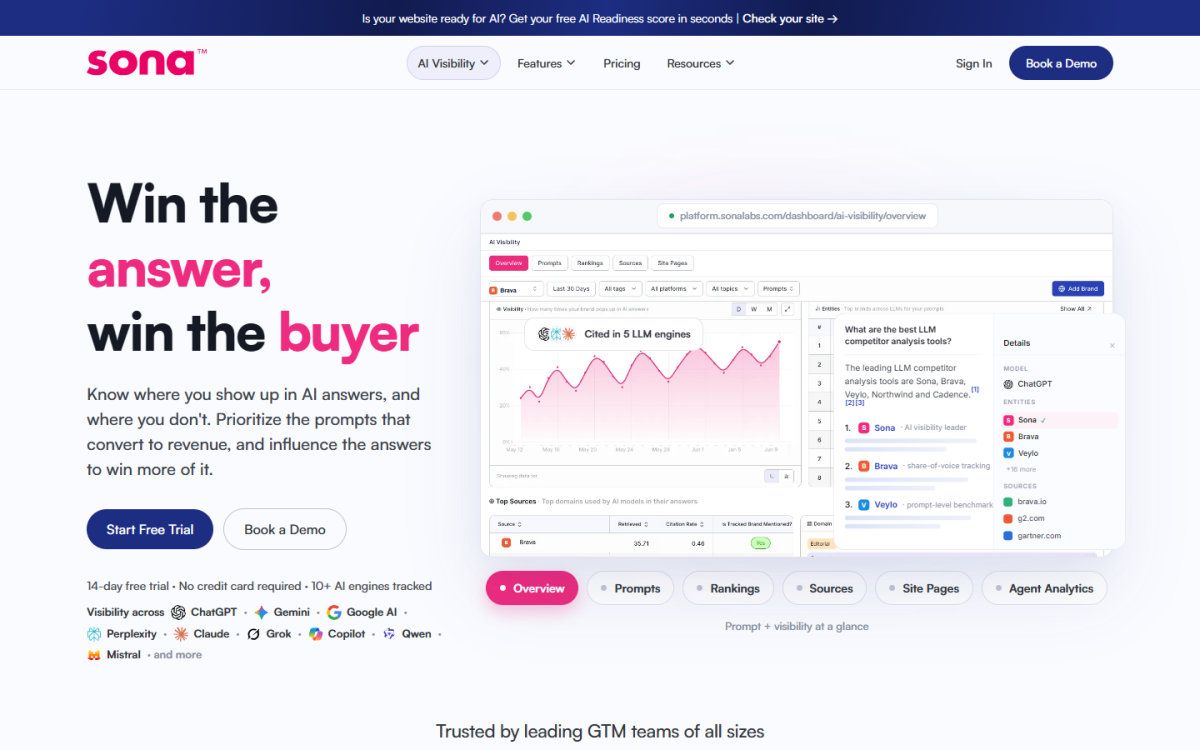
Platforms monitoring AI search visibility across ChatGPT and Gemini rerun fixed prompt sets in each engine and report whether your brand is mentioned, cited or recommended. Sona AI Visibility exceeds that baseline by connecting prompts and citations to pipeline and revenue, while displaying AI crawler and agent activity. Gemini warrants coverage: it accounted for 25.0% of global AI-chatbot website visits in September 2026, according to blockonomi.com. Starting prices are $29 monthly, but prompt limits vary, so assess effective cost rather than sticker price.
What do tools for tracking AI search visibility across ChatGPT and Gemini actually do?
Tools for tracking AI search visibility across ChatGPT and Gemini rerun a fixed set of buyer prompts and record how a brand appears in the answers. They show whether an answer names the brand, cites one of its pages, includes competitors, or frames the brand in a particular context.
AI visibility trackers cover ChatGPT, Google AI Mode, Perplexity, Gemini, Claude, and other answer engines. They do not measure conventional organic rankings. They create a repeatable record of what an AI answer says when a buyer asks a commercially relevant question.
The useful output is a history, not a one-time screenshot. Teams that run the same prompt list daily can identify changes that a weekly snapshot may obscure. Retrieval indexes, models, and competitor content all change.
For B2B teams, the central question is whether AI assistants include the brand in the consideration set when buyers ask about a category, problem, or vendor.
What metrics do AI visibility trackers actually measure?
AI visibility trackers measure appearances in generated answers, but each metric answers a different question. None proves demand or revenue by itself. These proxy measures show whether AI answers expose a brand to prospective buyers.
- Mentions or impressions: Counts of answers that name a brand. This indicates presence, but does not show whether the mention was favorable, prominent, or commercially useful.
- Citations and linked URLs: Instances where an answer names or links to a specific source page. Citations identify which pages AI systems surface, though a citation does not guarantee a referral visit.
- Placement or position: Where a brand appears in an answer, such as first recommendation, middle of a list, or closing example. Placement distinguishes a passing reference from a leading recommendation.
- Mention context and sentiment: The language around the brand, including whether it is framed as a specialist, an alternative, or a cautionary example. Context requires human review because AI wording can be conditional.
- Competitor presence and share of voice: The proportion of tracked answers where a brand appears relative to named competitors. Share of voice shows comparative exposure within the selected prompt set, not market share.
A brand-level visibility score is a dated snapshot, not a work item. The operational question is which prompts produced that score and which sources AI systems cited. Sona AI Visibility uses AI Search Insights to show prompts buyers ask and the sources AI cites, so teams can connect a visibility result to a specific page or query.
Metrics are more useful when segmented by buying stage. A mention for an informational prompt can matter, but a citation in a commercial comparison prompt often deserves closer review because it sits nearer to vendor selection.
Which tools track brand visibility, citations, and share of voice across ChatGPT and Gemini?
The six tools below track brand exposure across multiple AI answer engines, with different emphasis on prompt coverage, citation analysis, SEO reporting, and commercial measurement. The right choice depends on whether the team needs a visibility dashboard, a broader SEO workflow, or evidence that AI referrals influence pipeline.
1. Sona AI Visibility. Sona AI Visibility connects prompts and citations to pipeline and revenue on one account timeline while tracking AI crawler activity from server logs or a lightweight edge worker. It also provides mention and competitor tracking across 11 AI engines. Its focus is determining whether AI visibility produces identifiable accounts, opportunities, and closed-won revenue.
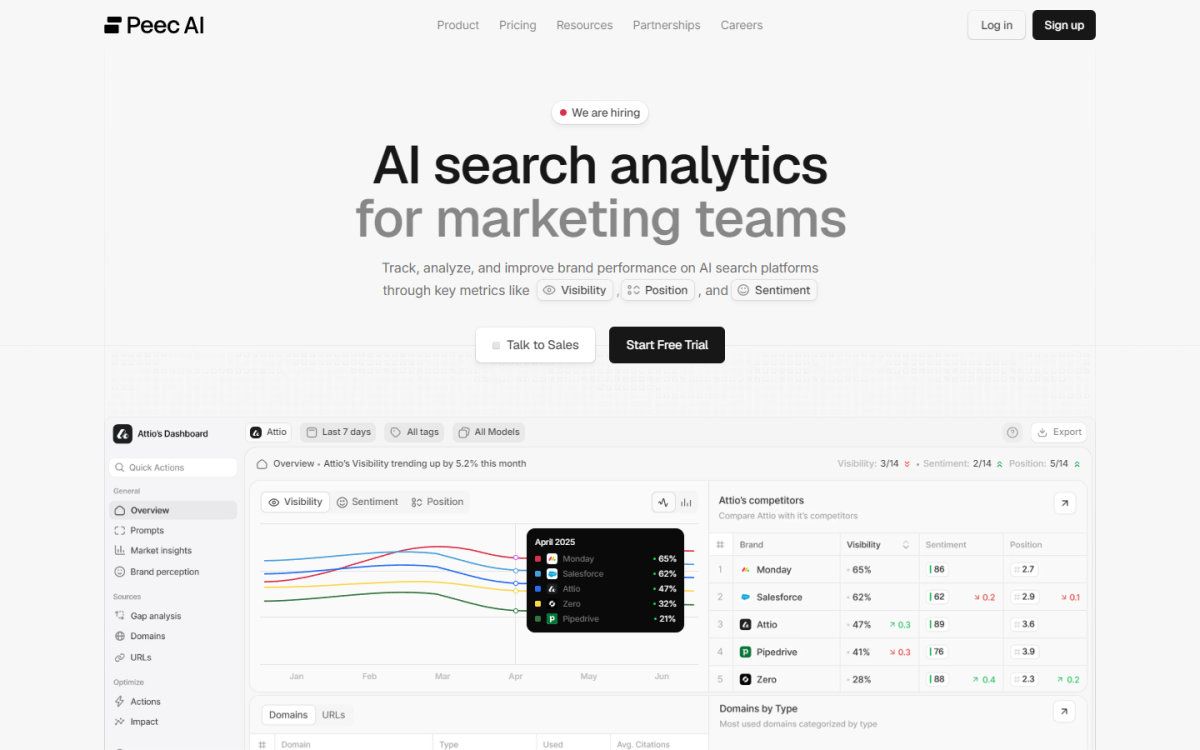
2. Peec AI. Peec AI tracks brand presence, citations, and competitive visibility across selectable AI models. Its Starter plan includes 50 prompts and three selectable models, while Pro and Advanced plans include 150 and 350 prompts, respectively, as of October 2026.
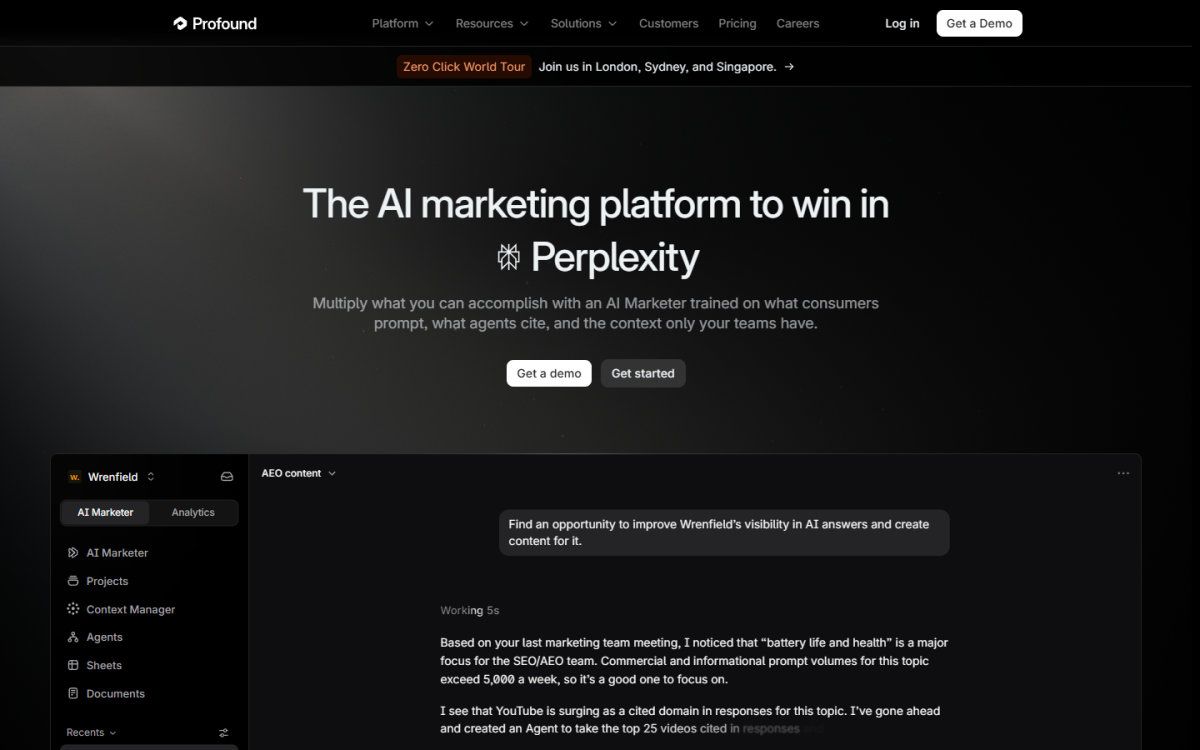
3. Profound. Profound focuses on monitoring AI answer visibility through prompt tracking. Its trial covers 50 prompts daily for seven days across ChatGPT, Gemini, and Google AI Overviews, while Enterprise plans support daily tracking across up to nine answer engines, as of October 2026.
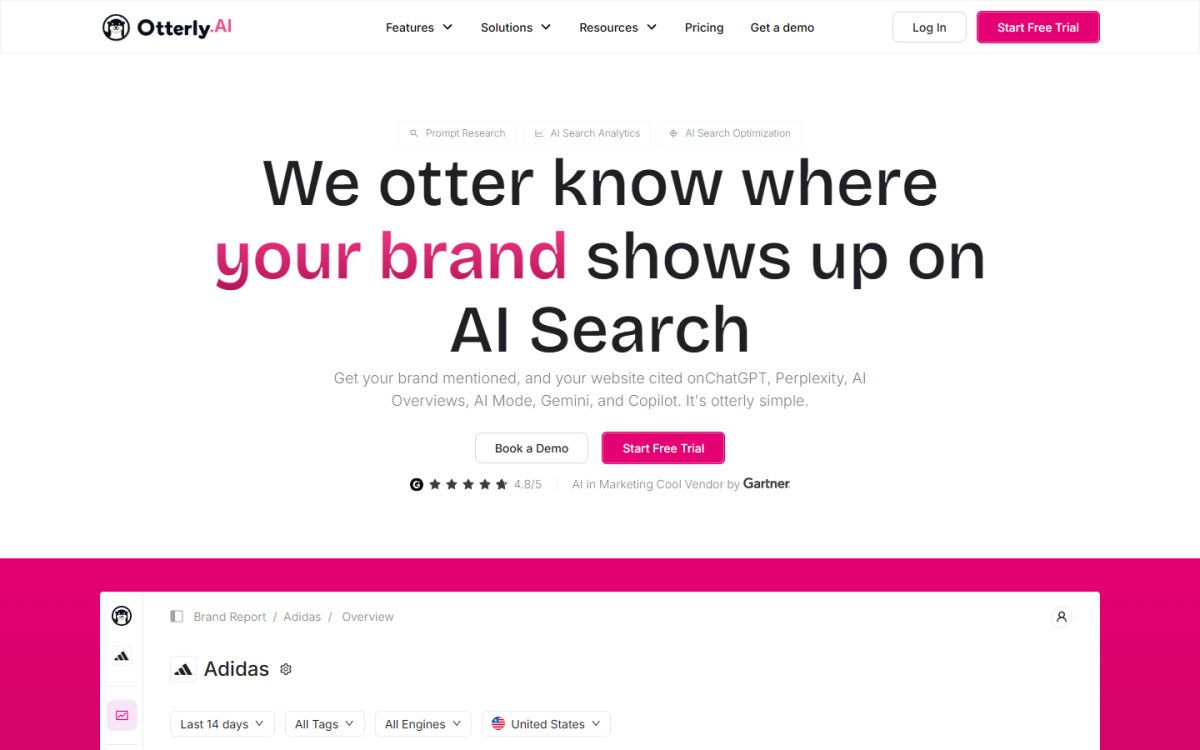
4. Otterly.ai. Otterly.ai tracks brand visibility across ChatGPT, Gemini, Perplexity, and Google AI Mode. Its Lite plan begins with ChatGPT, Google AI Overviews, Perplexity, and Microsoft Copilot, with Gemini and Google AI Mode available as paid add-ons, as of October 2026.
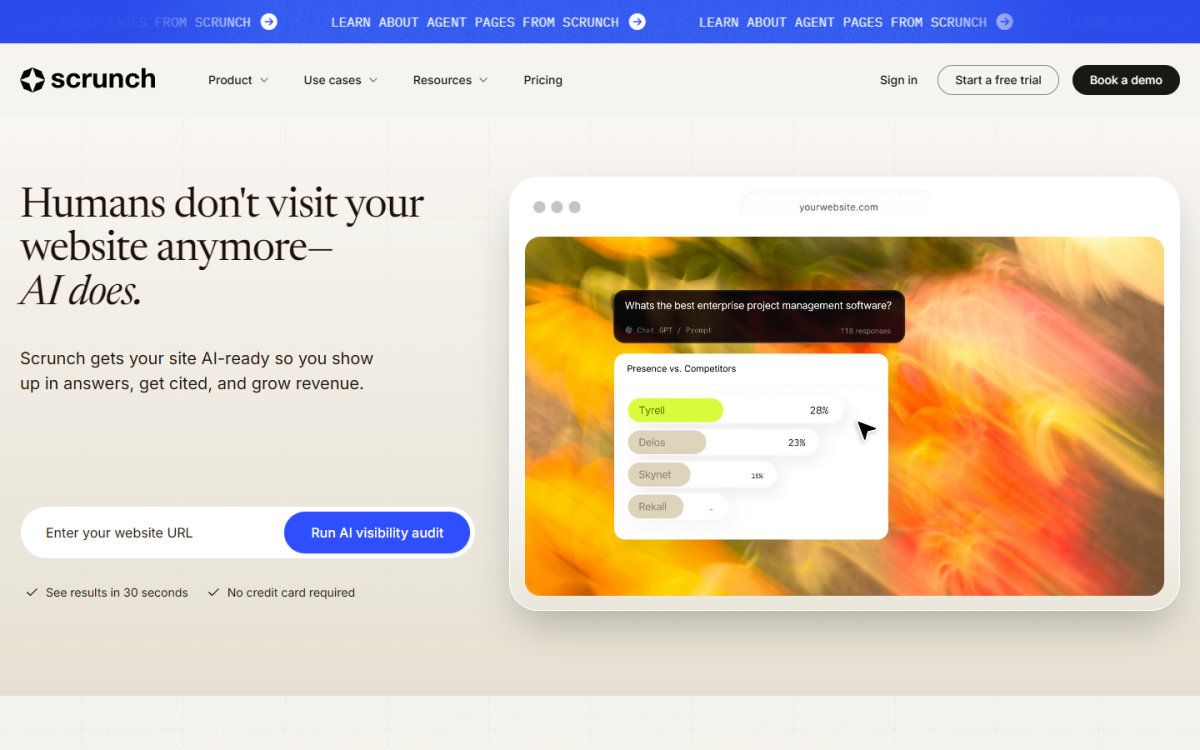
5. Scrunch AI. Scrunch AI tracks AI answer visibility across core answer engines. Its Core plan includes ChatGPT, Perplexity, Google AI Overviews, and Copilot, with 125 prompts and no published refresh frequency, as of October 2026.
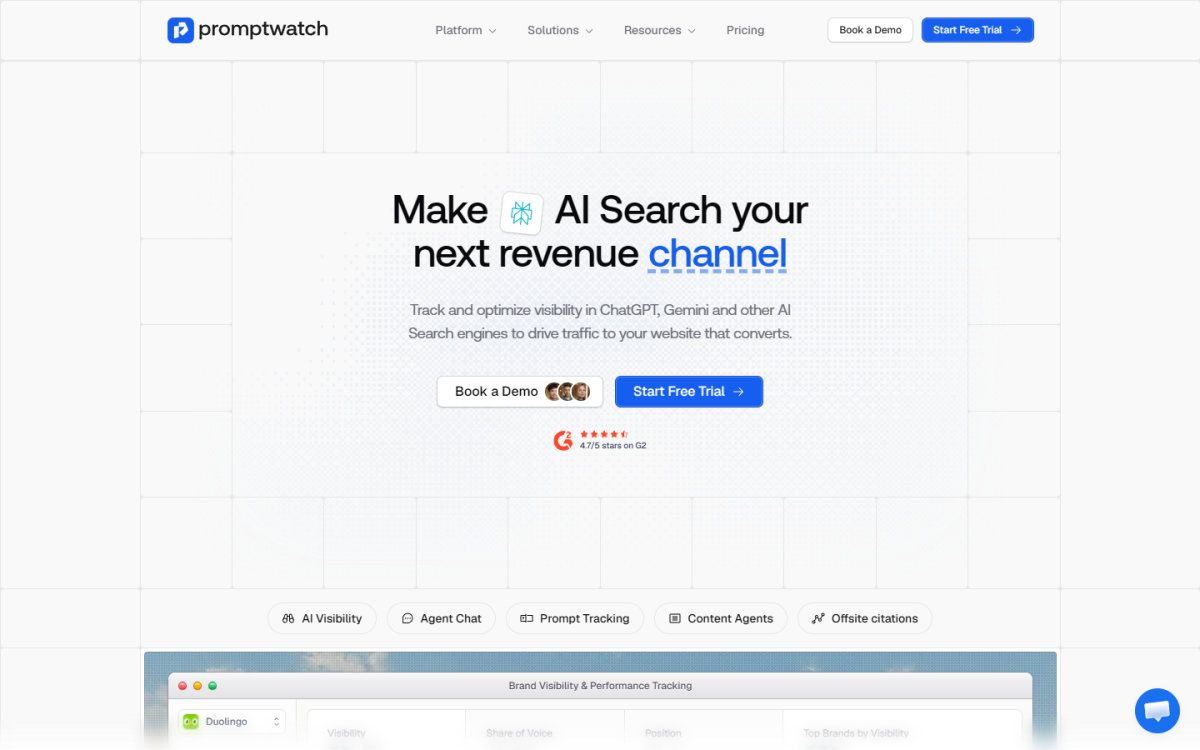
6. PromptWatch. PromptWatch provides daily prompt monitoring with response allowances. Its Essential plan includes 50 prompts and 6,000 responses per month, while Professional and Business plans include 150 and 350 prompts, respectively, as of October 2026.
How do the six tools compare on price, prompt limits, and engine coverage?
Price comparisons require a common unit because vendors package prompts, engines, credits, projects, and refresh cadence differently. The table uses published entry-plan details as of October 2026 and includes tools with published pricing information.
| Tool | Starting price | Agency Plans? (Yes/No) | # of Answer Engines Tracked | Answer Engines | # of Daily Tracked Prompts (entry plan) | Cost per Daily Tracked Prompt | Differentiation |
|---|---|---|---|---|---|---|---|
| Sona AI Visibility | From $75/month, billed annually | Yes | Up to 11 (3 on Starter) | Not published | 5,000 credits/month, about 56 prompts tracked daily across three engines | $0.45 per daily tracked prompt | Connects AI citations and prompts to pipeline and revenue, with AI crawler tracking from server logs or an edge worker |
| Peec AI | From $95/month | Yes | Up to 13 (3 of 6 on Starter, plus add-ons) | ChatGPT, Google AI Mode, Google AI Overviews, Microsoft Copilot, Gemini, Naver AI, three selectable on Starter | 50 prompts daily | $0.63 per daily tracked prompt | Brand, citation, and competitive visibility across selectable models |
| Profound | Custom pricing | Yes | Up to 9 (3 on free Trial) | ChatGPT, Gemini, Google AI Overviews | 50 prompts daily for seven-day trial | Cannot be calculated from custom pricing | Prompt tracking across AI answer engines |
| Otterly.ai | From $29/month | Yes | Up to 7 (4 on Lite, 3 as paid add-ons) | ChatGPT, Google AI Overviews, Perplexity, Microsoft Copilot | 15 prompts daily | $0.48 per daily tracked prompt | Brand visibility monitoring with engine add-ons |
| Scrunch AI | From $250/month | Yes | Up to 9 (4 on Core) | ChatGPT, Perplexity, Google AI Overviews, Copilot | 125 prompts | No refresh cadence published | AI answer visibility across core answer engines |
| PromptWatch | From $95/month | Yes | Not published | Not published | 50 prompts daily | $0.48 per daily tracked prompt | Daily prompt monitoring with response allowances |
Monthly price alone can mislead. A lower entry price may cover fewer engines, fewer prompts, or a different refresh cadence. Compare the prompt list, engines, historical retention, and reporting requirements before comparing subscription totals.
Which capabilities separate AI visibility tools beyond mention counts?
AI visibility tools differ in prompt selection, answer history, competitive analysis, refresh cadence, and their ability to connect visibility data with business outcomes. Mention counts are useful, but most products in the category can report them.
Prompt discovery matters because buyers phrase questions differently from the keyword strings they use in traditional search. Stronger products support custom prompt lists, suggested prompt variations, topic grouping, and persona-based prompts. These capabilities distinguish generic awareness questions from decision-stage vendor comparisons.
Competitor benchmarking also varies. Some tools compare whether brands appear in the same answer, while others organize results by prompt topic, source URL, position, and answer history. A preserved answer log lets analysts verify what changed rather than relying on a summary metric.
Refresh frequency determines whether the data reveals a real movement. Teams that run the same prompt list daily can see whether a shift holds for four days or disappears after one response. Daily tracking suits prompt lists, while broader positioning reviews and competitive benchmark reports can run quarterly.
Most trackers stop at counts, while Sona AI Visibility connects citations to pipeline and revenue and resolves the accounts behind AI-referred visits through Identity Resolution. That distinction matters when a marketing leader must determine whether an AI visibility improvement created commercial value.
Is Gemini tracking worth paying for when ChatGPT sends more traffic?
Yes. ChatGPT sends more AI-chatbot traffic in the available datasets, but Gemini represents enough discovery behavior that excluding it leaves a meaningful channel unmeasured. The split changes by dataset, geography, and measurement method.
ChatGPT accounted for 56.4% of global AI-chatbot website visits in September 2026, or approximately 5.9 billion visits, per blockonomi.com, September 2026. Gemini accounted for 25.0%, or approximately 2.6 billion visits, per blockonomi.com, September 2026.
Other datasets show a wider gap. An October 2026 dataset covering 101,574 sites assigned 74.78% of AI-search referrals to ChatGPT and 11.56% to Gemini. A May 2026 estimate put ChatGPT at approximately 53% of generative-AI web traffic and Gemini at approximately 28%, compared with less than 9% for Gemini in June 2025.
The datasets disagree on precise market shares, but they support the same decision: ChatGPT and Gemini both warrant measurement. A B2B brand that tracks only one answer engine risks mistaking partial visibility for complete coverage.
How reliable are AI visibility measurements when answers change by user, model, and time?
AI visibility measurement supports directional analysis when a tool reruns standardized prompts, preserves answer history, and makes its scoring rules visible. A single AI response is not a ranking signal because answers vary with the model, retrieval index, user context, and time.
Reliable reporting requires consistent measurement conditions. Retain the same prompt, engine, geography, and scoring logic across repeated runs. A historical answer record shows whether a citation, mention, or competitor appearance actually changed.
Ask vendors five questions before relying on a benchmark:
- How does the platform define a mention, citation, position, and share of voice?
- Does it preserve the full answer and cited sources for historical review?
- How often does it rerun the same prompt list?
- Which engines, geographies, and model versions are included?
- Can analysts export the underlying prompt-level results?
A score is a dated snapshot. A comparable series of results over time lets a team identify trends, investigate source changes, and decide whether a page deserves attention.
How should you choose a tool based on budget, team, and reporting needs?
Choose an AI visibility tool by the decision it must support, not by the largest published engine count. A small content team needs prompt and citation evidence it can turn into pages. A marketing leader needs reporting that connects AI discovery to traffic, accounts, pipeline, and revenue.
- Budget-conscious teams: Start with an entry plan that supports a focused commercial prompt list and preserves answer history.
- SMB and content teams: Prioritize prompt discovery, source analysis, citation context, and practical page-level reporting.
- SEO teams: Consider whether AI search data needs to sit inside an established SEO workflow or operate as a dedicated measurement discipline.
- Agencies: Review client workspaces, reporting controls, prompt allowances, and published multi-client plans.
- Enterprise and RevOps teams: Prioritize identity resolution, CRM integration, account reporting, and attribution.
Visibility does not equal pipeline. A sound reporting model combines mentions and citations with AI-referred traffic, assisted conversions, branded search behavior, and CRM outcomes. Sona AI Visibility is relevant when reporting must connect AI citations to accounts, pipeline, and closed-won revenue.
Compare pricing carefully. Vendors package prompts, models, projects, seats, regions, response volume, and refresh rates differently, so the nominal monthly subscription price rarely describes the true operating scope.
Who should not buy an AI visibility tracking tool?
AI visibility tracking tools are not for every team. They are most useful when a brand already has pages, positioning, and buyer questions worth monitoring, plus the capacity to act on patterns in the data.
Do not buy an AI visibility tracker if the team has no baseline organic presence or brand footprint to measure. The immediate work is creating credible category pages, product documentation, customer evidence, and technical accessibility rather than monitoring a thin result set.
These tools are also the wrong purchase for buyers who expect a guaranteed answer position. AI answers are generated responses, not fixed rankings. A tracker can show patterns and evidence, but it cannot guarantee placement in a future answer.
A one-off check does not justify an ongoing platform. Teams that only need a single technical assessment may not need continuous tracking.
Teams should not treat mention counts as proof of revenue. Without referral, account, conversion, and CRM evidence, a visibility number remains an exposure metric rather than a commercial result.
What are the frequently asked questions?
Do I need to track both ChatGPT and Gemini?
Yes, for most brands. Datasets disagree on exact shares, but both identify substantial Gemini usage. ChatGPT represented 56.4% of global AI-chatbot website visits and Gemini represented 25.0% in September 2026, per blockonomi.com, September 2026. Tracking ChatGPT alone leaves a meaningful discovery channel unmeasured.
How much do tools for tracking AI search visibility cost?
Sona AI Visibility starts at $75 per month when billed annually and connects AI citations and prompts to pipeline and revenue. Listed entry plans as of October 2026 start at $29 per month and rise above $160 per month. Otterly.ai starts at $29 per month, while Semrush One lists $165.17 per month when billed annually for 50 prompts tracked daily. Prompt counts, engine coverage, and refresh cadence differ, so subscription price is only one comparison point.
What is the difference between a mention and a citation in an AI answer?
A mention is a brand name in the answer text. A citation is a page or source listed to support the answer. The two do not always occur together: an answer can name a company without citing its site, or cite a page without prominently naming the brand.
How often should tracked prompts be rerun?
Run tracked prompts daily when the goal is to identify a trend rather than inspect one answer. A daily record can separate a four-day movement from a one-day spike caused by retrieval changes or a model update. Use a quarterly cadence for broader positioning reviews and competitive benchmark reports.
Can AI visibility data be tied to pipeline and revenue?
Yes, but not from mention counts alone. Sona AI Visibility links prompts and citations to AI-referred visits, accounts, pipeline, and deals, allowing visibility to be evaluated against commercial outcomes rather than exposure alone.
Are AI visibility scores comparable between tools?
Not directly. Each vendor defines its own prompt set, sampling process, scoring rule, and engine coverage. Compare trends inside one platform, then ask for the scoring definition and answer history before comparing a score from one tool against a score from another.
Summarize this article with AI: ChatGPT · Claude · Perplexity · Google AI Mode
Last updated: October 2026