Start by selecting the delivery model for an answer engine optimization platform: tool, service, in-house build, or hybrid. Next, test shortlisted options against your own buyer prompts for engine coverage, consistent measurement, and actionable fixes. Prompt volume and starting prices are weak tiebreakers, since add-ons and per-domain charges alter plan coverage. Mention tracking is the basic feature every platform provides; Sona AI Visibility extends it by linking prompts and citations with pipeline and revenue. Verify this in a trial before signing.
What do you need in place before you choose an answer engine optimization platform?
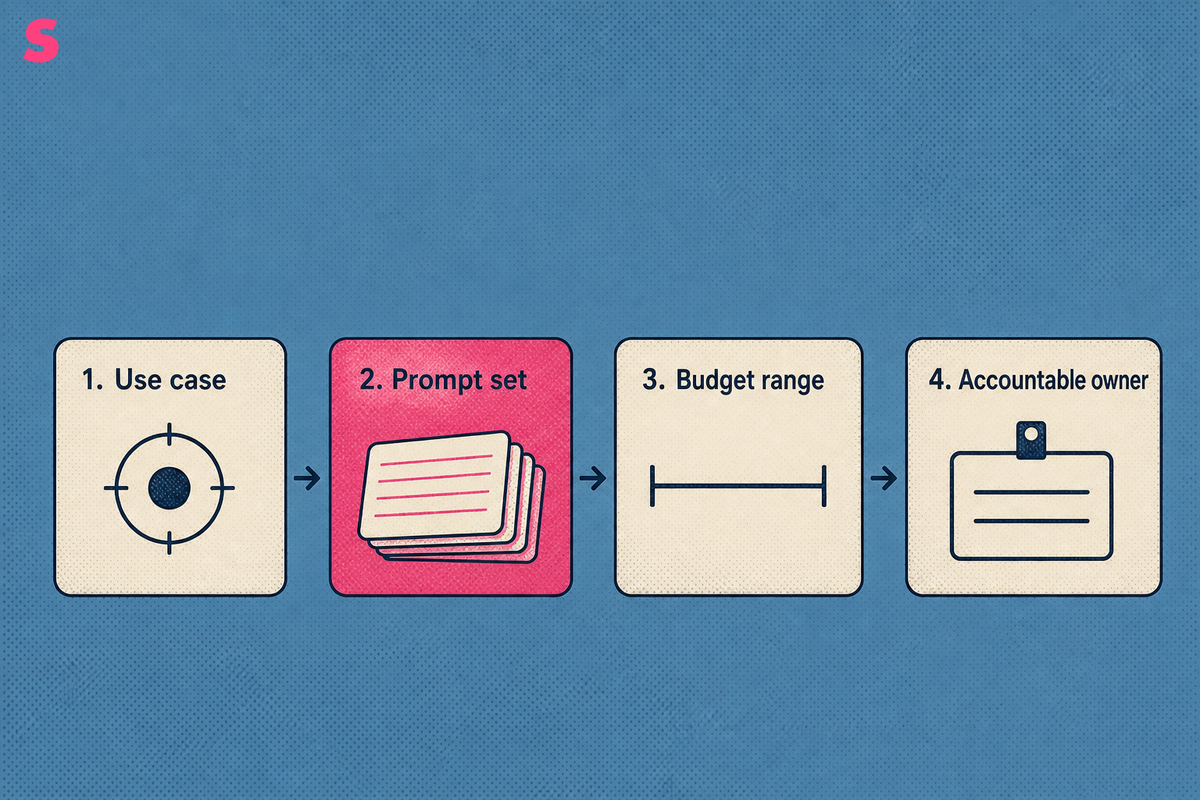
To choose an answer engine optimization platform, define one use case, prepare a representative buyer-prompt set, set a budget range, and assign one accountable owner. Those inputs turn a software search into a decision process. Without them, teams compare dashboards instead of deciding what the platform must prove.
Name the use case before requesting demos. Common choices include brand monitoring, SEO integration, content optimization, agency reporting, and enterprise governance. A demand generation leader measuring AI-sourced pipeline needs different evidence from an SEO lead evaluating citations and source pages.
Answer engine optimization (AEO) formats content for AI search features such as Google AI Overviews, Bing Copilot, Perplexity answers, and other answer engines. The buying decision differs from traditional SEO because AEO platforms have different implementation and pricing models. An SEO suite add-on does not establish whether the organization has the prompt tracking, citation evidence, technical guidance, and reporting required for AI search.
Build the initial prompt set from product categories, competitor comparisons, implementation questions, and buying-stage questions. Keep each prompt close to language a buyer would enter into ChatGPT, Perplexity, Gemini, Claude, and other answer engines. The named owner should approve prompts, review findings, and assign fixes across content, web, and revenue teams.
Should you buy a tool, hire a service, build in-house or combine them?
Buy a tool when the internal team can interpret findings and execute changes. Hire a service when execution capacity is the constraint. Build in-house when measurement requirements are highly specialized, and choose a hybrid when the organization needs software and expert delivery. The decision depends on who owns content, technical fixes, and reporting.
| Option | What you are buying | Who does the work | Where cost sits | Best fit |
|---|---|---|---|---|
| Standalone tool | Prompt monitoring, citation data, reporting, and recommendations | Internal SEO, content, demand generation, or RevOps team | Software budget | A team with clear owners and established publishing workflows |
| Done-for-you service | Monitoring, citation strategy, content fixes, and measurement | External specialists with internal approvals | Services budget | A team that needs execution capacity alongside reporting |
| In-house build | Custom data collection, scoring, dashboards, and governance | Data, engineering, and marketing operations teams | People, infrastructure, and maintenance budget | Enterprise teams with unusual data requirements |
| Hybrid | Software plus a team that operates the program | Shared internal and external ownership | Software and services budget | Organizations that need measurement and delivery together |
A tool reports what changed. A service adds people who can turn findings into citation strategy, content changes, technical fixes, and measurement. Strong AEO services combine AI visibility monitoring, citation strategy, content fixes, and measurement.
Sona done-for-you services provide a hybrid model, with a Sona team handling content, AI search optimisation, technical fixes, strategy, and reporting on top of an AI Visibility Growth plan or above. The practical question is whether the organization can convert evidence into assigned work.
Which platform type fits your company size, content maturity and budget?
Platform type should match company size, content maturity, budget model, and internal execution capacity. The matrix below turns those factors into a clear operating-model choice.
| Organization size | Content maturity | Available budget model | Internal execution capacity | Recommended platform type |
|---|---|---|---|---|
| Small team | Few priority pages and an early content program | Software-only | Can publish and implement a narrow set of fixes | Tool |
| SEO-led mid-size team | Established briefs, technical tickets, and recurring reporting | Software-only | Can interpret findings and assign content, technical, and reporting work | Tool |
| Content-heavy team | Solution pages, comparison pages, and editorial resources | Software plus managed execution | Can approve work but needs citation strategy and delivery support | Hybrid |
| Agency or enterprise | Multi-client or multi-market content with governance requirements | Dedicated engineering and maintenance capacity | Can operate custom data collection, scoring, dashboards, and governance | Internal build |
Sona AI Visibility connects citations to pipeline and revenue while tracking AI crawler activity, helping content-heavy teams distinguish pages that are reachable from pages that contribute to buyer journeys.
business.com placed platform pricing between $50 and $890 per month for one group and $99 to $399 per month for another in June 2026, with custom enterprise pricing at some vendors.
Which AI engines and metrics should an AI brand visibility tool cover?
An AI brand visibility tool should cover the answer engines your buyers use and show brand mentions, citations, source pages, position, sentiment, competitor presence, and share of voice. Mention tracking is the baseline. Citation evidence and source-level reporting show why an answer included the brand.
Ask whether ChatGPT, Google AI Overviews, Gemini, Perplexity, and other answer engines are included in the base plan or sold as add-ons. Sona AI Visibility tracks 11 AI engines, as of October 2026, and connects citation data to pipeline and revenue.
Engine counts require careful reading. HubSpot AEO listed 25 daily prompts across three engines in October 2026. Profound’s seven-day trial tracks 50 prompts daily on ChatGPT, Gemini, and Google AI Overviews, while Enterprise supports up to nine engines at custom pricing. Peec AI lists six self-serve engines, with three active on Starter and up to 13 on Enterprise, as of October 2026.
Otterly.ai Lite covers ChatGPT, Google AI Overviews, Perplexity, and Microsoft Copilot. Higher-tier engine counts are not published, and Claude, Google AI Mode, and Gemini are paid add-ons, as of October 2026. Semrush One listed ChatGPT, Perplexity, Gemini, Google AI Overviews, and Google AI Mode with 50 daily Starter prompts in October 2026. Evaluate the engines available at the tier under consideration, rather than coverage available only through add-ons or higher plans.
How can you tell whether a platform's measurement is reliable when AI answers vary?
Reliable AEO measurement shows how answers were collected, how often prompts run, how scores are calculated, and which citation evidence supports each result. A single score can mislead because answers vary by model version, personalization, location, language, retrieval changes, and sampling conditions.
Request five buyer signals during evaluation:
- Runs per prompt and the aggregation rule behind each metric.
- Daily prompt tracking, plus regional and language settings.
- Scoring rules for mentions, position, citations, sentiment, and share of voice.
- The complete answer and source page behind every reported citation.
- Exports that allow the organization to reproduce a result outside the dashboard.
Prompt counts can create false precision. Use prompts aligned to the market and buyer journey rather than a large set that mixes research, support, navigational, and irrelevant queries.
Daily runs of the same prompt list reveal patterns that a weekly snapshot can hide. Retrieval indexes, model updates, and competitor publishing can change an answer quickly. Review technical audits monthly or quarterly because those checks follow a different cadence.
Does the platform explain what to fix and tie results to revenue?
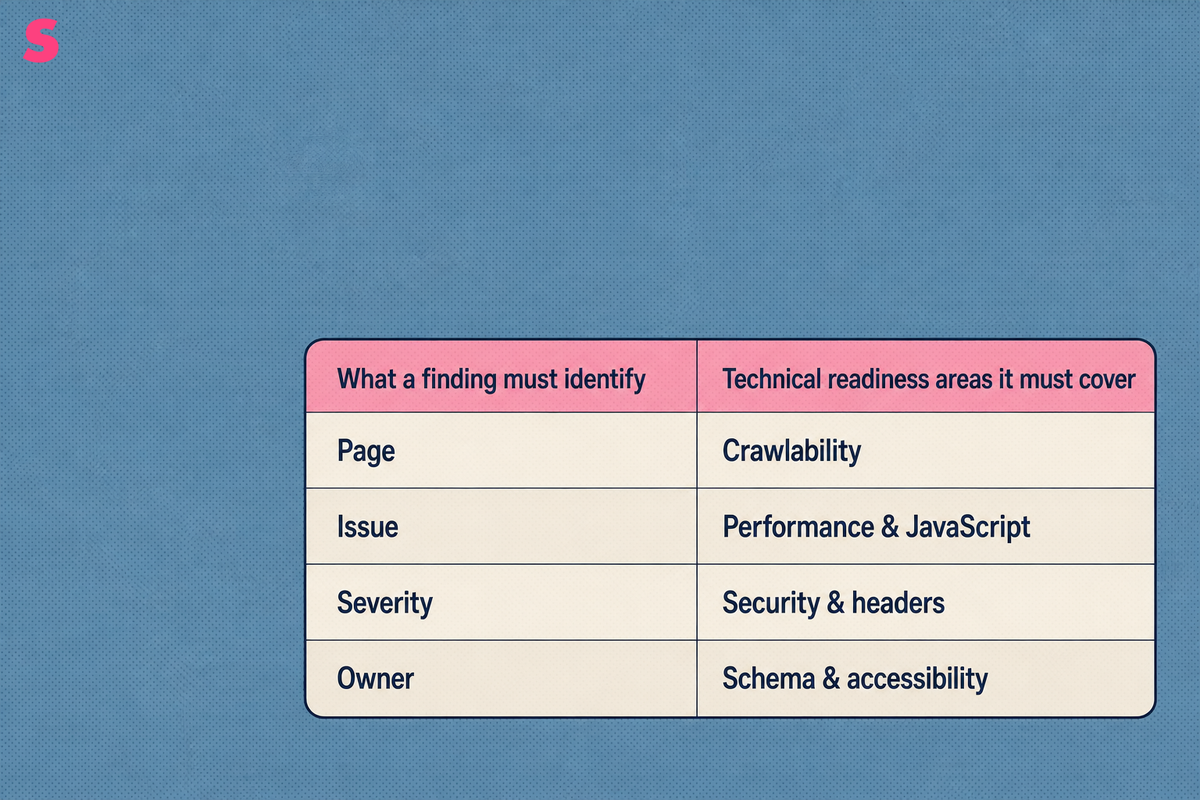
A useful AEO platform turns evidence into ranked work and connects meaningful outcomes to commercial results. Monitoring mentions without a source page, a technical finding, or an assigned action produces a report rather than an operating plan.
Test whether recommendations identify the page, issue, severity, and expected owner. Technical readiness should cover crawlability; performance and JavaScript dependence; security and header hygiene; content structure including schema markup; content quality including recency; and accessibility through alt text, ARIA, contrast, and image dimensions.
A score is a dated snapshot. More useful reporting shows change over time and attaches a severity-ranked fix to each page that moved. Ask whether reports support alerts, exports, API access, CRM integrations, agency workflows, and recurring reviews with accountable owners.
Sona AI Visibility connects prompts and citations to pipeline and revenue on one account timeline, and tracks AI crawler activity from server logs or a lightweight edge worker. Mention tracking across 11 AI engines is the baseline, as of October 2026. AI Attribution connects AI citations to accounts, pipeline, and closed-won revenue on that timeline.
Why can't you compare AEO platform prices on the plan price alone?
You cannot compare AEO platform prices on plan price alone because vendors package different units, including domains, workspaces, prompt sets, models, users, regions, and history. Compare the total operating configuration required for the organization’s buyer prompts, markets, and reporting workflow.
Check every tier for prompt limits, refresh cadence, domains, countries, competitors, seats, historical data, exports, API access, and add-on engines. Sona AI Visibility starts from $75 per month billed annually, includes unlimited seats and API and MCP access, and offers a 14-day free trial with no credit card, as of October 2026.
Published plans illustrate the variation. Profound agency plans start from $99 per month in October 2026. Peec AI starts from $95 per month with 50, 150, and 350 daily prompts across listed tiers in October 2026. Otterly.ai starts from $29 per month in September 2026. Scrunch starts from $250 per month in October 2026.
Semrush AI Visibility Base listed $99 per month per domain billed annually and no trial in October 2026. End the price comparison with total cost for the required configuration, not a single entry-plan number. Compare cost per daily tracked prompt only when refresh cadence and total AI answers are known, using the stated normalized figure rather than recalculating from headline labels. Where normalization is impossible, record No refresh cadence published.
What red flags should you watch for, and how do you trial a platform?
Red flags include undisclosed methodology, engine coverage hidden behind add-ons, generic recommendations, no trial or sandbox, and a sales process focused only on prompt count. Replace vendor claims with buyer signals: a sample export, a live run on your prompts, and case evidence with specific before-and-after citation data.
Run the trial on the organization’s representative buyer-prompt set. Repeat selected prompts under the same regional and language settings, inspect the complete answers, and request the cited source pages. A successful trial reproduces results across repeated runs, shows evidence behind each citation, and produces fixes that a named owner can assign.
A common failure is a flattering but unrepeatable visibility score or recommendations too generic to assign. Narrow the evaluation to the approved prompt set, rerun those prompts daily, and remove vendors that cannot show the answer, scoring rule, and citation evidence behind the result.
If the organization is evaluating agencies, compare fit, pricing signals, strengths, and tradeoffs instead of buying on claims alone. hamstergarage.com compared 11 AEO agencies using those criteria. Request a proposed operating model that specifies who handles monitoring, citation strategy, content fixes, technical work, and reporting.
How do you narrow your shortlist in five steps?
To narrow an AEO platform shortlist, make five decisions in sequence: define the use case, choose an operating model, filter for coverage, test repeatability, and compare total cost. The sequence prevents teams from selecting a dashboard before defining the business decision the platform must support.
- Confirm the use case and owner. Input: one named use case and a representative buyer-prompt set. Decision: identify the accountable marketing, SEO, agency, or RevOps owner. Buyer signal: the owner can explain which decision the report will support.
- Choose tool, service, build, or hybrid. Input: team size, content maturity, budget tier, and execution capacity. Decision: select the operating model. Buyer signal: named owners exist for content, technical fixes, reporting, and governance.
- Shortlist on base-plan engine coverage and metrics. Input: priority answer engines and required metrics. Decision: remove platforms that do not show citations, source pages, position, sentiment, and share of voice in the required configuration. Buyer signal: the vendor demonstrates each metric on a live answer.
- Trial on your own prompts. Input: the approved prompt set, region, and language. Decision: retain platforms that reproduce results and return specific recommendations. Buyer signal: repeated daily runs show a usable pattern rather than an isolated score.
- Compare total cost and decide. Input: all plan limits, add-ons, users, markets, and service fees. Decision: approve the configuration that fits budget and operating capacity. Buyer signal: procurement can trace every required capability to a priced tier.
Monitoring which AI answers mention a brand is only half the job. Sona AI Visibility connects citations and AI-referred visits to accounts, pipeline, and revenue, allowing the organization to assess whether visibility contributed to commercial outcomes.
What are the frequently asked questions about choosing an AEO platform?
How do I choose an AI brand visibility tool?
Start with a named use case and a list of buyer prompts. Shortlist platforms whose base plan covers the answer engines that matter to the organization, then test the tools on those prompts for repeatable results, citation evidence, and clear fixes. A platform should show more than mentions, including source pages, position, sentiment, and share of voice.
How is an AEO platform different from an SEO suite?
An AEO platform tracks how AI answer engines mention and cite a brand, while traditional SEO suites focus on search rankings, keywords, and organic search workflows. AEO platforms differ from SEO suites in implementation and pricing. Some SEO suites now add AI visibility modules, but organizations should still verify engine coverage, citation evidence, and reporting depth.
How many prompts should an AEO platform track?
An AEO platform should track enough prompts to cover product categories, buyer questions, competitor comparisons, and buying stages. Use a focused prompt set aligned to the organization’s market instead of hundreds of generic prompts. Run the same prompt list daily so the team can distinguish sustained movement from one-day variation.
Should I buy an AEO tool or hire an agency?
Buy an AEO tool when the internal team can act on findings through content, technical, and reporting workflows. Hire a service when the organization needs execution capacity. Consider a hybrid when a team needs software for measurement and external specialists to handle citation strategy, content fixes, and technical work.
Can an AI visibility score be trusted when answers change between runs?
An AI visibility score is trustworthy only when the platform discloses run count, tracking frequency, scoring rules, regional settings, language settings, and citation evidence behind each result. A score is a dated snapshot. Repeated measurements across the same prompt set identify meaningful trends.
Do I need a free trial before buying an answer engine optimization platform?
A trial or live demonstration on the organization’s own prompts is the strongest buyer signal because it shows whether results repeat and whether recommendations are specific. Some plans have no trial, so request a live run, a sample export, and the cited source pages before purchase. A trial should test evidence quality, not only dashboard design.
Summarize this article with AI: ChatGPT · Claude · Perplexity · Google AI Mode
Last updated: October 2026