


Wall cleaning contractors win jobs in the gap between a property manager noticing graffiti or grime and deciding who to call. Google Ads fills that gap, putting a business in front of the person searching right now, but many wall cleaning companies still can't tell which clicks turned into signed jobs, so budget drifts toward keywords that generate calls but not contracts. The fix is narrower targeting and tighter tracking, so every dollar spent traces back to a real booked job.
How to Generate Wall Cleaning Services Leads with Google Ads: A Step-By-Step Guide

Generating high-quality leads for wall cleaning services requires more than broad targeting and generic ad spend. Today’s successful campaigns leverage granular data, real-time insights, and automation to reach buying committees and property decision-makers at the exact moment they’re ready to engage.
- Identify your target audience: Precise audience identification is the foundation of profitable wall cleaning advertising. With traditional CRM systems, anonymous website visitors often slip through unnoticed, causing missed revenue opportunities. Advanced marketing platforms now empower wall cleaning businesses to unmask these visitors and connect website activity with real company profiles. This enables ad budgets to zero in on verified, in-market property managers, building owners, and commercial decision-makers, leading to higher conversion rates and more efficient spend.
- Utilize intent signals and ICP scoring: Relying solely on basic demographic or firmographic filters can result in mistimed outreach and lost deals. Using intent data and Ideal Customer Profile (ICP) scoring, modern marketers can identify accounts demonstrating active buying signals, such as repeat website visits, content downloads, or engagement with cleaning service ad examples. These accounts are then grouped into custom segments within Google Ads, allowing for aggressive bidding and personalized messaging when purchase intent peaks. For additional inspiration, explore this step-by-step guide to Google Ads for cleaning businesses. This approach ensures no high-value opportunity is overlooked and ad budgets are concentrated on those most likely to convert.
- Create compelling ad campaigns: One-size-fits-all messaging fails in a market where facility managers, property developers, and homeowners each respond to different value propositions. By harnessing firmographic and behavioral data, wall cleaning services can deploy tailored campaigns for each audience segment. For example, ads targeting commercial clients can emphasize compliance, flexibility, and scalability, while residential campaigns focus on affordability and same-day availability. To learn more about campaign segmentation and messaging, visit the Sona blog. This segmentation drives stronger engagement, improves click-through rates, and increases qualified lead volume.
- Track and optimize performance: Static audience lists quickly become stale as contacts change roles or move companies. Automating audience updates in Google Ads for cleaning services ensures campaigns always reach the most relevant profiles. By integrating advanced conversion tracking across both online and offline channels, wall cleaning businesses can accurately attribute leads to specific campaigns and keywords, refining ROI calculations and guiding smarter budget allocation.
- Integrate capabilities like automated syncs: Manual lead syncing between CRM and ad platforms often results in data errors or missed follow-ups. Automated syncing between platforms like Google Ads, Salesforce, and HubSpot ensures audience lists and new leads are always up to date. This eliminates lag in reaching high-intent contacts, streamlines retargeting, and maintains campaign momentum, ultimately maximizing the impact of every marketing dollar.
Why Does Google Ads Matter for Wall Cleaning Services
Wall cleaning service businesses operate in a market where immediate visibility and targeted reach create a measurable advantage. With Google Ads, providers can consistently reach property managers, facilities directors, and homeowners actively searching for specialized cleaning solutions in their area. For a step-by-step walkthrough on how to set up and optimize campaigns, review this Google Ads for cleaning business guide.
- Targeted advertising: Google Ads allows wall cleaning services to zero in on high-intent prospects by using specific keyword and location targeting. This precision ensures marketing budgets are spent only on those most likely to convert, such as commercial property managers or local homeowners facing graffiti issues. By layering in advanced visitor identification, marketers can move beyond anonymous clicks to recognize which companies or accounts are showing genuine in-market behavior, enabling more strategic engagement with high-value leads.
- Measurable ROI: Every click, form fill, and conversion is tracked, allowing wall cleaning businesses to calculate true ROI down to each campaign, ad group, and keyword. This level of transparency enables revenue teams to connect online actions with offline sales, especially when integrating advanced attribution models. Enhanced conversion tracking provides a unified view of which leads translate into long-term contracts, supporting smarter budget allocations that prioritize the highest-return segments.
- Competitive targeting: The cleaning industry is saturated with companies vying for a limited pool of commercial and residential contracts. Google Ads empowers wall cleaning providers to outflank competitors by targeting urgent, high-value search queries and using dynamic audience lists. As leads move through the funnel, these lists update in real time, ensuring only the most qualified prospects receive remarketing offers and tailored creative.
- Integration with other channels: Google Ads is most powerful when aligned with CRM, email, and outbound sales efforts. By syncing enriched lead and audience data directly into Google Ads and leading CRM platforms, marketing teams can orchestrate campaigns that respond instantly to buying signals.
Common Types of Google Ads Campaigns for Wall Cleaning Services
- Search Campaigns: These campaigns capture high-intent prospects actively searching for wall cleaning services, whether the query is a same-day "graffiti removal near me" search or a scheduled "commercial building facade cleaning" inquiry from a property manager. Responsive search ads, an ad format within Search campaigns, let you test multiple headlines and descriptions to see which combinations win against competitors bidding on the same terms. To maximize your campaigns, review this step-by-step guide to Google Ads for cleaning businesses for actionable setup and optimization tips. Leveraging precise audience intelligence allows marketing teams to prioritize budget allocation for keywords and audiences demonstrating the strongest buying signals and to route leads directly into their CRM, increasing conversion potential.
- Display Ads: Display campaigns build brand awareness and keep your service top-of-mind as prospects browse industry sites or local news outlets. With advanced audience segmentation, companies maintain consistent visibility among property managers, facility directors, and homeowners. Integrate Sona with your CRM to automate dynamic audience refresh and ensure ad impressions focus on the most valuable accounts as they progress through the decision journey.
- Video Ads: Video campaigns deliver powerful visual proof of cleaning results, illustrating before-and-after transformations and unique cleaning techniques. This format excels on platforms like YouTube, where commercial and residential prospects can see the tangible impact of professional wall cleaning. Refine targeting based on viewer behavior and unify video engagement data with intent signals to help sales teams prioritize outreach to those who demonstrate genuine purchase consideration. Explore a video walkthrough of Google Ads campaign setup for cleaning companies to boost your video ad strategy.
- Remarketing: Remarketing campaigns re-engage visitors who interacted with your website or ads but have not converted. By leveraging up-to-date audience lists that evolve as leads move from research to purchase, marketers can deliver timely, relevant messages that drive action. Automated syncing with Sona Destinations streamlines audience management, ensuring follow-up ads are tailored as contacts progress through the funnel.
- Performance Max: Performance Max campaigns pool Search, Display, YouTube, and Maps inventory into a single automated campaign, which suits wall cleaning services that need to cover both the urgent, high-intent searcher and the slower-moving commercial buyer researching vendors before a bid deadline. Feeding it strong conversion data, ideally tied to which leads became paying jobs rather than just form fills, lets its bidding models chase revenue instead of cheap clicks.
Where to Find Growth Opportunities?

Identifying new avenues for expansion is essential for wall cleaning services aiming to drive consistent revenue and outperform local competitors. Growth is unlocked by combining data-driven audience insights with targeted outreach that aligns with in-market demand and real-time buyer intent.
- Keyword targeting: Effective keyword targeting is foundational for scaling wall cleaning advertising campaigns. Search terms split cleanly by urgency and buyer type: "emergency graffiti removal" and "vandalism cleanup" signal a property manager who needs someone today, while "commercial building facade washing" or "annual pressure washing contract" signal a longer procurement cycle with bids and paperwork. Advanced platforms allow deeper visibility into which keywords are driving qualified traffic, enabling revenue teams to dynamically refine their lists as seasonal demand shifts, spring cleanups and post-storm cleanup spikes, for instance, or new service lines launch. When visitor identification technology is integrated, it is possible to connect anonymous ad clicks to specific companies or accounts, enabling more precise follow-up and nurturing. For additional keyword ideas and targeting inspiration, explore this database of cleaning services keywords.
- Competitor gap analysis: Continually assessing the digital landscape reveals gaps where competitors are under-invested. Marketers can benchmark their Google Ads for wall cleaning services against competitors’ share of voice, identifying underserved geographic markets or overlooked service keywords. By leveraging real-time intent data, teams can shift spend toward accounts or industries demonstrating purchase signals, instead of relying solely on broad geo-targeting. This approach increases efficiency and ensures advertising budgets are spent on segments most likely to convert.
- Content retargeting: Retargeting website visitors who have shown interest but not yet converted is a proven strategy for increasing lead quality and velocity. By tracking engagement and layering in behavioral signals, marketers can automatically update retargeting audiences as prospects progress through the funnel. Audience sync between CRM and ad platforms ensures that messaging remains relevant and timely, and enriched audiences can be pushed directly into Google Ads for cleaning services or other PPC channels, maximizing the value of every interaction. With robust online and offline attribution, teams can close the loop on campaign performance, measuring which retargeting efforts drive final conversions and allocating resources accordingly.
How to Apply Audience Segmentation for Wall Cleaning Services

Audience segmentation for wall cleaning services requires aligning ad delivery with each stage of the customer journey. Proper segmentation ensures your advertising budget targets prospects with the highest likelihood of conversion, from initial research to final decision-making. For more tactics, explore this step-by-step guide to Google Ads for cleaning businesses or dive into actionable frameworks in our library of marketing playbooks.
- Define segments: Start by classifying your audience based on customer type and buying stage. Residential clients, commercial property managers, and facility directors each have distinct pain points and timelines. Segmenting by intent such as "emergency graffiti removal" or "scheduled maintenance" lets you tailor messaging and offers to what each group values most. This segmentation not only improves click-through rates but also drives more qualified leads to your sales funnel. Unlock more segmenting strategies in our account-based marketing guide.
- Overlay intent signals: Layer behavioral and contextual data to further refine your segments. Google Ads for Wall Cleaning Services allows you to target searchers who display in-market signals, such as recent property-related searches or engagement with restoration content. By integrating real-time intent data, marketers can shift spend toward accounts that show signals of high urgency or budget readiness. Platforms that unify cross-channel engagement, including on-site visits and CRM activities, let you prioritize leads as they progress through the funnel, ensuring your highest-value prospects always receive the most relevant ads.
- Customize ad groups: Build ad groups that mirror your defined segments and intent signals. For example, create separate ad groups for "commercial exterior wall cleaning" and "residential graffiti removal," each with tailored ad copy and landing pages. This structure enables more relevant messaging, tighter budget control, and higher Quality Scores. Dynamic audience updates, powered by unified audience data, ensure that as prospects engage or convert, they automatically shift between ad groups, maximizing conversion potential throughout the customer lifecycle.
- Integrate data with your CRM: Connect your Google Ads audience data directly with your CRM to synchronize lead and customer information. Automated syncing ensures that enriched audience data and new leads are instantly available for retargeting, nurturing, or offline follow-up. Advanced platforms allow seamless push-pull of audience segments, campaign engagement, and conversion events between Google Ads and sales systems like Salesforce or HubSpot. This integration means your sales and marketing teams always act on the freshest, most actionable data, enabling faster response, more personalized outreach, and clear attribution of ad spend to closed business. To streamline this process across platforms, get started for free with Sona.
This is also where measurement changes the economics. With Sona Marketing Measurement you can identify the companies behind your ad clicks, not just anonymous sessions, and segment audiences by which accounts actually become customers. That lets you build bid adjustments and audience signals around the segments that convert and de-prioritize the ones that don't, so you feed Google's algorithms "this click became a paying wall cleaning services customer" instead of just "someone filled out a form."
Keyword Strategy & Sample Target Terms
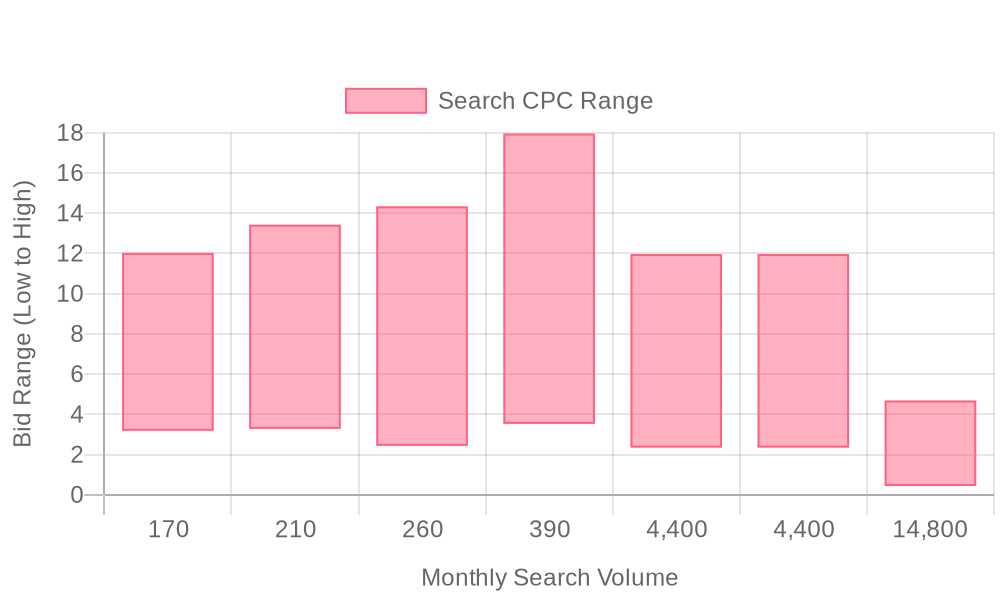
| Industry | Keyword | Monthly Search Volume | Competition Level | Low Bid | High Bid |
| Wall Cleaning Services | wall cleaning services near me | 170 | MEDIUM | 3.19 | 12.03 |
| Wall Cleaning Services | wall cleaners near me | 210 | MEDIUM | 3.28 | 13.43 |
| Wall Cleaning Services | cleaning soot off walls | 260 | HIGH | 2.44 | 14.34 |
| Wall Cleaning Services | wall and ceiling cleaning services near me | 390 | HIGH | 3.53 | 17.96 |
| Wall Cleaning Services | wall cleaning services | 4400 | MEDIUM | 2.35 | 11.97 |
| Wall Cleaning Services | wall washing services | 4400 | MEDIUM | 2.35 | 11.97 |
| Wall Cleaning Services | wall cleaning | 14800 | HIGH | 0.44 | 4.69 |
Effective keyword strategy is the cornerstone of profitable Google Ads for wall cleaning services. High-intent terms such as "professional wall cleaning services," "commercial building graffiti removal," and "exterior wall washing near me" attract audiences with immediate purchasing needs and a willingness to engage. For inspiration on top-performing keywords and how to structure ad groups, visit this database of popular keywords and targeting ideas for cleaning service Google Ads campaigns. Targeting these core keywords ensures budgets are allocated to prospects most likely to convert, reducing wasted spend and improving lead quality.
Long-tail keywords play a critical role in capturing niche demand and driving down cost-per-click. Phrases like "historic brick wall restoration," "eco-friendly wall cleaning for schools," and "urgent graffiti removal downtown" serve specialized queries that competitors often overlook. By segmenting campaigns with these long-tail variants, wall cleaning businesses can reach decision-makers in property management, facility operations, and municipal services while positioning themselves as experts in unique scenarios. Leverage real-time, signal-based audience segments to ensure your Google Ads campaigns are always targeting the right decision-makers as market needs shift.
Integrating real-time CRM data into keyword management amplifies results at every stage. Marketers can dynamically assess which search terms generate not just clicks but also qualified pipeline opportunities, using visitor identification technology to match anonymous website interactions to actual companies and buyer profiles. This enables budget shifts toward search terms that drive high-value accounts, while audiences are automatically refreshed as leads move through the funnel, ensuring ongoing relevance and precision. With advanced intent analytics, campaigns evolve from static keyword lists to adaptive, outcome-driven strategies that reflect true buyer behavior in the market for wall cleaning solutions. To experience this seamless integration firsthand, get started for free with Sona.
Step-by-Step Campaign Execution Framework
Step 1: Build Targeted Keyword Lists
A successful Google Ads for Wall Cleaning Services campaign starts with precise keyword planning. Segment keywords by service type, such as "graffiti removal," "exterior wall washing," and "commercial wall cleaning", and layer in geographic modifiers to capture intent in your actual service area. For additional targeting ideas and a list of high-performing industry terms, review this database of popular cleaning service keywords. By clustering keywords this way, advertisers prevent budget waste on generic or out-of-market searches, ensuring ads reach audiences actively seeking wall cleaning solutions.
Integrating negative keywords like “DIY,” “jobs,” or unrelated cleaning terms filters out unqualified clicks, which is critical for controlling spend and improving lead quality. When marketers leverage platforms that identify not just keywords but which companies and people are visiting your website, targeting can be refined to prioritize high-value accounts. This approach results in higher conversion rates and a more efficient path to revenue by aligning ad visibility with genuine commercial intent.
The upgrade most wall cleaning services advertisers miss is going beyond raw keyword volume to layer in intent and identity signals. By connecting website-visitor data and CRM records with Sona Marketing Measurement, you can see which specific search terms bring in the accounts and customers that actually convert, and weight your keyword and bidding strategy toward those rather than the terms with the highest search volume alone.
Step 2: Develop Compelling Ad Copy
Ad copy must speak directly to the urgent needs of property managers and facilities teams facing wall damage or persistent stains. Incorporate pain points, such as vandalism, building curb appeal, or compliance with safety regulations, while embedding trust signals like certification badges, insurance, and testimonials from local commercial clients. For tips and examples on creating effective ads, check out these cleaning service ad strategies. Dynamic features, such as real-time countdown timers for limited-time offers or emergency response windows, can be layered into ads to create urgency and drive faster action.
When campaign data reveals which messages resonate most with in-market prospects, advertisers can automatically shift budget to top-performing copy variations. The ability to sync real-time audience segments into ad platforms empowers teams to personalize messaging at scale, ensuring every impression targets the right decision-maker at the right moment in their buying journey.
Step 3: Design Effective Landing Pages
Landing pages must align tightly with ad intent and keywords to eliminate friction for visitors. Each page should feature clear headlines referencing the specific wall cleaning service, a concise benefit statement, and a prominent call to action, such as “Request a Quote” or “Book Emergency Removal.” For a practical checklist on landing page elements, see this guide to high-converting cleaning service pages. Engaging copy, paired with before-and-after images and client logos, builds confidence and trust.
Mobile-first design is essential, given the high volume of search activity from smartphones. Integrating lead forms that capture key qualification details streamlines handoff to sales and enables timely follow-up. When marketers connect form submissions to automatically sync audience data into CRM and ad platforms, they ensure that audience lists stay current, allowing for immediate retargeting or upsell campaigns as leads progress through the funnel.
Step 4: Implement Data-Driven Optimizations
Continuous optimization drives long-term campaign profitability. Use conversion tracking in Google Ads to identify which ads, keywords, and landing pages generate the most qualified leads for wall cleaning services. Adjust bidding strategies in real time based on performance, prioritizing high-intent searches and high-converting geographies to maximize budget efficiency.
Offline data imports, such as closed deals or service completions, can be mapped back to campaign interactions, revealing the true ROI of each marketing channel. With unified audience and conversion data, revenue teams gain a full-funnel view of campaign impact, enabling smarter retargeting, more accurate attribution, and ongoing improvement of digital marketing for cleaning. To see how you can transform your campaign results, get started for free with Sona. This integrated, data-driven approach helps B2B teams continually refine their Google Ads for cleaning services strategies and outperform competitors in a competitive local service market.
Sona Marketing Measurement closes the gap between clicks and revenue. It captures every ad click with first-party tracking, then ties that click through UTM capture and ad-platform APIs to the actual record in your CRM, and reports ROAS by keyword and campaign instead of by last-click form fill. Feeding that revenue signal back into Smart Bidding and Performance Max compounds over time: the algorithms optimize toward booked wall cleaning services revenue, not cheap leads.
Tips on Expanding Your Wall Cleaning Services Presence
Expanding your wall cleaning services requires a focused, multi-channel approach designed for measurable growth. Businesses that implement strategic market outreach consistently see stronger brand recognition and a higher volume of qualified leads. Explore more insights on marketing, analytics, and demand generation strategies to help shape your expansion plan.
- Leverage cross-channel promotions: Integrate your wall cleaning advertising across digital channels, including display, search, and social, to reinforce your brand message. This approach allows you to reach decision-makers whether they are searching for cleaning solutions on Google, browsing industry news, or scrolling through LinkedIn. With unified campaign reporting and attribution, you gain a holistic view of channel performance, enabling real-time budget shifts to those driving the highest ROI. When audience data is enriched and dynamically shared across platforms, teams can personalize outreach and boost engagement with in-market prospects.
- Use local targeting: Local targeting in Google Ads for cleaning services is essential for connecting with high-intent prospects within your operational radius. Geo-targeted campaigns limit wasted spend and ensure your ads reach property managers, facility directors, and homeowners in the neighborhoods you serve. Advanced identification tools go beyond simple location filters by pinpointing exact companies or buildings visiting your site, enabling hyper-personalized ad delivery. As your CRM and ad platforms stay in sync, you can update local audiences automatically as new leads enter or progress through the funnel, keeping your messaging relevant and timely. For a step-by-step guide on setting up Google Ads for cleaning businesses, review this Google Ads cleaning business tutorial.
- Partner with industry-specific publications: Collaborating with trade publications and local business outlets extends your market reach and builds authority in niche markets. Sponsored content, expert interviews, and featured case studies position your wall cleaning business as a trusted solution provider among commercial real estate stakeholders and municipal buyers. By tracking referral sources and integrating data with ad platform analytics, you can attribute conversions accurately, refine your channel mix, and reinvest in partnerships that drive the highest lead quality.
Beyond Google Ads: Winning the AI Answers Wall Cleaning Services Buyers Now Trust
Paid search captures demand at the moment someone types a query. But a fast-growing share of wall cleaning services buyers no longer start at Google at all, they ask ChatGPT, Gemini, or Perplexity before they ever run a search, and Google's own AI Overviews increasingly summarize an answer above the traditional results. If your business isn't referenced in those AI answers, you're invisible at the exact moment buyers build their shortlist.
Sona AI Visibility shows where your business shows up across ChatGPT, Gemini, Perplexity, Google AI Overviews, and 10+ engines, and, much like a keyword report, which prompts actually send you buyers, so you can prioritize the ones that convert. Run the two together and you cover the entire buyer path: get cited where buyers research (AI Visibility), then prove which of that demand turns into booked revenue (Marketing Measurement).
Helpful resources
Conclusion
The wall cleaning companies pulling ahead right now aren't just running more ads, they're the ones who can say with confidence which keyword, which ad, and which landing page produced a signed contract rather than a stray form fill. That clarity compounds: every week of clean attribution data makes the next bid adjustment sharper and the next budget conversation shorter.
To connect your ad spend to the jobs it actually wins, start for free and see how unified data changes your approach to Google Ads.
FAQ
What are the best Google Ads strategies for wall cleaning services?
The best strategies include precise audience identification, leveraging intent signals and ICP scoring, creating tailored ad campaigns, tracking and optimizing performance, and integrating capabilities like automated syncs to ensure efficient ad spend and high conversion rates.
How can I create effective Google Ads for my cleaning business?
To create effective Google Ads, focus on precise keyword targeting, develop compelling ad copy that addresses specific client pain points, design landing pages that align with ad intent, and utilize data-driven optimizations to refine campaigns continuously.
What budget should I allocate for Google Ads in the cleaning industry?
The budget should align with targeting high-intent keywords and audiences, using advanced audience identification to focus on verified, in-market prospects, ensuring efficient spend and higher conversion rates.
How do I target the right audience for wall cleaning services using Google Ads?
Target the right audience by defining segments based on customer type and buying stage, overlaying intent signals, customizing ad groups with tailored messaging, and integrating data with your CRM for precise targeting.
What are common mistakes to avoid when using Google Ads for cleaning services?
Common mistakes include broad targeting, using generic ad spend, failing to track and optimize campaign performance, and not integrating automated audience updates, which can lead to missed opportunities and suboptimal ad spend.







