


A homeowner searching "kitchen remodel contractor near me" at 9 p.m. on a Sunday is closer to signing a contract than almost any other lead type a residential general contractor will see. Google Ads can put your business in front of that homeowner at the exact moment they search, but most contractors waste budget on broad keywords and incomplete lead data that never trace back to a signed job. A well-defined strategy attracts local clients at their precise moment of need, bridges online and offline marketing efforts, and drives more conversions. This guide walks through structuring Google Ads campaigns for the residential general contractor sector, so your business captures the right attention and converts clicks into contracts.
How to Generate Google Ads for Residential General Contractor Leads: A Step-by-Step Guide

Residential general contractors compete for homeowners who often need a decision fast, a burst pipe or storm-damaged roof doesn't wait for three quotes. A disciplined approach to Google Ads for home builders keeps every interaction traceable and relevant, while real-time audience data delivers targeted outreach that improves lead quality.
Leaders in this industry recognize that maximizing campaign value requires more than just ad placements. Unifying intent data, engaging audiences at the right moment, and capturing qualified opportunities are essential for predictable growth. For more on connecting digital touchpoints to sales outcomes, explore our comprehensive guide to account-based marketing.
Step 1: Define Your Objective & KPIs
Setting clear objectives is foundational. For residential general contractors, this means distinguishing between high-value actions like phone calls, form fills, or on-site estimate bookings, since a homeowner requesting an emergency roof tarp has different urgency than one browsing kitchen finishes. Vague goals waste ad spend on clicks that never become a signed contract. Review strategies used by top-performing home services businesses in digital marketing case studies to clarify which KPIs matter most for your business.
Align campaign objectives with broader business outcomes. When campaign KPIs mirror revenue targets and sales priorities, every ad dollar works toward the bottom line. Precise goal tracking also informs budget allocation and creative direction, eliminating ambiguity and preventing resource misalignment.
The upgrade most residential general contractor advertisers miss is layering intent and identity signals on top of raw keyword volume. Connecting website-visitor data and CRM records with Sona Marketing Measurement shows which search terms bring in the homeowners and projects that actually convert into signed contracts, so you can weight keyword and bidding strategy toward those terms instead of the ones with the highest raw volume.
Step 2: Keyword Research & Strategy
Generic keyword lists quickly lose their competitive edge. To remain relevant, contractors must identify high-intent searches, such as "residential contractor near me" or "home renovation leads", that signal a real purchasing need. Access a list of top-performing Google Ads keywords for contractors to optimize your ad targeting from the start.
Dynamic keyword strategies go beyond manual updates. With advanced platforms, marketers can automatically refresh negative keyword lists and adjust targeting as seasonal demand shifts, storm season driving roofing searches, spring driving remodel searches. This cuts exposure to irrelevant traffic (homeowners searching DIY tutorials, for instance) and keeps cost-per-lead in check by tracking live search behavior and reallocating spend to top-performing terms.
Step 3: Craft High-Impact Ad Copy & Assets
Effective ad copy captures attention and builds trust from the first impression. Headlines should feature strong offers like "Free Consultation" or "Immediate Project Start Dates" to separate genuine leads from casual browsers. Discover actionable tips for writing high-converting Google Ads copy and integrate trust signals, such as certifications and client testimonials, to boost response rates.
Ad assets enhance visibility and drive engagement. Integrate structured snippets and callouts to showcase specialties and service areas directly in search listings. Testing calls-to-action and highlighting licensing, warranty terms, or financing options can lift click-through rates and set the stage for downstream conversions.
Step 4: Design Optimized Landing Pages
Every click should land on a page purpose-built for conversion. Learn how to create optimized landing pages for Google Ads to match ad group intent and keep prospects moving toward action.
Conversion-focused elements include prominent CTAs, embedded project galleries, and visible proof of licensing or insurance. Reducing form fields and leveraging mobile-friendly layouts further increase submission rates. Connect your landing page and CRM using automatic data syncing for seamless follow-up and real-time lead activation.
Sona Marketing Measurement closes the gap between clicks and revenue. It captures every ad click with first-party, company-level measurement, then ties that click through UTM capture and ad-platform APIs to the actual record in your CRM, and reports ROAS by keyword and campaign instead of by last-click form fill. Feeding that revenue signal back into Smart Bidding and Performance Max compounds over time: the algorithms optimize toward booked residential general contractor revenue, not cheap leads.
Step 5: Implement Smart Bidding & Budget Management
Choosing between Maximize Clicks and Maximize Conversions requires a nuanced understanding of campaign maturity and lead quality. For budgeting insights, review the average Google Ads spend for general contractors in 2024.
Budgets should flex in real time based on performance analytics. Advanced attribution tools allow marketers to pinpoint which campaigns or keywords influence the most revenue, ensuring no valuable prospect is undervalued and automated budget pacing captures every profitable opportunity.
Step 6: Utilize Conversion Tracking & Offline Measurement
Robust conversion tracking closes the loop between digital campaigns and real-world sales. Beyond online form submissions, Sona's Identity Resolution helps marketers identify which companies and known contacts became leads, what content sparked engagement, and how those leads progressed to closed deals.
Importing offline conversion data, such as signed contracts or completed site visits, provides a full-funnel view of ROI. For step-by-step guidance on integrating ad platform data into analytics, see our guide to importing ad platform cost data into Google Analytics.
Why Does Google Ads Matter for Residential General Contractors?
Residential general contractors operate in a fiercely local and time-sensitive market, where missing a high-intent lead by even a few hours can mean losing a substantial project. Google Ads offers the precision and agility to capture these opportunities, allowing contractors to attract homeowners ready to start their remodeling or renovation journeys. This digital channel does more than drive traffic; it puts your business at the top of search results exactly when your services are needed most. For ongoing tips on digital marketing analytics and strategy, visit our marketing blog.
Specialized Audience Targeting
- Immediate service seekers: Google Ads empowers contractors to zero in on people actively searching for urgent repairs or renovations, bypassing untargeted media. By leveraging advanced targeting, contractors can prioritize in-market audiences such as homeowners who have recently viewed renovation guides or searched for “emergency repair.” Paired with unified data platforms, marketers can identify not just anonymous clicks but the actual companies and known contacts behind each inquiry, enabling rapid follow-up and tailored messaging.
- Reduced lead loss: This precision cuts the risk of losing leads to indecision or delay, so more clicks turn into booked jobs. To learn how to turn anonymous website traffic into identified leads, see how Sona's Identity Resolution can elevate your marketing.
Competitive Advantage through Quick Demand Response
- Rapid results for seasonal and urgent needs: Seasonal demands and emergency situations, like storm damage or urgent plumbing issues, reward those who can act fastest. Google Ads enables campaigns to launch or pivot in real time, shifting spend to capitalize on sudden market swings or weather events. Real-time intent data can automatically increase bids for high-value accounts showing immediate need, keeping contractors ahead of competitors who rely on slower or less dynamic channels.
- Agility at scale: This nimbleness is especially valuable for contractors managing multiple service lines or geographic regions, ensuring each area receives the right level of attention based on real-time demand signals.
Emerging Market Visibility
- Reaching underserved markets: Not every website visitor or inquiry holds equal value. Google Ads allows contractors to identify and target specific neighborhoods, ZIP codes, or even property types that are historically underserved or present new growth opportunities. Dynamic audience management continuously updates your target segments as leads progress, ensuring your message is always reaching those most likely to convert.
- Efficient resource allocation: By focusing on high-potential pockets rather than broad, generic outreach, contractors can stretch their budgets further and dominate new or overlooked markets. See practical examples of digital marketing impact in home services case studies.
Comprehensive Data Analytics
- Actionable conversion insights: Proving ROI is a persistent challenge for contractors investing in digital marketing. With Google Ads, every click, call, and form fill can be tracked, allowing for granular measurement of which campaigns generate the most valuable leads. Modern platforms unify online and offline attribution, connecting ad interactions to closed deals and even syncing enriched lead data directly into CRM systems. This full-funnel visibility enables contractors to continuously refine messaging, targeting, and budget allocation to maximize returns.
- Continuous improvement: Analyzing performance at every step of the customer journey lets contractors optimize campaigns based on real outcomes, not surface-level metrics alone.
Common Types of Google Ads Campaigns for Residential Contractors

- Search Campaigns: Search campaigns target high-intent, bottom-funnel queries such as “residential general contractor near me” or “home renovation quote.” These put your business in front of prospects actively seeking your services, ideal for driving direct inquiries and immediate leads. By integrating advanced visitor identification and intent signals, revenue teams can shift spend toward keywords and locations where in-market buyers are most likely to convert, turning search visibility into booked projects. For a step-by-step guide on optimizing Google Ads for contractors, visit this resource.
- Display Ads: Display ads maintain your brand’s presence on relevant industry websites, blogs, and forums that homeowners and developers browse during their research phase. These visuals build recognition among audiences who may not be ready to inquire immediately but are likely to need a contractor soon. With dynamic audience capabilities, your ads can automatically retarget visitors as they progress from awareness to consideration, ensuring consistent engagement throughout the buying cycle.
- Video Ads: Video ads are powerful for showcasing complex residential projects, such as large-scale remodels or custom home builds, that benefit from visual storytelling. These campaigns enable contractors to present before-and-after transformations, customer testimonials, or walk-throughs of completed work, engaging prospects beyond what static images can achieve. Marketers can leverage real-time engagement data to prioritize video placements that drive the most qualified traffic back to their website or landing pages.
- Remarketing: Remarketing campaigns reconnect with visitors who engaged with your site but left without converting, the homeowner who read your kitchen remodel gallery three times but never called. Personalized offers or reminders bring back high-intent prospects and cut wasted spend on low-quality clicks. When remarketing audiences update dynamically based on CRM and pipeline activity, contractors can focus investment on prospects most likely to become valuable leads. To see how home builders are generating leads with Google Ads, check out this case study.
Where to Find Growth Opportunities
High-growth residential general contractors consistently pursue new channels and methods to reach high-value opportunities. The most successful teams rely on advanced targeting, competitive research, and data-driven content strategies to identify gaps and convert intent into measurable pipeline.
- Vertical keyword targeting for niche services: Contractors often miss high-converting segments by focusing only on broad, generic terms. Vertical keyword targeting, such as “historic home restoration contractor” or “energy-efficient home additions”, reaches homeowners with specific, often licensed or code-driven, project needs at a lower cost per acquisition. Sona surfaces intent signals so teams can quickly pivot budget to keywords with the highest engagement or conversion rates. For inspiration on effective keyword selection, see top-performing Google Ads keywords for contractors.
- Competitor gap analysis: Running a thorough analysis of competitor campaigns reveals underserved service lines and geographic pockets. By reviewing where competitors underinvest, such as newer neighborhoods or specialty renovations, contractors can seize low-competition routes to grow market share. Integrating real-time market intelligence with campaign execution ensures that budget flows into the most promising, underutilized opportunities while tracking shifts in competitive spend.
- Industry-specific placements in directories or forums: While organic reach forms the foundation, paid placements in industry directories or active homeowner forums extend visibility and supplement lead flow. These channels capture in-market homeowners further along the buying journey, especially when supported by educational content or case studies. Connecting ad and CRM data allows contractors to measure which placements drive qualified conversations and adjust bids to focus on proven sources.
- Retargeting content readers: Retargeting isn’t limited to website visitors. By segmenting audiences who engage with guides, project galleries, or webinars, contractors can deliver tailored educational assets or timely offers that build trust and prompt action. Real-time audience updates ensure that as prospects move from research to purchase, messaging and campaign cadence adjust instantly. With enriched data syncing directly into Google Ads and CRM platforms, contractors maintain continuous engagement, closing the loop from first touch to booked project.
How to Apply Audience Segmentation for Residential Contractors
Residential contractors achieve higher ROI by structuring campaigns around precise audience segmentation. This approach transforms a generic marketing strategy into a tailored, data-driven system that surfaces the most profitable opportunities and minimizes wasted ad spend. For further tips on optimizing your segmentation process, visit our marketing analytics blog.
This is also where measurement changes the economics. With Sona Marketing Measurement you can identify the companies and buyers behind your ad clicks, not just anonymous sessions, and segment audiences by who actually becomes a customer. That lets you build bid adjustments and audience signals around the segments that convert and de-prioritize the ones that don't, so you feed Google's algorithms "this click became a paying residential general contractor customer" instead of just "someone filled out a form."
Define Segments
- Residential vs. commercial needs: Segmenting audiences by residential and commercial intent is foundational for campaign efficiency. Residential projects differ in urgency, budget, and emotional drivers compared to commercial builds, so separating these audiences prevents messaging misalignment. Residential homeowners prioritize family impact, design, and timelines, while commercial clients focus on compliance, scalability, and cost control. Marketing teams using Sona's Identity Resolution can go beyond surface-level segmentation, identifying specific homeowners, property types, and company affiliations among known site visitors, unlocking more granular targeting and personalization.
Overlay Intent Signals
- Stage-based targeting: Intent signals let contractors match messaging to the homeowner's stage, initial research, active renovation planning, or an emergency service need. Ads for urgent roof repairs should reach people searching “emergency leak fix,” while those researching “kitchen remodel costs” need educational content and softer calls-to-action. Marketers can shift budget toward audiences showing in-market signals, so high-value prospects get immediate attention, and tools that track on-site and off-site behavior can update audiences automatically as prospects move from casual research to a serious, permit-pulling inquiry. For a practical guide on setting up segmented campaigns, see this step-by-step Google Ads guide for contractors.
Develop Customized Ad Groups
- Creative matched to audience needs: Building ad groups that align closely with each defined segment and intent stage reduces message fatigue and incomplete conversions. Each group should feature creative assets, headlines, descriptions, and extensions, that speak directly to the audience’s pain points and motivators. For instance, an ad group targeting “historic home restoration” should highlight craftsmanship and compliance with preservation codes, while a “whole home addition” group focuses on ROI and seamless integration. Sophisticated platforms can automate much of this process, updating creative and audience combinations as new data arrives, eliminating the disconnect between prospect needs and ad messaging. Explore additional strategies in our account-based marketing guide.
Optimize Conversion Paths
- Seamless CRM integration: The path from ad click to lead handoff is often undermined by friction, clunky forms, incomplete data capture, or delayed follow-up. Optimizing conversion paths requires integration between ad platforms and your CRM so every qualified lead is tracked, routed, and nurtured. Syncing enriched audience data and real-time lead details into systems like HubSpot or Salesforce lets marketers see where drop-offs occur and address them, whether by simplifying forms, enabling one-click scheduling, or triggering automated follow-ups. Advanced conversion tracking, including offline attribution, lets revenue teams measure the true ROI of each segment and campaign, closing the loop between marketing and sales.
Keyword Strategy & Sample Target Terms
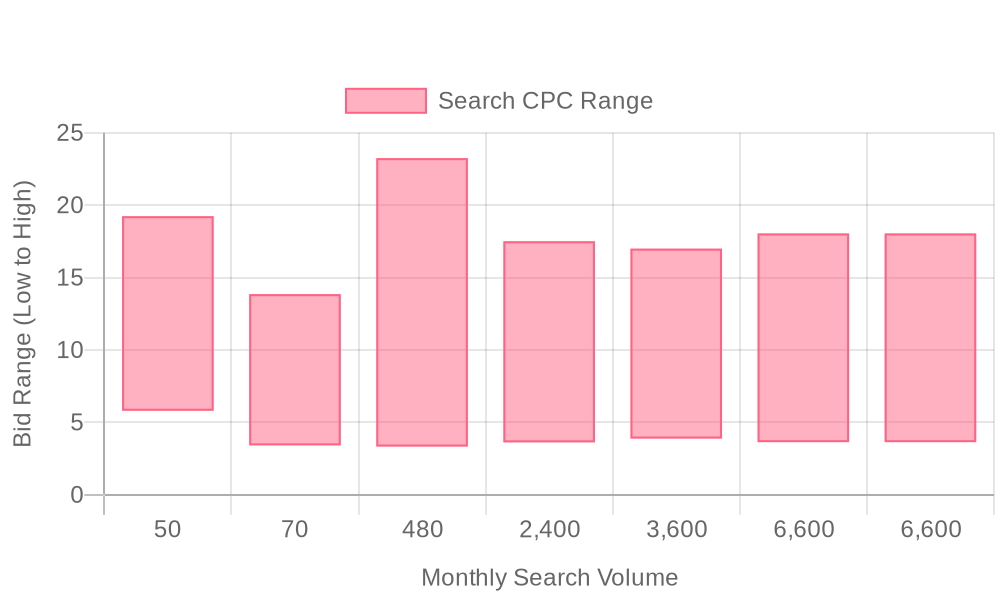
| Industry | Keyword | Monthly Search Volume | Competition Level | Low Bid | High Bid |
| Residential General Contractor | general residential contractors near me | 50 | MEDIUM | 5.81 | 19.24 |
| Residential General Contractor | local residential contractors | 70 | MEDIUM | 3.42 | 13.86 |
| Residential General Contractor | general contractors near me residential | 480 | MEDIUM | 3.34 | 23.25 |
| Residential General Contractor | residential general contractor | 2400 | LOW | 3.63 | 17.51 |
| Residential General Contractor | residential contractor | 3600 | LOW | 3.89 | 17 |
| Residential General Contractor | residential contractors near me | 6600 | MEDIUM | 3.64 | 18.05 |
| Residential General Contractor | residential general contractors near me | 6600 | MEDIUM | 3.64 | 18.05 |
Precision in keyword selection determines whether residential general contractors attract ready-to-buy homeowners or waste budget on low-value clicks. An expertly crafted keyword strategy covers high-volume, low-competition, and hyper-local search terms, ensuring every ad dollar addresses buyers at the right stage and location. Explore more contractor keyword ideas to further refine your targeting approach.
- High Volume Keywords: Using phrases like "contractors near me" ensures visibility among homeowners needing immediate service. These broad-match terms place your ads in front of prospects acting on urgent needs, but without further segmentation, they risk attracting irrelevant queries. When marketers leverage advanced visitor identification and real-time intent analysis, they can move from anonymous traffic to pinpointing in-market individuals, optimizing spend on these valuable searches.
- Low Competition Treasures: Targeting "home renovation contractor" and related long-tail variations allows campaigns to operate in spaces with less bidding pressure. This approach is ideal for driving more qualified leads at lower costs, as these terms often reflect homeowners planning bigger projects or seeking expertise not found with generic contractor searches. By integrating CRM data and automated audience updates, marketers can dynamically allocate budget to the terms and segments converting best, refining targeting as new lead insights emerge.
- Niche Phrases: Incorporating neighborhood names, project types, and service specifics, such as "kitchen remodeler in Lakeview" or "energy-efficient home addition contractor", elevates campaign relevance in competitive metro markets. These granular keywords reach homeowners with clear intent, narrowing the field to local prospects likely to convert. With dynamic audience syncing and advanced conversion tracking, every contact and engagement can be attributed, measured, and optimized, ensuring that marketing efforts remain sharply focused on the highest-value opportunities.
Building campaigns around these prioritized keyword groups ensures residential general contractors reach buyers at every stage, from urgent repairs to major renovations, while maximizing ROI. By tapping into unified data and live intent signals, marketers can adapt their keyword targeting in real time, outpacing local competitors and delivering measurable business growth. To put these strategies into action, get started for free with Sona.
Step-by-Step Campaign Execution Framework
A methodical approach is essential for residential general contractors aiming to unlock consistent, high-quality lead flow through Google Ads. Each campaign phase must balance data-driven targeting with tailored messaging to address the unique decision cycles of homeowners undertaking major renovations. For a deeper dive into marketing analytics and attribution strategies that support predictable growth, visit the Sona blog.
Step 1: Build Targeted Keyword Lists
Effective Google Ads for Residential General Contractor campaigns start with granular keyword segmentation. Grouping keywords by service type, kitchen remodels, home additions, roofing, ensures ads appear only for queries with high purchase intent. For actionable keyword inspiration, explore this list of top-performing Google Ads keywords for contractors. Layering regional modifiers further aligns spend with local demand, focusing impressions on neighborhoods with strong renovation activity or higher home values. Avoid waste by revisiting search queries weekly, removing irrelevant terms, and adding negative keywords. Sona's Identity Resolution reveals which companies and known contacts engage with your campaigns, enabling precise budget allocation to the most promising segments while minimizing wasted impressions.
Step 2: Develop Compelling Ad Copy
Ad copy for residential general contractors must do more than list services, it should address homeowner pain points like project disruption, timeline uncertainty, or trust in a stranger working inside their house. Highlighting warranty coverage, years in business, or local project experience builds confidence and encourages click-through. To improve your messaging, review these tips for writing high-converting Google Ads copy. As audience data grows, marketers can tailor copy to specific personas or project stages, from a homeowner comparing three quotes for a bathroom remodel to one who needs a tree through the roof patched today. Harnessing real-time audience insights lets marketers refine headlines and value propositions continuously, improving conversion rates over time.
Step 3: Design Impactful Landing Pages
Landing pages should seamlessly continue the narrative set by the ad and keyword, addressing user intent without distraction. For residential general contractors, this means prioritizing credibility, displaying licenses, insurance, and customer testimonials above the fold. Learn how to build optimized landing pages with this Google Ads landing page guide. Forms must be concise, with clear calls-to-action like “Request Your Free Quote” or “Book a Site Visit.” Advanced platforms that unify ad and CRM data enable instant personalization of landing content based on visitor source, service interest, or funnel stage. Sona Destinations streamlines this process by syncing high-quality audience data across your CRM, ad platforms, and other GTM tools, ensuring timely follow-up and accurate attribution of every project inquiry.
Step 4: Implement Data-Driven Optimizations
Continuous, data-driven optimization sustains Google Ads ROI for contractors. Real-time dashboards let revenue teams monitor which keywords, ads, and landing pages yield not just clicks but qualified leads and closed projects. Integrate CRM and ad channel data to see exactly which campaigns drive the most valuable pipeline, using this case study on successful Google Ads for roofing businesses as inspiration. Audience lists update dynamically as leads move from inquiry to consultation or contract, enabling timely retargeting and nurturing. Sona Buyer Journeys provides visibility into every touchpoint, web visits, intent signals, and ad interactions, turning performance marketing into a predictable engine for growth.
Tips on Expanding Your Residential Contractor Presence

Strategic growth for residential contractors starts with understanding how to reach the right local homeowners at the right time. Leveraging Google Ads with precise targeting and actionable insights enables contractors to dominate their geographic markets and generate consistent, high-value leads. To see how other home builders are generating leads with Google Ads, explore this Google Ads for home builders guide. For more ideas on optimizing your ad approach, visit our marketing analytics blog.
- Upsell services to segmented audiences through CRM insights: Residential contractors can use CRM data to segment audiences by prior project type, budget range, or renovation timeline. This supports tailored upsell campaigns, offering premium finishes to past bathroom remodel clients, or a maintenance package a year after a roof replacement. Platforms that unify CRM and Google Ads data surface patterns in client behavior, letting contractors launch campaigns highlighting add-on services to the segments most likely to respond. Streamline your upsell targeting with Sona's Audiences tool to build real-time, signal-based segments that sync directly to ad platforms.
- Partner with local associations for referral traffic: Relationships with real estate agents, architects, and design associations produce a steady stream of high-intent referral traffic. When this referral data is captured and integrated into campaign targeting, contractors can retarget visitors who arrive via trusted local sources. Syncing association-driven leads into digital ad audiences ensures every visitor, however they found the business, gets nurtured through tailored follow-up. Learn how Sona's Identity Resolution can help reveal which companies and known contacts are visiting your website, even before they fill out a form.
- Use geo-specific strategies to dominate local market shares effectively and sustainably: Hyper-local targeting in Google Ads empowers contractors to concentrate budgets on neighborhoods with high remodeling activity or upcoming property developments. Real-time intent signals, such as increased permit applications or spikes in search volume for specific renovation services, can guide campaign adjustments to capture in-market leads as demand arises. With dynamic audience updates, contractors can automatically shift focus to ZIP codes where prospects are moving faster through the funnel, maintaining market share while minimizing spend wastage. Discover how to utilize intent signals for pinpointing and prioritizing your most engaged prospects.
- Identify new content topics for your marketing calendar through search data insights, ensuring relevance and timeliness in content: Search trend analysis helps contractors discover emerging homeowner interests, such as eco-friendly retrofits or accessory dwelling units, so their content and offers remain relevant. Effective platforms transform anonymous search data into actionable profiles, allowing marketing teams to plan blog posts, landing pages, and ad creatives that align with what local homeowners are searching for right now. By continually refreshing the content calendar with data-backed topics, contractors improve organic visibility and support paid campaign relevance, further driving qualified traffic and lead engagement. For actionable steps on building your content calendar, visit our playbooks collection.
Effective Google Ads management for residential general contractors hinges on a strategic approach that includes smart keyword targeting, audience segmentation, high-converting ads, and continuous optimization. Integrating these practices across CRM, search, and content channels positions contractors for sustainable growth, ensuring that every marketing dollar is linked to measurable business outcomes. By consistently unifying marketing and sales data, contractors can act on deeper insights, personalize engagement, and build a competitive edge in the crowded local services space. Ready to take the next step? Get started for free with Sona.
Beyond Google Ads: Winning the AI Answers Residential General Contractor Buyers Now Trust
Paid search captures demand at the moment someone types a query. But a fast-growing share of residential general contractor buyers no longer start at Google at all, they ask ChatGPT, Gemini, or Perplexity before they ever run a search, and Google's own AI Overviews increasingly summarize an answer above the traditional results. If your business isn't referenced in those AI answers, you're invisible at the exact moment buyers build their shortlist.
Sona AI Visibility shows where your business shows up across ChatGPT, Gemini, Perplexity, Google AI Overviews, and 10+ engines, and, much like a keyword report, which prompts actually send you buyers, so you can prioritize the ones that convert. Run the two together and you cover the entire buyer path: get cited where buyers research (AI Visibility), then prove which of that demand turns into booked revenue (Marketing Measurement).
Helpful resources
Conclusion
The bigger shift underway is where residential general contractor buyers start their search at all. Paid search still catches homeowners at the moment they type a query, but AI Overviews, ChatGPT, and Gemini increasingly answer the question before a search ever happens. The contractors who show up in both places, in the paid results and in the AI answer, will take share from the ones who only show up in one.
Ready to close that gap? Start for free with Sona to see where your business stands in both the paid and AI-driven buyer journey.
FAQ
What are the best practices for Google Ads as a residential general contractor?
The best practices include setting clear objectives and KPIs, conducting detailed keyword research, crafting high-impact ad copy, designing optimized landing pages, implementing smart bidding and budget management, and utilizing conversion tracking and offline measurement.
How can I optimize my Google Ads for better ROI in contracting?
To optimize Google Ads for better ROI, use precise keyword targeting, segment audiences based on intent signals, create tailored ad groups, and continuously optimize conversion paths by integrating CRM data.
What budget should I allocate for Google Ads as a contractor?
Budget allocation should be flexible and based on real-time performance analytics, using insights from advanced attribution tools to ensure valuable prospects are prioritized and budget pacing captures every profitable opportunity.
Are there specific keywords I should target for Google Ads in the construction industry?
Target high-intent keywords such as 'residential contractor near me' and 'home renovation leads,' along with niche phrases that include neighborhood names or specific project types for precise audience reach.
How do I measure the success of my Google Ads campaigns as a contractor?
Measure success by tracking conversions through robust conversion tracking systems, importing offline conversion data, and integrating ad platform data into analytics for a full-funnel view of ROI.







