


Property tax appeals run on deadlines and documentation: assessment notices, filing windows, evidentiary hearings, and a client who wants to know, before anything else, whether the case is worth pursuing. Google Ads reaches that client at the moment the deadline becomes real, but most firms waste budget on broad terms and vague ad copy that never gets tested against results. This guide lays out how property tax appeal attorneys can build campaigns, keyword lists, and tracking that turn search intent into signed retainers.
How to Generate Property Tax Appeal Attorney Leads with Google Ads

Legal professionals specializing in property tax appeals require a marketing approach focused on precision, urgency, and measurable results. Digital advertising, especially through Google Ads, offers a direct path to connect with business owners and property managers actively seeking tax relief solutions. For a deeper dive into tailored PPC strategies for this niche, explore this guide on PPC advertising for real estate lawyers.
Understanding the nuances of this audience is essential. These clients often operate under tight deadlines and expect rapid, expert guidance; outreach must address their immediate concerns and convey trust from the first interaction. For more tips on tailoring your marketing to various segments, check out the essential guide to account-based marketing.
- Audience Insights: Property tax appeal clients are typically decision-makers in commercial real estate, finance, or property management. They respond to messaging that demonstrates expertise, quick turnaround, and a track record of successful tax reductions. Segmenting your audience by property type, location, and urgency ensures that campaigns speak directly to the right prospects. Leverage Sona's Audiences tool to dynamically segment and sync high-intent prospects for more precise targeting.
- High-Intent Keyword Strategy: Start with a focused list of high-intent keywords such as "property tax appeal attorney," "reduce commercial property tax," or "property tax lawyer near me." Incorporate local modifiers and industry-specific terms to filter out low-quality traffic and zero in on those ready to take action. This level of targeting becomes even more powerful when platforms unify intent signals from website visitors, enabling marketers to identify not just what users search, but which companies are expressing interest.
- Campaign Structure by Intent: Organize campaigns around service categories, such as residential vs. commercial appeals, or by buyer stage, such as "free consultation" or "case evaluation." Tailoring ad groups to these distinctions boosts relevance and Quality Score, making every ad dollar more effective. Real-time audience updates keep prospect lists fresh, ensuring that as leads move from research to hiring, ads adapt to their evolving intent.
- Compelling Ad Copy: Address client pain points in the ad text, highlighting differentiators like success rates, average tax savings, or complimentary case assessments. Use dynamic copy to personalize offers based on location or property type. Alignment with client needs improves response rates and reduces wasted spend. For playbooks on improving ad messaging and personalization, visit the Sona playbooks library.
- Tracking and Attribution: Missed opportunities are common in the legal sector due to fragmented lead tracking. Advanced conversion tracking, tying both online form fills and offline calls or signed retainer agreements back to individual ad campaigns, enables a true measurement of ROI. Integrating CRM and ad platforms allows property tax law firms to sync enriched audience data, meaning every interested party is captured, segmented, and nurtured automatically.
- Continuous Optimization: Leverage real-time analytics to monitor which keywords, ads, and landing pages are driving actual signed cases. By shifting budget toward high-converting segments and suppressing audiences who have already engaged, firms maximize the ROI of their Google Ads investment. This is especially critical in a high-cost, competitive category like legal services, where costs can quickly escalate without rigorous campaign management.
Combining these strategies positions property tax appeal attorneys to increase lead volume, minimize waste, and prove the value of every marketing dollar spent. When data from website visits, CRM, and ad platforms is unified and actionable, law firm digital marketing strategies can scale efficiently, capturing both urgent inquiries and long-term opportunities. Ready to take the next step? Get started for free with Sona.
Why Google Ads Matter for Property Tax Appeal Attorneys Businesses

Property tax appeal attorneys operate in a highly specialized legal market, where clients often require urgent and informed representation to resolve complex tax disputes. Google Ads serves as a direct line to these high-intent prospects, capturing individuals and businesses actively searching for property tax appeal services at a critical decision-making stage. For peer insights and troubleshooting, many attorneys participate in community discussions on Google Ads campaigns for law firms.
Immediate visibility through Google Ads ensures that property owners seeking relief connect with your firm before competitors, bypassing the slow yield of referral-based marketing. This channel excels at intercepting demand when legal consultation is most pressing, leading to faster client acquisition and higher conversion rates than traditional advertising approaches. For additional guidance on optimizing digital demand capture, explore our blog on marketing analytics and demand generation.
Precise targeting is a core advantage for property tax appeal attorneys using Google Ads. Geographic and keyword specificity enables your campaigns to surface only to relevant audiences, those searching for legal support in your jurisdiction or using intent-rich queries. This precision elevates the efficiency of every advertising dollar, reducing wasted spend and elevating lead quality for your intake team with real-time audience segmentation.
Comprehensive analytics and attribution tools allow firms to go far beyond standard reporting. By tracking both anonymous and identified visitors, revenue teams gain deep insights into which campaigns drive engagement and signed cases. Sona's Identity Resolution identifies the companies behind previously anonymous clicks at the company level and translates search intent into actionable sales intelligence for future strategy refinement.
Common Types of Google Ads Campaigns for Property Tax Appeal Attorneys

- Search Campaigns: Search ads are central for property tax appeal attorneys aiming to capture high-intent leads. Prospects searching for terms like "property tax appeal services near me" or "reduce property taxes lawyer" are demonstrating actionable intent. With accurate keyword targeting and advanced audience syncing, firms can ensure their ads reach those most likely to convert. Real-time data on in-market behavior enables dynamic budget allocation, allowing attorneys to prioritize high-value searches and optimize spend for maximum impact.
- Display Campaigns: Display ads expand your firm's visibility by placing brand messaging on legal forums, real estate industry sites, and targeted local publications. This format drives awareness among property owners who may not yet realize they need appeal services. By leveraging visitor identification and intent data, campaigns can specifically reach business owners or commercial real estate managers who fit your ideal client profile, even if they have not visited your website before.
- Video Campaigns: Video ads present an opportunity to engage and educate audiences with content such as successful case studies or step-by-step guides to the property tax appeal process. These campaigns are effective at building trust and highlighting your firm's expertise. By using behavioral insights and audience segmentation, attorneys can ensure video content is delivered to users who have shown interest in property law or have interacted with related legal content.
- Remarketing Campaigns: Remarketing targets previous website visitors who showed interest but did not convert, keeping your services top-of-mind as they continue their research. Using enriched data and advanced segmentation, these campaigns can be tailored to address specific objections or interests based on users' prior behavior. Audience lists automatically update as prospects move through the decision funnel, ensuring ongoing relevance and improved conversion rates.
- Ad Assets: Ad assets add valuable real estate to your ads and provide more direct paths to conversion. Sitelinks, callouts, and call assets can highlight unique service offerings, showcase client testimonials, or connect prospects directly with intake teams. When integrated with CRM data and audience insights, assets can be dynamically tailored for each searcher, increasing both ad relevance and the odds of securing a qualified lead.
For property tax appeal attorneys, leveraging the full spectrum of campaign types, including Performance Max for cross-channel reach, and integrating unified go-to-market data results in smarter targeting, higher ROI, and a streamlined approach to PPC campaign management for law firms.
Keyword Strategy & Sample Target Terms
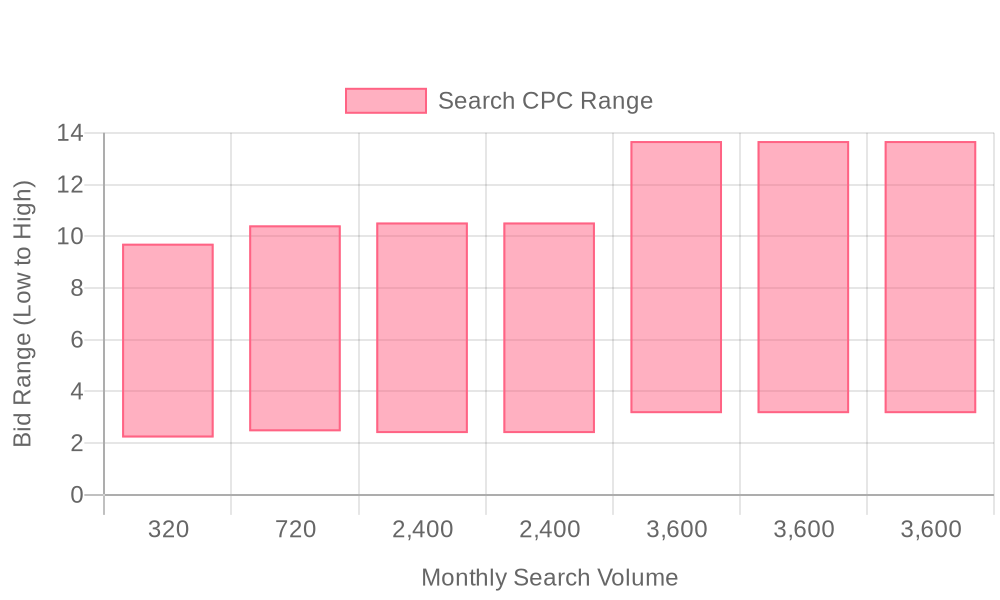
| Industry | Keyword | Monthly Search Volume | Competition Level | Low Bid | High Bid |
| Property Tax Appeal Attorneys | property tax appeal attorney near me | 320 | MEDIUM | 2.22 | 9.71 |
| Property Tax Appeal Attorneys | property tax appeal attorneys | 720 | LOW | 2.46 | 10.42 |
| Property Tax Appeal Attorneys | property tax attorney near me | 2400 | MEDIUM | 2.39 | 10.53 |
| Property Tax Appeal Attorneys | property tax lawyer near me | 2400 | MEDIUM | 2.39 | 10.53 |
| Property Tax Appeal Attorneys | property tax lawyer | 3600 | MEDIUM | 3.16 | 13.68 |
| Property Tax Appeal Attorneys | real estate tax attorney | 3600 | MEDIUM | 3.16 | 13.68 |
| Property Tax Appeal Attorneys | property tax attorney | 3600 | MEDIUM | 3.16 | 13.68 |
Effective keyword selection is the foundation of successful Google Ads campaigns for property tax appeal attorneys. Focusing on specific, high-intent search terms ensures your ads reach business owners and homeowners actively seeking legal guidance for tax reduction and assessment appeals. By targeting relevant keywords, you minimize wasted spend and maximize the likelihood of connecting with motivated prospects ready to engage your services.
- Strategic Value: Incorporate core phrases such as "property tax appeal services," "property tax reduction lawyers," and long-tail queries that signal immediate intent. This approach not only aligns with how real clients search for help but also filters out irrelevant clicks. Negative keywords are essential here, preventing your budget from being consumed by unrelated searches, such as those seeking general real estate advice or tax preparation instead of legal appeals.
- Pro Tip: Prioritize high-volume, high-conversion intent keywords to deliver the strongest ROI. Integrating long-tail variations like "appeal property tax assessment lawyer in [city]" or "commercial property tax dispute attorney" can help capture more qualified, lower-funnel leads. These terms often represent users who are further along in their decision process and more likely to convert.
Modern platforms enable property tax appeal attorneys to analyze real-time query data, dynamically update keyword lists based on in-market behaviors, and synchronize those insights back to their CRM or ad platforms. This level of integration allows for continuous refinement of keyword targets, ensuring campaigns stay ahead of shifting filing deadlines and assessment cycles. Marketing teams can identify and focus on the highest-value accounts, track true campaign ROI, and create outreach timed to when a property owner is actually deciding whether to appeal. For ongoing improvement, layer in negative keywords, adjust match types, and use advanced attribution methods to align every ad dollar with signed cases.
Step-by-Step Campaign Execution Framework

Step 1: Build Targeted Keyword Lists
Effective Google Ads for Property Tax Appeal Attorneys begin with precise keyword targeting. Start by clustering keywords based on service type: group terms such as "property tax appeal attorney," "property tax reduction lawyer," and "property tax reassessment help" to clearly align with each core offering. To deepen your keyword research and understand peer tips or troubleshooting, consider reviewing this community discussion on Google Ads campaigns for law firms. This enables campaigns to capture users who are most likely to convert, reflecting the specific legal needs and search intent of your ideal clients.
Localizing keywords is vital for property tax law, where clients often search for expertise within their own city or region. Incorporate geographic modifiers: append city names, use "near me," and add neighborhood tags to core keywords. As dynamic audience segments are identified and synced, your lists adapt in real time as high-intent leads emerge, maximizing ad relevance and increasing the likelihood of engagement from prospects actively seeking local tax appeal representation.
Most property tax appeal attorneys advertisers stop at keyword volume. The better move is layering in intent and identity signals: connect website-visitor data and CRM records through Sona Marketing Measurement to see which search terms, "commercial reassessment appeal" versus "homeowner property tax reduction," for instance, actually produce signed retainers, not just clicks. A firm filing appeals ahead of a county's assessment deadline can then shift bids toward the terms that historically convert in that window, rather than chasing the highest-volume query.
Step 2: Develop Compelling Ad Copy
Ad copy for property tax appeal attorneys must address urgent legal pain points and establish immediate credibility. Headlines should reference common client concerns: "Lower Your Property Tax Bill," "Appeal Property Assessments Fast," or "Reduce Tax Burden with Legal Help." For specialized tips on crafting PPC ads for legal professionals, review this guide to PPC advertising strategies for real estate lawyers. Integrate trust signals directly into your ads, such as referencing past case wins, years of specialized experience, or direct quotes from satisfied clients.
Use extensions to reinforce your value proposition and drive action, including call buttons and location information. As visitor intent data identifies which prospects have engaged with specific pages or case studies, ad messaging can dynamically update to reflect those interests, ensuring each touchpoint is highly personalized and relevant.
Step 3: Design Effective Landing Pages
Landing pages must directly align with both the keywords and ad copy that drove the click, creating a seamless pathway from search to conversion. For property tax appeal attorneys, each landing page should focus on a single service, such as "commercial property tax appeals", and feature targeted headlines, concise descriptions, and an easy-to-find contact form. For an overview of Google Ads management services tailored to law firms, see this Google Ads services page for lawyers. Integrate FAQs that address common legal questions and showcase client success stories to build credibility and reduce friction for potential clients.
Layer in trust-building elements: feature attorney credentials, display testimonials, and include a clear, compelling call-to-action (CTA). By leveraging visitor identification, marketers can see which segments engage most with specific content and tailor landing page variations accordingly, enhancing conversion rates by delivering the most relevant, persuasive experience to each audience segment.
Step 4: Implement Data-Driven Optimizations
Continuous optimization is central to successful PPC campaign management for law firms. A/B test variations of ad copy, landing page layouts, and CTA placements to identify what resonates best with your audience. For deeper insight into Google Ads costs, strategies, and ROI for law firms, review this article on Google Ads cost and strategy for law firms. Monitor performance using robust conversion tracking: attribute leads across online forms, phone calls, and even offline consultations to measure true ROI.
Unifying web analytics, CRM data, and real-time data activation allows for rapid adaptation. For example, if a particular city or practice area consistently generates high-quality leads, budgets can be shifted in real time to capitalize on that demand. As audience lists evolve and new high-value accounts are identified, automated campaign updates ensure that Google Ads for tax law firms remain relevant, efficient, and focused on delivering measurable business outcomes.
Sona Marketing Measurement closes the gap between clicks and revenue. It captures every ad click with first-party measurement, ties that click through UTM capture and ad-platform APIs to the actual record in your CRM, and reports ROAS by keyword and campaign instead of by last-click form fill. Feeding that revenue signal back into Smart Bidding and Performance Max compounds over time: the algorithms optimize toward booked property tax appeal attorneys revenue, not cheap leads.
Tips on Expanding Your Property Tax Appeal Attorney Presence

Property tax appeal attorneys operate in a complex, high-stakes legal environment that demands both authority and strategic visibility. Establishing a robust digital footprint is essential for attracting qualified leads and converting them into clients.
- Keyword-driven content themes: Leverage keyword data to identify high-impact topics for blogs, guides, and FAQs that address client questions and pain points. This approach not only strengthens organic search visibility but also nurtures trust by showcasing expertise in property tax law. By analyzing search trends and intent signals, attorneys can prioritize content that resonates with prospects actively seeking legal guidance in property tax appeals.
- Partnerships with legal directories: Collaborating with reputable local legal directories enhances online presence and boosts credibility. These partnerships often drive referral traffic from prospects already primed to hire legal counsel, streamlining the pathway to direct consultations. Optimizing listings with precise practice areas, attorney profiles, and client testimonials further increases the likelihood of appearing in high-intent searches for property tax legal services.
- Localized ad targeting: Focusing digital ads on specific regions or municipalities ensures outreach efforts align with areas of highest legal demand. This precision mitigates wasted ad spend and maximizes ROI by connecting attorneys with clients facing local assessment challenges. Platforms that integrate real-time audience data and dynamic audience updates allow marketers to shift budgets toward regions and prospects showing the strongest interest, increasing the efficiency of law firm digital marketing strategies.
- Video campaign strategies: Developing video content to explain the property tax appeal process or highlight successful outcomes builds credibility and educates potential clients. Video ads, when targeted using in-market behavioral signals, reach viewers at critical decision-making stages. Regular updates to audience lists ensure these campaigns engage prospects as they actively seek legal support, making every impression more likely to convert. For additional strategies, visit the Sona blog for actionable marketing insights.
These best practices help property tax appeal attorneys consistently attract, educate, and convert high-value clients while maintaining a competitive edge in the legal services market.
Beyond Google Ads: Winning the AI Answers Property Tax Appeal Attorneys Buyers Now Trust
Paid search captures demand at the moment someone types a query. But a fast-growing share of property tax appeal attorneys buyers no longer start at Google at all, they ask ChatGPT, Gemini, or Perplexity before they ever run a search, and Google's own AI Overviews increasingly summarize an answer above the traditional results. If your business isn't referenced in those AI answers, you're invisible at the exact moment buyers build their shortlist.
Sona AI Visibility shows where your business shows up across ChatGPT, Gemini, Perplexity, Google AI Overviews, and 10+ engines, and, much like a keyword report, which prompts actually send you buyers, so you can prioritize the ones that convert. Run the two together and you cover the entire buyer path: get cited where buyers research (AI Visibility), then prove which of that demand turns into booked revenue (Marketing Measurement).
Helpful resources
Conclusion
The firms that pull ahead in this category are the ones that treat Google Ads as one input into a larger measurement system, tying keyword-level spend to signed retainers rather than to form fills alone, and increasingly, that means showing up in AI-generated answers before a prospect ever opens a search bar.
Take the next step toward elevating your practice by leveraging a platform that unifies your marketing data and provides actionable insights. Start for free to see what it surfaces about your own campaigns.
FAQ
What are best practices for Google Ads in property tax appeal law?
Best practices include targeting high-intent keywords, segmenting audiences by property type and location, crafting compelling ad copy that addresses client pain points, and continuously optimizing campaigns using real-time data.
How can property tax appeal attorneys optimize their Google Ads campaigns?
Attorneys can optimize their campaigns by organizing them around service categories, using high-intent keywords, personalizing ad copy, and leveraging conversion tracking to measure ROI.
How do I track the ROI of my Google Ads for property tax appeal services?
You can track ROI by using advanced conversion tracking that ties online forms and offline calls to individual ad campaigns, integrating CRM data, and syncing audience insights.
How can I target the right audience with Google Ads for my property tax appeal law firm?
Target the right audience by using precise geographic and keyword targeting, segmenting audiences based on property type and urgency, and leveraging real-time audience data.
How can I improve my Quality Score in Google Ads to reduce costs for property tax appeal services?
Improve Quality Score by ensuring ad relevance through tailored ad groups, using compelling ad copy that aligns with client needs, and maintaining a strong alignment between keywords, ads, and landing pages.
What are the legal considerations and compliance requirements for Google Ads in the property tax appeal sector?
While the article does not specify legal considerations, it is important to ensure that all advertising complies with local regulations and accurately represents the services offered.
How do I set up and manage a Google Ads campaign specifically for property tax appeal attorneys?
Set up a campaign by building targeted keyword lists, developing ad copy that addresses client concerns, designing effective landing pages aligned with ad content, and implementing data-driven optimizations.







