


Health and wellness businesses fight for attention in a search results page crowded with competitors, aggregators, and insurance directories. A patient searching "same-day acupuncture" or "pediatric nutritionist near me" is often ready to book, but that intent evaporates if the click doesn't lead somewhere trustworthy fast. Many practices lose these high-value visitors entirely: the click happens, the ad spend registers, but the person never surfaces as a named lead in the CRM.
How to Generate Leads for Health and Wellness Businesses Using Google Ads: A Step-by-Step Guide

Health and wellness businesses accelerate lead generation by implementing a measured, data-informed Google Ads strategy. Precision targeting, strong compliance, and seamless integration between ad campaigns and CRM systems result in higher-quality leads and a more efficient funnel. For foundational insights, explore strategies for personalized Google Ads campaigns tailored to wellness audiences.
- Evaluate your advertising goals: Define clear goals before launching any campaign. Pinpoint target metrics such as lead volume, conversion rate, and cost per lead. These KPIs must align with your unique business objectives, whether that means increasing appointment bookings, growing a mailing list, or launching a new wellness service. By setting these benchmarks upfront, health and wellness teams can accurately forecast ROI and justify their ad spend to stakeholders. For a deeper dive into aligning campaign goals with revenue, see the importance of accurate revenue attribution.
- Keyword and audience targeting techniques: Use advanced keyword research to surface high-intent, low-competition search terms that match your services and location. For health and wellness PPC, combine broad and niche keywords like “IV vitamin therapy near me” with audience segmentation based on demographics, online behavior, and in-market interest. Layering in company-level visitor identification and intent data lets marketers move past generic lookalikes and put budget behind accounts already showing purchasing intent or active engagement with your brand. This keeps spend focused on decision-makers, not passive browsers.
- Create a seamless user journey: Consistency between ads and landing pages is non-negotiable in healthcare advertising. Align messaging, visuals, and calls to action so visitors get a unified experience from click to conversion. Every landing page should be mobile-optimized, fast-loading, and compliant with industry regulations. Capture visitor activity while respecting privacy through dynamic forms and consent-driven tracking. Health and wellness brands that use real-time enrichment can personalize experiences for returning visitors and route hot leads straight into the sales pipeline.
- Optimize for performance: Regular A/B testing of ad creative, calls to action, and landing page layouts uncovers what truly resonates with your audience. Continuous monitoring of campaign metrics, such as click-through rate, cost per acquisition, and lead quality, enables proactive adjustments and rapid scaling of top-performing ads. Automated conversion tracking and attribution solutions illuminate which channels and keywords produce the highest-value leads, giving teams the clarity they need to reallocate budgets and maximize campaign efficiency. Learn how to measure marketing’s influence on the sales pipeline for even sharper optimization.
- Integrate Sona's features: With company-level identification, marketers can pinpoint accounts that are actively engaging or already in the buying cycle, even before a form is filled out. Dynamic audience syncing keeps target lists updated in real time as leads move through the funnel, while CRM integration ensures enriched audiences and high-fit leads are instantly available for Google Ads targeting and campaign optimization. This unified approach helps health and wellness businesses streamline demand generation, cut wasted spend, and convert more efficiently. Ready to transform your pipeline? Get started for free with Sona.
Why Google Ads is Crucial for Health and Wellness Businesses

Adopting Google Ads for health and wellness businesses unlocks distinct advantages in a marketplace where both urgency and trust matter. The ability to reach qualified prospects when they are actively searching for solutions ensures that ad budgets translate into tangible results and measurable growth. For a detailed look at how Google Ads can be tailored to wellness consumers, explore this guide on personalized Google Ads strategies.
- Complex Audience Needs: Health and wellness businesses cater to practitioners, specialists, and patients with nuanced, condition-specific requirements. Capturing this audience takes more than broad targeting; it demands a data-driven approach that reads behavioral signals and professional profiles. By integrating company-level visitor identification, marketers can move beyond anonymous traffic to pinpoint high-potential accounts, enabling more relevant and compliant outreach.
- High Conversion Potential: The health and wellness sector faces an acute need for immediate response, especially when clients are seeking urgent care or solutions. Google Ads accelerates the path from inquiry to appointment or consultation, facilitating real-time engagement that transforms searches into booked sessions or qualified leads. Dynamic audience sync ensures that as leads progress through the funnel, campaigns automatically update to nurture and convert at every stage.
- Geographical Targeting: Many health and wellness providers depend on reaching local or underserved populations, whether that's a single-location clinic or a multi-city practice. Precision geo-targeting in Google Ads, enhanced with real-time intent signals, keeps businesses visible to people searching for care nearby. Layering in offline data and CRM insights lets marketers shift spend toward high-converting regions and cut wasted impressions, getting more from every advertising dollar.
- Data Utilization: Success in digital marketing for health and wellness hinges on continuous optimization. Unifying Google Ads data with CRM and sales platforms provides a closed-loop view of the customer journey. With advanced conversion tracking and enriched attribution, teams can accurately measure the impact of every keyword, creative, and channel, leading to smarter budget decisions and higher ROI in healthcare advertising.
Common Types of Google Ads Campaigns for Health and Wellness Services
Search, Display, Video, and Remarketing each play a distinct role, and Performance Max rounds out the set for health and wellness advertisers who want Google's automation to find qualified patients across Search, Display, YouTube, and Maps from a single campaign. Responsive Search Ads are not a separate campaign type; they're the standard ad format within Search campaigns, blending multiple headlines and descriptions that Google tests in combination.

- Search Campaigns: Search campaigns deliver high-impact results for health and wellness businesses by surfacing your services to individuals actively researching solutions. By targeting intent-driven keywords, you engage audiences at the precise moment they are making healthcare decisions. Leveraging advanced visitor identification, marketers can match anonymous search clicks to real companies, improving lead qualification and enabling more precise follow-up. To further optimize your strategy, explore how to use Google Ads for health-focused personalized advertising for wellness consumers.
- Display and Video Ads: Display and video campaigns extend your brand’s reach across health content platforms, nurturing awareness among potential clients who are not yet ready to engage directly. These visual formats reinforce your presence as prospects consume articles, watch instructional content, or browse wellness forums. When integrated with real-time intent data, campaigns can dynamically increase exposure to accounts demonstrating rising interest, ensuring visibility is maintained long after a user’s initial search.
- Remarketing Strategies: Remarketing is a cornerstone for converting high-interest prospects who previously interacted with your site but did not convert. By tracking user journeys and updating audience lists as leads move through the funnel, you can serve tailored messages that address specific hesitations or promote timely offers. Dynamic audiences automatically adjust as new information is captured, making your outreach continually relevant and improving conversion rates among those with prior engagement.
- Ad Assets: Ad assets (formerly called extensions) play a vital role in overcoming skepticism common in health and wellness marketing. By incorporating practitioner credentials, certifications, and authentic patient reviews directly into ad units, you provide immediate trust signals that reassure potential clients. When these elements are synced from CRM or practice management platforms, updates are reflected in real time, so campaigns always showcase the latest achievements, accreditations, and positive feedback. This elevates your ads above competitors and shortens the path from interest to booked appointment.
Keyword Strategy & Sample Target Terms
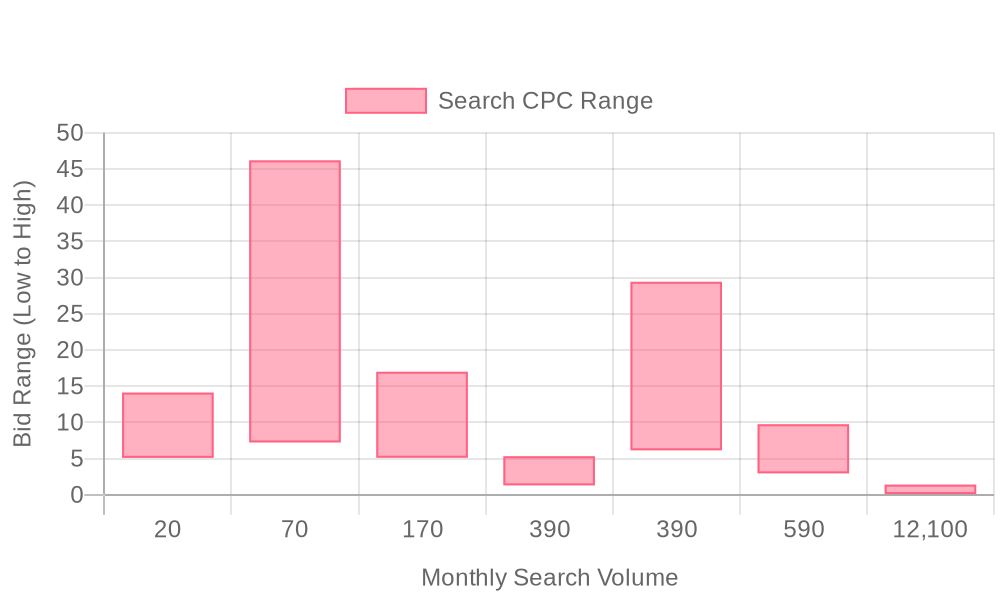
| Industry | Keyword | Monthly Search Volume | Competition Level | Low Bid | High Bid |
| Health and Wellness Businesses | wellness platform companies | 20 | MEDIUM | 5.11 | 14.12 |
| Health and Wellness Businesses | wellness programs for small businesses | 70 | LOW | 7.25 | 46.19 |
| Health and Wellness Businesses | corporate wellbeing programs | 170 | LOW | 5.13 | 17 |
| Health and Wellness Businesses | health and wellness businesses | 390 | LOW | 1.32 | 5.33 |
| Health and Wellness Businesses | wellness programs for companies | 390 | LOW | 6.16 | 29.42 |
| Health and Wellness Businesses | corporate wellness companies | 590 | LOW | 2.98 | 9.75 |
| Health and Wellness Businesses | wellness companies | 12100 | LOW | 0.11 | 1.41 |
Effective keyword strategy is the backbone of high-performing Google Ads for Health and Wellness Businesses. To maximize ROI and deliver measurable results, campaigns must center on search terms that signal strong buyer intent, such as "book a massage therapy session" or "chiropractor appointment near me." These terms reflect a readiness to engage, ensuring ad budgets go toward users most likely to convert into booked appointments or product purchases. By analyzing historical performance and search trends, marketers can surface nuanced variations that separate information-seekers from motivated buyers, making every click more valuable. For further tactics on personalized campaign design, see this guide to Google Ads for health-focused audiences.
Local intent is an essential layer for any healthcare advertising or wellness marketing initiative. Adding geographic modifiers like "near me," city names, or neighborhoods transforms broad queries into actionable opportunities for local clinics, spas, or wellness centers. For example, targeting "wellness center in Austin" drives higher conversion rates than generic alternatives. These local signals allow health and wellness PPC campaigns to capture audiences when they are searching with intent to act, boosting return on ad spend and supporting steady patient acquisition. To explore more location-based strategies and campaign frameworks, visit our marketing playbooks.
Equally important is the strategic deployment of negative keywords to filter out irrelevant searches. Health and wellness advertisers often encounter wasted spend from ambiguous or educational searches, such as "wellness tips for teachers" or "history of chiropractic care." By excluding these terms, campaigns stay focused on high-value segments. Negative keyword management should be dynamic: as new queries emerge, marketers must routinely audit and expand their exclusion lists to reflect evolving intent and campaign goals. For step-by-step guidance on optimizing exclusions, see our blog on negative keyword management.
Marketers committed to digital marketing for health see further gains by integrating advanced keyword insights. Using real-time audience data, marketing teams can pinpoint trending terms, prioritize high-conversion opportunities, and calibrate their bids accordingly. Platforms that enrich keyword analytics with behavioral and firmographic signals enable revenue teams to identify which visitors are progressing through the funnel and which accounts are showing genuine buying signals. This refinement ensures campaigns not only reach the right audience but also align spend with the accounts most likely to generate long-term value.
By connecting keyword intent data to CRM and ad platforms, teams can sync enriched lead lists and update audience segments as contacts move through research, evaluation, and purchase stages. This unified approach prevents wasted impressions, supports compliance in healthcare digital ads, and delivers continuous optimization for wellness brand promotion. The result: every dollar invested in Google Ads for Health and Wellness Businesses is traceable to qualified engagement, with conversion tracking that measures both online actions and offline outcomes.
Health and Wellness-Specific Bidding Strategies
Bidding strategies for health and wellness businesses require a disciplined, data-driven approach that aligns spend with sector benchmarks. Industry standards reveal that conversion rates and cost-per-acquisition fluctuate based on service type, regulatory requirements, and consumer urgency. By referencing Google Ads ROAS benchmarks, revenue teams can calibrate their bids to capture high-intent moments without overspending. For example, chiropractic practices may see higher click-through rates during certain times of day, while supplement brands experience seasonal spikes that justify more aggressive bidding.
Smart Bidding techniques offer a path to efficiency by leveraging automated solutions like Max Conversions, which dynamically adjust bids in real time to capture active prospects as soon as they express intent. This approach is particularly effective in healthcare digital ads, where user journeys can be complex and multi-touch. Automated bidding not only frees up campaign managers from manual adjustments but also ensures that budget is deployed to the most promising opportunities as they emerge. When these workflows are supported by unified marketing and sales data, teams can see exactly which touchpoints drive quality leads and optimize for both lead volume and downstream revenue.
Predictive analytics further elevate bidding strategies for health and wellness PPC by identifying the buying stage of each visitor. With access to real-time intent signals, marketers can prioritize prospects who are closer to booking appointments or requesting consultations. This reduces lead cool-off and shortens the lag between ad click and sales engagement. When predictive insights are integrated with connected CRM and ad platforms, dynamic audiences update instantly as leads move through the funnel. This ensures that high-value prospects consistently see the right message and bid strategy, while lower-intent traffic is managed more conservatively to protect ROI. These capabilities let health and wellness businesses move beyond static campaign structures, unlocking greater performance and more transparent attribution across all digital marketing for health initiatives.
Leveraging Social Proof and Testimonials in Ads

Social proof stands as a cornerstone for effective healthcare advertising and wellness marketing, providing assurance to prospective clients navigating a crowded, and often sensitive, marketplace. When health and wellness businesses incorporate authentic client testimonials and detailed case studies into their Google Ads strategy, skepticism is addressed with evidence, not just promises. Instead of generic endorsements, practitioners can highlight specific outcomes or patient experiences, giving prospects relatable, real-world narratives that drive higher engagement and conversion rates. For further inspiration, review case studies of AdWords campaigns for healthcare to see how social proof and testimonials can be leveraged in successful advertising.
Transparency further amplifies trust in digital marketing for health and wellness businesses. Displaying practitioner credentials alongside real-world success metrics allows businesses to demonstrate accountability and expertise, both essential for compliance and conversion. For example, showcasing board certifications, years of experience, or measurable improvements in patient outcomes can reassure users researching providers for the first time. Combining this transparency with up-to-date visual badges or third-party reviews on landing pages or within ad extensions elevates confidence and signals a commitment to ethical practices, critical in healthcare digital ads. To dive deeper into strategies for building trust and credibility, explore our blog library with best practices for healthcare marketers.
Health and wellness PPC campaigns see substantial gains when enriched with client feedback collected through integrated CRM workflows. With Sona's Destinations, marketers can pull verified testimonials and satisfaction scores from their pipeline and sync these directly into ad copy or audience segments. Ads reflect genuine patient insights, not vague claims, and social proof can update dynamically as new feedback arrives, a fresh five-star review or a practitioner's new certification can be rolled into live campaigns quickly. Marketers also gain granular attribution: by connecting Sona data to Google Ads targeting, they can measure which testimonials or case studies drive the highest lead quality, refining creative and audience strategy for future wellness brand promotion. This closed loop turns social proof into a measurable growth driver rather than a static website afterthought.
Compliance Considerations for Health and Wellness Google Ads

Health and wellness businesses operate in a landscape where digital advertising success depends on strict adherence to regulatory standards. Careful navigation of HIPAA, GDPR, and other data privacy laws is essential for both protecting patient information and maintaining campaign eligibility on Google Ads. To understand upcoming platform requirements, review the summary of health advertising policies that will impact Google Ads and Microsoft Ads in 2025.
Including mandatory health disclaimers within ad content is not only a best practice but also a legal requirement in most jurisdictions. These disclaimers foster trust and transparency, signaling to audiences that your wellness brand values ethical communication and patient safety. For additional insights on crafting compliant messaging and reducing the risk of ad disapproval, explore tips from our healthcare PPC best practices.
To further streamline compliance in digital marketing for health and wellness, a unified platform can automate policy checks, ensure every ad reflects the latest legal requirements, and maintain audit trails for regulatory review. When audience and conversion data are synced across CRM, ad platforms, and compliance modules, teams can confidently run health and wellness PPC campaigns that maximize reach while protecting brand integrity and regulatory standing.
Metrics and Optimization for Campaign Success
Effective health and wellness digital marketing hinges on the ability to precisely track, interpret, and act on both macro and micro conversion events. Macro conversions, such as booked appointments, completed telehealth registrations, or online product purchases, reveal the direct impact of your Google Ads for Health and Wellness Businesses campaigns. Micro conversions, including newsletter signups, resource downloads, and live chat interactions, signal early-stage engagement from high-potential leads. By measuring both types of actions, marketers build a granular understanding of the full customer journey, enabling more nuanced campaign tuning for healthcare advertising and wellness brand promotion initiatives.
Data-driven optimization is essential as the market evolves and regulations shift. Regular analysis of campaign performance metrics, cost-per-lead, click-through rate, conversion rate, and return on ad spend, enables agile adjustments in keyword targeting, ad creative, and bidding strategy. Health and wellness PPC advertisers can identify inefficiencies, uncover new opportunities, and allocate budgets dynamically to high-performing channels or offers. Advanced attribution tracking goes further: by connecting online ad engagement to offline appointment bookings or sales calls, teams gain a holistic view of true ROI for healthcare digital ads, supporting smarter investment decisions.
Integrating a unified analytics platform streamlines performance measurement and campaign optimization for advertising for wellness businesses. With real-time access to company-level identification and intent signals, marketers can distinguish between anonymous traffic and qualified leads, ensuring that high-value accounts are prioritized. Dynamic audience management lets audiences update automatically as leads progress through the funnel, supporting continual retargeting and nurture. Seamless syncing of enriched lead data with Google Ads, CRM platforms, and downstream sales systems ensures accurate attribution and lets revenue teams react instantly to in-market activity. This closed-loop measurement approach helps health and wellness brands maximize impact, maintain Google Ads compliance, and elevate their digital marketing for health outcomes. Ready to improve your campaign measurement? Get started for free with Sona.
Beyond Google Ads: Winning the AI Answers Health and Wellness Businesses Buyers Now Trust
Paid search captures demand at the moment someone types a query. But a fast-growing share of health and wellness businesses buyers no longer start at Google at all, they ask ChatGPT, Gemini, or Perplexity before they ever run a search, and Google's own AI Overviews increasingly summarize an answer above the traditional results. If your business isn't referenced in those AI answers, you're invisible at the exact moment buyers build their shortlist.
Sona AI Visibility shows where your business shows up across ChatGPT, Gemini, Perplexity, Google AI Overviews, and 10+ engines, and, much like a keyword report, which prompts actually send you buyers, so you can prioritize the ones that convert. Run the two together and you cover the entire buyer path: get cited where buyers research (AI Visibility), then prove which of that demand turns into booked revenue (Marketing Measurement).
Helpful resources
Conclusion
The health and wellness businesses that pull ahead won't be the ones spending the most on Google Ads, but the ones that connect every click to a real account, a booked appointment, and a documented outcome. As compliance scrutiny tightens and AI-driven search reshapes how patients find care, that closed-loop discipline, matching ad spend to actual pipeline and revenue, becomes the difference between a campaign that looks busy and one that grows the practice.
See how connecting Google Ads to your CRM and sales data can sharpen attribution and lead quality. Start for free
FAQ
What types of Google Ads are best for health and wellness businesses?
Search campaigns, display and video ads, remarketing strategies, and ad extensions are effective for health and wellness businesses, as they target intent-driven searches, extend brand reach, convert high-interest prospects, and provide immediate trust signals.
How can I create effective Google Ads for my wellness service?
To create effective Google Ads, define clear advertising goals, use advanced keyword and audience targeting, create a seamless user journey, optimize performance through A/B testing, and integrate CRM systems for enriched audience targeting.
What are the compliance requirements for Google Ads in healthcare?
Compliance for healthcare Google Ads involves adhering to regulations like HIPAA and GDPR, including mandatory health disclaimers, automating policy checks, and maintaining audit trails to protect patient information and ensure campaign eligibility.
How much should I budget for Google Ads in the health sector?
Budgeting for Google Ads in the health sector should align with industry standards for conversion rates and cost-per-acquisition, using data-driven bidding strategies and referencing Google Ads ROAS benchmarks to capture high-intent moments efficiently.
What are the common mistakes to avoid in Google Ads for health and wellness?
Common mistakes include not setting clear advertising goals, failing to integrate CRM systems, ignoring compliance requirements, not optimizing for mobile, and neglecting continuous performance monitoring and A/B testing.







