


Pet owners rarely shop for insurance until something goes wrong, a scary vet bill, a new puppy, a breeder's recommendation, and that narrow window is where Google Ads earns its keep. The category is crowded with providers pitching nearly identical coverage, so the winners are the ones who can find a pet owner mid-decision and answer the specific question they're asking, whether that's about breed exclusions, waiting periods, or reimbursement speed. Done well, Google Ads turns that moment of comparison into a measurable pipeline of enrolled policyholders.
How to Generate Pet Insurance Leads with Google Ads: A Step-by-Step Guide

Pet insurance providers need a sharper approach to reach pet owners actively searching for coverage. Google Ads lets teams reach in-market buyers at the moment they're ready to compare or purchase policies; Google Ads for insurance goes deeper on this trend.
A comprehensive strategy blends data-driven audience segmentation, intent-focused keyword targeting, and seamless ad-to-landing page experiences. By integrating advanced campaign management with real-time behavioral insights, revenue teams can deliver relevant messaging, reduce wasted spend, and convert more high-value leads. For more insights on boosting your ad performance, check out our guide on boosting Google Ads ROAS.
Why Does Google Ads Matter for Pet Insurance Providers?

Pet insurance providers operate in a highly competitive landscape where consumer attention is fragmented and policy differentiation is subtle. Google Ads enables these businesses to surface their unique offerings to pet owners at precisely the moment of need, elevating visibility among decision-makers searching for coverage or comparing options.
- High Competition Visibility: Leveraging Google Ads ensures pet insurance companies are present for high-intent search queries, placing tailored plans in front of pet owners who are actively researching or ready to buy. Providers can highlight specialized coverage, such as breed-specific policies or wellness add-ons, exactly when prospects are weighing choices. Google Ads insights provides a deeper look at this trend.
- Immediate Needs Response: Using data-driven advertising, providers can respond to both urgent and preventive pet care moments, such as after-hours emergencies or seasonal wellness reminders. Campaigns can be dynamically adjusted to capitalize on emerging trends, like increased pet adoptions or the launch of new veterinary technologies, ensuring offers meet timely demands.
- Comprehensive Campaign Measurement: Google Ads delivers robust analytics, empowering pet insurance marketers to track every touchpoint from the first ad click to policy enrollment. With real-time visibility into which campaigns and audiences drive actual conversions, teams can optimize spend, adjust creative, and refine targeting for ongoing growth. For more insights on connecting ad data to business outcomes, check out our guide on revenue attribution.
Ready to maximize your Google Ads performance? Get started to uncover actionable insights and drive higher ROI.
Common Types of Google Ads Campaigns for Pet Insurance Providers

- Search Campaigns: Search campaigns capture high-intent prospects searching for immediate pet insurance solutions. Targeted keyword selection ensures your ads appear at the exact moment potential customers are researching coverage options for their pets. By integrating enriched company-level data, marketers can move beyond anonymous clicks and see which businesses show the strongest purchase signals. This focus on real-time intent lets revenue teams prioritize budget for segments most likely to convert, improving both efficiency and lead quality. For a closer look at optimizing ad performance, see Google Ads ROI Tips for practical strategies and examples.
- Display Ads: Display ads maintain your brand’s presence across pet care blogs, forums, and lifestyle sites, reaching audiences even when they are not actively searching. Precise audience building enables you to target pet owners based on browsing habits, device usage, or previous engagement with your site. Dynamic audience updating ensures your display campaigns always reach current prospects, automatically adjusting as leads progress through the sales funnel or as new high-potential accounts are identified. Learn more in Google Ads Guide.
- Video Ads: Video campaigns communicate complex pet insurance benefits through engaging storytelling and visual demonstrations. These ads resonate especially well in educating pet owners about preventive care and exclusive coverage perks. By syncing ad audiences with CRM and behavioral data, marketers can serve tailored video content to prospects who show specific in-market behaviors, increasing relevance and engagement rates.
- Remarketing: Remarketing campaigns keep your brand top-of-mind for pet owners who visited your site but did not convert on their first visit. Strategic retargeting leverages granular segmentation, allowing you to serve personalized offers or reminders based on the visitor’s actions and lifecycle stage. By combining online and offline conversion tracking, marketers gain full attribution visibility, optimizing retargeting spend and measuring true ROI across pet insurance campaigns.
- Assets: Ad assets build trust by showcasing customer testimonials, industry certifications, and key plan benefits directly within your ads. These rich snippets increase click-through rates and help differentiate your offering in a crowded market. Syncing your CRM or customer database keeps reviews and credentials current, reinforcing authority and supporting stronger conversion outcomes in Pet Insurance Marketing.
Where to Find Growth Opportunities?

Targeting specialized keywords in pet insurance marketing allows providers to capture valuable, intent-driven traffic that generic campaigns often miss. By focusing on terms like "exotic pet insurance coverage" or "senior dog accident plans," marketers uncover segments of pet owners actively seeking tailored solutions, which results in higher conversion rates and more efficient spend. Leveraging unified intent data, teams can further refine their keyword lists based on evolving in-market signals, ensuring budget is continuously allocated to audiences most likely to engage and convert. Google Ads strategies provides a deeper look at strategies for maximizing paid search efficiency in this industry.
Competitor weakness analysis helps pet insurance marketers find underserved segments and sharpen their pitch. Studying competitor gaps, such as thin coverage for chronic conditions or clunky mobile quoting, lets a brand position directly against what rivals leave unaddressed. With company-level visitor identification, marketers can see which organizations are engaging with competitive content and adjust messaging and offers while that interest is still live. Sona's Identity Resolution surfaces these high-intent companies in real time for smarter engagement.
Broadened placement strategies expand visibility beyond search engines, putting brands where pet owners actively research and connect. Engaging in specialized pet forums, online directories, and community platforms ensures presence in trusted peer-to-peer spaces, increasing the chance of discovery at critical decision points. Advances in audience sync allow marketing teams to push enriched, segmented lists into these channels, guaranteeing campaigns reach users as their interest intensifies.
Retargeting with educational content builds trust and keeps your brand top-of-mind during the insurance research phase. Offering guides, policy checklists, or interactive tools nurtures leads with practical value, increasing the likelihood of policy purchase when readiness peaks. For more insights on connecting offline and online attribution, check out our guide on revenue attribution. Advanced conversion tracking, including offline and CRM-linked attribution, gives teams full visibility into which assets and retargeting sequences drive both online and phone-based signups, supporting ongoing optimization of pet insurance campaigns.
How to Apply Audience Segmentation for Pet Insurance

Audience segmentation is a powerful lever for pet insurance providers aiming to maximize marketing efficiency and personalize outreach. Precision in segmenting audiences enables companies to connect with distinct pet owner groups, ensuring every message resonates with the recipient’s needs and behaviors.
- Identifying Segments: Differentiating between dog owners, cat owners, and exotic pet enthusiasts is the foundation for relevant engagement. Each group responds to different triggers and cares about different coverage, so mapping these segments with behavioral and firmographic data matters. Company-level visitor identification helps marketers move beyond anonymous website traffic and see which organizations are engaging with their site. Sona's Identity Resolution reveals these high-value visitors and feeds actionable segmentation data.
- Refining Messaging: Customizing advertising messages for each segment increases both relevance and conversion rates. For example, a campaign aimed at dog owners can focus on accident coverage and wellness benefits, while content for cat owners might emphasize chronic illness protection. Real-time intent data further sharpens this messaging, enabling budget shifts toward in-market audiences with a demonstrated propensity to convert on pet insurance offerings. Intent retargeting explores how leveraging first-party signals can refine campaign accuracy and impact.
- Customized Ad Groups: Allocating budgets and developing individual ad groups for each segment drives stronger campaign performance. Dynamic audience solutions ensure that these groups automatically update as leads progress through the funnel or as their behaviors change, keeping targeting fresh and highly relevant. This approach supports higher click-through rates and more efficient CPC for pet insurance, as resources are focused where they’re most likely to generate ROI. Pet care conversion costs provides a deeper look at this trend.
- Ensure Conversion Pathway Alignment: Aligning conversion paths with CRM tracking is critical for seamless sales engagement and attribution. Integrating CRM and ad platforms allows enriched audience data and lead information to flow directly into Google Ads and downstream systems, making follow-up swift and contextually informed. Advanced conversion tracking, including both online and offline attribution, gives revenue teams a holistic view of performance and true ROI, streamlining the journey from initial interest to policy activation.
Ready to drive more high-value conversions from your pet insurance campaigns? Start optimizing your segmentation with Sona onboarding.
Keyword Strategy & Sample Target Terms
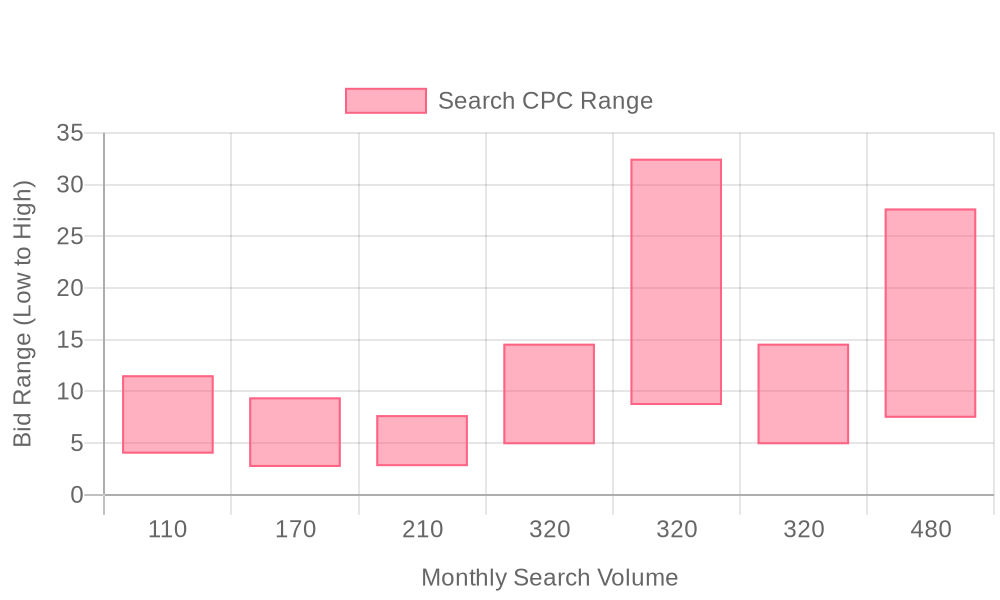
| Industry | Keyword | Monthly Search Volume | Competition Level | Low Bid | High Bid |
| Pet Insurance Providers | trupanion medical insurance | 110 | MEDIUM | 3.99 | 11.56 |
| Pet Insurance Providers | nationwide major medical pet insurance | 170 | MEDIUM | 2.7 | 9.42 |
| Pet Insurance Providers | trupanion deductible | 210 | LOW | 2.78 | 7.71 |
| Pet Insurance Providers | petplan insurance | 320 | LOW | 4.9 | 14.61 |
| Pet Insurance Providers | best pet insurance providers | 320 | LOW | 8.69 | 32.49 |
| Pet Insurance Providers | pet insurance petplan | 320 | LOW | 4.9 | 14.61 |
| Pet Insurance Providers | pet insurance providers | 480 | LOW | 7.46 | 27.68 |
Success in pet insurance marketing depends on intercepting decision-makers at the exact moment they’re searching for solutions. A robust keyword strategy ensures your message appears for high-intent queries and adapts dynamically as market trends shift, letting you capture demand in real time.
- Decision-maker Interception: Targeting phrases such as “best pet insurance for dogs” or “cat insurance with wellness coverage” attracts prospects who are ready to compare and purchase policies. These keywords consistently capture traffic with clear buying intent, keeping budget focused where it converts. Company-level visitor identification lets marketers move beyond generic traffic to see which organizations are showing interest, enabling sharper follow-up. Sona's Identity Resolution reveals which companies are visiting your site so you can act on high-value leads in real time.
- Conversion Tracking: Effective conversion tracking links each keyword to its ultimate outcome, measuring not just clicks but completed inquiries and policy signups. Advanced tracking solutions enable revenue teams to connect online and offline touchpoints, providing a true view of ROI for every pet insurance campaign. For more insights on maximizing ad spend efficiency, check out our guide on Google Ads ROAS.
Dynamic audience updates ensure that as prospects move through the funnel, from initial research to requesting a quote, ad messaging and offers evolve in lockstep with their intent. Real-time intent data lets marketers shift spend towards segments showing the highest likelihood to convert, increasing efficiency and driving higher-value policy enrollments. Varos Benchmarks provides a deeper look at this trend by sharing cost-per-conversion benchmarks for pet care and insurance providers.
Step-by-Step Campaign Execution Framework
Targeted, data-driven campaign execution is essential for pet insurance marketing teams that want to maximize their Google Ads ROI. Modern B2B revenue leaders know that precise targeting and continuous optimization are the foundation of repeatable growth in digital marketing for pet insurance. This framework lays out clear, actionable steps for every stage of campaign setup and performance improvement, tailored to the realities of high-competition pet insurance campaigns.
Step 1: Build Targeted Keyword Lists
Careful keyword selection shapes the efficiency and reach of every PPC for pet insurance initiative. Start by mapping out core terms such as "pet insurance quotes," "dog insurance plans," and "cat insurance for emergencies," then layer in niche phrases addressing unique policy benefits or pet health scenarios. Sophisticated marketers also deploy negative keywords, filtering out non-converting intent like "free pet care tips" or unrelated veterinary advertising queries, which prevents wasted budget and improves audience quality. View industry benchmarks for this approach to help teams calibrate expectations for cost and conversion rates.
Company-level visitor identification lets marketers move past anonymous click data to see which organizations are genuinely engaging with their ads, refining keyword lists around high-intent prospects in real time. Sona's Identity Resolution reveals which organizations are interacting with your campaigns, so you can prioritize keywords accordingly.
The upgrade most pet insurance providers advertisers miss is going beyond raw keyword volume to layer in intent and identity signals. By connecting website-visitor data and CRM records with Sona Marketing Measurement, you can see which specific search terms bring in the accounts and customers that actually convert, and weight your keyword and bidding strategy toward those rather than the terms with the highest search volume alone.
Step 2: Develop High-Impact Ad Copy
Effective Google Ads strategies for pet insurance providers hinge on emotionally resonant ad copy paired with clear value propositions. Address common pain points, such as unexpected vet bills or coverage confusion, while highlighting what sets your policy apart, like fast claims or coverage for chronic conditions. Adding trust signals, such as industry awards or customer satisfaction ratings, increases credibility and can lift click-through rates in crowded SERPs. See campaign examples from pet insurance brands for further insights.
With dynamic audience data, ad messaging can be tailored as leads progress through the funnel, enabling more relevant, personalized engagement that reflects each prospect’s policy research stage.
Step 3: Create Converting Landing Pages
The transition from ad click to landing page must be seamless, reinforcing the promise made in the ad and driving immediate action. Ensure landing pages are intuitive, mobile-optimized, and visually consistent with your brand’s tone. Display authentic testimonials that speak to policyholder experiences, reinforcing benefits like reimbursement speed or broad coverage. For more insights on streamlining forms and maximizing conversions, check out our conversion guide.
Streamlined forms are critical: shorter, intelligently designed fields increase completion rates across devices. Advanced conversion tracking can attribute submissions and offline conversions (such as agent calls or signed policies) back to each campaign, providing a full-picture ROI for pet insurance campaigns.
Step 4: Optimize with Data Insights
Continuous improvement depends on actionable insights, not just surface-level metrics. Monitor primary conversion events, like quote requests and policy enrollments, but also track secondary actions, such as resource downloads or agent chats, to gain a nuanced view of user engagement. Experiment regularly with headline variations, call-to-action placements, and visual elements to pinpoint the combinations that deliver the highest conversion rates.
Syncing offline sales and CRM data lets marketers feed enriched lead and policyholder information back into Google Ads, sharpening retargeting and audience updates as prospects move through the buying journey. This keeps campaign optimization for pet insurance providers grounded in measurable outcomes instead of guesswork. For hands-on help setting this up, book a demo.
Sona Marketing Measurement closes the gap between clicks and revenue. It captures every ad click with first-party measurement, ties that click through UTM capture and ad-platform APIs to the actual record in your CRM, and reports ROAS by keyword and campaign instead of by last-click form fill. Feeding that revenue signal back into Smart Bidding and Performance Max compounds over time: the algorithms optimize toward booked pet insurance revenue, not cheap leads.
Tips on Expanding Your Pet Insurance Presence
Innovative pet insurance brands are moving beyond basic advertising to create campaigns that engage, educate, and convert. By pairing expert targeting with real-time data, marketing teams can deliver high-value experiences that resonate with pet owners and drive lasting loyalty.
- Retarget With Educational Content: Use retargeting not just for reminders, but to share timely educational resources, like pet wellness tips or coverage guides, after a prospect's first site visit. Pairing this with company-level visitor identification helps campaigns address specific knowledge gaps and nurture prospects based on their interests and intent signals. Sona's Identity Resolution helps teams recognize the companies behind anonymous visits, making educational retargeting more precise.
- Cross-sell Related Products: Unlock additional revenue by analyzing customer purchase behavior and serving personalized offers for add-ons or premium coverage. When CRM and ad platforms are tightly synced, new policyholder data can trigger dynamic audience updates, ensuring the right upsell message reaches engaged pet owners at the optimal decision point.
- Collaborate Locally: Building partnerships with veterinary clinics and pet care providers amplifies reach and trust. Joint promotions, such as co-branded content or event sponsorships, leverage local authority while aggregating first-party data, making future campaigns more precise and relevant. Local veterinary marketing provides additional tactics for targeting pet owners in specific regions.
- Regional Ad Localization: Tailor ads to demographic and geographic hotspots where pet ownership is highest. With advanced segmentation, marketers can allocate spend based on real-time audience engagement and conversion likelihood within specific regions, maximizing efficiency and minimizing wasted impressions.
- Guide Content Development: Review emerging search trends to inform content strategy, creating resources that answer tomorrow’s queries before competitors catch up. Analyzing in-market behaviors uncovers shifting intent patterns, guiding both creative development and campaign budgeting toward the most impactful themes. For more on leveraging intent data in campaign planning, check out our guide on intent retargeting.
Smart use of Google Ads for pet insurance providers hinges on integrating these tactics with unified data and actionable insights. This approach ensures every engagement is timely, relevant, and measurable, transforming casual interest into policy conversions and long-term growth.
Beyond Google Ads: Winning the AI Answers Pet Insurance Providers Buyers Now Trust
Paid search captures demand at the moment someone types a query. But a fast-growing share of pet insurance providers buyers no longer start at Google at all, they ask ChatGPT, Gemini, or Perplexity before they ever run a search, and Google's own AI Overviews increasingly summarize an answer above the traditional results. If your business isn't referenced in those AI answers, you're invisible at the exact moment buyers build their shortlist.
Sona AI Visibility shows where your business shows up across ChatGPT, Gemini, Perplexity, Google AI Overviews, and 10+ engines, and, much like a keyword report, which prompts actually send you buyers, so you can prioritize the ones that convert. Run the two together and you cover the entire buyer path: get cited where buyers research (AI Visibility), then prove which of that demand turns into booked revenue (Marketing Measurement).
Helpful resources
Conclusion
Winning in pet insurance Google Ads isn't about outspending competitors, it's about meeting a pet owner at the moment they're comparing coverage and giving them the specific answer they came for. Precise keyword targeting, ad copy that addresses real pain points, and landing pages that don't waste the click are what separate campaigns that scale from ones that plateau.
The providers pulling ahead now are the ones tying ad spend to which clicks actually became policyholders, not just which ads got clicked, and increasingly, the ones showing up when buyers ask an AI assistant for a recommendation before they ever open Google.
FAQ
What are the best practices for Google Ads in the pet insurance industry?
Best practices include using data-driven audience segmentation, intent-focused keyword targeting, and seamless ad-to-landing page experiences to effectively reach and convert high-value leads.
How can I optimize my Google Ads for pet insurance providers?
Optimize by continuously refining keyword lists, creating engaging ad copy, ensuring landing page consistency, and leveraging real-time data insights for better targeting and conversion rates.
What budget should I allocate for Google Ads in pet insurance?
Budget allocation should focus on intent-driven keywords and high-impact ad groups, with adjustments based on real-time engagement and conversion data to maximize ROI.
What keywords should I target for pet insurance Google Ads?
Target keywords like 'pet insurance quotes,' 'dog insurance plans,' and 'cat insurance for emergencies,' and include niche phrases that address specific policy benefits or pet health scenarios.
How do I measure the success of my Google Ads campaigns for pet insurance?
Measure success through comprehensive campaign tracking, linking ad clicks to policy enrollments, using both online and offline data to assess true ROI and refine targeting strategies.







