


Painting contractors live and die by timing: a homeowner with storm damage or a property manager planning a repaint before a tenant turnover searches Google the moment the need arises, and whichever contractor shows up first often wins the job. The trouble is that most of those visitors never fill out a form, so their intent goes untracked and their budget-worthy interest gets missed. Modern tools can identify these anonymous visitors and route them into customer match lists, so ad spend concentrates on decision-makers who are actually ready to hire. Google Ads gives painting contractors a level of targeting precision and measurable return that flyers, truck wraps, and word of mouth can't match, a real bridge between a homeowner's search and a signed estimate. This guide walks through setting up and optimizing Google Ads to turn that intent into booked jobs.
How to Generate Google Ads for Painting Contractors Leads: A Step-by-Step Guide

Adopting a data-driven approach empowers painting contractors to capture and convert high-value leads while maximizing every dollar spent on Google Ads. Leveraging real-time intent signals ensures that marketing budgets align with the most profitable opportunities, reducing wasted spend and driving measurable business outcomes. For actionable tips on maximizing Google Ads ROI in 2025, review this Google Ads guide for painters.
Precise targeting and campaign orchestration are critical for painting businesses seeking consistent pipeline growth. By integrating and unifying audience data across platforms, marketers can dynamically adjust campaigns as prospects engage, nurturing them from first search to booked appointment. For more hands-on strategies, explore our marketing playbooks.
- Data-Driven Strategy: For painting contractors, a data-centric strategy means connecting every campaign decision to clear business objectives, such as increasing booked jobs in specific zip codes or capturing commercial repaint projects. Unifying digital signals with CRM and sales data allows for continuous optimization, ensuring that high-intent prospects are not overlooked. When Sona's Identity Resolution is incorporated, marketers benefit from identifying which companies behind website visits are in-market for services, enabling immediate and relevant follow-up before competitors can engage.
- Keyword and Audience Targeting: Success in PPC for painting contractors hinges on identifying and bidding on keywords that reflect true purchase intent, like “licensed house painters near me” or “commercial painting bids.” Enhanced with behavioral and firmographic data, campaigns can now prioritize audiences showing buying signals, such as repeat visits to pricing pages or engagement with service-specific content. For a comprehensive list of high-performing painting PPC keywords, consider updating your keyword strategy with these insights.
- Landing Page Alignment: High-performing painting advertising campaigns always connect ad creative to tailored landing pages that speak directly to the searcher’s needs. Whether highlighting eco-friendly interior paints or same-week exterior touch-ups, landing pages must reinforce ad promises and offer seamless conversion paths. Integrating conversion tracking from ad click to booked project, including offline actions, gives marketers a true picture of ROI and highlights where customer journeys can be streamlined for better results.
- Cross-Channel Integration: To prevent fragmented prospect journeys, leading painting businesses coordinate messaging across Google Ads, email, social, and even offline channels. By syncing audience segments and leads across systems, marketers maintain consistent follow-up regardless of where a prospect first engages. This holistic approach accelerates painting business growth strategies by ensuring every touchpoint builds on the last, moving high-value prospects efficiently from awareness to conversion.
Why Does Google Ads Matter for Painting Contractors?

Painting contractors operate in a highly competitive market where timing and relevance directly impact revenue. The ability to connect with homeowners or property managers at the exact moment they are searching for painting services drives a measurable increase in both qualified leads and closed projects. For a deeper dive into digital marketing tactics tailored to painting contractors, review strategies for maximizing leads with Google Ads in 2025.
- Audience Precision: Google Ads enables painting contractors to move beyond generic outreach by connecting with homeowners searching for specific painting services in their local area. By leveraging industry-specific keywords, such as “exterior house painting near me” or “commercial building repainting,” ads appear only when potential clients are actively seeking service. When integrated with visitor identification tools, marketers can pinpoint not just anonymous traffic but the actual companies or residents showing interest, allowing for tailored follow-up and higher conversion rates.
- On-Demand Results: The painting industry often faces urgent requests, such as damage repairs after storms or last-minute commercial updates. Google Ads delivers immediate visibility in these high-pressure scenarios, ensuring that the contractor’s message appears at the right moment. Marketers can use real-time intent signals to dynamically shift budget toward high-converting accounts, maximizing the return on every advertising dollar and capturing business that might otherwise go to a more visible competitor.
- Market Expansion: For growth-oriented painting contractors, Google Ads offers a reliable pathway to test new neighborhoods, cities, or service lines. Granular geographic targeting and performance insights reveal where demand is strongest, so teams can confidently expand their service footprint. With dynamic audience building, contractors can continuously update their target list as leads move through the funnel, ensuring resources are always focused on the most promising opportunities.
- Integrated Analytics: Success in painting advertising relies on understanding which interactions drive real business outcomes. Google Ads provides full-funnel tracking from initial click to client acquisition, helping contractors see which keywords, ads, and landing pages generate the best results. By syncing enriched lead and audience data into platforms like Google Ads, HubSpot, or Salesforce, marketers achieve a single source of truth for online and offline conversions, optimizing spend and refining strategy for maximum impact.
Ready to elevate your painting business’s digital marketing? Get started for free with Sona.
Common Types of Google Ads Campaigns for Painting Contractors
- Search Campaigns: Search campaigns are the backbone of online marketing for painters, capturing demand by targeting high-intent keywords such as "painting services near me" or "commercial painting contractors." By leveraging firmographic data, these campaigns allow painting businesses to adjust messaging based on company size, location, or industry segment, ensuring every click brings higher relevance and stronger engagement. When advanced visitor identification is layered into the process, marketers can directly attribute inbound inquiries to specific organizations, enabling hyper-personalized follow-up and faster sales cycles.

Where to Find Growth Opportunities?

Painting contractors aiming for measurable business growth must leverage advanced digital marketing strategies to uncover new opportunities. Growth now relies on identifying untapped market segments, engaging high-intent prospects, and converting industry insights into actionable campaigns. For actionable ideas on identifying and reaching these segments, explore our marketing strategy playbooks.
- Vertical Keyword Strategy: Focusing on niche painting services, such as cabinet refinishing, eco-friendly coatings, or commercial exterior projects, allows contractors to build specialized content and Google Ads campaigns targeting long-tail keywords. This approach attracts specific customer segments who are searching for exact solutions, resulting in higher conversion rates and improved ad spend efficiency. Using campaign performance data, marketing leaders can quickly identify which verticals are driving the best leads and shift budget to high-performing segments.
- Competitor Analysis: A systematic review of competitor tactics, using platforms like SEMrush, enables painting contractors to spot under-serviced markets and keyword gaps. This intelligence reveals where competitors are failing to reach or retain customers, opening a path to gain share in overlooked neighborhoods or specialized services. Integrating unified marketing data, teams can monitor shifts in competitor bidding, adapt strategies in real time, and allocate resources to the most promising opportunities. For a deep dive on optimizing Google Ads for painters in 2024, review this Google Ads strategies guide.
- Content Retargeting: Delivering valuable industry-focused content, such as case studies, paint selection guides, or maintenance checklists, helps re-engage visitors who have shown prior interest but have not yet converted. By tracking user behavior and mapping engagement signals, contractors can retarget these potential clients with personalized ad messaging across web and social channels. Dynamic audience tools update segments automatically as leads move through the funnel, ensuring that retargeting efforts address the right people at the right time. This data-driven approach results in higher engagement, improved conversion rates for painting ads, and more efficient online marketing for painters.
When these strategies are unified within a robust marketing technology stack, contractors can identify anonymous website visitors and measure true return on investment through online and offline attribution. This empowers revenue teams to optimize painting business growth strategies, ensuring every marketing dollar is directed where it drives the most value.
How to Apply Audience Segmentation for Painting Contractors

Audience segmentation for painting contractors is foundational to maximizing advertising efficiency and return on investment. By isolating distinct customer profiles, contractors can deliver more relevant messaging and prioritize budget toward the segments most likely to convert. For further insights on building actionable segments, explore dynamic audience management to reach the right prospects at the right time.
- Define Segments: The first step is separating residential from commercial clients. Each group has unique purchase drivers: homeowners prioritize aesthetics and trust, while business owners seek durability and minimal disruption. Creating bespoke campaigns for each ensures messaging matches their motivations, driving higher engagement. Residential ads can focus on home transformation or seasonal specials, while commercial campaigns emphasize project management expertise and compliance with building standards. To refine your campaign approach, review this overview of effective Google Ads strategies for painting contractors in 2024.
- Overlay Intent Signals: Segmentation deepens in value when contractors overlay intent signals, such as differentiating between prospects seeking interior versus exterior painting. Homeowners searching "interior wall painting" have different needs and urgency than those researching "exterior house painters." By tailoring ads and landing pages to these intent signals, contractors avoid generic messaging and increase the likelihood of click-throughs and conversions. Leveraging real-time behavioral data, teams can further refine segments, shifting spend toward those actively displaying high purchase intent, ensuring resources are allocated where opportunity is greatest.
- Create Ad Groups by Segment: Structuring ad groups around these defined segments enables highly specific ad copy, offers, and calls to action. For example, an ad group targeting property managers might highlight volume discounts or long-term contracts, while a group aimed at luxury homeowners could focus on premium finishes and design consultations. This approach prevents wasted budget on irrelevant clicks and maximizes the impact of every impression. With dynamic audience management, segments can update automatically as leads move through the funnel, allowing ongoing personalization and improved conversion rates over time. Integrating enriched audience data into CRM and advertising platforms ensures that both sales and marketing teams act on the most current insights, aligning outreach across every touchpoint and driving measurable business growth.
This is also where measurement changes the economics. With Sona Marketing Measurement you can identify the companies and buyers behind your ad clicks, not just anonymous sessions, and segment audiences by who actually becomes a customer. That lets you build bid adjustments and audience signals around the segments that convert and de-prioritize the ones that don't, so you feed Google's algorithms "this click became a paying painting contractors customer" instead of just "someone filled out a form."
Keyword Strategy & Sample Target Terms
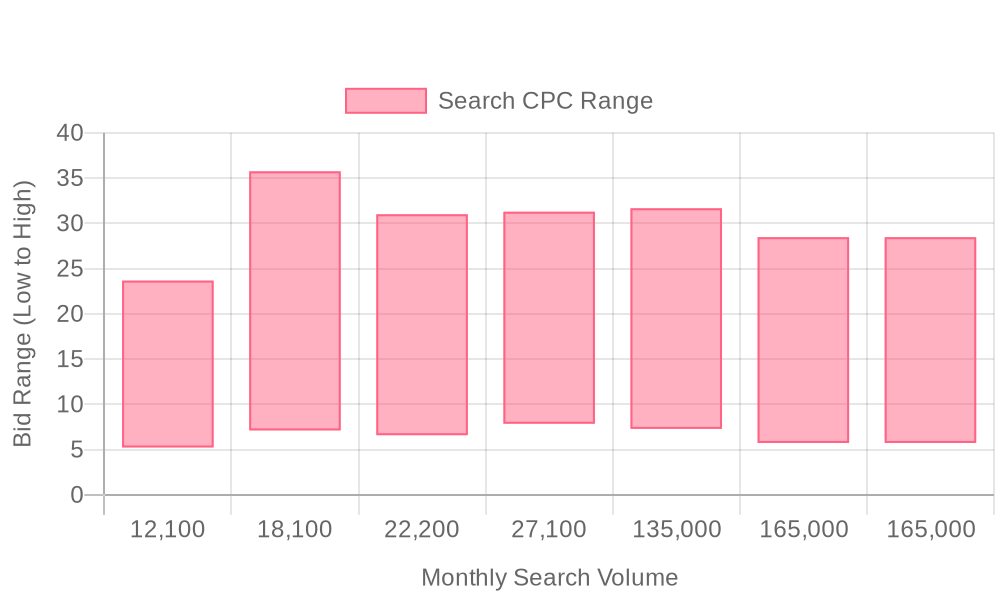
| Industry | Keyword | Monthly Search Volume | Competition Level | Low Bid | High Bid |
| Painting Contractors | cabinet painters near me | 12100 | MEDIUM | 5.24 | 23.67 |
| Painting Contractors | exterior painters near me | 18100 | LOW | 7.12 | 35.74 |
| Painting Contractors | interior painters near me | 22200 | LOW | 6.59 | 31 |
| Painting Contractors | painting contractors | 27100 | LOW | 7.86 | 31.28 |
| Painting Contractors | painting companies near me | 135000 | LOW | 7.29 | 31.66 |
| Painting Contractors | painters near me | 165000 | MEDIUM | 5.74 | 28.47 |
| Painting Contractors | house painters near me | 165000 | MEDIUM | 5.74 | 28.47 |
A robust keyword strategy defines the foundation for profitable Google Ads campaigns in the painting industry. Effective keyword planning ensures every ad dollar is focused on attracting high-intent leads actively searching for painting contractors, driving faster conversion cycles and measurable revenue impact. For practical guidance on selecting high-converting keywords, review this keyword list for painting contractors. Marketers can further expand their approach with insights from the Sona blog on using intent data.
- Identify Common Search Queries: Start by analyzing frequently searched phrases such as "home painters near me," "commercial painting services," or "interior painting company." These broad terms capture a large segment of your potential audience, especially those ready to engage with a painting contractor in their area. Marketers benefit from unifying search query data with CRM intelligence, allowing precise targeting of individuals and businesses exhibiting in-market intent.
- Focus on Long-Tail Keywords: Move beyond generic phrases to incorporate specific, solution-oriented queries like "eco-friendly cabinet painters in Seattle," "same-day exterior house painting," or "licensed commercial painters for hospitals." Long-tail keywords attract prospects with urgent needs or specialized requirements, significantly increasing conversion rates and lowering cost per acquisition. Revenue teams can leverage real-time behavioral signals to identify trending long-tail terms, dynamically reallocating budget toward those producing the highest quality leads.
- Use Negative Keywords: Optimize spend by filtering out irrelevant traffic, such as searchers looking for "DIY painting tips," "artist supplies," or "painting jobs hiring." Building a well-maintained negative keyword list prevents wasted clicks, improves ad relevance, and boosts conversion rates for painting ads. Integrating negative keyword management with advanced visitor identification tools allows marketers to refine audience criteria, ensuring only qualified prospects are engaged and nurtured.
Modern B2B revenue teams seeking to elevate their online marketing for painters need to treat keyword strategies as living assets. As leads move through the funnel, dynamic audience management solutions automatically update targeting parameters, syncing enriched contact and company data back into Google Ads and connected CRMs. This approach maximizes every ad impression, delivering personalized engagement to high-value prospects and continuously enhancing ROI for PPC campaigns in the painting sector.
Step-by-Step Campaign Execution Framework
A methodical, data-driven approach to Google Ads for painting contractors unlocks consistent, high-quality leads and drives efficient allocation of every marketing dollar. By executing each step with precision and leveraging the latest technology for audience insight and campaign refinement, painting businesses can elevate their online marketing for painters from ad hoc to a scalable, measurable revenue engine.
Step 1: Build Targeted Keyword Lists
Targeted keyword selection is foundational for painting contractors aiming to reach homeowners and businesses searching for their specific services. Effective lists combine location-based phrases like "Scottsdale exterior painter" with service-specific modifiers such as "commercial epoxy floor coating" or "cabinet refinishing estimate." This approach narrows the audience to those displaying strong buying signals, which improves conversion rates for painting ads and reduces wasted spend. Keyword expansion should be informed not only by standard search volume tools but also by analyzing high-converting keywords for painting contractors, allowing marketers to identify which keywords drive the highest-quality traffic. With unified data and intent monitoring, you can dynamically add or pause terms as your painting business targets shift, preventing stagnation and capitalizing on seasonality or emerging demand trends.
The upgrade most painting contractors advertisers miss is going beyond raw keyword volume to layer in intent and identity signals. By connecting website-visitor data and CRM records with Sona Marketing Measurement, you can see which specific search terms bring in the accounts and customers that actually convert, and weight your keyword and bidding strategy toward those rather than the terms with the highest search volume alone.
Step 2: Develop Compelling Ad Copy
Compelling ad copy is the linchpin for turning search impressions into engaged clicks and qualified leads. For painting advertising, messaging must directly address pain points such as project timelines, quality guarantees, and trust, think "Licensed and Insured • Free Next-Day Quotes" or "Locally Trusted Since 2008." Including references to real customer satisfaction, Google reviews, or professional affiliations fosters credibility. By syncing CRM and enriched customer data with ad platforms, marketers can personalize messaging for different audience segments: for instance, tailoring ads for high-value commercial accounts versus first-time residential clients. Dynamic audience updates ensure ad content always reflects the lead’s current journey stage, boosting relevance and response rates.
Step 3: Design Effective Landing Pages
Landing pages serve as the conversion gateway for PPC for painting contractors. Every landing page should align tightly with the ad copy and keyword, reinforcing the offer and eliminating distractions that could lead prospects away. Essential elements include job-specific photo galleries, concise service descriptions, and single-step forms that encourage immediate action. Mobile optimization is mandatory given the high percentage of searches originating from mobile devices. Best practices for painter landing pages help increase conversion rates by ensuring the design and messaging resonate with prospects. Advanced attribution solutions make it possible to identify anonymous website visitors, attribute them to specific campaigns, and link online form fills or calls to offline closed deals, enabling continuous improvement.
Step 4: Implement Data-Driven Optimizations
Continuous, data-driven optimization ensures every dollar in your Google Ads budget for painters delivers maximum return. Performance data, ranging from click-through rates to lead quality and downstream revenue, enables swift identification of what’s working and what’s not. Automated systems can shift budget allocation toward high-converting service lines, pause underperforming keywords, and adjust bids for peak hours or top-performing geographies. Seamless integration with ad platforms and CRM or sales tools unlocks closed-loop attribution, allowing both online and offline interactions to be mapped back to their original ad source. Marketers gain the ability to track the entire funnel, reallocating spend in real time and refining target audiences as prospects move through the buying journey. For a deeper dive into optimizing campaign performance, review this 2024 Google Ads strategies guide for painting contractors.
Sona Marketing Measurement closes the gap between clicks and revenue. It captures every ad click with first-party measurement, then ties that click through UTM capture and ad-platform APIs to the actual record in your CRM, and reports ROAS by keyword and campaign instead of by last-click form fill. Feeding that revenue signal back into Smart Bidding and Performance Max compounds over time: the algorithms optimize toward booked painting contractors revenue, not cheap leads.
Tips on Expanding Your Google Ads Presence for Painting Contractors
Painting contractors seeking consistent lead generation and sustainable growth benefit from a strategic expansion of their Google Ads efforts. By integrating educational content, local partnerships, and search-driven analytics, contractors can maximize both reach and engagement while driving higher-quality conversions. For further ideas on optimizing campaigns, see this overview of effective Google Ads strategies for painting contractors.
- Cross-Promote Content: Educational assets, such as how-to guides, case studies, and project walkthroughs, play a vital role in nurturing prospects throughout their decision journey. Sharing these resources across Google Ads assets, remarketing lists, and social touchpoints keeps your brand top-of-mind and positions your team as industry experts. As prospects interact with these assets, advanced campaign setups can identify high-intent visitors and move them into tailored nurture sequences, increasing the likelihood of conversion at each stage.
- Local & Partnerships: Building credibility within your local market is essential for painting contractors. Partner with local suppliers, real estate agents, and homeowner associations to amplify brand visibility and establish trust. These alliances create authentic opportunities for referral traffic and joint promotional efforts, which can be reinforced through geo-targeted Google Ads campaigns. By leveraging unified visitor and account data, contractors can prioritize ad spend for neighborhoods and businesses most likely to engage, ensuring that partnerships translate into measurable pipeline growth.
- Analytics-Driven Content: Successful painting advertising relies on understanding and addressing real client needs uncovered through search data and campaign analytics. Regularly review keyword trends, audience insights, and engagement metrics to inform new ad copy and landing page content. When connected to a unified data platform, contractors can quickly identify which topics drive form fills, calls, or bookings, and adjust their content strategy to focus on the most lucrative segments. This feedback loop ensures your Google Ads for Painting Contractors campaigns remain relevant, efficient, and aligned with evolving market demand.
Final Thoughts
The success of Google Ads for painting contractors relies on disciplined keyword strategies, highly refined audience segmentation, and a commitment to continuous optimization. Revenue teams that struggle to connect ad spend with downstream revenue can now leverage unified data platforms to clearly attribute conversions, providing a much-needed bridge between digital marketing and actual business outcomes. For a deeper dive into optimizing ad strategies, explore this guide to Google Ads for painters in 2024, or review our marketing attribution blog for actionable insights.
Modern tools empower painting businesses to seamlessly integrate Google Ads into a broader marketing and sales strategy, syncing enriched audience lists directly with platforms like Google Ads, HubSpot, and Salesforce. Solutions like Sona’s Audiences enable dynamic, intent-driven segmentation for hyper-personalized outreach. This level of integration ensures that high-intent leads, identified through real-time web behavior, receive tailored messaging and are dynamically moved between audience segments as they progress through the sales funnel.
By connecting anonymous website visits to actual companies and individuals, marketers can prioritize outreach to in-market accounts actively researching painting services using Sona's Identity Resolution. This data-driven approach enables rapid budget adjustments to capitalize on seasonal demand or high-converting geographies, maximizing lead generation while minimizing wasted spend. For painting contractors aiming to outperform in a crowded market, adopting these advanced methodologies positions their ad campaigns to deliver measurable ROI and sustained, scalable growth.
Beyond Google Ads: Winning the AI Answers Painting Contractors Buyers Now Trust
Paid search captures demand at the moment someone types a query. But a fast-growing share of painting contractors buyers no longer start at Google at all, they ask ChatGPT, Gemini, or Perplexity before they ever run a search, and Google's own AI Overviews increasingly summarize an answer above the traditional results. If your business isn't referenced in those AI answers, you're invisible at the exact moment buyers build their shortlist.
Sona AI Visibility shows where your business shows up across ChatGPT, Gemini, Perplexity, Google AI Overviews, and 10+ engines, and, much like a keyword report, which prompts actually send you buyers, so you can prioritize the ones that convert. Run the two together and you cover the entire buyer path: get cited where buyers research (AI Visibility), then prove which of that demand turns into booked revenue (Marketing Measurement).
Helpful resources
Conclusion
Painting contractors who treat Google Ads as a static setup, picking keywords once and letting campaigns run, will keep losing jobs to competitors who adjust bids around storm season, commercial bid cycles, and neighborhood-level demand shifts. The contractors pulling ahead are the ones feeding closed-won data back into their campaigns, so Google's bidding algorithms learn to chase booked revenue instead of cheap form fills. That shift, from counting leads to counting paying customers, is what separates a Google Ads account that spends money from one that grows the business.
To truly harness the potential of these strategies, consider integrating them with a comprehensive platform that unifies your marketing data and drives actionable insights. Start for free with Sona.
FAQ
What are the best practices for using Google Ads as a painting contractor?
The best practices include precision targeting, aligning ad creative with audience targeting, optimizing landing pages for conversion, and integrating efforts across channels to create a consistent experience for prospects.
How much should I budget for Google Ads in my painting business?
While the article does not specify an exact budget, it emphasizes the importance of optimizing ad spend through data-driven strategies and focusing on high-converting segments to ensure every marketing dollar is effectively used.
What types of ads work best for painting contractors?
Painting contractors benefit from search campaigns targeting high-intent keywords, display campaigns for brand visibility, video campaigns for showcasing expertise, and remarketing campaigns to re-engage interested prospects.
How can I improve my ROI with Google Ads for painting services?
Improving ROI involves using data-driven strategies to target high-intent customers, aligning ads with effective landing pages, leveraging audience segmentation, and continuously optimizing campaigns based on performance data.
What are Google Local Service Ads and how can they benefit my painting business?
While the article does not specifically mention Google Local Service Ads, it highlights the importance of using Google Ads to precisely target high-intent customers and improve lead quality and revenue for painting businesses.







