


Naval stores marketing runs on two clocks at once: the slow rhythm of procurement cycles and the sudden urgency of a supply disruption. Online channels build the awareness that gets a supplier onto a shortlist, social posts, email nurture, organic search, while trade shows, direct mail, and industry publications do the slower work of building trust with buyers who move in person and by relationship. Google Ads sits in the middle, catching a procurement head or supply chain lead at the exact moment they search for a coating, a rope supplier, or an emergency logistics fix. For naval stores, that means intercepting decision-makers at the moment of need, targeting with industry-specific terms competitors often ignore, and tracing spend through to closed contracts rather than clicks.
The common failure mode is simple: high-value prospects visit, don't convert on the first pass, and disappear untracked. Identifying those anonymous visitors and routing them into targeted campaigns turns a missed opportunity into a working pipeline.
How to Generate Naval Stores Leads with Google Ads: A Step-by-Step Guide
Naval stores businesses targeting B2B buyers need a methodology that sharpens every stage of digital acquisition. A multi-channel, data-driven approach ensures that marketing spend directly supports high-value opportunities instead of dissipating across low-yield segments. To deepen your understanding of how Google Ads auctions impact your strategy and budget, review how the Google Ads auction works.
By matching targeted paid search campaigns with Sona’s Audiences tool, you can accelerate pipeline velocity and surface leads ready for meaningful engagement. This guide provides a tactical framework to help revenue teams unify paid search, intent data, and CRM insights for maximum ROI in naval stores marketing. For further insights on orchestrating effective acquisition campaigns, explore our latest marketing blog content.
- Data-Driven Approach: CRM account enrichment paired with Sona's Intent Signals surfaces which accounts are researching marine coatings, mooring hardware, or emergency logistics support, so effort isn't wasted on browsers with no purchasing role. Marketers who combine first- and third-party data can segment by firmographic fit, buying stage, and engagement history. Sona's Identity Resolution reveals not just who visits your site, but which companies are actively evaluating naval stores solutions, enabling immediate outreach and tailored ad sequencing.
- Targeting Strategies: Define precise technical keywords and audience segments suitable for the naval stores industry to capture decision-makers effectively. Strategic use of Google Ads targeting options such as custom intent audiences, company size, and job function narrows focus to buyers with purchasing authority. Automated syncing of enriched CRM data with ad platforms ensures audiences stay fresh as prospects move through the funnel, supporting agile retargeting and personalized messaging at scale.
- Creative Alignment: Ensure consistent messaging and visual alignment with landing pages for higher conversion rates, addressing potential message disconnects that lower engagement. Creative assets should mirror the technical language, compliance requirements, and value propositions that matter most to naval stores buyers. Dynamic creative testing, powered by segmented audience insights, enables high-impact messaging and rapid iteration to drive up conversion rates from paid campaigns.
- Performance Optimization: Use predictive buying stages and auto-updating CRM audiences to refine ad performance, enabling timely, relevant ad exposures that accelerate leads into your sales pipeline. Performance monitoring platforms allow for granular attribution across online and offline touchpoints, giving clarity on which ads and keywords are driving qualified pipeline. Budget can be shifted in real time to prioritize campaigns that show rising intent or engagement, ensuring optimal use of spend.
- Integration Methods: Syncing audiences to digital marketing platforms for holistic impact, ensuring seamless transition across campaign touchpoints. When enriched CRM audiences are pushed directly into Google Ads and connected platforms, marketers achieve a unified view of the buying journey. This facilitates retargeting strategies and nurtures prospects from initial research through to conversion, reinforcing brand presence and driving higher lead-to-close rates.
Applied rigorously, these data-driven Google Ads strategies let B2B revenue teams generate, qualify, and convert high-value naval stores leads in a market where most competitors are still bidding on generic terms. If you're ready to put these strategies into action, get started for free with Sona and unify your paid search, audience targeting, and CRM data today.
Why does Google Ads matter for Naval Stores?

Naval stores face a uniquely complex buying environment, where specialized procurement cycles and high-value contracts demand precision in outreach. Google Ads provides a direct line to decision-makers, so marketing budgets aren't wasted on broad, unqualified audiences. For marketers seeking to turn anonymous web traffic into actionable leads, Sona's Identity Resolution identifies the companies behind that traffic so sales can prioritize outreach based on verified interest.
- Complex, Specialized Audience: Procurement heads and supply chain leaders in maritime industries often conduct highly specific searches when evaluating suppliers. Google Ads targeting ensures these professionals see your solutions precisely when intent is highest, mitigating the risk of missing qualified prospects. Sona's Identity Resolution converts anonymous web traffic into named companies, allowing sales teams to prioritize outreach based on verified interest.
- Higher Margin Services: Bulk supply contracts and logistics projects require a tailored approach to advertising. Segmenting audiences by buying signals within Google Ads for naval stores increases the likelihood of acquiring larger, more profitable deals. Dynamic audience management ensures that as leads engage with your content or website, they are automatically routed into relevant campaigns, keeping messaging aligned with their position in the purchase cycle.
- Faster Demand Response: Disruptions in the maritime supply chain or urgent procurement needs necessitate agile marketing tactics. Google Ads enables immediate campaign deployment, capturing demand at exactly the right moment. When paired with real-time intent monitoring, budget can be shifted to high-converting accounts during critical periods, eliminating the lag that often leads to lost opportunities.
- Visibility in Emerging Markets: Growth in new geographies or expanding into underserved regions hinges on accurate location targeting in Google Ads. Advertisers can deploy campaigns that reflect local market nuances and purchasing behaviors, increasing relevance and response rates. By syncing enriched audience data from CRM and offline sources, campaigns remain accurate and scalable across multiple territories, strengthening market penetration strategies.
- Integrated Data Analysis: Measurement from ad click to offline conversion is essential in assessing true campaign value, especially when deals are closed outside digital channels. Advanced conversion tracking connects Google Ads activity to downstream outcomes, providing closed-loop attribution for every marketing dollar spent. Unified analytics across platforms reveal which tactics drive the highest ROI, empowering revenue teams to double down on what works and refine underperforming segments.
Common Types of Google Ads Campaigns for Naval Stores
- Search Campaigns: Search campaigns are essential for naval stores aiming to convert high-intent buyers who are actively searching for specialized supplies, spare parts, or logistics solutions. These campaigns target critical bottom-of-funnel prospects, ensuring you capture demand generated by both online and offline channels. By integrating real-time visitor identification, marketers can move beyond generic search data, pinpointing which companies are actively seeking naval supply solutions and allocating spend for optimal conversion. For an overview of how ad placement and cost strategies work, visit how Google Ads auction works.
- Display Ads: Display ads maintain your brand’s presence across relevant industry websites, forums, and procurement platforms. This visibility is crucial for naval stores, where long sales cycles and complex buying committees demand consistent brand reinforcement. Utilizing dynamic audience updates, you ensure ad creative and placements remain relevant to stakeholders as they progress through the decision journey, minimizing wasted impressions and boosting engagement.
- Video Ads: Video ads allow naval stores to visually communicate the intricacies of supply chain solutions, equipment compatibility, and compliance standards. Short-form and explainer videos can simplify technical concepts, supporting sales enablement and content marketing initiatives. When video campaign audiences are built using real-time intent signals, budgets shift to prioritize accounts demonstrating active research and readiness to engage, driving higher quality leads into your funnel. For step-by-step guidance on campaign setup, check out this video tutorial on Google Ads campaigns.
- Remarketing: Remarketing engages previous site visitors, quote abandoners, or even those who interacted with gated technical documentation. This approach ensures prospects are re-engaged with tailored messaging across search, display, and video channels. By syncing CRM and enriched lead data directly into remarketing lists, naval stores avoid generic retargeting and instead deliver hyper-relevant touchpoints that accelerate the path to conversion. To learn more about intent-driven retargeting, explore this playbook on first-party intent signals.
- Assets: Ad assets add critical details to your ads, such as store locations, certifications, and average response times, increasing trust and click-through rates. For naval stores operating across multiple ports or regions, location targeting Google Ads strategies paired with Sona's Identity Resolution ensure only the most relevant assets appear to the right audience. This reinforces your credibility in a market where responsiveness and reliability are non-negotiable.
Where to Find Growth Opportunities?
B2B revenue teams in naval stores increasingly face diminishing returns from traditional advertising channels and broad-match search terms. Identifying untapped digital opportunities ensures sustained pipeline growth and sharper ROI, especially when marketing budgets demand precision.
- Vertical Keyword Targeting: Prioritize highly specific, service-oriented keywords directly tied to naval stores, such as marine maintenance solutions or specialty coatings suppliers. This approach moves beyond generic queries and captures buyers with urgent, high-intent needs, improving lead quality and reducing wasted ad spend. By tracking intent signals and mapping them to actual visitor behavior, marketers can dynamically adjust keyword bids toward accounts showing the strongest purchase intent.
- Competitor Gap Analysis: Analyze auction insights within Google Ads to identify segments where competitors underperform or neglect. Use SEO gap analysis tools to map out underserved queries related to naval logistics, fleet supply, or shipyard essentials. Pinpointing these gaps enables you to focus budget on high-value, low-competition opportunities, while visitor identification technology reveals which companies are engaging but not converting, enabling immediate outreach and tailored follow-up.
- Industry-Specific Placements: Go beyond search by placing ads on niche maritime directories, naval procurement forums, and specialized B2B marketplaces. These placements target decision-makers researching vendors or solutions, supplementing organic reach and ensuring your brand is visible where high-fit buyers are active. Integrating ad platform data with CRM records ensures full attribution and allows for seamless audience updates as contacts engage across different channels.
- Retargeting Content: Maintain engagement with high-fit prospects using retargeting campaigns featuring whitepapers, technical guides, or naval store case studies. Incorporate these resources into your content calendar to nurture leads who have interacted but not yet converted. With unified conversion tracking, you can attribute both online and offline actions, such as trade show meetings or inbound calls, to the precise retargeting touchpoint, refining both messaging and spend allocation.
How to Apply Audience Segmentation for Naval Stores
Effective audience segmentation is foundational for maximizing ROI in naval stores marketing. By pairing granular segmentation with dynamic audience management and real-time intent signals, teams can shift budget toward the segments most likely to convert, streamlining acquisition and minimizing wasted spend.
- Define Segments: Identify high-value groups within your naval stores audience, such as shipbuilding contractors, port authorities, naval suppliers, and logistics firms. Each segment has distinct procurement cycles, product needs, and buying triggers, so precise differentiation is critical for targeting accuracy and message relevance. When leveraging advanced visitor identification tools, marketers can move beyond anonymous site traffic, pinpointing specific companies and decision-makers for more personalized engagement.
- Overlay Intent Signals: Integrate behavioral and contextual data to surface key buying indicators, including recent searches for marine coatings, inquiries about bulk inventory, or signals of upcoming infrastructure projects. Monitoring these signals enables timely outreach, reducing cold interactions and increasing the likelihood of meaningful conversations. Real-time intent data helps marketers prioritize budget allocation, focusing on accounts actively demonstrating purchase readiness.
- Create Ad Groups by Segment: Structure ad groups to align with each segment's unique journey and intent profile. Customize creative, offers, and calls to action to address known challenges and requirements of each group, such as bulk ordering for shipyards or specialty supplies for logistics providers. Dynamic audience capabilities ensure ad groups automatically update as leads progress or shift segments, maintaining campaign relevance and improving efficiency across platforms.
- Validate Conversion Paths: Track every touchpoint, from quote requests and phone calls to form fills and in-person visits, using integrated CRM and analytics systems. Holistic tracking provides a comprehensive view of the customer journey, supporting both online and offline attribution for accurate ROI measurement. By syncing enriched audience and conversion data into platforms like Google Ads and CRM systems, marketers can optimize future spend, refine messaging, and close the loop on multi-channel naval stores advertising efforts.
This is also where measurement changes the economics. With Sona Marketing Measurement you can identify the companies and buyers behind your ad clicks, not just anonymous sessions, and segment audiences by who actually becomes a customer. That lets you build bid adjustments and audience signals around the segments that convert and de-prioritize the ones that don't, so you feed Google's algorithms "this click became a paying naval stores customer" instead of just "someone filled out a form."
Keyword Strategy & Sample Target Terms
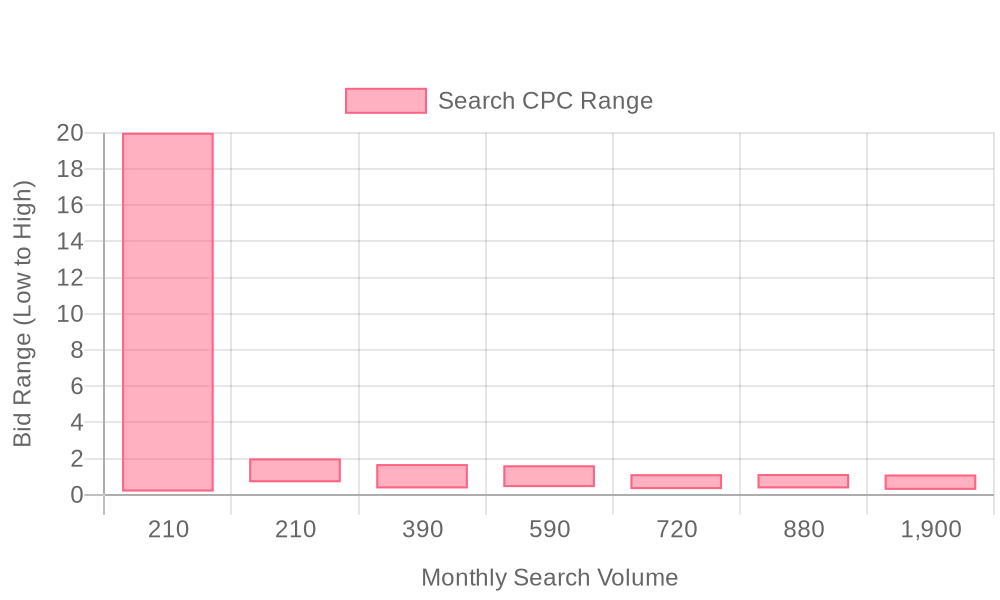
| Industry | Keyword | Monthly Search Volume | Competition Level | Low Bid | High Bid |
| Naval Stores | naval aviation museum store | 210 | MEDIUM | 0.19 | 20 |
| Naval Stores | official navy gear | 210 | HIGH | 0.7 | 2.01 |
| Naval Stores | navy clothing store | 390 | HIGH | 0.36 | 1.7 |
| Naval Stores | navy online store | 590 | HIGH | 0.43 | 1.63 |
| Naval Stores | navy merchandise | 720 | HIGH | 0.32 | 1.14 |
| Naval Stores | us navy merchandise | 880 | HIGH | 0.36 | 1.15 |
| Naval Stores | midshipmen store | 1900 | MEDIUM | 0.28 | 1.12 |
Revenue teams in the naval stores sector require a search-driven approach that engages high-intent buyers precisely when they are seeking specialized marine supplies, coatings, and logistics solutions. Google Ads campaigns built around this intent serve as a core component of a multi-channel marketing strategy designed to convert search-driven demand efficiently.
Google Ads occupies a unique middle-funnel position in naval stores marketing: prospects who discover your brand via social or email often turn to search just before making their final buying decision. By intercepting these prospects with keyword-rich campaigns designed around terms like “marine supplies distributor,” “ship maintenance products,” and “naval equipment procurement,” marketers ensure they appear at the critical moment of purchase consideration. For more tips on maximizing campaign impact, explore our latest blog articles.
Precision in keyword selection is essential. Teams should segment campaigns by product category, audience intent, and regional relevance, using terms tailored to B2B procurement cycles and compliance requirements. Real-time audience insights can refine these keyword lists on an ongoing basis, dynamically updating bid strategies as market signals shift. This ensures that ad spend is directed toward in-market accounts, maximizing both visibility and conversion rates across the naval supply chain.
Step-by-Step Campaign Execution Framework
Step 1: Build Targeted Keyword Lists
Precision in keyword selection is the backbone of successful Google Ads for Naval Stores. Begin by clustering keywords according to product types, such as marine paints, mooring ropes, or cargo securing equipment, to ensure each ad group reaches the most relevant audience. Enhance targeting by localizing terms with regional relevance, aligning your strategy with the actual search behaviors of procurement teams and maritime professionals.
Include long-tail keywords and question-based queries to capture high-intent prospects, such as “best anti-fouling paint for ships in Miami” or “how to secure cargo for transatlantic shipping.” Negative keywords are equally essential: exclude unrelated queries like “naval history museum” or “naval officer training” to safeguard your budget. When keywords mirror terminology found on your web content, ad relevance and Quality Scores improve, driving more qualified clicks and reducing wasted spend. With Sona Identification, marketers can directly tie keyword clusters to on-site engagement, identifying which terms attract the highest-value companies and adjusting campaigns in real time.
For more on how the Google Ads auction impacts keyword strategy, review this overview of Google Ads auction.
Layering intent and identity signals on top of raw keyword volume is what separates naval stores advertisers who scale from those who plateau. Connecting website-visitor data and CRM records with Sona Marketing Measurement shows which specific search terms bring in accounts that actually convert, so keyword and bid strategy can weight toward those terms rather than the ones with the highest volume alone.
Step 2: Develop Compelling Ad Copy
Effective ad copy for naval stores must resonate with industry-specific needs and quickly establish trust. Headlines should reflect the day-to-day challenges of marine operators, such as “Prevent Rust with Certified Marine Coatings” or “Heavy-Duty Ropes, Trusted by Shipbuilders Worldwide.” Embedding trust signals like ISO certifications, safety awards, or decades of reliability directly into descriptions builds immediate credibility.
Timely calls-to-action, such as “Consultations Open Now!” or “Bulk Discounts for Fleet Owners”, capitalize on urgency and decision cycles common in procurement. Ad extensions, including structured snippets for product categories or call extensions for direct supplier contact, add context and drive more engagement. Maintaining consistent messaging across all online channels ensures prospects experience a unified, professional brand voice. Sona’s Buyer Journeys empowers revenue teams to sync approved messaging with every ad variation, allowing creative updates to flow seamlessly from marketing to live campaigns.
Step 3: Design Effective Landing Pages
Relevance across the full journey, from keyword to ad to landing page, is critical in converting interest into qualified leads for naval stores. Each product or service category (e.g., mooring lines, navigation aids, waterproof coatings) should have a dedicated landing page tailored to the visitor’s intent. Include interactive calculators for bulk pricing, customer testimonials from maritime clients, and a robust FAQ addressing technical and logistical questions.
Ensure every landing page features a strong, mobile-optimized call-to-action, such as “Request a Custom Quote” or “Book a Dockside Demo.” Form submissions should sync instantly with your CRM to support rapid lead follow-up and pipeline visibility. By leveraging platforms that unify web and ad data, marketers can map each lead’s journey, identify drop-off points, and surface high-value opportunities back to sales in real time.
Step 4: Implement Data-Driven Optimizations
Continuous optimization separates average Google Ads for naval stores campaigns from top performers. Actively measure both micro-conversions (e.g., spec sheet downloads, inquiry form starts) and macro-conversions (e.g., RFQ submissions, demo bookings) to pinpoint which touchpoints drive revenue. Smart Bidding strategies, such as target CPA or ROAS, dynamically allocate budget toward the most profitable keywords and audiences. For tactical guidance on optimization and campaign structure, see this Google Ads ecommerce guide.
A/B testing on ad copy and landing page layouts uncovers the combinations that best resonate with purchasing managers and marine engineers. Uploading offline conversions, such as closed deals or qualified calls, into Google Ads enables true ROI measurement and ensures campaigns are optimized for actual business outcomes. Sona’s Ad Conversions helps teams leverage granular ad data to inform content marketing and sales outreach, aligning campaign insights with broader buying signals. This integrated approach allows for automated audience updates as prospects progress through the funnel, ensuring retargeting and nurturing remain relevant at every stage.
Ready to optimize your campaigns and unify your ad data? Get started for free with Sona.
Sona Marketing Measurement closes the gap between clicks and revenue. It captures ad clicks with first-party, company-level tracking, ties that click through UTM capture and ad-platform APIs to the actual record in your CRM, and reports ROAS by keyword and campaign instead of by last-click form fill. Feeding that revenue signal back into Smart Bidding and Performance Max compounds over time: the algorithms optimize toward booked naval stores revenue, not cheap leads.
Tips on Expanding Your Naval Stores Presence
Expanding your naval stores presence requires a purposeful blend of digital tactics, audience intelligence, and market-driven messaging. Modern B2B marketers in this niche see the strongest results by unifying their marketing and sales data for granular targeting and precise campaign measurement. Accessing precise audience intelligence helps ensure every campaign is built on real-time account signals and intent.
- Cross-Promotion Strategies: Retargeting educational content across platforms keeps your naval stores brand visible throughout the buying cycle. By leveraging advanced visitor identification, marketers can move from generic impressions to pinpointing key accounts that have shown interest, ensuring every retargeted ad is relevant and personalized.
- Strategic Upselling: CRM data empowers upselling by revealing which naval stores customers are most likely to need complementary products. Syncing enriched audience segments from your CRM into ad platforms allows for hyper-targeted cross-sell campaigns that activate only when engagement signals are detected, driving higher conversion rates while minimizing wasted budget.
- Partnerships: Collaborating with industry organizations and allied suppliers opens new referral channels. By integrating real-time intent data, you can identify when referred traffic includes high-intent buyers, allowing for immediate outreach or tailored ad experiences that reflect their interests.
- Localized Marketing: State or metro-specific campaigns are critical in a sector where regional demand fluctuates. Dynamic audience segmentation ensures ads adjust as prospects move between regions or as inventory changes, boosting the relevance of every impression and supporting timely offers in target areas.
- Content Insights: Search data reveals emerging needs and market shifts, guiding the creation of content that addresses current challenges in naval stores operations. Continuous feedback from campaign analytics highlights which topics drive engagement, so you can prioritize new content that aligns with both search demand and sales objectives.
Effectively using Google Ads for naval stores hinges on matching campaign structures to buyer needs and market realities. Precise keyword targeting, segmentation aligned with customer lifecycles, and creative that resonates with decision makers set the foundation. Real-time optimization using unified data eliminates blind spots, improves lead quality, and ensures your marketing spend delivers measurable results across the naval stores ecosystem. Learn more about how Google Ads auction works to inform your bidding and placement strategies, or explore retargeting strategies tailored to B2B and industrial marketing.
Beyond Google Ads: Winning the AI Answers Naval Stores Buyers Now Trust
Paid search captures demand at the moment someone types a query. But a fast-growing share of naval stores buyers no longer start at Google at all, they ask ChatGPT, Gemini, or Perplexity before they ever run a search, and Google's own AI Overviews increasingly summarize an answer above the traditional results. If your business isn't referenced in those AI answers, you're invisible at the exact moment buyers build their shortlist.
Sona AI Visibility shows where your business shows up across ChatGPT, Gemini, Perplexity, Google AI Overviews, and 10+ engines, and, much like a keyword report, which prompts actually send you buyers, so you can prioritize the ones that convert. Run the two together and you cover the entire buyer path: get cited where buyers research (AI Visibility), then prove which of that demand turns into booked revenue (Marketing Measurement).
Helpful resources
Conclusion
Naval stores marketing has a narrow window: buyers with an urgent need search once, decide fast, and rarely revisit a supplier who wasn't findable at that moment. Google Ads, built around technical keywords, tight ad copy, and landing pages that speak the buyer's language, turns that narrow window into a repeatable source of qualified pipeline rather than a one-off win.
The naval stores suppliers who win the next cycle of procurement budgets will be the ones who can already tell which keywords, ads, and accounts turned into signed contracts, not just clicks. Start for free with Sona and connect that picture across paid search, intent data, and your CRM.
FAQ
What are the best practices for Google Ads for naval stores?
The best practices include using a data-driven approach, integrating CRM and intent data, targeting precise technical keywords, and aligning creative assets with landing pages to ensure consistent messaging and higher conversion rates.
How can I effectively target my ads for naval stores?
Effective targeting involves defining precise technical keywords and audience segments specific to the naval stores industry, using Google Ads features like custom intent audiences and dynamic audience management to engage decision-makers with purchasing authority.
What budget should I allocate for Google Ads for naval stores?
Budget allocation should be flexible, allowing for real-time shifts towards high-converting campaigns using predictive buying stages and performance monitoring platforms to ensure optimal spend.
How do I optimize my Google Ads for better performance?
Optimizing Google Ads involves using predictive buying stages, auto-updating CRM audiences, and performance monitoring to refine ad exposures and shift budget towards campaigns showing rising intent and engagement.
What keywords should I use for Google Ads targeting naval stores?
Use highly specific, service-oriented keywords related to naval stores, such as 'marine maintenance solutions' and 'specialty coatings suppliers,' to capture high-intent buyers and improve lead quality.







