


Medical billing firms live and die by timing: a practice searching for a new revenue cycle partner today may sign a contract within weeks, and a slow follow-up often means a lost account. Common frustrations in the industry include missing high-value prospects due to incomplete data and delayed follow-up that lets leads cool off. Google Ads gives medical billing companies a way to reach healthcare decision-makers at the exact moment they're evaluating vendors, provided campaigns are built with the industry's compliance requirements and long, considered buying cycles in mind. This article covers how to structure campaigns that align with healthcare practitioners' needs, stay within advertising policy limits, and convert search intent into signed contracts.
How to Generate Medical Billing Leads with Google Ads: A Step-by-Step Guide

Medical billing companies can consistently win high-value leads with a data-driven paid search strategy built around healthcare decision-makers. Digital advertising lets teams capture in-market buyers with relevant messaging and attribute every conversion back to the specific campaign and keyword that produced it. Learn more about Google Ads strategies for medical billing companies to sharpen your approach.
A successful approach depends on precise audience targeting, sharp keyword selection, and unified tracking so no opportunity waits for follow-up. Connecting campaign performance to CRM data lets revenue teams focus on prospects showing genuine purchase intent, such as billing directors researching RCM vendors ahead of a contract renewal, rather than burning budget on unqualified clicks. See how intent signals can help you prioritize the right leads.
- Data-driven strategy: Effective medical billing lead generation begins with a unified approach to paid search. Integrating campaign data with CRM insights uncovers which buyer personas and service lines are most lucrative, letting marketers prioritize high-intent audience segments. When campaign activity is unified with first-party data, marketers can move beyond anonymous web traffic to see which organizations are engaging, which content resonates, and which leads are progressing through the funnel. Sona's Identity Resolution does this at the company level, not by tracking individuals.
- Audience targeting and keyword profiling: Success hinges on using targeted keywords that align with the services offered, such as "medical billing services for small practices" or "RCM solutions for clinics." By continuously refining these terms through search intent data and real-time behavior, teams can shift budgets toward accounts most likely to convert. Explore a list of top medical SEO keywords for 2025 to further refine your audience segmentation.
- Landing page alignment and creative enhancement: Conversion rates climb when landing pages are built for each audience segment. Creative should address concrete pain points for healthcare administrators, such as claim denials or audit exposure, and speak directly to the person who signs the contract. Aligning messaging across ads and landing pages, and keeping all creative compliant with Google Ads healthcare policies, cuts bounce rates and lifts qualified lead volume.
- Performance optimization and workflow automation: Timely follow-up is critical in medical billing advertising, where buyer consideration cycles can be short. By synchronizing ad campaigns with CRM systems, teams can automate lead routing and immediate outreach for high-intent form submissions. This closed-loop process empowers sales to engage warm leads instantly, while marketing can measure ROI with true online and offline attribution, revealing which tactics consistently yield new business.
- CRM integration for enriched journeys: The modern medical billing marketer must integrate Google Ads campaigns directly with CRM and marketing automation platforms. This enables full-funnel visibility from first click to closed deal and ensures no high-value opportunity is missed. Through real-time audience syncing and lead enrichment, marketing and sales teams can prioritize follow-up based on actual buying signals, personalize outreach, and ultimately drive more revenue from every campaign.
To see how seamlessly you can connect your campaigns, get started for free with Sona and unify your medical billing lead generation from click to close.
Why Google Ads Matters for Medical Billing

Medical billing companies operate in a market where timing and precision are everything. The ability to capitalize on intent signals and ICP scoring means you can engage healthcare managers, billing departments, and procurement heads at the exact moment they are actively seeking new solutions. Advanced segmentation transforms the challenge of reaching cold traffic into an opportunity by refining audiences to include only those whose behaviors match high-value buying patterns.
Capturing higher-margin contracts requires targeting prospects who are searching for reliable, compliant medical billing services. By leveraging granular intent data, marketers can distinguish between casual research and genuine purchase consideration, ensuring that budgets are directed toward prospects with the highest revenue potential. Real-time ad targeting aligns campaigns with demand spikes, such as when new practices open or regulatory changes create immediate billing needs, providing immediate visibility and eliminating the lag of manual updates. For medical billing specialists looking to generate more clients, this guide to Google Ads offers actionable tips and best practices.
Expanding into underserved regions becomes far more efficient with precision targeting backed by up-to-date demographic insights. This lets medical billing providers grow market share in new territories by reaching decision-makers who might otherwise be overlooked. Integrating Google Ads with unified analytics enables end-to-end tracking, connecting every click and conversion to downstream revenue and closing the long-standing gap of incomplete data. To see how these capabilities can transform your campaigns, get started for free with Sona.
Common Types of Google Ads Campaigns for Medical Billing Services

Modern medical billing companies face constant pressure to stay visible, relevant, and differentiated in a competitive market. The most effective Google Ads strategies mix campaign types, each suited to a distinct buyer intent and stage of the decision process. For teams looking to identify which organizations are visiting their site, Sona's Identity Resolution reveals the companies behind anonymous traffic, enabling smarter outreach and faster pipeline movement.
- Search Campaigns: Search campaigns are the backbone of medical billing advertising, capturing buyers who are actively looking for solutions right now, often after a compliance audit, a denied claims spike, or a new practice launch. Targeting keywords like "medical billing services near me" intercepts prospects at the point of decision. Identity resolution lets marketers see which organizations are visiting the site, going beyond anonymous clicks to prioritize outreach to the right healthcare practices at the company level, then direct budget toward segments with the highest close potential. For a step-by-step walkthrough on setting up campaigns tailored for this industry, see this Google Ads guide for medical billing companies.
- Display Ads: Display ads keep your brand top-of-mind as prospects research across industry forums, medical association sites, and healthcare technology blogs. Advanced audience insights allow marketers to deploy display creatives only when real-time signals reveal genuine intent, reducing wasted impressions and driving up engagement rates. When display campaigns are dynamically synced with enriched audience data, ads automatically adapt as leads progress through the funnel, improving relevance and conversion efficiency.
- Video Ads: Video campaigns provide a powerful platform to explain complex medical billing offerings, such as revenue cycle management or specialty coding services. Engaging educational content positions your team as thought leaders while robust video analytics measure viewer retention and drop-off points. Real-time analytics help optimize placement and creative, ensuring messaging lands with the right healthcare decision-makers at the ideal moment. For inspiration on creative approaches, explore these PPC ad copy examples.
- Remarketing: Remarketing is essential for reconnecting with prospects who have interacted with key service pages but have not yet converted. Automated audience segmentation updates in real time, reflecting lead status and level of engagement. This ensures remarketing ads are always targeted to the most sales-ready prospects, enabling medical billing agencies to focus spend on the highest-value opportunities and move leads efficiently through the sales pipeline.
- Assets: Ad assets add tangible credibility to every impression, showcasing certifications, compliance credentials, and location details directly in the search results. By integrating healthcare compliance insights and office locations, assets personalize the ad experience for each segment, whether targeting multi-site hospital groups or solo practices. When CRM and ad data are unified, asset content can be dynamically tailored to match the prospect's specialty and buying stage, building trust and lifting response rates.
Where to Find Growth Opportunities in Medical Billing Advertising

Vertical keyword targeting is essential for medical billing firms seeking distinct growth through Google Ads. By focusing on niche service terms, such as “pediatric billing specialists” or “RCM audit for ambulatory clinics”, campaigns capture demand beyond generic healthcare queries, preventing wasted spend and improving lead quality. For deeper guidance on campaign setup and optimization, explore Google Ads for medical billing companies. This specificity enables marketers to allocate budget precisely where high-value opportunities exist, rather than diluting reach with broad, undifferentiated campaigns. You can also find more strategies for effective vertical targeting in our medical billing advertising playbooks.
Competitor gap analyses reveal substantial untapped market segments in medical billing advertising. By mapping where rival firms concentrate spend, marketers can discover overlooked specialties, underserved regions, or practice sizes that are not receiving focused outreach. These insights drive the creation of segmented campaigns tailored to the needs of overlooked audiences, quickly converting missed opportunities into measurable growth. Leveraging unified go-to-market data ensures these gaps are identified in near real-time, allowing teams to pivot strategies as market dynamics change.
Industry forums present a direct line to high-intent buyers who may not engage with organic search or generic digital content. Strategic placement of ads in these communities, paired with interactive educational assets, ensures spend is funneled toward genuine prospects within the medical billing sector. Content retargeting deepens this engagement: offering whitepapers, calculators, or industry reports keeps your solutions top-of-mind as prospects research options. With dynamic audience updates, marketers can nurture leads through the funnel based on their engagement with specific resources, syncing this data back to CRM and ad platforms for more personalized, timely outreach.
Sophisticated platforms can pinpoint not only anonymous website traffic but also the companies behind each visit, using real-time intent signals to prioritize outreach. As leads progress through webinars, downloads, and demo requests, audiences update automatically, keeping remarketing and nurture campaigns relevant to each stage of the buyer journey. With attribution spanning both online and offline touchpoints, revenue teams can measure true ROI and close the loop between Google Ads engagement and new client acquisition.
How to Apply Audience Segmentation for Medical Billing

Audience segmentation lays the groundwork for high-performing medical billing advertising, letting teams deliver exactly the right message to each healthcare organization. With targeted segmentation, marketers eliminate wasted spend on irrelevant clicks and consistently generate higher-converting leads for billing services. For a deeper dive into optimizing segmentation and campaign success, explore our B2B marketing playbooks.
- Define Segments: Medical billing companies achieve their best results by distinguishing between healthcare practices and clinic chains using firmographic data. Individual practices have unique service needs, decision cycles, and contract sizes compared to multi-site groups, which often require more robust integration and higher-volume billing support. Segmenting by business structure, specialty, and geographic reach enables marketers to build campaigns that anticipate and resolve each segment’s specific pain points. When marketers leverage advanced visitor identification, they move beyond anonymous web traffic and pinpoint the exact practices or healthcare networks engaging with their ads, ensuring a more personalized and relevant ad experience.
- Overlay Intent Signals: For medical billing, intent signals reveal whether a potential client seeks full-service billing outsourcing or supplemental in-house support. Marketers overlay these signals to fine-tune creative and bidding strategies: those researching end-to-end outsourcing respond to efficiency and scalability messaging, while in-house teams want tools for claim denial reduction or regulatory compliance. Sona's Intent Signals shift budget automatically toward accounts showing in-market behavior, increasing spend on high-potential leads and reducing waste on low-intent audiences. This dynamic allocation keeps engagement matched to the target organization's actual decision phase.
- Create Ad Groups by Segment: Effective medical billing advertising requires building distinct ad groups tailored to each segment’s needs and stage in the buying journey. Early-stage practices receive educational content and introductory offers, while established clinic chains are targeted with detailed cost-benefit analyses and integration case studies. PPC ad copy examples can inspire more impactful messaging for each audience. By continuously updating audiences as leads move through the funnel, campaigns stay synchronized with real business opportunities, driving higher relevance and conversion rates. This approach ensures every touchpoint, ad creative, landing page, and follow-up, is optimized for the segment’s context.
- Validate Conversion Paths: Robust conversion tracking is critical in medical billing, where lead quality and revenue attribution drive campaign decisions. Teams must ensure CRM systems capture both online and offline interactions, updating in real time to avoid the pitfalls of stale or duplicate data. Advanced conversion tracking solutions streamline attribution, linking form fills, phone calls, and even offline meetings back to the original ad and keyword, giving marketers a true picture of ROI. With seamless CRM and ad sync, enriched audience and lead data flow directly into platforms like Google Ads, HubSpot, or Salesforce, enabling real-time retargeting and reporting without compliance gaps or manual data reconciliation. This complete feedback loop allows teams to optimize spend, accelerate deal cycles, and accurately measure the impact of every ad dollar.
This is also where measurement changes the economics. With Sona Marketing Measurement you can identify the companies and buyers behind your ad clicks, not just anonymous sessions, and segment audiences by who actually becomes a customer. That lets you build bid adjustments and audience signals around the segments that convert and de-prioritize the ones that don't, so you feed Google's algorithms "this click became a paying medical billing customer" instead of just "someone filled out a form."
Keyword Strategy & Sample Target Terms
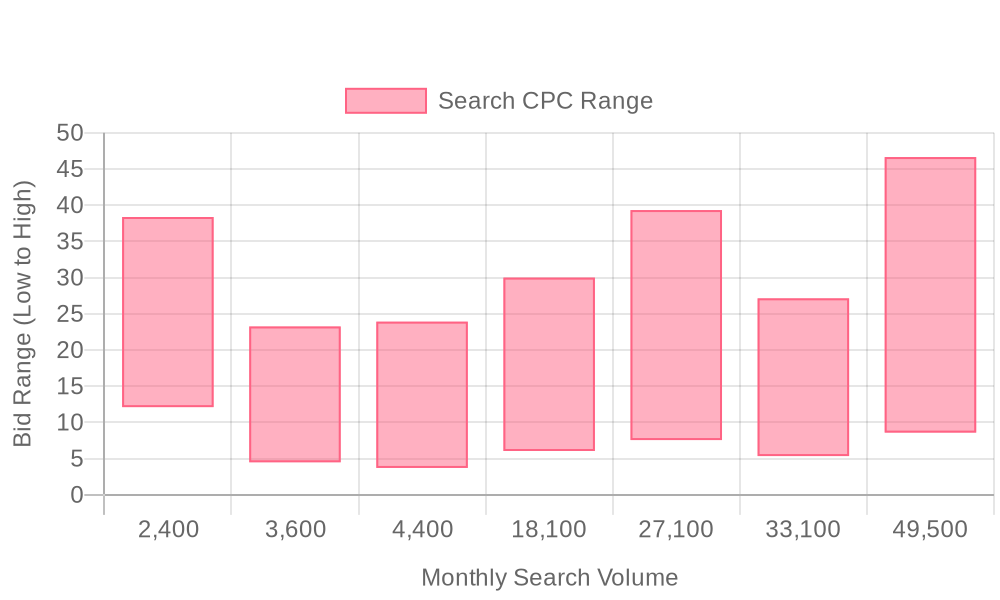
| Industry | Keyword | Monthly Search Volume | Competition Level | Low Bid | High Bid |
| Medical Billing | medical billing companies | 2400 | MEDIUM | 12.12 | 38.37 |
| Medical Billing | aapc medical coding | 3600 | HIGH | 4.5 | 23.26 |
| Medical Billing | certified professional coder | 4400 | HIGH | 3.72 | 23.92 |
| Medical Billing | medical billing | 18100 | MEDIUM | 6.06 | 30 |
| Medical Billing | billing and coding | 27100 | MEDIUM | 7.57 | 39.33 |
| Medical Billing | medical coding | 33100 | MEDIUM | 5.36 | 27.14 |
| Medical Billing | medical billing and coding | 49500 | HIGH | 8.6 | 46.65 |
A robust keyword strategy is the cornerstone of successful medical billing advertising, as it directly impacts how efficiently campaigns capture qualified prospects. By prioritizing high-intent keywords rooted in industry vernacular, marketers can intercept healthcare decision-makers actively searching for solutions that address pain points, such as "medical billing services for clinics" or "compliance-ready billing provider."
Data-driven insights are critical for surfacing long-tail and niche search terms that competitors often overlook. Phrases like "EMR billing integration," "telemedicine billing platforms," or "out-of-network claim recovery" attract buyers with urgent, specialized needs and typically yield higher conversion rates. Advanced tools streamline keyword list management, automatically sourcing and prioritizing fresh queries based on real-time market shifts, so teams avoid manual curation and stay ahead of emerging trends. This approach ensures campaigns consistently reflect the evolving language of healthcare finance, maximizing visibility among the most valuable segments.
Negative keywords play an essential role in preserving ad budget efficiency. By excluding irrelevant queries, such as those related to "medical billing jobs," "certification courses," or "remote billing positions," marketers prevent wasted spend on non-commercial searches. Automated negative keyword discovery, informed by ongoing search term analysis, further refines audience targeting and sharpens campaign focus. As a result, medical billing companies consistently reach practice administrators and CFOs ready to invest rather than job seekers or students.
Pairing visitor identification with keyword targeting connects previously anonymous search traffic to actual companies and decision-makers. Layering in real-time intent signals lets teams shift budget to the highest-converting accounts and keep lists refreshed with terms driving bottom-funnel engagement, like "claims denial recovery" or "HIPAA-compliant billing audit." As a lead moves from research to evaluation, campaign messaging and targeting adjust in step, capturing the opportunity with language matched to that stage.
Step-by-Step Campaign Execution Framework
Step 1: Build Targeted Keyword Lists
Successful medical billing advertising begins with a foundation of targeted, service-specific keywords. Focus on terms that reflect the intent of healthcare organizations seeking specialized billing solutions, such as “medical billing services for small clinics” or “HIPAA-compliant revenue cycle management.” Layering geographic modifiers like city or state names helps reach decision-makers in your service area while reducing wasted spend on irrelevant clicks.
Integrating advanced visitor identification and real-time intent data elevates keyword targeting far beyond standard approaches. Marketers can pinpoint not just anonymous searchers, but also identify the companies and healthcare providers landing on their site. This lets teams shift budgets dynamically toward high-converting accounts and adjust keyword sets as in-market behavior changes. To further refine your list, top medical SEO keywords for 2025 can provide additional inspiration for search terms with proven performance. By continuously updating lists based on verified conversion data and funnel progression, campaigns remain focused on prospects who are most likely to become qualified leads.
The upgrade most medical billing advertisers miss is going beyond raw keyword volume to layer in intent and identity signals. Connecting website-visitor data and CRM records with Sona Marketing Measurement shows which search terms bring in accounts and customers that actually convert, so you can weight keyword and bidding strategy toward those terms rather than the ones with the highest volume alone.
Step 2: Develop Compelling Ad Copy
Developing ad copy for Google Ads for Medical Billing requires deep insight into the industry’s pain points and urgency factors. Highlight value propositions that resonate with healthcare administrators, such as “Accelerate your cash flow” or “Reduce insurance claim denials.” Messaging should be tailored to address regulatory compliance, revenue cycle optimization, and specialty-specific needs, driving a sense of immediate relevance.
Responsive ad formats allow for dynamic testing of headlines and descriptions, optimizing engagement rates while staying within Google Ads healthcare policy guidelines. As ad audiences evolve, leveraging dynamic audience segmentation ensures messaging always aligns with a lead’s current stage in the decision journey. For inspiration on writing effective ads, you can review real-world PPC ad copy examples to help improve your approach. This method raises click-through rates and increases the efficiency of marketing investments by serving the most relevant ads to each high-value segment.
Step 3: Design Effective Landing Pages
Effective landing pages bridge the gap between ad engagement and conversion. For medical billing services, landing pages must clearly communicate expertise, compliance, and operational transparency. Content should be organized for rapid scanning, with trust signals like certifications and testimonials prominently displayed. Calls-to-action such as “Book a compliance audit” or “Request a custom proposal” make next steps unmistakable for prospects.
Integrating page analytics and session-level attribution enables healthcare advertisers to fine-tune page layouts and conversion paths based on real user behavior. To see how other medical billing companies have optimized their pages and workflows, check out this case study on outsourcing medical billing. By feeding enriched lead data directly into CRM systems, teams can personalize follow-up sequences and surface the most qualified prospects to sales. This unified data flow shortens response times and improves lead-to-client conversion rates.
Step 4: Implement Data-Driven Optimizations
Continuous improvement is essential for Google Ads for healthcare campaigns, especially with compliance and ROI at stake. Smart bidding strategies use historical conversion data to automatically adjust bids, prioritizing high-value leads and minimizing spend on low-intent clicks. Incorporating CRM feedback closes the attribution loop, linking ad spend directly to revenue outcomes and client retention.
Real-time syncing between ad platforms and CRM ensures that audience lists are always current, with leads dynamically progressing through the funnel. Advanced conversion tracking, including both online and offline events, provides a holistic view of campaign performance. To benchmark your results and optimize budget allocation, healthcare marketers can reference Google Ads cost per conversion data. This enables marketing teams to allocate budget with confidence, knowing that every optimization is informed by the full customer journey from ad click to closed deal.
Ready to elevate your medical billing ad campaigns? Get started for free with Sona.
Sona Marketing Measurement closes the gap between clicks and revenue. It captures every ad click with first-party measurement, ties that click through UTM capture and ad-platform APIs to the actual record in your CRM, and reports ROAS by keyword and campaign instead of by last-click form fill. Feeding that revenue signal back into Smart Bidding and Performance Max compounds over time: the algorithms optimize toward booked medical billing revenue, not cheap leads.
Tips on Expanding Your Medical Billing Presence
Expanding your medical billing services requires a multi-channel approach that aligns educational content with the decision journey of your clients. By prioritizing personalized engagement and leveraging actionable analytics, you ensure that your marketing strategy remains agile and relevant. To maximize your reach, consider how advanced visitor identification can help you pinpoint organizations showing genuine interest rather than relying on anonymous site traffic.
- Educational Content for Retargeting: Educational resources, such as guides, webinars, and explainer videos, are highly effective when paired with retargeting strategies. Serving this content to website visitors based on their previous interactions keeps your brand top-of-mind and addresses client concerns at each stage of their research process. With intent signals, you can prioritize retargeting budgets for high-potential accounts.
- CRM-Based Upsell Strategies: Segmenting your CRM data by client type, engagement history, and practice size allows you to focus upsell efforts on the most promising prospects. Syncing enriched CRM audiences into Google Ads makes tailored offers and cross-sell campaigns more effective, reducing wasted time on less valuable leads. As prospects move through your funnel, dynamic audiences update automatically, ensuring upsell messaging always matches their current needs and readiness to buy.
- Association Collaboration for Referrals: Building partnerships with healthcare associations not only expands your network but also enhances your industry credibility. Association collaborations provide trusted referral inflows and open doors to member-exclusive events, webinars, and joint marketing opportunities. Explore strategies to maximize healthcare PPC ROI to strengthen your standing as a reliable partner for medical billing services and help you tap into new client segments that trust association-endorsed vendors.
- Content Topics from Analytics: Google Analytics is essential for uncovering search trends and identifying the most relevant content topics for your audience. By analyzing inbound queries and user behavior, you can prioritize content creation that addresses emerging pain points and frequently asked questions.
Continuous integration of these tactics with real-time intent data and unified attribution tracking clarifies which channels, content, and campaigns drive the highest ROI. Connecting these insights to CRM and advertising platforms keeps your growth strategy compliant and adaptive, ready to respond as healthcare advertising dynamics shift.
Beyond Google Ads: Winning the AI Answers Medical Billing Buyers Now Trust
Paid search captures demand at the moment someone types a query. But a fast-growing share of medical billing buyers no longer start at Google at all, they ask ChatGPT, Gemini, or Perplexity before they ever run a search, and Google's own AI Overviews increasingly summarize an answer above the traditional results. If your business isn't referenced in those AI answers, you're invisible at the exact moment buyers build their shortlist.
Sona AI Visibility shows where your business shows up across ChatGPT, Gemini, Perplexity, Google AI Overviews, and 10+ engines, and, much like a keyword report, which prompts actually send you buyers, so you can prioritize the ones that convert. Run the two together and you cover the entire buyer path: get cited where buyers research (AI Visibility), then prove which of that demand turns into booked revenue (Marketing Measurement).
Helpful resources
Conclusion
The medical billing firms that win with Google Ads over the next few years will be the ones that stop optimizing for cheap form fills and start optimizing for booked revenue, tying every keyword and campaign back to which accounts actually signed. Pair that with visibility in the AI answers buyers now consult before they ever open a search bar, and paid search stops being a lead-generation line item and becomes a measurable part of how the business grows.
Put these strategies into action with Sona.
FAQ
What are the best practices for Google Ads in medical billing?
Best practices include precise audience targeting, advanced keyword selection, and integrating campaign performance with CRM data to focus on high-intent prospects and minimize wasted spend.
How can I ensure my Google Ads are HIPAA compliant?
Ensure compliance by aligning messaging across ads and landing pages with Google Ads healthcare policies and using CRM integration for enriched lead management.
What is the cost of running Google Ads for medical billing?
The cost can vary, but using smart bidding strategies and continuous optimization informed by CRM feedback can help manage and justify ad spend effectively.
How do I set up a Google Ads campaign for my medical billing service?
Start by building targeted keyword lists, develop compelling ad copy that addresses industry pain points, design effective landing pages, and implement data-driven optimizations.
What keywords should I target for medical billing ads?
Target high-intent keywords specific to medical billing services, such as 'medical billing services for clinics' and 'HIPAA-compliant revenue cycle management,' and use negative keywords to exclude irrelevant searches.







