


Parents shopping for infant care rarely browse casually, they search with urgency, often at odd hours, driven by a return-to-work date or a spot that just opened up. Google Ads lets infant child care providers meet that urgency head-on, appearing exactly when a parent types "infant daycare near me" at 11pm. For providers in this industry, that timing, paired with the right trust signals, is what turns a search into a tour booking.
How to Generate Google Ads for Infant Child Care Leads

Driving high-quality leads for infant child care through Google Ads requires a nuanced approach that aligns campaign structure, audience targeting, and creative assets with the unique needs of parents seeking trusted providers. Modern marketers gain a competitive edge by leveraging intent signals and data-driven insights to connect with families at the precise moment they are considering enrollment.
Effective paid search tactics for infant child care move far beyond generic strategies. Campaigns tailored to this segment capture parental attention by using high-performing childcare keywords for PPC, ad assets, and messaging that address safety, certifications, and proximity, key decision drivers for families with infants.
- Crafting data-driven paid search tactics: Infant child care is a high-consideration purchase, and generic campaigns risk being ignored by discerning parents. Success begins with audience research and segmentation, ensuring each ad group aligns with the specific concerns of parents searching for infant care, such as staff credentials or infant-only rooms. Smart marketers consistently outperform by activating real-time signals, such as recent visits to infant care resource pages, to prioritize spend on in-market parents.
- Keyword selection and audience targeting: Identifying the right search terms is critical for Google Ads for Infant Child Care. High-intent keywords like "infant daycare near me" and "certified newborn care" filter out irrelevant clicks, focusing budgets on parents actively seeking services. Audience targeting becomes more precise when enriched with behavioral and firmographic data, enabling rapid identification of parents who are most likely to convert. Integrating CRM and web activity data enables marketers to build dynamic audiences that update as parents move from research to inquiry, ensuring no high-potential lead is left behind.
- Landing page and creative consistency: Consistent messaging between ads and landing pages is essential for conversion. Parents expect to see the same safety assurances and facility features promised in the ad when they arrive on the site. Using dynamic content and company-level visitor identification, marketers can personalize landing pages based on the parent's employer or prior engagement, increasing trust and driving higher inquiry rates. Visuals showcasing clean infant rooms, staff certifications, and daily routines reduce anxiety and reinforce the provider's authority.
- Maintaining campaign performance through continuous optimization: Stagnant audience lists and unchanged creative lead to declining results. Marketers maximize performance by implementing advanced conversion tracking and attribution, measuring both online inquiries and offline enrollments. This full-funnel visibility reveals which audiences and keywords drive actual enrollments, allowing budgets to shift toward top-performing segments. Automated audience refresh and data sync keep campaigns focused on the most engaged parents, reducing wasted spend and unlocking incremental growth.
- Methods for cross-channel integration: Google Ads does not operate in isolation, its impact multiplies when integrated with email, organic search, social, and CRM workflows. Marketers can unify leads from all sources, syncing enriched audience segments back into Google Ads for seamless retargeting and nurturing. For a more comprehensive approach to maximizing your daycare’s visibility and growth using Google Ads, review these strategies and tips. This holistic view ensures every in-market parent receives relevant messaging at every touchpoint, increasing both lead quality and overall childcare business growth potential.
Ready to attract more high-quality infant child care leads? Get started for free with Sona.
Why does Google Ads matter for Infant Child Care

New parent decision cycles are compressed, requiring real-time engagement and tailored messaging to capture high-value infant care enrollments as soon as intent surfaces. Google Ads empowers childcare providers to intercept these high-intent moments, ensuring their services appear precisely when parents are evaluating infant daycare options and ready to act. For a step-by-step guide on optimizing campaigns, explore how to set up Google Ads for childcare services.
Timely campaigns eliminate the lag between inquiry and response, especially crucial for infant child care where safety and trust are paramount. With advanced targeting, marketers can reach parents actively searching for infant care, segmenting by newborn age brackets, location, and lifestyle, while dynamically updating audiences as parents progress through research and enrollment phases.
Regional outreach strategies allow providers to spotlight their services in untapped neighborhoods and emerging communities, driving consistent lead flow even in competitive or underserved markets. By leveraging granular firmographic data, campaigns adapt to local demand shifts and pinpoint areas with the greatest revenue potential.
Analytics integration ensures that every advertising dollar is measured against lead quality, not just clicks or impressions. Marketers can identify not only which ads generate inquiries, but also which companies engage most with infant care content by utilizing website visitor intelligence, supporting continuous optimization and budget efficiency.
Rapid response capabilities are key in an environment where urgency drives action. Real-time audience updates and seamless CRM-ad platform integration enable teams to immediately engage qualified leads, routing high-intent inquiries to enrollment staff, automating nurture sequences, and closing gaps between digital interest and offline tours or signups.
Google Ads for Infant Child Care gives providers the infrastructure for data-driven marketing, supporting growth through targeted parent outreach, measurable ROI, and the agility to respond instantly to shifting demand. To experience these capabilities firsthand, get started for free with Sona.
Common Types of Google Ads Campaigns for Infant Child Care Services

- Search Campaigns: Search campaigns capture parents with immediate intent, appearing in front of those actively searching for infant daycare, newborn care, and trusted childcare providers. Leveraging account-level insights, these campaigns prioritize engagement from families most likely to convert, moving away from broad analytics and toward actionable data that drives higher-quality inquiries. With Sona, marketers can go further by pinpointing which visitors are real parents and which companies are engaging most deeply, allowing revenue teams to double down on segments with proven interest and accelerate fill rates for infant care spots.
- Performance Max: Performance Max campaigns run across Search, Display, YouTube, Gmail, and Maps from a single campaign, using automated bidding to find parents likely to convert wherever they spend time online. For infant child care providers, this format is useful for capturing demand that doesn't fit neatly into a single channel, a parent might see a video testimonial on YouTube, then later click a search ad for "infant daycare near me." Feeding Performance Max with enrollment data, not just form fills, keeps its automated bidding focused on parents who actually sign up rather than ones who merely click.
- Display Ads: Display ads maximize visibility by placing your childcare messaging across content parents are already consuming, from parenting blogs to local community forums. Dynamic audience lists ensure your ads remain top-of-mind for families considering their options, keeping your infant programs in front of both current and potential clients at critical decision points. By integrating real-time behavioral signals, Sona helps you refresh these audiences as parents move through their research journey, ensuring you only spend on those showing current, in-market intent.
- Video Ads: Video campaigns offer a compelling way to showcase your facility's unique environment, safety protocols, and caregiver expertise. Through visual storytelling, these ads highlight what sets your infant care apart, building trust while answering the common questions parents have before booking a tour or making an inquiry. For step-by-step guidance on optimizing Google Ads for childcare services, look at which viewers show high intent, then retarget those who watch key segments or interact with specific video features.
- Remarketing: Remarketing campaigns re-engage visitors who previously explored your site but did not convert, delivering relevant messaging as they continue their search for infant childcare solutions. Using fresh, intent-driven lists, these ads cater to families who may have visited your curriculum page or downloaded an infant care checklist, keeping your brand at the top of their shortlist. Sona enhances this process by dynamically updating remarketing audiences as parents progress through the funnel, ensuring follow-up ads are timely and contextually relevant.
- Assets: Ad assets give your campaigns added depth and credibility by including critical trust signals such as location, licensing, staff certifications, and parent testimonials directly within your ads. These elements drive higher click-through rates, as parents see immediate proof of compliance and safety, top priorities in infant care decisions. For more on Google Local Service Ads and Google Guaranteed status, Sona advanced attribution seamlessly tracks which assets contribute to conversions, making it easier to optimize creative and prove ROI across both online and offline touchpoints.
Where to Find Growth Opportunities in Child Care Leads

Maximizing growth in the infant child care sector requires a proactive approach to uncovering new lead sources and engaging families at pivotal decision points. Success hinges on evolving beyond standard channels and leveraging data to reveal untapped opportunities for targeted, high-quality engagement.
- Vertical keyword targeting: Expanding your Google Ads strategy to focus on vertical keyword targeting allows you to reach parents searching for specialized infant care offerings, such as "Montessori infant programs" or "preemie daycare support." This approach enables your campaigns to capture demand from families with unique needs, helping you stand out in a crowded market and sidestep reliance on outdated lead lists. For a list of high-performing childcare keywords to enhance your targeting, check childcare-related keywords for PPC and SEO. With enriched audience data, marketers can identify specific search intent, such as parents seeking flexible hours or advanced security protocols, and deliver tailored messaging that converts.
- Competitor gap analyses: Conducting regular competitor gap analyses uncovers overlooked market segments and reveals service gaps in your local area. By analyzing search share, ad placements, and keyword gaps, you can position your infant care services where competitors are absent or underperforming. This process ensures your messaging remains precise and resonates with parents actively researching their options. Integrating real-time behavioral signals and demographic data helps you prioritize spending on the highest-converting audience segments, optimizing your return on investment.
- Parent forums and childcare directories: Securing placements on trusted parent forums and childcare directories is essential for building credibility and increasing referral traffic. These platforms are frequented by parents seeking peer recommendations and safety insights, making them high-intent environments for lead generation. Advanced visitor identification enables you to track which forums and directories drive the most engaged traffic, allowing for agile budget reallocation and more informed ad placements.
- Content retargeting: Utilizing content retargeting strategies helps you maintain brand visibility and nurture leads who have shown interest in your infant care resources. By promoting informative guides, virtual tours, and caregiver profiles, you extend the engagement window and shepherd hesitant families along the decision journey. Dynamic audience updates ensure that once a parent moves from research to scheduling a tour or enrolling, your retargeting efforts seamlessly shift focus to new prospects, keeping your pipeline fresh and conversion-focused.
How to Apply Audience Segmentation for Childcare Marketing

Precise audience segmentation is fundamental to high-performing childcare marketing. When each campaign speaks directly to a distinct group, conversion rates climb and cost per lead drops. This approach reduces wasted spend by ensuring ads reach parents who are actively searching for infant care or specialized childcare services, not just generic audiences. For additional strategies on boosting visibility and leads, see maximizing your daycare’s visibility with Google Ads.
- Defining customer segments: Success starts by breaking down your audience into actionable categories such as working parents, stay-at-home parents, parents seeking newborn care, or those focused on advanced toddler programs. Avoiding a one-size-fits-all mentality allows messaging to reflect real household priorities, scheduling needs, and even location-specific pain points. Marketers who continuously refresh and enrich these segments see higher engagement as they address the nuanced concerns of each group. By integrating Sona's Identity Resolution, teams can pinpoint which companies or households are engaging, rather than relying on anonymous site traffic or outdated lists.
- Applying intent signals: Modern childcare marketing must go beyond static demographic data. By leveraging real-time intent signals, marketers can detect when parents shift from casual browsing to high-intent actions, such as searching for "infant daycare near me" or comparing licensing standards. This allows for dynamic budget allocation, directing spend toward the parents most likely to convert. When online behaviors indicate a shift, such as multiple visits to the infant care program page or engagement with pricing calculators, campaigns can be adjusted instantly to target those in-market prospects. Real-time data unification also ensures that as leads evolve, their audience profiles update automatically for ongoing relevancy.
- Creating targeted ad groups: Each segment deserves its own creative and bidding strategy. Ad groups can be tailored to highlight features like extended hours for working parents or developmental curriculum for education-focused families. This specificity increases ad relevance, directly improving Quality Scores and reducing cost-per-click. Through seamless CRM and ad platform sync, marketers can keep audience lists fresh, ensuring that leads nurtured by sales or customer service are reflected in digital advertising outreach and retargeting pools. For more actionable ideas, explore our marketing and sales playbooks.
- Ensuring thorough conversion path tracking: Effective segmentation is incomplete without clear attribution and conversion tracking. Advanced tracking solutions allow marketers to connect both online and offline interactions, like tour bookings or phone inquiries, back to specific segments and ad engagements. This closed-loop view enables more accurate ROI measurement and identifies which segments contribute most to business growth. With automated syncing between marketing platforms and CRM tools, every conversion or lead status change instantly informs audience lists and campaign optimizations, supporting smarter resource allocation and higher-value follow-up.
This is also where measurement changes the economics. With Sona Marketing Measurement you can identify the companies and buyers behind your ad clicks, not just anonymous sessions, and segment audiences by who actually becomes a customer. That lets you build bid adjustments and audience signals around the segments that convert and de-prioritize the ones that don't, so you feed Google's algorithms "this click became a paying infant child care customer" instead of just "someone filled out a form."
Keyword Strategy & Sample Target Terms
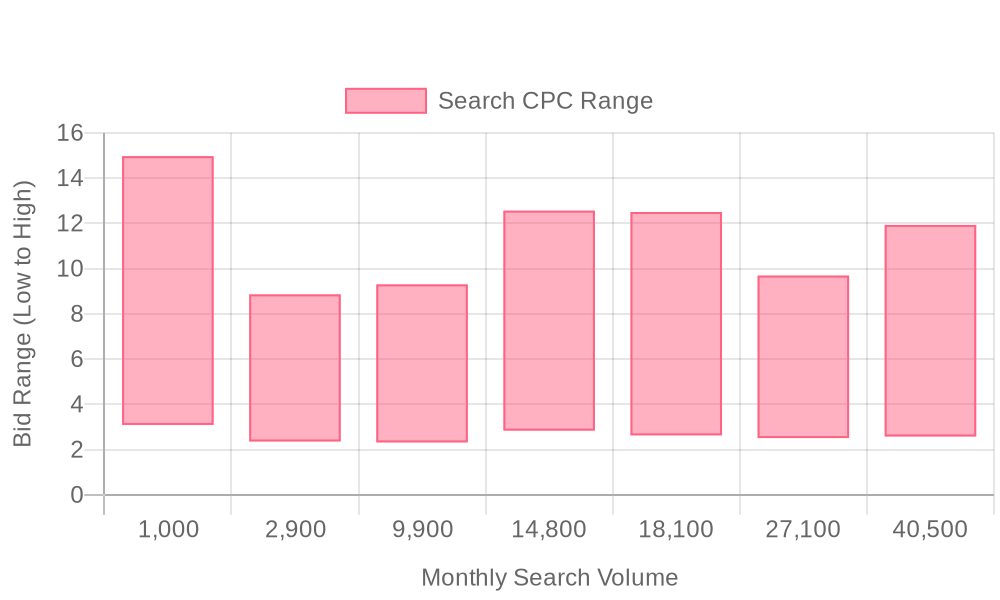
| Industry | Keyword | Monthly Search Volume | Competition Level | Low Bid | High Bid |
| Infant Child Care | best infant daycare near me | 1000 | MEDIUM | 3.09 | 14.97 |
| Infant Child Care | infant child care | 2900 | LOW | 2.36 | 8.86 |
| Infant Child Care | infant care | 9900 | LOW | 2.32 | 9.3 |
| Infant Child Care | infant care near me | 14800 | MEDIUM | 2.84 | 12.56 |
| Infant Child Care | infant child care near me | 18100 | MEDIUM | 2.63 | 12.5 |
| Infant Child Care | infant daycare | 27100 | LOW | 2.51 | 9.69 |
| Infant Child Care | infant daycare near me | 40500 | MEDIUM | 2.58 | 11.93 |
Modern infant child care providers know that keyword strategy is the gateway to capturing parents actively searching for trusted daycare and specialized baby care. By targeting granular, intent-driven search terms, brands can intercept decision-makers precisely when their need is urgent and their likelihood to convert is highest. This approach eliminates wasted spend, guiding every advertising dollar toward audiences who signal readiness for enrollment or inquiry. Discover high-performing childcare keywords for PPC to refine your targeting and maximize campaign efficiency.
- Precision Targeting: Strategic keyword development enables campaigns to reach parents when they're most likely to make a decision, such as during late-night searches for "affordable infant care near me" or "licensed baby care providers." These keywords, updated in real time, ensure ad visibility directly to those who signal intent through their online activity. As leads progress through the journey, from first-time visitors to repeat site explorers, audiences automatically refresh, allowing marketers to retarget and nurture only the most relevant prospects. Marketers leveraging platforms that unify CRM and web analytics can go beyond anonymous clicks, matching high-value searches to specific accounts for tailored follow-up. Use Sona's Identity Resolution to reveal which companies are visiting your site and trigger timely outreach.
- Measurable ROI: With robust conversion tracking, every keyword and campaign is tied to final outcomes, not just impressions or clicks. Real-time attribution across channels means marketers can see which infant care advertising terms actually drive completed tours, calls, or enrollments. This level of insight supports ongoing optimization, budget naturally flows to the keywords and creative combinations that deliver the strongest results. When campaign data is unified with offline events, such as phone consultations or facility visits, teams get a true picture of ROI and can confidently scale only what works. Learn more about measuring marketing's influence for actionable insights.
- Channel Synergy: Keywords do more than drive search results, they fuel retargeting audiences and cross-channel promotion. A parent who searches “best infant daycare nearby” and engages with a landing page can be automatically added to a display, video, or social retargeting pool, ensuring persistent brand presence during the evaluation phase. As audience segments update dynamically, marketers can seamlessly synchronize them with CRM platforms and Google Ads, keeping messaging relevant and timely. This synergy ensures that every touchpoint, from the first web search to a personalized follow-up email, is informed by unified, actionable data. Activate audience data effortlessly with Sona Destinations for seamless data syncing across your marketing stack.
By anchoring childcare marketing strategies in high-intent, relevant search terms and leveraging unified data platforms, providers can accelerate business growth and maximize every opportunity to connect with discerning parents seeking infant care solutions. To experience these capabilities first-hand, get started for free with Sona and transform the way you reach and engage your ideal audience.
Step-by-Step Campaign Execution Framework
Precision and intent-driven execution define successful Google Ads for Infant Child Care. Revenue leaders in this sector recognize that blending first-party data with real-time behavioral signals elevates both outreach and conversion efficiency while minimizing wasted spend.
Step 1: Build Targeted Keyword Lists
A comprehensive keyword strategy forms the backbone of effective infant care advertising. Begin by categorizing keywords according to core services, such as "infant daycare," "newborn care," and "safe infant environment." Incorporate city and neighborhood modifiers to localize exposure, ensuring parents searching in specific geographies discover your services first. For inspiration on high-performing childcare-related keywords, review this list of childcare keywords for PPC. Long-tail and question-based queries, like "best infant daycare near [city]" or "is your daycare safe for newborns," help capture parents with specific concerns or high-intent needs. Aligning keyword sets with content marketing ensures ad messaging and blog resources reinforce each other, leading to higher on-site engagement and trust. Using platforms that unify visitor identity data, marketers can tie anonymous search clicks to known parent accounts, enabling precise retargeting and optimizing spend on keywords that drive real conversions.
The upgrade most infant child care advertisers miss is going beyond raw keyword volume to layer in intent and identity signals. By connecting website-visitor data and CRM records with Sona Marketing Measurement, you can see which specific search terms bring in the accounts and customers that actually convert, and weight your keyword and bidding strategy toward those rather than the terms with the highest search volume alone.
Step 2: Develop Compelling Ad Copy
Ad copy for infant care must balance clarity, reassurance, and immediacy. Highlighting caregiver qualifications, such as state licensure or infant CPR certifications, establishes trust from the first impression. Incorporate service differentiators directly in headlines and descriptions, such as "Staffed by Licensed Infant Caregivers" or "24/7 Video Access for Peace of Mind." For a detailed PPC strategy guide, refer to this daycare facility PPC Google Ads strategy. Calls-to-action should be direct and actionable: "Schedule a Tour Today" or "Secure Your Infant’s Spot." Special offers, like "First Month Free Trial," can create urgency for parents evaluating multiple centers. By leveraging real-time audience insights, marketers can dynamically adjust ad messaging to reflect current parent concerns or trending safety topics, ensuring relevance and resonance with each prospect.
Step 3: Design Effective Landing Pages
High-converting landing pages for infant care are meticulously aligned to the intent of each ad group. Each page should immediately confirm the visitor’s needs with clear headlines such as "Trusted Infant Daycare in [Neighborhood]." Service differentiators, including unique safety protocols, staff-child ratios, and client testimonials, must be prominently displayed to build credibility and lower decision barriers. Trust badges and parent reviews reinforce confidence in your facility’s standards. To explore additional advertising tactics, review these daycare advertising strategies. Calls-to-action need to be unmistakable and optimized for mobile, guiding parents from interest to inquiry in as few steps as possible. With unified data systems, landing page experiences can be personalized to past visitor interactions, showing tailored content for returning parents or those who previously requested information, thus increasing conversion efficiency.
Step 4: Implement Data-Driven Optimizations
Continuous optimization transforms good campaigns into high-performing growth engines. Monitor both micro-conversions, such as schedule-a-tour form fills, and macro-conversions, like completed enrollments, to measure true marketing effectiveness. Performance analytics should inform creative, audience, and budget decisions across all digital channels. Real-time syncing of enriched audience data ensures that Google Ads retargeting lists always reflect the most current parent interest levels and lifecycle stages. Advanced attribution connects online ad interactions to offline enrollment events, providing a comprehensive view of ROI and enabling informed reallocation of spend toward the channels and campaigns that drive the most valuable outcomes for your childcare business. Get started for free with Sona.
Sona Marketing Measurement closes the gap between clicks and revenue. It captures every ad click with first-party measurement, then ties that click through UTM capture and ad-platform APIs to the actual record in your CRM, and reports ROAS by keyword and campaign instead of by last-click form fill. Feeding that revenue signal back into Smart Bidding and Performance Max compounds over time: the algorithms optimize toward booked infant child care revenue, not cheap leads.
Tips on Expanding Your Google Ads for Infant Child Care Presence
Building a dominant presence in the infant child care market through Google Ads relies on understanding parent motivations and addressing their nuanced decision-making journey. Smart marketers harness actionable data and advanced segmentation to ensure every campaign dollar reaches families that fit their ideal client profile. For additional strategies on increasing your daycare’s visibility and leads through optimized Google Ads campaigns, explore this guide.
- Retargeting for content engagement: Retargeting allows you to re-engage parents who previously interacted with your website or content, positioning your educational resources front and center as parents continue their research. By keeping your audience lists updated in real-time, you ensure that parents who have shown recent intent, such as those downloading an infant care checklist or scheduling a virtual tour, see relevant ads that nudge them closer to conversion. Integrating intent data from your site with campaign audiences enables you to dynamically prioritize high-value visitors, shifting budget to those most likely to enroll.
- Upsell via segmented audiences: Upselling infant care services requires more than a generic approach. Segment your audiences based on comprehensive CRM data, including parental stage, previous inquiries, or recent tour attendance, to deliver tailored messaging around premium offerings, add-on developmental programs, or flexible scheduling. With unified data, audiences automatically update as families move through the funnel, parents who complete a tour but have not yet enrolled receive different creative than first-time website visitors. Synchronizing enriched CRM segments into Google Ads ensures each outreach is both timely and relevant, increasing upsell rates and reducing wasted spend.
- Affiliate with local networks: Forming affiliations with trusted community associations, parenting groups, and local pediatrician offices can drive cost-effective referrals that supplement your paid campaigns. Embedding your services within these established networks not only boosts your credibility but also provides valuable data signals that can be leveraged for more precise ad targeting. When these local partnerships are reflected in your campaign targeting, you benefit from a warm introduction effect, significantly improving click-through and conversion rates among parents already primed to trust your brand. For more ideas on expanding your reach through daycare advertising tactics and channels, review this resource.
Winning in Google Ads for infant child care comes down to audience precision, creative that addresses parents' safety concerns directly, and data that connects clicks to actual enrollments. Getting those three working together is what separates providers who fill their infant rooms from those still waiting on the phone to ring.

Beyond Google Ads: Winning the AI Answers Infant Child Care Buyers Now Trust
Paid search captures demand at the moment someone types a query. But a fast-growing share of infant child care buyers no longer start at Google at all, they ask ChatGPT, Gemini, or Perplexity before they ever run a search, and Google's own AI Overviews increasingly summarize an answer above the traditional results. If your business isn't referenced in those AI answers, you're invisible at the exact moment buyers build their shortlist.
Sona AI Visibility shows where your business shows up across ChatGPT, Gemini, Perplexity, Google AI Overviews, and 10+ engines, and, much like a keyword report, which prompts actually send you buyers, so you can prioritize the ones that convert. Run the two together and you cover the entire buyer path: get cited where buyers research (AI Visibility), then prove which of that demand turns into booked revenue (Marketing Measurement).
Helpful resources
Conclusion
Google Ads gives infant child care providers a way to meet parents at the exact moment their search turns urgent, whether that's a return-to-work deadline or a sudden opening they can't risk losing. The providers who win aren't necessarily spending the most, they're the ones whose keywords, creative, and landing pages speak directly to the specific fears and priorities of parents entrusting someone with an infant.
The next twelve months will separate providers who treat Google Ads as a lead-gen line item from those who connect it to actual enrollment data, tracking which keywords and audiences produce paying families, not just form fills. That connection, more than any single tactic, is what will determine who fills their infant rooms first.
FAQ
What are the best practices for Google Ads in childcare?
Best practices include using data-driven paid search tactics, keyword selection focused on high-intent phrases, audience targeting by demographics, consistent landing page and creative alignment, continuous optimization, and cross-channel integration.
These strategies, when backed by unified data and advanced attribution, provide a holistic view of campaign impact. Marketers can identify previously anonymous site visitors, connect in-market signals to specific accounts, and shift budget toward the highest-converting audiences. Elevate your advertising ROI and get actionable insights, get started for free with Sona.
How can I effectively target parents with Google Ads?
Effectively target parents by using real-time audience segments, demographic filters, and refining reach with keywords that capture parents who are in-market and ready to engage.
What budget should I allocate for Google Ads for infant care?
The budget should be flexible, allowing for dynamic adjustments as new high-intent accounts are identified, ensuring resources are allocated where they have the most impact.
What keywords should I use for Google Ads in childcare?
Use high-intent, location-specific phrases such as 'infant daycare near me,' 'licensed baby care,' and 'newborn care center' to attract parents actively searching for childcare solutions.
How do I measure the success of my Google Ads for daycare services?
Measure success through robust analytics, conversion tracking, and real-time intent signals that inform continuous optimization, analyzing both online and offline conversions.







