


Health sharing organizations attract qualified leads on Google Ads through search moments driven by real financial anxiety, often while comparing costs against ACA plans, and much of that anonymous search traffic never becomes a visible lead unless the organization has a way to identify and follow up with the people behind it.
How to Generate Health Sharing Leads with Google Ads: A Step-by-Step Guide

Health sharing organizations attract qualified leads on Google Ads through data, not guesswork. Sona's Intent Signals and advanced segmentation help marketers engage high-value prospects who typically slip through traditional CRM workflows unnoticed.
A precise campaign strategy requires deep alignment with healthcare advertising regulations and a clear understanding of what resonates with health sharing audiences. Streamlined integration between advertising, CRM, and analytics tools ensures that digital marketing efforts are efficient, compliant, and measurable at every stage.
- Develop targeted keyword lists focusing on healthcare-specific terms: A strong keyword foundation is the cornerstone of health sharing marketing. Focus on terms like "Christian health sharing," "faith-based medical cost sharing," and "affordable healthcare alternatives," which attract people already comparing costs against traditional insurance and ACA plans. Add negative keywords such as "insurance" and "Obamacare" to screen out searchers who want coverage the organization doesn't offer, cutting wasted spend and keeping campaigns aligned with Google Ads healthcare policies.
- Optimize audience targeting through intent signals and segmentation: Reaching audiences with a high propensity to convert starts with knowing who's actually on your site. Sona's Identity Resolution identifies the companies and organizations behind anonymous visits, moving beyond raw traffic counts to in-market behavior. Syncing enriched audiences from CRM platforms into Google Ads lets health sharing organizations update targeting as leads move from initial inquiry toward enrollment, keeping campaigns relevant and cost-efficient.
- Design ad creatives that highlight unique value propositions and compliance: Ad copy and creative assets should clearly communicate the unique benefits of joining a health sharing organization, such as community support or values-driven care. To maintain trust and meet advertising policies for healthcare, creatives must avoid insurance terminology and include compliance statements like "not insurance." For inspiration and practical benchmarks, review these Google Ads campaign examples for healthcare brands.
- Adjust campaigns through continuous performance monitoring and data integration: Ongoing optimization is critical for healthcare SEM and PPC success. Integrating online and offline conversion data allows for accurate attribution, revealing which campaigns and keywords drive genuine patient acquisition. By unifying real-time intent data with CRM insights, revenue teams can reallocate budget to high-converting segments and automate follow-up outreach, closing the loop on patient acquisition strategies and maximizing ROI.
Modern solutions that unify go-to-market data provide an edge by enriching CRM records with behavioral insights, enabling health sharing organizations to identify, nurture, and convert leads that would otherwise remain invisible. This approach elevates every aspect of Google Ads for Health Sharing Organizations, from targeting and creative to measurement and optimization, driving sustainable growth in a competitive landscape.
Why Google Ads Matters for Health Sharing Organizations

Health sharing organizations operate in a highly specialized market, attracting individuals who actively seek alternatives to traditional health insurance. Google Ads offers the ability to pinpoint these audiences with precision, using intent-driven targeting that ensures campaigns reach people ready to explore faith-based, community-driven healthcare solutions. The platform’s granular targeting capabilities empower marketers to focus budgets on high-value segments, eliminating wasted spend on audiences unlikely to convert.
Navigating advertising policies for healthcare can be challenging, especially as health sharing organizations must remain compliant with strict Google Ads guidelines for health and telemedicine. Google Ads provides structured pathways for compliance, including ad formats and messaging frameworks designed for sensitive categories. Marketers can confidently launch campaigns knowing their messaging respects both regulatory and ethical boundaries, while advanced tracking ensures that every dollar invested is accountable.
Timely exposure matters most when potential members are weighing costs during open enrollment season or right after a life event, like a new job or a lapse in coverage, that forces a decision. Google Ads delivers visibility at the top of search results at exactly that moment. Sona's Identity Resolution helps marketers see past anonymous traffic by identifying the companies and organizations behind site visits, so health sharing organizations can follow up on real interest instead of losing it in the gap between click and conversion.
The end-to-end measurement capabilities of Google Ads are especially valuable for health sharing marketing, allowing organizations to track performance from initial click to final application or membership. When CRM and ad platforms are seamlessly synced, marketers can attribute every conversion, online or offline, to specific campaigns, keywords, and audience segments. This integrated ROI analysis supports data-driven optimization, helping health sharing organizations refine acquisition strategies and maximize their digital marketing for healthcare investment.
Common Types of Google Ads Campaigns for Health Sharing

Health sharing organizations benefit from a strategic blend of Google Ads formats, each supporting a distinct stage in the participant acquisition journey. Precision in campaign structure allows marketers to capitalize on high-intent moments, sustain brand awareness, and systematically nurture leads from first touch to conversion. By unifying real-time behavioral data and intent signals, teams ensure their campaigns drive measurable impact and adapt to changing market dynamics.
- Search Campaigns: These campaigns target individuals actively seeking health sharing alternatives, capturing queries such as “Christian health sharing plans” or “healthcare cost sharing options.” With advanced visitor identification and intent data, marketers pinpoint not just anonymous clicks but the actual companies and high-value leads behind search activity. This enables budget allocation to segments most likely to convert, improving return on ad spend and reducing wasted impressions.
- Display Ads: Display campaigns keep health sharing organizations visible across top healthcare content networks, placing branded visuals and messaging where prospects research options and compare solutions. Dynamic audience syncing ensures ad creative is relevant to each user’s funnel stage, automatically updating segments when leads engage with specific content or complete key actions on-site.
- Video Ads: Video ads provide a powerful format to showcase real member testimonials, explainer videos, or walkthroughs of health sharing processes. By pulling real-time engagement and in-market behavior data, teams can prioritize video placements for audiences showing strong intent signals, increasing the likelihood that high-interest prospects see compelling social proof at pivotal decision points. For campaign inspiration and optimization, explore healthcare Google Ads campaign examples.
- Remarketing: Remarketing campaigns re-engage previous site visitors and prospects who requested quotes but did not complete signup. With real-time audience updates and CRM integration, marketers reach prospects with tailored messaging that reflects their latest interactions and stage in the sales cycle. This level of personalization significantly improves re-engagement rates, turning passive interest into active membership applications.
- Assets: Adding call, sitelink, and structured snippet assets builds trust and drives immediate action. Teams can automate the display of location-based phone numbers, highlight unique aspects of faith-based coverage, and surface direct links to FAQs or eligibility criteria. Syncing enriched lead data from CRM and website touchpoints lets these assets show the most relevant offers and contact methods for each prospect.
Health sharing organizations that struggle with delayed or manual follow-up can close that gap with real-time audience segment updates, keeping ads and offers aimed at the right accounts as interest shifts. That link between campaign management, behavioral data, and CRM lets revenue teams run coordinated, compliant digital marketing instead of chasing leads after the moment has passed.
Where to Find Growth Opportunities?

Growth for health sharing organizations comes from spotting underserved demand before competitors do. Teams that pair data-driven targeting with fast execution consistently capture more qualified leads and convert more of them to members.
- Geo-specific keyword targeting: Health sharing organizations see outsized results by focusing on keywords that match local or regional intent. Campaigns tailored to areas with higher concentrations of faith-based communities or underserved populations can unlock pools of in-market prospects searching for alternatives to traditional health insurance. Dynamic audience segmentation allows for continuous adjustment as geographic performance shifts, ensuring marketing dollars always pursue the highest value locations.
- Competitor gap analysis: By mapping the competitive landscape and analyzing keyword share, organizations can uncover market segments where existing offerings lack depth or relevance. Identifying underserved verticals, such as self-employed professionals or families seeking lifestyle-based coverage, enables the deployment of bespoke campaigns that fill unmet needs. Integrating real-time visitor identification reveals not just which competitors are drawing traffic, but which prospects are actively evaluating alternatives, allowing for rapid pivots and targeted outreach.
- Placement-specific advertising: Strategic placements in top-performing healthcare directories and telehealth platforms generate high-conversion touchpoints. Ad creative that speaks directly to decision-makers within these environments, paired with seamless CRM syncing, ensures that every qualified lead is routed instantly for personalized follow-up. This approach reduces lead leakage and maximizes the impact of every impression by connecting the right message to the right audience at the right time. For inspiration and benchmarking, see these healthcare Google Ads campaign examples.
- High-performing keyword iteration and testing: A rigorous cycle of keyword performance analysis and creative testing uncovers emerging demand patterns before they saturate. Predictive modeling surfaces which leads demonstrate readiness to join, empowering teams to prioritize budget toward those most likely to convert. Advanced attribution models integrate online engagement with offline member enrollments, delivering granular insight into true ROI and guiding future bidding strategies for optimal cost efficiency and reach.
Ready to unlock new growth channels and drive higher member acquisition? Get started for free with Sona.
How to Apply Audience Segmentation for Health Sharing

Segmenting audiences in health sharing marketing enables outreach that connects deeply with each group’s needs. By defining segments such as families, individual plan seekers, and faith-based micro-communities, marketers create messaging that resonates on a personal level while maximizing campaign efficiency. For inspiration on how segmentation powers high-performance ads, explore real-world Google Ads campaign examples for healthcare brands.
Defining clear segments allows for campaigns that reflect the real-world diversity of health sharing prospects. Families often prioritize comprehensive care and cost savings, while individuals may focus on flexibility or values alignment. Micro-communities, such as church groups or professional associations, respond to messaging that highlights shared beliefs and collective benefits. Nuanced audience definitions ensure ad spend reaches the right people at the right time, minimizing wasted impressions and elevating ROI. For more guidance on segmenting and activating your audience data, see this guide to account identification.
Overlaying intent signals further improves segmentation by capturing in-market behaviors that indicate true interest in alternatives to traditional healthcare. When real-time data reveals which visitors are actively comparing health sharing with insurance, marketers can prioritize these high-intent segments and shift budgets for greater impact. Dynamic audience updates ensure that as leads progress, from initial inquiry to application, ad creative and offers evolve to remain relevant and compelling.
Customization at the ad group level is critical for matching creatives to each segment’s unique decision criteria. Families may respond best to testimonials and cost breakdowns, while individuals engage more with content about simplicity and autonomy. By tailoring messaging, imagery, and calls to action, campaigns deliver experiences that guide prospects through the decision journey. This precision reduces friction, shortens the sales cycle, and supports personalized engagement at scale.
Validating conversion paths is essential for tracking inquiries and sign-ups across digital and offline touchpoints. Advanced conversion tracking, including integration with CRM and offline attribution systems, reveals which audience segments and creatives drive true membership growth. When enriched audience and lead data is synced seamlessly into platforms like Google Ads, HubSpot, and Salesforce, marketers gain a unified view of performance. This closed-loop measurement supports ongoing optimization, enabling teams to attribute revenue to the right segments, refine targeting, and scale what works. Ready to optimize your segmentation and measurement? Get started for free with Sona.
This is also where measurement changes the economics. Sona Marketing Measurement identifies the companies and buyers behind your ad clicks, not just anonymous sessions, and segments audiences by who actually becomes a customer. That lets you build bid adjustments and audience signals around the segments that convert, and de-prioritize the ones that don't, so you feed Google's algorithms "this click became a paying health sharing organizations customer" instead of just "someone filled out a form."
Keyword Strategy & Sample Target Terms
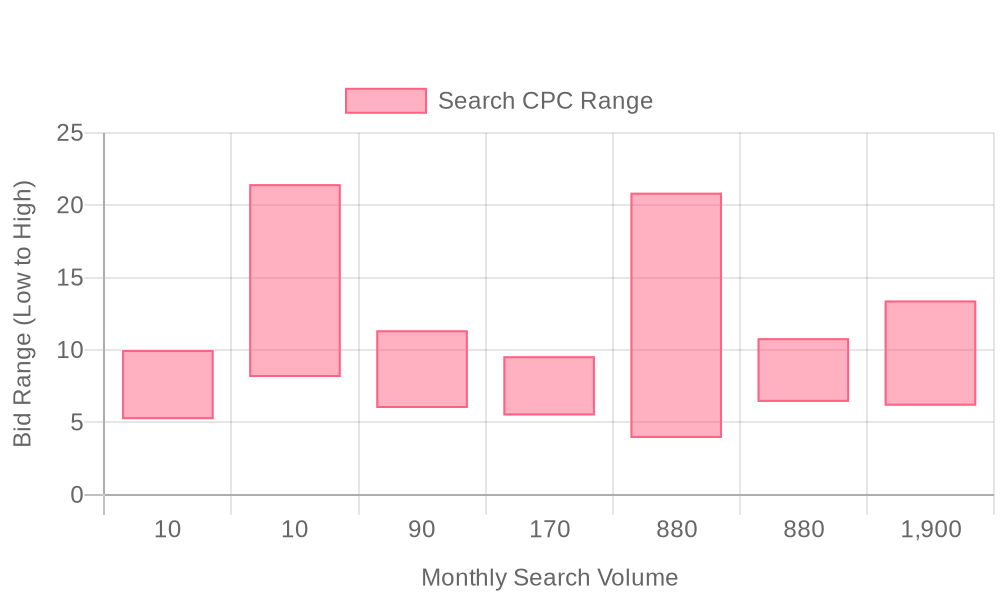
| Industry | Keyword | Monthly Search Volume | Competition Level | Low Bid | High Bid |
| Health Sharing Organizations | christian organization health insurance | 10 | HIGH | 5.23 | 10 |
| Health Sharing Organizations | health care sharing companies | 10 | HIGH | 8.14 | 21.45 |
| Health Sharing Organizations | medicare shared savings program aco | 90 | LOW | 6 | 11.36 |
| Health Sharing Organizations | medicare aco programs | 170 | LOW | 5.49 | 9.57 |
| Health Sharing Organizations | medicare shared savings program | 880 | LOW | 3.93 | 20.86 |
| Health Sharing Organizations | medicare aco | 880 | LOW | 6.42 | 10.82 |
| Health Sharing Organizations | health sharing organizations | 1900 | MEDIUM | 6.16 | 13.42 |
Developing a data-driven keyword strategy is vital for health sharing organizations seeking to maximize digital campaign reach and effectiveness. The right mix of search terms not only elevates brand visibility but also ensures marketing investments are directed toward audiences most likely to convert. For real-world keyword inspiration and campaign insights, review this collection of healthcare Google Ads campaign examples.
- Health insurance alternatives: Targeting keywords such as “Christian health sharing plans,” “faith-based health coverage,” and “medical cost sharing programs” attracts users actively searching for options outside traditional insurance.
- Telemedicine services: Including terms like “virtual healthcare for ministries” or “telehealth for faith communities” addresses the growing demand for remote medical support within these networks.
- Healthcare compliance: Integrating phrases such as “HIPAA-compliant health sharing” and “healthcare compliance for ministries” aligns campaigns with regulatory concerns and builds trust among compliance-focused prospects.
Combining high-intent keywords and long-tail phrases allows campaigns to engage both broad and highly specific segments. This dual approach improves both reach and lead quality, ensuring every click has a strong potential for downstream engagement. Explore best practices for aligning keyword strategy with content marketing to further boost results.
Effective use of negative keywords is equally important. By filtering out terms like “free health insurance,” “ACA plans,” or unrelated queries, marketing teams can avoid unqualified traffic and protect budget efficiency. Advanced technology platforms streamline this process by integrating unified data sources, enabling marketers to see which queries drive the best downstream results and adapt keyword lists in real time.
Integrating keyword strategy with content marketing further amplifies results. By ensuring alignment between ad keywords, website content, and landing page messaging, organizations can boost Quality Scores and drive more cost-effective patient acquisition. Technology that centralizes campaign data enables marketers to monitor keyword performance, audience engagement, and conversion attribution within a single view, empowering real-time optimization that reflects evolving audience needs and intent. Leverage Sona to identify which companies and individuals are interacting with your campaigns and optimize engagement in real time.
When supported by advanced audience identification tools, marketers can go beyond surface-level keyword targeting to pinpoint which individuals and companies are interacting with their campaigns. This level of precision allows for dynamic audience updates and smarter budget allocation as high-intent accounts move through the funnel, ensuring that every aspect of the keyword strategy contributes directly to pipeline growth and revenue impact. To accelerate your results, get started for free with Sona and unlock precise audience visibility for your campaigns.
Step-by-Step Campaign Execution Framework
Success in Google Ads for Health Sharing Organizations relies on precision and adaptability. Each step in the campaign lifecycle is structured to maximize conversions while maintaining strict compliance with healthcare advertising standards.
Step 1: Build Targeted Keyword Lists
Selecting the right keywords is foundational for effective healthcare SEM. Health sharing organizations benefit from keyword sets tailored to faith-based medical cost sharing, alternatives to traditional insurance, and geo-specific intent (such as "Christian health sharing Texas" or "affordable health sharing for families"). Incorporating negative keywords, like "insurance" or "Obamacare," ensures that the ads do not trigger irrelevant or policy-violating impressions. For real-world inspiration and benchmarking, review these healthcare Google Ads campaign examples to see how leading brands approach keyword strategy.
When organizations integrate real-time visitor identification, they can pinpoint high-value prospects more efficiently. This capability allows marketers to see not just anonymous clicks but exactly which organizations or individuals are landing on their site, enabling ongoing refinement of keyword lists by quickly expanding on terms that attract engaged, in-market users and filtering out segments that consistently fail to convert.
The upgrade most health sharing organizations advertisers miss is going beyond raw keyword volume to layer in intent and identity signals. By connecting website-visitor data and CRM records with Sona Marketing Measurement, you can see which specific search terms bring in the accounts and customers that actually convert, and weight your keyword and bidding strategy toward those rather than the terms with the highest search volume alone.
Step 2: Develop Compelling Ad Copy
Effective Google Ads copy for health sharing marketing educates users, distinguishes health sharing from insurance, and highlights compliance with industry regulations. Messaging should focus on transparency, such as stating "not insurance" prominently and outlining eligibility requirements. Using clear, benefit-driven language builds trust and improves click-through rates. To ensure your ad copy adheres to all requirements, reference the official Google Ads policy guidelines for healthcare.
Data-driven platforms can surface real-time intent signals, enabling teams to dynamically adjust ad copy based on user behavior. If a segment demonstrates increased interest in family coverage or faith-based healthcare, marketers can swiftly shift budget and messaging to address these needs. Dynamic audience updates ensure that copy variations remain relevant as leads progress through the funnel, boosting both engagement and regulatory alignment.
Step 3: Design Effective Landing Pages
Landing page experience is critical for converting interest into membership applications. Pages must reinforce ad messaging, provide clear explanations of how health sharing works, and address common questions about coverage and compliance. Including testimonials or video stories from existing members can help establish credibility and address skepticism around health sharing arrangements. For a deeper dive into digital marketing strategies that can elevate your healthcare landing pages, explore this complete guide to digital marketing for healthcare.
Platforms that sync CRM and ad data unlock advanced personalization. When a visitor’s company or intent is identified, landing pages can present tailored content, such as specific plan options or case studies most relevant to their segment. This seamless alignment between ad targeting and landing page content drives higher conversion rates and ensures that data from each touchpoint is captured for ongoing optimization.
Step 4: Implement Data-Driven Optimizations
Continuous campaign optimization is vital in the competitive healthcare PPC landscape. Bid adjustments based on device, location, and time-of-day performance help stretch budgets further. Integrating CRM data with Google Ads enables real-time monitoring of which audience segments are converting, allowing teams to double down on high-performing cohorts. For additional insights, review this case study on reducing Google Ads CPC in healthcare for practical optimization strategies.
Predictive analytics further streamline this process. By analyzing historical campaign data and identifying patterns in in-market behavior, teams can anticipate which audiences are most likely to convert and automatically shift budget toward those segments. Advanced conversion tracking, including both online and offline attribution, provides clear visibility into ROI. This holistic approach ensures that every dollar spent is tied to measurable growth in patient acquisition or member sign-ups.
Sona Marketing Measurement closes the gap between clicks and revenue. It captures ad clicks with first-party measurement, ties them through UTM capture and ad-platform APIs to the actual record in your CRM, and reports ROAS by keyword and campaign instead of by last-click form fill. Feeding that revenue signal back into Smart Bidding and Performance Max compounds over time: the algorithms optimize toward booked health sharing organizations revenue, not cheap leads.
Tips on Expanding Your Health Sharing Presence
Expanding your health sharing organization’s footprint requires a digital strategy built for transparency, trust, and measurable results. Modern revenue teams in this space benefit from unified data that transforms how audiences are identified, engaged, and converted across channels.
- Boost educational content using retargeted ads to inform potential participants: A robust educational content strategy paired with retargeted ads ensures that individuals who have previously interacted with your site or resources receive timely, relevant information about your health sharing model. Integrating intent data and visitor identification allows marketers to go beyond anonymous traffic, pinpointing high-fit prospects and personalizing content for their stage in the journey. This approach increases both engagement rates and lead quality, as audiences are continually nurtured with new educational assets until they are ready to inquire or apply. For further inspiration, see real-world healthcare Google Ads campaign examples to benchmark your strategy.
- Explore partnerships with telehealth services to cross-promote offerings: Strategic alliances with telehealth providers open the door to broader reach, allowing both parties to share audiences and create co-branded campaigns that demonstrate comprehensive care solutions. By syncing CRM data and enriched audience segments, it becomes possible to dynamically update target lists within Google Ads and other marketing platforms, ensuring that cross-promotional messaging reaches the right individuals at the right time. This not only improves campaign efficiency but also enhances attribution, providing clear insights into which partnerships and channels drive new member sign-ups.
- Engage through local and regional campaigns to build community-specific engagement: Localized campaigns help health sharing organizations establish trust and credibility in specific communities by tailoring messaging to regional needs and values. Using real-time intent signals, marketers can adjust budgets and creative dynamically to prioritize regions with the highest in-market activity or underserved populations. This granular approach to targeting, combined with advanced conversion tracking across online and offline touchpoints, delivers actionable insights that fuel continuous improvement and higher ROI in community engagement initiatives.
Unified data lets health sharing organizations expand content topics, allocate resources with more confidence, and surface audience insights that would otherwise stay buried. The result is personalized, high-impact marketing that compounds rather than resets with every campaign.
Beyond Google Ads: Winning the AI Answers Health Sharing Organizations Buyers Now Trust
Paid search captures demand at the moment someone types a query. But a fast-growing share of health sharing organizations buyers no longer start at Google at all, they ask ChatGPT, Gemini, or Perplexity before they ever run a search, and Google's own AI Overviews increasingly summarize an answer above the traditional results. If your business isn't referenced in those AI answers, you're invisible at the exact moment buyers build their shortlist.
Sona AI Visibility shows where your business shows up across ChatGPT, Gemini, Perplexity, Google AI Overviews, and 10+ engines, and, much like a keyword report, which prompts actually send you buyers, so you can prioritize the ones that convert. Run the two together and you cover the entire buyer path: get cited where buyers research (AI Visibility), then prove which of that demand turns into booked revenue (Marketing Measurement).
Helpful resources
Conclusion
The health sharing market will keep growing as insurance costs climb, and the organizations that win members will be the ones that can prove, not just claim, that their ads reach people who actually enroll. Pairing compliant creative with real identity and attribution data turns Google Ads from a compliance obstacle course into a measurable growth channel, one where every dollar spent can be traced to a member who joined.
FAQ
What are the advertising policies for health sharing organizations on Google Ads?
Health sharing organizations must align with healthcare advertising regulations and avoid using insurance terminology, instead clearly stating 'not insurance' in their ads to maintain compliance with Google Ads healthcare policies.
How can health sharing organizations effectively use Google Ads?
They can effectively use Google Ads by developing targeted keyword lists, optimizing audience targeting through intent signals, designing compliant ad creatives, and continuously monitoring and adjusting campaigns for better performance.
What strategies can be implemented for Google Ads in the healthcare sector?
Strategies include using precise keyword targeting, optimizing audience segmentation, designing effective landing pages, and integrating CRM data for real-time campaign adjustments to enhance targeting and compliance.
Are there specific keywords that work best for health sharing organizations in Google Ads?
Yes, focusing on healthcare-specific keywords like 'Christian health sharing,' 'faith-based medical cost sharing,' and 'affordable healthcare alternatives' can attract intent-driven users exploring non-traditional healthcare options.
What are the common challenges faced by health sharing organizations when using Google Ads?
Common challenges include ensuring advertising compliance, precise targeting, measuring ROI, and addressing visibility issues with anonymous traffic, which can be mitigated through advanced technology solutions.







