


Aspiring pilots rarely wait around once they've decided to enroll: they search, compare a handful of schools, and often reach out to whichever one answers first. Capturing that high-intent moment is the central challenge for flight school marketers, since a delayed response or a generic ad can mean losing a student to the school down the runway. Google Ads gives flight schools a way to meet that moment head-on, surfacing programs to prospects who are actively researching certifications, discovery flights, or accelerated training. Done well, it also bridges the perennial gap between digital campaigns and offline enrollment, connecting a click to an actual seat in a cockpit. By targeting the right keywords and ad formats, and adjusting to local licensing requirements, seasonal enrollment cycles, and emerging markets, flight schools can turn ad spend into a steady pipeline of qualified students, standing out in a marketplace where most competitors look alike on the surface.
How to Generate Flight School Leads with Google Ads: A Step-by-Step Guide

Flight schools face persistent challenges in reaching prospective students who are genuinely ready to enroll. Advanced digital marketing solutions now give these organizations a unique edge: the ability to engage high-intent prospects in real time, making every marketing dollar work harder.
Data-driven paid search has changed how flight schools find students. Precise analytics let marketers clear the visibility hurdle and put a compelling offer in front of an aspiring pilot exactly when they're comparing programs. Flight school marketing looks at this shift in more detail.
Effective keyword targeting is critical for capturing the attention of future aviators at the decisive moment. Using tools that identify in-market behaviors, schools can prioritize search terms like "accelerated pilot training near me" or "FAA-approved flight school cost." This approach ensures that campaigns reach users with the highest likelihood to inquire or schedule a tour, driving enrollment strategies for flight schools with efficiency.
Aligning landing pages with ad creative removes friction from the lead-capture process. When ad messaging and landing page content match, prospects move from interest to action without a second thought. Advanced platforms can identify the companies and buyers behind site visits, attribute them to a source, and personalize landing pages around the keywords or ad groups that brought them in, which lifts form submissions and calls. Sona's Identity Resolution helps connect that visitor data to campaign performance with precision.
Optimization techniques now extend beyond manual bid adjustments. Sophisticated solutions allow marketers to monitor prospect behaviors in real time, reallocating budget to campaigns and audiences that show the strongest intent signals. When audience segments update dynamically as leads move through the funnel, schools can continue to nurture warm prospects while reducing wasted spend on non-converting clicks.
Cross-channel marketing integration is the new standard for flight school advertising. By synchronizing online campaigns with offline touchpoints, such as open house RSVPs or flight discovery calls, flight schools create a cohesive experience that boosts both engagement and conversion rates. For more insights on maximizing Google Ads ROI, check out our guide on Google Ads ROAS. Advanced attribution and CRM syncing ensure that every inquiry is tracked from click to enrollment, providing a holistic view of campaign ROI and informing future digital marketing for flight schools.
Why Does Google Ads Matter for Flight Schools?

Flight schools face unique challenges in connecting with the right prospective students at the exact moment they are researching aviation careers or advanced certifications. Google Ads delivers precision by capturing demand from individuals who are actively searching for flight training, ensuring marketing budgets focus on leads with the highest intent to enroll. Flight school strategies provides a deeper look at this trend.
Rapid response is essential during peak enrollment cycles and seasonal surges. With Google Ads, schools can immediately shift ad spend to the most urgent programs or campuses, responding to real-time signals without delay. This enables timely filling of classes and maximizes return from marketing investments.
Marketing for flight schools also requires the flexibility to segment campaigns by program type, such as private pilot licenses, instrument ratings, or commercial training. Google Ads supports dynamic audience targeting, allowing schools to serve tailored messaging to students interested in specific certifications or career paths. For more insights on campaign segmentation, check out our guide on retargeting strategies.
Geographic targeting within Google Ads empowers flight schools to penetrate new regions or expand into underserved markets. By analyzing in-market behaviors and lead sources, revenue teams can prioritize spend in areas showing high conversion potential, efficiently accelerating growth. Enhanced attribution means schools can now link offline outcomes, like phone inquiries or campus visits, back to specific ads, providing a complete view of ROI and supporting smarter, data-driven decisions for student acquisition.
Common Types of Google Ads Campaigns for Flight School Services

Flight schools operating in a high-competition market need campaign structures that align directly with student intent and enrollment cycles. Leveraging diverse Google Ads campaign types ensures broad coverage, reaching prospects at every stage of their decision process while maintaining cost efficiency and maximizing student acquisition.
- Search Campaigns: Targeting high-intent keywords like "flight school near me" and "private pilot training enrollment" catches prospects who are done browsing and ready to call or apply. These campaigns convert the most serious leads, letting marketers hold spend for bottom-of-funnel queries rather than broad research terms like "how to become a pilot." Layered with real-time visitor intent data, search campaigns can shift budget toward the prospects closest to enrolling, including those searching around FAA medical requirements or financing, which sharpens PPC efficiency for flight schools. For an actionable breakdown on boosting Google Ads performance, see Google Ads ROAS.
- Display Ads: Maintaining continuous brand visibility across aviation blogs, educational portals, and related forums prevents competitor encroachment and keeps your programs top-of-mind. Display campaigns allow for precise audience targeting based on in-market behaviors and interests, ensuring that ad impressions are served to those most likely to engage. Marketing strategies provides a deeper look at this trend and its applications as audience needs evolve.
- Video Ads: YouTube and other video platforms provide unmatched opportunities to visually immerse prospective students in real training scenarios, campus tours, and alumni testimonials. Video ads not only build trust but also differentiate your school’s unique approach to flight instruction. Marketers can leverage video engagement analytics to pinpoint which content formats and messages resonate most, then retarget viewers who show high intent, accelerating their journey toward enrollment.
- Remarketing: Re-engaging website visitors who explored course pages or downloaded program brochures is essential for nurturing leads until they are ready to commit. Remarketing campaigns can be fine-tuned using event-level intent signals, ensuring messaging evolves as prospects gather more information and move closer to application. Platforms like Sona Audiences are designed to help flight schools segment and reach high-potential prospects through dynamic audience updates.
- Assets: Incorporating structured ad assets, such as sitelinks to financial aid details or callouts highlighting FAA certifications, increases ad credibility and click-through rates. Trust-building elements like student testimonials, safety records, and awards can be surfaced automatically when a prospect's behavioral data indicates they are seeking reassurance. This approach strengthens digital marketing for flight schools by connecting prospects with the most relevant proof points at the right decision stage.
Ready to optimize your Google Ads approach? Start onboarding and take the next step toward more effective digital campaigns.
Where to Find Growth Opportunities

Flight schools face an evolving market where digital channels increasingly shape student acquisition and enrollment strategies. Growth now depends on identifying untapped audiences and using technology to convert interest into measurable results.
- Specialty Keyword Targeting: Targeting niche aviation phrases extends reach beyond generic terms like “flight school near me.” By focusing on specialty programs, certifications, and aircraft types, marketing teams address unique segments, such as international pilot candidates or career changers, who often show higher conversion intent. This approach uncovers long-tail opportunities and improves engagement quality. For a list of high-impact aviation search terms, see flight school keywords.
- Competitor Gap Analysis: Systematically reviewing which audiences and keywords competitors prioritize, and where they fall short, reveals underserved areas in the market. For example, if competitors neglect digital marketing for flight school offerings in certain regions or advanced ratings, proactive campaigns can fill these voids. Sona's Identity Resolution surfaces new audience segments and intent signals, supporting agile campaign adjustments as market gaps emerge.
- Google Display Network Expansion: Display campaigns help flight schools build brand awareness among aspiring pilots who may not be actively searching yet. By synchronizing CRM insights and enriched audience data with Google Ads, teams ensure that ad impressions reach organizations and individuals displaying in-market behavior. This level of precision helps flight school advertising move beyond basic demographic targeting to focus on high-value accounts and those most likely to convert.
- Content Retargeting For Education: Retargeting users who engage with blog posts or downloadable resources keeps prospects connected as they research training options. Employing advanced conversion tracking and cross-channel attribution, marketing teams attribute leads accurately, even for complex customer journeys involving both online and offline touchpoints. For more insights on attribution best practices, see our guide on revenue attribution.
How to Apply Audience Segmentation for Flight Schools

Flight schools competing for student acquisition benefit from precise audience segmentation within their digital marketing and Google Ads campaigns. By distinguishing key learner profiles, institutions can allocate budgets more efficiently and engage with individuals most likely to convert, supporting stronger enrollment strategies for flight schools and improving overall marketing ROI. Flight school marketing provides a deeper look at this trend.
- Defining Segments: Start by separating core audiences, such as beginner pilots seeking introductory lessons and advanced learners pursuing additional certifications. This segmentation allows marketers to craft tailored messaging and offers that resonate with each group’s stage of flight training, ensuring higher relevance and engagement in PPC for flight schools.
- Overlaying Intent Signals: Integrate behavioral and contextual signals like recent searches for "pilot certification" or "accelerated flight training." Sona surfaces intent signals that help marketers prioritize in-market prospects who show high readiness to enroll, enabling smarter Google Ads targeting and maximizing the impact of every advertising dollar.
- Creating Ad Groups By Segment: Build ad groups within Google Ads tailored for each audience, aligning keywords, creative, and offers directly to their training goals. For example, a campaign for entry-level students may emphasize discovery flights and financing, while advanced segments respond to ads highlighting multi-engine or instrument ratings. Dynamic audiences ensure that as leads progress from inquiry to enrollment, messaging and retargeting strategies adapt seamlessly in online marketing for flight schools.
- Ensuring Accurate Conversion Tracking: Comprehensive tracking connects all the dots between online engagement and offline outcomes, crucial for measuring student acquisition in flight school advertising. For more insights on attribution and connecting ad spend to revenue, check out our guide on revenue tracking. When audience and lead data sync automatically between systems, revenue teams can attribute enrollments to specific ads, refine their targeting, and optimize budget allocation across every stage of the funnel.
This is also where measurement changes the economics. With Sona Marketing Measurement you can identify the companies and buyers behind your ad clicks, not just anonymous sessions, and segment audiences by who actually becomes a customer. That lets you build bid adjustments and audience signals around the segments that convert and de-prioritize the ones that don't, so you feed Google's algorithms "this click became a paying flight school customer" instead of just "someone filled out a form."
Keyword Strategy & Sample Target Terms
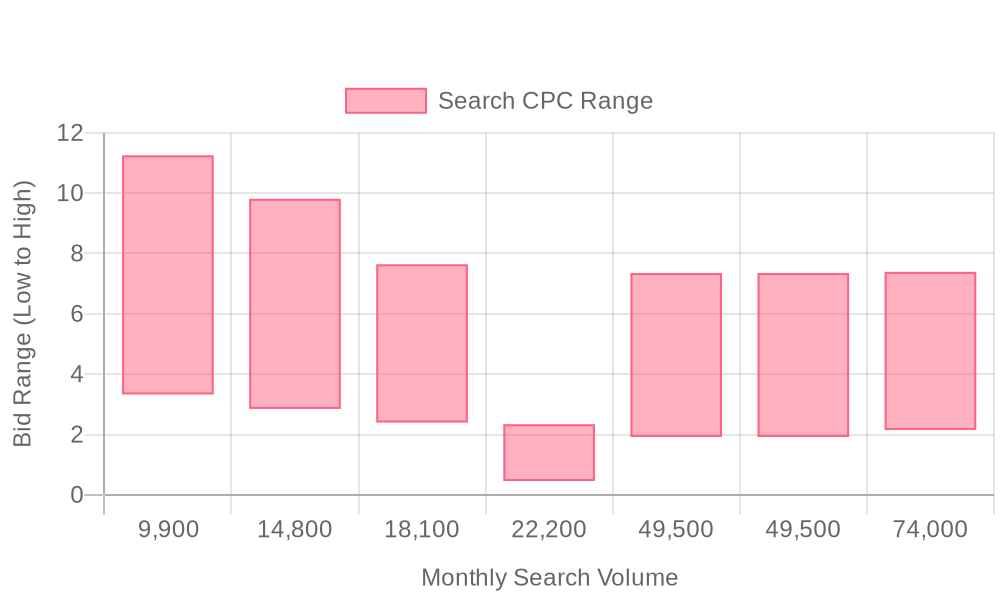
| Industry | Keyword | Monthly Search Volume | Competition Level | Low Bid | High Bid |
| Flight School | aviation school | 9900 | MEDIUM | 3.33 | 11.25 |
| Flight School | pilot school near me | 14800 | MEDIUM | 2.85 | 9.81 |
| Flight School | pilot school | 18100 | MEDIUM | 2.4 | 7.64 |
| Flight School | flight attendant school | 22200 | MEDIUM | 0.46 | 2.34 |
| Flight School | flight school near me | 49500 | MEDIUM | 1.92 | 7.35 |
| Flight School | flying lessons near me | 49500 | MEDIUM | 1.92 | 7.35 |
| Flight School | flight school | 74000 | LOW | 2.15 | 7.39 |
Precision in keyword selection drives measurable enrollment growth for flight schools. Marketers who focus on high-intent search terms consistently reach prospects ready to take the next step, such as scheduling discovery flights or requesting admissions information. Phrases like "pilot training near me" and "aviation courses in [city]" directly address location-based search behaviors, capturing leads who are actively evaluating their training options.
Incorporating local modifiers into keywords ensures visibility for prospects seeking nearby options, which is essential for a service as location-dependent as flight training. Flight school keywords provides a deeper look at this trend. Pairing this with negative keywords, such as "flight simulator games" or "free pilot training," helps filter out unqualified traffic and optimize budget allocation. This approach ensures ad spend is directed toward genuine potential students, preventing wasted impressions and irrelevant inquiries.
Aligning keyword lists with promotional content and current market demand further elevates campaign effectiveness. For those looking to optimize Google Ads ROAS, we’ve covered best practices in our Google Ads guide. Marketers leveraging unified data platforms can dynamically update keyword targeting based on real-time search trends and observed intent, allowing them to shift budget toward segments showing higher conversion potential. This adaptability ensures that campaigns always address the most promising audience segments, maximizing student acquisition and return on investment.
Step-by-Step Campaign Execution Framework
Step 1: Build Targeted Keyword Lists
- Localize Queries For Relevance: Focusing on service-oriented keywords like "flight lessons near me" and "pilot certification in [city]" ensures ads reach prospects ready to enroll. Localizing queries addresses market-specific demand and reduces wasted spend on irrelevant traffic.
- Segment By Course Level: Crafting separate keyword lists for entry-level training and advanced pilot courses aligns ad delivery with the prospect’s stage in the aviation journey. This structure increases lead quality and lets marketing teams tailor messaging to readiness and goals.
- Integrate Negative Filters: Filtering out terms like “flight simulator games” or “free pilot classes” eliminates low-intent clicks, maximizing budget efficiency and delivering higher-quality leads to sales.
With unified campaign data, teams can identify not just anonymous searchers but actual companies and high-value prospects visiting their flight school website. Sona's Identity Resolution reveals which organizations are behind your site traffic, turning keyword strategy from guesswork into precision targeting and directly supporting student acquisition for flight schools.
The upgrade most flight school advertisers miss is going beyond raw keyword volume to layer in intent and identity signals. By connecting website-visitor data and CRM records with Sona Marketing Measurement, you can see which specific search terms bring in the accounts and customers that actually convert, and weight your keyword and bidding strategy toward those rather than the terms with the highest search volume alone.
Step 2: Develop Compelling Ad Copy
- Highlight Unique Experiences: Emphasizing assets like state-of-the-art simulators or a high instructor-to-student ratio sets a flight school apart in a crowded market. Effective ad copy details tangible benefits, helping digital marketing for flight schools resonate with career-focused prospects.
- Build Trust Through Authority: Including FAA certifications, alumni testimonials, or published pass rates in ad headlines and descriptions establishes credibility. Prospects are more likely to engage with schools that prove their commitment to safety and success.
- Leverage Incentives: Promoting introductory pricing, limited-time discounts, or bundled discovery flight offers compels hesitant leads to act quickly.
Flight school marketing provides a deeper look at messaging, value propositions, and tactics that resonate with prospective students and their families.
Step 3: Design Effective Landing Pages
- Ensure Message Match: Landing pages must mirror the language and promises of the ad that brought the visitor there. Consistency between ad copy and on-page content directly impacts conversion rates and the overall effectiveness of PPC for flight schools.
- Optimize For Conversion: Prominent, action-focused CTAs such as “Book a Discovery Flight” or “Apply Now” guide prospects seamlessly through the funnel. Fast, mobile-first layouts and minimal form fields reduce friction, especially for high-intent mobile users.
For more insights on optimizing conversion journeys, check out our guide on stage segmentation.
Step 4: Implement Data-Driven Optimizations
- Leverage Smart Automation: Automated bidding strategies can allocate budget in real time, capitalizing on peak periods of search activity for aviation training. This ensures that flight school advertising remains cost-effective and highly visible to the right audiences.
- Enhance Targeting With Enrollment Data: Importing actual application and enrollment outcomes into campaign management allows for continuous refinement. Marketers can identify which keywords, ad groups, or creative assets drive true student acquisition for flight schools.
One analysis in Google Ads guide explores optimization tactics and how closed-loop tracking improves campaign performance.
Sona Marketing Measurement closes the gap between clicks and revenue. It captures ad clicks with first-party, company-level measurement, ties that click through UTM capture and ad-platform APIs to the actual record in your CRM, and reports ROAS by keyword and campaign instead of by last-click form fill. Feeding that revenue signal back into Smart Bidding and Performance Max compounds over time: the algorithms optimize toward booked flight school revenue, not cheap leads.
Tips on Expanding Your Flight School Presence
Aviation training providers thrive when they deliver value beyond standard program listings and tuition tables. Flight schools that lead the market share actionable educational resources, leverage advanced analytics, and consistently personalize their digital presence to reach the next generation of pilots.
Retargeting with educational content transforms passive browsers into high-quality leads by clarifying your school’s unique offerings and value proposition. By segmenting audiences based on their online behavior and nurturing them with tailored insights, such as pilot career pathways, financial aid options, or advanced certificate tracks, schools build trust and attract candidates most likely to convert. Real-time audience updates ensure that as prospective students engage with your resources, they move seamlessly through personalized remarketing journeys, maximizing relevancy and potential for enrollment. Platforms like Sona Audiences help schools reach the right visitor segments with messaging that adapts as prospects move through the funnel.
Upselling certificate courses through segmented ad campaigns guides students along continued educational paths. For example, promoting instrument rating or commercial pilot add-ons to current private pilot students not only increases lifetime student value but also strengthens retention. Audience segmentation and CRM-ad sync enable these upsell campaigns to reach the right prospects at the precise moment they demonstrate readiness for advanced training, backed by behavioral signals and enriched data. CORMORANT Marketing shares industry benchmarks for this approach.
Strategic collaborations with aviation associations and local clubs enhance your school’s credibility in a crowded digital marketplace. Featuring association logos in ad creative or landing pages signals third-party validation, which, combined with consistent messaging across paid channels, fosters trust and sets your school apart from competitors. Integrating visitor identification technologies further enables marketers to pinpoint which industry partners or organizations are driving the most high-intent traffic, allowing you to amplify these relationships for greater reach.
Capitalizing on search trends lets flight schools adapt quickly to new regions or shifting student needs. By monitoring evolving local demand, such as surges in pilot training interest in secondary cities or seasonal peaks in discovery flight queries, schools can adjust budgets and messaging with precision. Flight school SEO explores this trend.
Implementing insights from analytics tools ensures your marketing efforts are analyzed holistically, linking online engagement to offline outcomes such as tour bookings and enrollments. For more insights on optimizing digital campaigns, check out our guide on Google Ads ROAS. By integrating advanced conversion tracking and attributing leads from first digital touchpoint through final enrollment, flight schools gain a true picture of return on ad spend. This approach surfaces which Google Ads campaigns, creative assets, or channels deliver the greatest impact, empowering revenue teams to continually refine strategy and maximize student acquisition.
Beyond Google Ads: Winning the AI Answers Flight School Buyers Now Trust
Paid search captures demand at the moment someone types a query. But a fast-growing share of flight school buyers no longer start at Google at all, they ask ChatGPT, Gemini, or Perplexity before they ever run a search, and Google's own AI Overviews increasingly summarize an answer above the traditional results. If your business isn't referenced in those AI answers, you're invisible at the exact moment buyers build their shortlist.
Sona AI Visibility shows where your business shows up across ChatGPT, Gemini, Perplexity, Google AI Overviews, and 10+ engines, and, much like a keyword report, which prompts actually send you buyers, so you can prioritize the ones that convert. Run the two together and you cover the entire buyer path: get cited where buyers research (AI Visibility), then prove which of that demand turns into booked revenue (Marketing Measurement).
Helpful resources
Conclusion
Google Ads for a flight school works when it treats a click the way the business treats a student: as someone who needs to be met at the right moment, with the right information, and followed through to a specific outcome.
The schools that pull ahead won't be the ones spending the most, but the ones that know which keywords, ads, and audiences actually produce enrolled students, and keep feeding that signal back into their campaigns as AI search reshapes how prospects research their first flight.
FAQ
How can I set up a Google Ads campaign for my flight school?
To set up a Google Ads campaign for your flight school, start by building targeted keyword lists focusing on service-oriented and localized queries. Develop compelling ad copy highlighting unique experiences and trust-building elements. Design effective landing pages that ensure message match and optimize for conversion, and implement data-driven optimizations using smart automation and enrollment data.
What keywords should I target for flight school ads?
Target high-intent keywords like 'pilot training near me' and 'aviation courses in [city]' to capture location-based search behaviors. Use specialty keywords related to specific programs or certifications, and incorporate negative filters to exclude low-intent traffic.
What is the average cost per click for flight school Google Ads?
The article does not specify the average cost per click for flight school Google Ads.
How do I measure the success of my Google Ads for flight school?
Measure the success of your Google Ads by tracking conversion rates, aligning landing pages with ad creatives, and using advanced attribution to connect online engagement to offline outcomes like enrollments. This provides a holistic view of campaign ROI.
What are the best practices for Google Ads in the flight training industry?
Best practices include targeting high-intent keywords, aligning ad creatives with landing pages, using audience segmentation, implementing data-driven optimizations, and integrating cross-channel marketing efforts to synchronize online and offline touchpoints.







