


Air conditioning repair services live or die by timing: a homeowner's unit fails, and the business that shows up first in Google Ads often wins the job. Yet most campaigns in this space miss that moment, spreading budget across broad terms instead of catching prospects at the instant they need help, which wastes spend and hands the lead to a competitor. A well-built campaign closes that gap, pairing precise targeting with real-time analytics to reach decision-makers when they're already reaching for the phone. This guide walks through designing, launching, and optimizing Google Ads campaigns built specifically for air conditioning repair businesses.
How to Generate Air Conditioning Repair Leads with Google Ads: A Step-by-Step Guide
Google Ads works best as part of a broader plan, not a standalone tactic. Pairing PPC for HVAC with ongoing SEO, content marketing, and targeted social outreach compounds visibility across channels instead of leaving lead growth to one source.
Ad copy needs to speak to the pain points of homeowners and property managers facing urgent repairs: a breakdown during a heatwave, the need for a fast response, a technician who's actually local. Seasonality shapes nearly every part of this messaging. Search intent spikes ahead of and during hot spells, when a broken system becomes an emergency rather than a maintenance question, so copy and bidding need to flex with that curve. Calling out licensed, insured technicians and straightforward pricing matters too, since HVAC buyers are often deciding fast, under stress, and want proof they're hiring someone qualified. That specificity is what raises Google Ads ROI for HVAC and builds trust from the first impression.
Advanced platforms let marketers move past generic audience segments to identify the actual companies and visitors most likely to convert. Sona Audiences supports this kind of targeting for HVAC campaigns, reaching homeowners facing an urgent breakdown alongside property managers evaluating service contracts, so spend concentrates on the segments most likely to book a repair.
Campaigns become even more powerful when audiences are dynamically updated as leads progress through the funnel. CRM and ad platforms can stay in sync, ensuring that both new and returning customers see the most relevant offers and calls-to-action. This holistic approach to HVAC digital marketing streamlines workflows and keeps sales and marketing aligned on shared revenue goals.
Accurate attribution is what makes the cost of Google Ads for HVAC defensible. See our guide on revenue attribution for more on tracking revenue from digital campaigns. It enables continuous optimization and makes the true ROI of an HVAC advertising investment easy to prove.
Why Google Ads Matter for Air Conditioning Repair Businesses
Google Ads has become a cornerstone of air conditioning marketing, letting HVAC businesses reach prospects at the moment of highest intent. High-intent search signals let air conditioning repair companies spend every ad dollar on opportunities most likely to convert.
Granular data and measurable ROI let HVAC marketing leaders tie ad spend to real revenue, folding paid search into the broader digital strategy rather than running it in isolation. For more on maximizing paid search performance, see our guide on Google Ads ROI.
Modern integrations move marketers beyond anonymous website traffic, identifying which companies are engaging and updating audience segments as leads progress through the funnel. Sona's Identity Resolution pinpoints engaged companies and syncs enriched lead data with Google Ads for sharper targeting.
That visibility lets marketers shift budget to the highest-converting accounts, tailor messaging, and push enriched lead data straight into Google Ads and connected CRM platforms, a unified approach to PPC for HVAC that shortens sales cycles and drives consistent lead generation.
Common Types of Google Ads Campaigns for Air Conditioning Repair
- Search Campaigns: Search campaigns are the foundation for acquiring high-intent leads in HVAC. They target keywords like "HVAC repair near me," ensuring your business appears when customers urgently need air conditioning repair. Responsive Search Ads, an ad format within Search campaigns rather than a separate campaign type, let you test multiple headlines and descriptions so Google serves the best-performing combination to each searcher. Real-time intent signals let marketers shift budget toward accounts showing immediate need, improving both lead quality and ROI. Local targeting has an outsized impact on HVAC ad success.
- Display Ads: Display ads provide visual reinforcement of your brand across the web, complementing search campaigns by reaching users browsing weather, home improvement, or local news sites. Dynamic audience updates, based on lead status and browsing behavior, keep your brand visible to prospects most likely to convert. For more insights on optimizing ad campaigns for every stage of the funnel, check out our guide on stage segmentation.
- Video Ads: Video campaigns capitalize on platforms like YouTube to showcase service speed, reliability, and customer satisfaction in compelling formats. Video ads can be tailored using audience segmentation and real-time insights, ensuring each prospect receives content closely aligned with their stage in the buying journey. Advanced attribution models connect video engagement to both online and offline conversions, providing a clear view of Google Ads ROI for HVAC.
- Remarketing: Remarketing targets visitors who explored your site but didn't book, bringing them back with tailored ads at critical moments. Identifying company-level visitors lets marketers personalize follow-up messaging and raise conversion odds. Sona's Identity Resolution pinpoints high-value visitors for precise remarketing, making every ad dollar count.
- Performance Max Campaigns: Performance Max lets air conditioning repair advertisers run across Search, Display, YouTube, Maps, and Gmail from a single campaign, using Google's automation to find high-intent prospects wherever they are. When fed accurate conversion data, such as which clicks became booked repair jobs, Performance Max can shift budget toward the audiences and placements most likely to generate qualified HVAC leads, making it a strong complement to dedicated Search campaigns.
- Ad Assets: Beyond the campaign types above, ad assets (formerly called "extensions") such as callouts, structured snippets, and call buttons enhance your Search ads by immediately highlighting key differentiators like "24/7 emergency repairs" or "licensed technicians." Syncing these assets with CRM and website data ensures that the most relevant offers and service details are featured, driving higher click-through rates and capturing valuable inbound calls. These assets are not a standalone campaign type but a layer that strengthens the Search campaigns above, helping HVAC ads stand out in crowded search results and convert more high-intent prospects.
Where to Find Growth Opportunities?
Growth in air conditioning repair marketing comes from spotting demand before competitors do. Repair needs spike suddenly, with a heat wave or the season's first cold snap, and marketers who track campaign performance against local weather trends catch those high-intent leads while others miss them.
- Seasonal Trend Analysis: The demand for air conditioning repair fluctuates throughout the year, often peaking during extreme weather months. Savvy revenue teams proactively shift budgets and refresh creative assets to capture these surges. Using unified go-to-market data, marketers can detect subtle demand spikes and rapidly adjust Google Ads for air conditioning repair to maximize lead generation during critical periods.
- Auction Insights For Competitive Gaps: Auction insights reveal which competitors are active and when windows for market share open up. Rather than relying on aggregate data alone, advanced teams use real-time intent signals to spot accounts in-market for HVAC services and shift budget quickly toward likely conversions. Sona surfaces intent signals in real time so marketers can identify and act on these opportunities as they arise.
- Trade Directories And Local Review Sites: HVAC ad campaigns perform best when integrated across multiple digital touchpoints. By promoting air conditioning repair services in trade-specific directories and trusted review platforms, marketers can supplement paid search with authoritative third-party placements. This multi-channel strategy not only builds brand credibility but also helps identify previously anonymous site visitors, closing the attribution loop and ensuring no high-quality lead is overlooked.
- Content Partnerships In Regional Publications: Strategic partnerships with local or regional publishers can amplify reach and position air conditioning repair businesses in front of new audiences. By combining CRM and ad platform data, marketers can discover which content partnerships drive the highest engagement and conversions. For more insights on optimizing multi-channel attribution and partnerships, check out our guide on affiliate revenue attribution.
How to Apply Audience Segmentation for Air Conditioning Services

Precise audience segmentation transforms air conditioning marketing by separating residential and commercial prospects, each with distinct needs and buying triggers. Revenue teams that act on these differences avoid wasted spend and improve lead quality, driving more booked appointments with less effort.
Start by building dedicated segments for the most relevant customer groups. Splitting residential from commercial clients lets marketers tailor creative, offers, and landing pages to the priorities of homeowners versus facilities managers, solving the common problem of poorly targeted HVAC campaigns and lifting conversions. Residential segments respond to ads about fast emergency repairs and seasonal tune-ups, while commercial segments respond better to messaging on energy efficiency, compliance, or maintenance contracts.
Layer intent signals on top of these segments using Google Ads features like custom intent audiences. Tracking recent search behavior, site visits, and service requests reveals in-market prospects actively looking for air conditioning repair. Sona's Identity Resolution helps revenue teams move beyond anonymous traffic by revealing which companies are browsing your site, so B2B marketers can reach those high-value accounts directly in Google Ads.
Dynamic audience management further elevates campaign performance. As leads interact with your brand or progress through the sales funnel, audience membership updates automatically, keeping campaigns relevant and timely. Seamless CRM and ad platform sync ensures these enriched, high-intent audiences flow directly into Google Ads and connected tools. For more insights on closed-loop measurement and refining segmentation, check out our guide on Google Ads ROI.
This is also where measurement changes the economics. With Sona Marketing Measurement you can identify the companies behind your ad clicks, not just anonymous sessions, and segment audiences by which accounts actually become customers. That lets you build bid adjustments and audience signals around the segments that convert and de-prioritize the ones that don't, so you feed Google's algorithms "this click came from a company that became a paying air conditioning repair customer" instead of just "someone filled out a form."
Keyword Strategy & Sample Target Terms
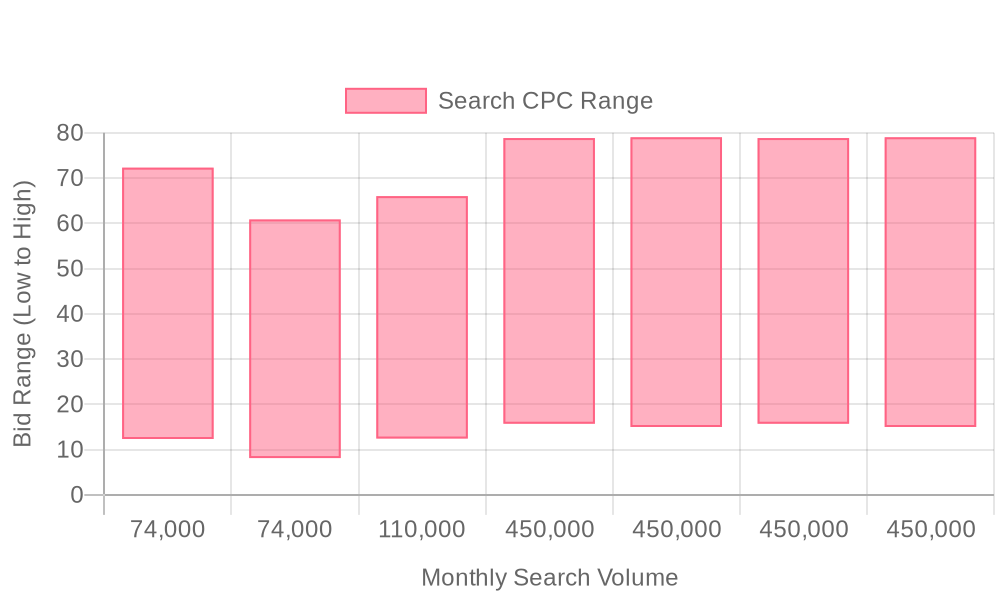
| Industry | Keyword | Monthly Search Volume | Competition Level | Low Bid | High Bid |
| Air Conditioning Repair | hvac repair near me | 74000 | LOW | 12.34 | 72.29 |
| Air Conditioning Repair | hvac repair | 74000 | LOW | 8.13 | 60.85 |
| Air Conditioning Repair | hvac companies near me | 110000 | MEDIUM | 12.45 | 66 |
| Air Conditioning Repair | air conditioning repair | 450000 | LOW | 15.72 | 78.84 |
| Air Conditioning Repair | ac repair near me | 450000 | LOW | 15 | 79.02 |
Air conditioning repair companies get stronger lead generation results by focusing on keyword strategies that align with customer urgency and local demand. Terms that signal immediate intent, such as “emergency AC repair” or “24/7 HVAC service,” intercept high-value searches from prospects ready to act, particularly during heat waves when a no-cool call becomes a same-day priority rather than something to schedule next week. This delivers better conversion rates and efficient budget allocation by concentrating spend on the search moments with the highest payoff.
Location-specific keywords, for example “AC repair in [city]” or “local HVAC technician,” ensure ads surface for users in your true service area. These targeted phrases are especially effective for air conditioning marketing because they filter out irrelevant impressions and clicks, driving higher relevance and lower acquisition costs. In addition, integrating seasonal and pain-point-driven terms like “pre-season AC tune-up,” “air conditioner not cooling,” or “noisy AC unit” captures intent from customers whose needs change throughout the year. This nuanced targeting increases campaign agility and ensures that your ads remain closely aligned with shifting demand cycles.
Negative keywords play a critical role in reducing wasted spend and improving PPC for HVAC efficiency. By excluding generic or low-intent queries such as "DIY AC repair," "HVAC training courses," or "HVAC certification," marketers can prioritize ad delivery to buyers with genuine service needs rather than students, job-seekers, or homeowners looking to fix the problem themselves. Continual negative keyword refinement, supported by real-time search data and intent signals, sharpens campaign focus and elevates lead quality. Marketers using platforms that unify intent analytics and keyword performance are able to dynamically adjust their targeting as new search patterns emerge, ensuring their campaigns remain relevant and cost-effective. This builds on the strategies outlined in retargeting with intent.
Advanced platforms let air conditioning repair advertisers refine keyword lists using real-time behavioral insights and granular intent tracking, identifying which keywords consistently drive converting traffic versus irrelevant clicks. That data guides budget shifts, negative-list updates, and expansion into profitable long-tail terms. In B2B environments, syncing enriched data between CRM and ad platforms also enables account-based targeting, concentrating spend on companies and decision-makers most likely to convert.
Step-by-Step Campaign Execution Framework
Step 1: Build Targeted Keyword Lists
Identifying high-intent search terms for air conditioning repair is crucial for generating quality leads, especially in competitive local markets. Utilize advanced keyword tools to map urgent customer needs such as "emergency AC repair," "24/7 HVAC service," and "same-day air conditioning repair." Integrate geo-modifiers tied to specific service areas, ensuring your campaigns reach prospects seeking immediate help nearby.
Modern B2B teams improve keyword targeting by layering intent signals from website visitor data and CRM integrations. This approach empowers marketers to go beyond generic traffic, pinpointing companies or decision-makers who are actively searching for HVAC solutions. Precision prospecting leverages intent signals to help marketers prioritize spend on searchers most likely to convert.
The upgrade most air conditioning repair advertisers miss is going beyond raw keyword volume to layer in intent and identity signals. By connecting website-visitor data and CRM records with Sona Marketing Measurement, you can see which specific search terms bring in the accounts and customers that actually convert, and weight your keyword and bidding strategy toward those rather than the terms with the highest search volume alone.
Step 2: Develop Compelling Ad Copy
Crafting ad copy that directly addresses urgent service needs and high-value offers, like "Same-Day AC Service," immediately communicates your differentiators. Highlighting trust signals, such as verified customer ratings, industry awards, or satisfaction guarantees, strengthens credibility and increases click-through rates. Persuasive, benefits-focused headlines paired with clear calls-to-action guide users toward conversion.
Data-driven HVAC advertising benefits from dynamic segmentation, where ad messages automatically adjust as leads progress through the buying journey. When in-market behavior signals an intent to book service, ad copy can adapt to emphasize limited-time offers, financing options, or priority scheduling. Tailored messaging drives higher engagement across every stage of the funnel.
Step 3: Design Effective Landing Pages
A seamless experience from ad click to landing page is essential for maximizing conversion rates in air conditioning marketing. Ensure messaging stays consistent by mirroring ad headlines and offers on the landing page, reinforcing the value proposition. Incorporate customer reviews, service guarantees, and visible contact options to reduce friction and build immediate trust.
Visitor identification technology lets HVAC marketers personalize landing page content based on known attributes like company size or service history. Sona's Identity Resolution supports this level of customization, turning generic pages into targeted conversion engines.
Step 4: Implement Data-Driven Optimizations
Continuous optimization is what maximizes Google Ads ROI for HVAC. Use campaign performance data to adjust bids, targeting, and budgets in line with high-intent signals and shifting market demand. Proactive bid adjustments direct resources to the most promising queries and geographies, cutting unnecessary spend and improving cost efficiency.
Integrating unified marketing data platforms into your workflow ensures that audience lists update in real time as leads move through the sales cycle. For more insights on boosting Google Ads performance, check out our guide on Google Ads ROAS. With predictive intent monitoring, teams can recognize when buyers are most likely to convert and act quickly, ensuring every dollar drives measurable results in PPC for HVAC and air conditioning repair lead generation.
Sona Marketing Measurement closes the gap between clicks and revenue. It captures ad clicks with first-party measurement, then ties that click through UTM capture and ad-platform APIs to the matching company account record in your CRM, and reports ROAS by keyword and campaign instead of by last-click form fill. Feeding that revenue signal back into Smart Bidding and Performance Max compounds over time: the algorithms optimize toward booked air conditioning repair revenue, not cheap leads.
Tips on Expanding Your Air Conditioning Repair Presence

- Cross-promote Seasonal Offers: Timely promotions, such as pre-summer tune-ups or winter heater checks, generate urgency and drive action when customers are most in need. By dynamically identifying which segments are entering peak buying cycles, marketers can optimize budget allocation and present relevant offers to users actively searching for services. Enhanced conversion tracking provides clarity on which promotions convert best, enabling real-time adjustments that reduce wasted spend and increase overall ROI.
- Engage A Localized Audience: Tailoring ad messaging to highlight participation in neighborhood events or addressing weather-specific problems makes campaigns resonate on a community level. Location-specific targeting, paired with real-time intent data, ensures ads reach users in affected areas during heat waves or cold snaps, increasing relevancy and engagement. As audiences move through the funnel, dynamic audience updates allow marketers to keep messaging aligned with changing local conditions, ensuring no opportunity is missed.
- Use Customer Feedback And Testimonials: Featuring authentic reviews and testimonials within ad creatives establishes credibility and trust with first-time prospects. Marketers can identify which feedback resonates most with their target audience by analyzing attribution data and intent signals, then amplify those messages across high-performing ad sets. For more on effective attribution strategies, check out our guide on self-reported attribution. Integrating online and offline conversion data provides a 360-degree view of campaign effectiveness, linking customer sentiment to actual booked jobs and revenue impact.
- Partner With Local Businesses: Collaborative campaigns with trusted neighborhood brands or service providers can amplify reach and introduce HVAC companies to new but relevant audiences. By syncing enriched lead and account data with both internal CRM systems and Google Ads, teams ensure co-marketing efforts target the right segments, improving efficiency and maximizing lead quality. Real-time reporting and attribution make it easy to track which partnerships drive the most qualified traffic and conversions, enabling smarter future collaborations.
Beyond Google Ads: Winning the AI Answers Air Conditioning Repair Buyers Now Trust
Paid search captures demand at the moment someone types a query. But a fast-growing share of air conditioning repair buyers no longer start at Google at all, they ask ChatGPT, Gemini, or Perplexity before they ever run a search, and Google's own AI Overviews increasingly summarize an answer above the traditional results. If your business isn't referenced in those AI answers, you're invisible at the exact moment buyers build their shortlist.
Sona AI Visibility shows where your business shows up across ChatGPT, Gemini, Perplexity, Google AI Overviews, and 10+ engines, and, much like a keyword report, which prompts actually send you buyers, so you can prioritize the ones that convert. Run the two together and you cover the entire buyer path: get cited where buyers research (AI Visibility), then prove which of that demand turns into booked revenue (Marketing Measurement).
Helpful resources
Conclusion
Mastering Google Ads for an air conditioning repair business isn't about clicks, it's about turning searches into customers. Targeted keywords, sharp ad copy, and strategic bidding turn HVAC lead generation from guesswork into a system.
Get this right and the pipeline fills with high-intent customers because the ads speak directly to their needs. That's the difference between running ads and building a predictable, scalable growth engine.
FAQ
What are the best practices for Google Ads in HVAC?
Best practices for Google Ads in HVAC include using targeted keywords that highlight customer urgency, aligning ad messaging with customer pain points, utilizing advanced audience segmentation, and continuously optimizing campaigns based on real-time data and performance insights.
How much should I budget for Google Ads for air conditioning repair?
The budget for Google Ads should align with high-intent search signals and focus on opportunities most likely to convert, ensuring that ad spend is efficiently allocated to high-value prospects.
What keywords should I use for HVAC Google Ads?
Use keywords that indicate immediate intent such as 'emergency AC repair,' '24/7 HVAC service,' and location-specific terms like 'AC repair in [city]' to intercept high-value searches.
How can I improve my Google Ads click-through rate for HVAC?
Improve click-through rates by crafting compelling ad copy that addresses urgent service needs, highlighting trust signals, and using ad assets to emphasize key differentiators like '24/7 emergency repairs.'
What are the common mistakes to avoid in HVAC Google Ads?
Common mistakes include failing to use precise audience segmentation, not aligning ad copy with customer pain points, neglecting to use negative keywords, and lacking continuous optimization based on performance data.







