


Ductwork collects dust, pollen, and mold spores year-round, and the moment a building manager or homeowner notices a musty smell or a spike in allergy symptoms, they search Google for help immediately. That urgency is what makes Google Ads so valuable for air conditioning cleaning services: the platform captures prospects at the precise moment they're searching for a fix, whether it's a homeowner googling 'air conditioning duct cleaning near me' at 9pm or a facilities director comparing vendors for a compliance-driven cleaning contract. With precise targeting and the ability to measure ROI from click to closed deal, Google Ads can slot directly into a broader marketing strategy. The common failure point is high interest that never converts, quote requests and form fills that go unanswered for days, which is exactly the gap that retargeting and fast follow-up are built to close.
How to Generate Air Conditioning Cleaning Services Leads with Google Ads: A Step-by-Step Guide
Effective lead generation for air conditioning cleaning services relies on precise targeting and conversion-focused execution. Businesses that move beyond generic campaigns and tailor their Google Ads approach for air duct cleaning consistently secure higher-quality leads and maximize spend efficiency.
A robust strategy addresses two persistent challenges: follow-up prioritization and message relevance. By leveraging high-intent signals and real-time digital interactions, marketers can ensure that every qualified inquiry gets prompt attention, while also delivering messaging that speaks to the distinct needs of property managers, facilities directors, and homeowners looking for air quality solutions.
Campaign success starts with a deep understanding of the search journey for air conditioning cleaning. Prospects are motivated by urgent needs (such as allergy spikes, regulatory compliance, or seasonal maintenance) and expect clear, solution-oriented information at every touchpoint. Using Google Ads for Air Conditioning Cleaning Services allows advertisers to intercept these in-market buyers at the moment of intent, presenting highly relevant offers that drive immediate action. For more inspiration on crafting compelling ads, review these HVAC advertising examples and ideas.
To generate qualified leads at scale, businesses must align their entire funnel: from keyword and audience targeting to landing page design, ad creative, and post-click engagement. When audience segments dynamically update as prospects move through the funnel, marketers can allocate budget with confidence to the highest-performing segments and campaigns. This data-driven approach ensures no lead is left behind and spend is continuously optimized for maximum ROI.
Integrating CRM and ad platforms further enhances campaign performance. By syncing enriched lead profiles and audience lists directly into Google Ads, teams can activate remarketing, automate nurture flows, and attribute revenue across both online and offline conversion events. This closed-loop system gives B2B marketers and local service providers the precise control and visibility needed to refine every stage of their air conditioning cleaning services lead generation strategy. Get started for free with Sona.
Why Does Google Ads Matter for Air Conditioning Cleaning Services?
Air conditioning cleaning services rely on precise demand capture, especially as building managers, facilities directors, and property teams search for solutions during peak allergy seasons, post-renovation, or urgent maintenance events. Unlike broad digital campaigns, Google Ads for Air Conditioning Cleaning Services position your brand at the exact moment high-value prospects need reliable cleaning partners, creating efficient links between search intent and booked appointments.
Google Ads also solve the challenge of wasted impressions common to generic HVAC marketing by enabling targeted campaigns for locations and segments often overlooked by traditional outreach. Sona's Identity Resolution reveals which companies and people are visiting your website, giving you insight into which accounts are actively researching air duct cleaning, coil sanitization, or compliance-driven air quality solutions. This visibility allows you to dynamically adjust bids, messaging, and resource allocation in real time, ensuring your spend is focused on the prospects most likely to convert.
Closed-loop tracking further elevates the value of Google Ads in air conditioning cleaning by measuring performance from the initial click to final service contract. Modern marketers can attribute every lead, call, or form submission back to the precise keyword, ad, and location, enabling granular ROI measurement. Integrating your CRM and marketing automation stack with ad platforms ensures that enriched visitor profiles and qualified leads sync automatically, giving sales teams actionable data for intelligent follow-up and precise forecasting.
Common Types of Google Ads Campaigns for Air Conditioning Cleaning Services

- Search Campaigns: Search campaigns are essential for capturing high-intent prospects who are actively seeking air conditioning cleaning services, whether it's a homeowner dealing with sudden allergy flare-ups or a property manager scheduling seasonal maintenance ahead of a lease renewal. These campaigns convert urgent queries into qualified leads by appearing at the moment of need. B2B teams benefit most when their ad funnel can recognize in-market searchers and shift budget to these segments, optimizing for conversion and reducing wasted spend. For actionable strategies, review this guide on Google Ads for air duct cleaning services, and see how Sona's Identity Resolution can reveal which companies and people are visiting your website, even if they don't fill out a form.
- Display Ads: Display advertising extends your brand presence across industry-relevant websites, forums, and local news platforms, keeping your solution top-of-mind even when prospects are not actively searching. This format supports consistent engagement, which is often lost with generic or one-size-fits-all messaging. By connecting display audiences with real-time audience and intent data, marketers can refine placements and creative to match evolving buyer journeys.
- Video Ads: Video campaigns are uniquely suited for demonstrating the value and technical expertise required in air conditioning cleaning, such as showcasing before-and-after results or proprietary cleaning techniques. These ads increase reach and build trust, particularly when targeting operation managers or facility decision-makers evaluating multiple vendors. When audience lists sync with CRM data, video campaigns can retarget previous site visitors or nurture cold accounts with dynamic, stage-specific messaging.
- Remarketing: Remarketing campaigns re-engage potential clients who have visited your site or interacted with inquiry forms but did not convert. By targeting these warm leads, marketers can deliver tailored offers, case studies, or time-sensitive promotions to move prospects further down the funnel. Using enriched audience signals, remarketing lists update automatically as contacts progress, ensuring spend is focused on high-propensity buyers instead of stale or irrelevant segments.
- Assets: Ad assets (formerly called extensions) add critical trust and credibility by showcasing certifications, proximity, and service guarantees directly within your ads. For air conditioning cleaning service providers, highlighting industry credentials, verified reviews, or real-time service availability can increase click-through and conversion rates. Assets become even more powerful when they pull in live data, such as open appointment slots or response time, tightly integrating marketing and operational systems for a seamless buyer experience. For a comprehensive look at effective campaign building, check out this HVAC Google Ads strategy guide.
Ready to level up your paid ad performance and audience targeting? Get started for free with Sona.
Where to Find Growth Opportunities
Growth in the air conditioning cleaning services market requires moving beyond traditional paid channels and uncovering new demand pockets. By mapping the entire customer journey and surfacing nuanced buyer signals, marketers can identify fresh segments and reach prospects ahead of competitors.
- Vertical keyword targeting for complementary services: Expanding keyword coverage to include related terms such as "indoor air quality testing," "HVAC sanitization," or "mold remediation" unlocks opportunities with buyers exploring adjacent solutions. This targets prospects who have not yet defined their need but are in-market for services connected to air conditioning cleaning. When keyword targeting is combined with real-time audience intent data, budget can shift automatically to high-converting queries as they emerge, ensuring continuous alignment with buyer demand.
- Analyzing competitor gaps for untapped segments: Systematic analysis of competitor ad positioning, messaging, and keyword footprints reveals market whitespace. By tracking which audience profiles and service offerings are overlooked or underrepresented, revenue teams can prioritize campaigns to fill those gaps. Direct identification of high-value visitors, by company, segment, or buying stage, enables marketers to capture leads their competitors miss and adjust targeting strategies dynamically as the market evolves.
- Positioning ads on niche trade forums: Advertising on select trade forums, community boards, and industry-specific directories increases engagement with audiences seeking technical advice or peer recommendations. These placements drive incremental volume beyond Google Search or Display, building brand credibility among knowledgeable buyers. Leveraging visitor identification technology, marketers can trace which companies interact with these niche ads and seamlessly sync engaged prospects into CRM and nurture workflows.
- Retargeting with educational content: Following up with non-converting website visitors using targeted whitepapers or how-to videos establishes authority and addresses common objections. Dynamic audience capabilities ensure retargeting lists automatically update as leads move through the funnel, delivering personalized messages to decision-makers at the right stage. For inspiration on creative approaches, review this collection of HVAC advertising ideas. By tracking both online and offline conversions from these nurture touches, marketers can measure the true impact on pipeline, attribute revenue accurately, and refine ongoing creative to maximize ROI.
How to Apply Audience Segmentation for Air Conditioning Cleaning Services
Audience segmentation is crucial for air conditioning cleaning services aiming to maximize the relevance and efficiency of digital campaigns. The one-size-fits-all approach often leads to wasted budget and low engagement, as it fails to address the unique needs and motivations of each type of client. For a comprehensive overview of building effective campaigns in this space, review this guide to HVAC Google Ads.
- Defining detailed segments: Start by classifying your market into clear segments such as residential clients seeking home duct cleaning and commercial property managers needing large-scale HVAC maintenance. Each group has distinct pain points, seasonal cycles, and budget thresholds. For strategies tailored to segment-specific outreach, explore this library of actionable playbooks.
- Overlaying intent signals: Layer in behavioral and contextual data to further refine your segments. Residential customers may signal urgency with search terms like "emergency AC cleaning" or "same-day duct service," while commercial contacts often display longer research cycles and request bulk quotes. Leverage intent signals to pinpoint and prioritize high-potential prospects within each group.
- Crafting custom ad groups: For each segment, create separate ad groups in your Google Ads for Air Conditioning Cleaning Services account, allocating tailored budgets and creatives. Residential campaigns can highlight health and comfort benefits, while commercial-focused ads emphasize compliance, operational uptime, and cost predictability. For additional inspiration, check out these HVAC advertising examples and ideas.
- Tracking conversion pathways: Robust tracking ensures no lead slips through the cracks. Integrating advanced attribution tools allows you to monitor every conversion event, whether it starts from a mobile search or a desktop form fill, and ties each lead back to its original segment and campaign. By synchronizing enriched audience and conversion data directly into your CRM, you maintain real-time visibility on which segments are driving true revenue, not just raw leads. Connect your audience data into CRM to streamline this process.
Bringing audience data, in-market intent, and conversion activity together, revenue teams can dynamically update audiences as prospects move through the funnel. This approach refines ad delivery and spend allocation, and enables retargeting and cross-channel engagement as soon as a lead's status changes. The result: each unique client journey gets addressed with precision, accelerating pipeline and improving Google Ads ROI for cleaning services.
This is also where measurement changes the economics. With Sona Marketing Measurement you can identify the companies and buyers behind your ad clicks, not just anonymous sessions, and segment audiences by who actually becomes a customer. That lets you build bid adjustments and audience signals around the segments that convert, and de-prioritize the ones that don't, so you feed Google's algorithms "this click became a paying air conditioning cleaning services customer" instead of just "someone filled out a form."
Keyword Strategy & Sample Target Terms
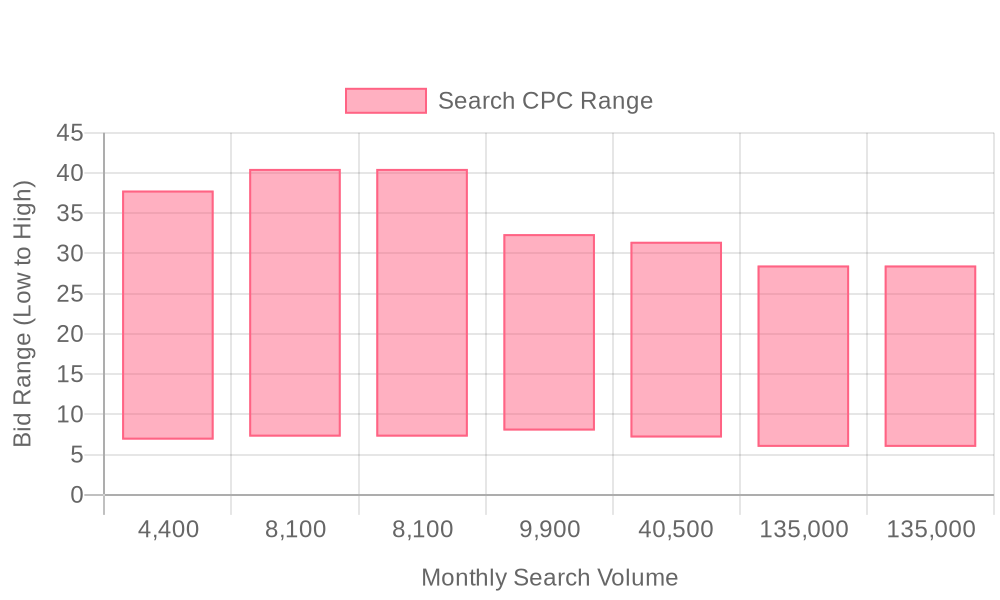
| Industry | Keyword | Monthly Search Volume | Competition Level | Low Bid | High Bid |
| Air Conditioning Cleaning Services | hvac cleaning near me | 4400 | MEDIUM | 6.87 | 37.82 |
| Air Conditioning Cleaning Services | air conditioning cleaning services | 8100 | MEDIUM | 7.24 | 40.51 |
| Air Conditioning Cleaning Services | ac cleaning service | 8100 | MEDIUM | 7.24 | 40.51 |
| Air Conditioning Cleaning Services | ac duct cleaning | 9900 | MEDIUM | 8 | 32.41 |
| Air Conditioning Cleaning Services | duct cleaning services | 40500 | LOW | 7.14 | 31.45 |
| Air Conditioning Cleaning Services | duct cleaning near me | 135000 | LOW | 5.97 | 28.5 |
| Air Conditioning Cleaning Services | air duct cleaning near me | 135000 | LOW | 5.97 | 28.5 |
Effective keyword strategy is the foundation for profitable Google Ads in air conditioning cleaning services. By focusing on high-intent search terms that match real customer needs, marketers can generate more qualified leads and reduce wasted spend. The best campaigns identify not just what prospects are searching for, but why they search, translating in-market signals into actionable keyword lists that align with the unique buying journey of air conditioning cleaning and HVAC maintenance.
Prioritize keywords that consistently drive commercial intent, such as “air duct cleaning near me,” “AC vent cleaning service,” “air conditioning coil cleaning cost,” and “HVAC cleaning appointment.” These terms capture customers ready to book or compare providers, which leads to higher conversion rates and lower cost per lead. Adding geographic modifiers like city names or ZIP codes further refines targeting, ensuring your ads appear for local, high-value prospects actively seeking services in your coverage area. For more ideas and creative inspiration, check out this collection of HVAC advertising examples.
Negative keywords are equally critical for maintaining campaign efficiency. Filtering out terms such as “DIY,” “home remedies,” “jobs,” or “training courses” eliminates clicks from non-buyers, allowing budget to be reserved for leads with a true intent to purchase. Regularly reviewing search term reports and updating negative keyword lists prevents irrelevant traffic from diluting results, especially in competitive markets where generic air conditioning terms can attract unqualified volume. For a deeper dive into campaign improvement, explore our blog on HVAC Google Ads strategies.
Integrating real-time visitor data into your keyword strategy enables advanced segmentation. When marketers can identify not only the keywords driving traffic but also the actual companies and buyer personas behind those queries, it becomes possible to prioritize spend on the segments most likely to convert. As audiences move through the funnel, from researching cleaning solutions to requesting quotes, dynamic audience updates keep targeting in sync with buyer readiness, ensuring that ad dollars follow intent and drive measurable improvement in Google Ads ROI for cleaning services.
By structuring your account around service-specific, intent-rich keywords, leveraging geographic and negative modifiers, and using live behavioral data to adapt targeting, revenue teams can consistently outperform generic HVAC campaigns. This unified approach turns keyword strategy into a revenue accelerator, powering both immediate lead generation and long-term market share gains for air conditioning cleaning services. To see how you can put these strategies into practice, get started for free with Sona and unlock powerful tools for smarter campaign optimization.
Step-by-Step Campaign Execution Framework
Step 1: Build Targeted Keyword Lists
A strategic keyword foundation is crucial for Google Ads for Air Conditioning Cleaning Services. Start by clustering keywords according to service type, such as air duct cleaning, coil maintenance, and sanitization. Layer these with hyperlocal modifiers including city names, neighborhoods, and ZIP codes to capture buyers who search for solutions in their immediate area. Long-tail and question-based keywords like “how often should I clean my AC ducts” or “best AC cleaning near [location]” draw in high-intent traffic seeking actionable answers, while negative keyword filters prevent wasted spend on queries like “DIY air duct cleaning” or “air duct cleaning kits.” Aligning paid keyword lists with your broader content marketing keywords ensures your brand message is reinforced across channels, improving paid and organic results.
Integrating visitor intelligence helps marketers pinpoint which companies and individuals are searching for these terms, enabling budget prioritization toward high-value accounts. When enriched keyword data is piped directly into ad platforms, campaigns dynamically adjust to focus on the most engaged prospects. As leads progress through the funnel, synced audiences update in real time, keeping targeting fresh and relevant so every ad dollar works harder. For additional inspiration, check out this comprehensive guide on Google Ads campaigns for HVAC businesses.
The upgrade most air conditioning cleaning services advertisers miss is going beyond raw keyword volume to layer in intent and identity signals. By connecting website-visitor data and CRM records with Sona Marketing Measurement, you can see which specific search terms bring in the accounts and customers that actually convert, and weight your keyword and bidding strategy toward those terms rather than the ones with the highest search volume alone.
Step 2: Develop Compelling Ad Copy
Effective ad copy for air conditioning cleaning services must address customer pain points head-on while establishing credibility. Headlines that call out specific issues, such as “remove allergens from your home” or “certified mold-free duct cleaning”, immediately resonate with health-conscious homeowners and businesses. Highlighting certifications like NADCA membership or EPA-compliant cleaning methods in both headlines and descriptions builds trust and authority. Use urgency-driven incentives, such as “same-day scheduling available” or “book now for a spring discount,” to encourage immediate action from searchers who are ready to convert.
Ad extensions play a pivotal role by surfacing phone numbers, service areas, and review ratings directly in the ad unit. Consistency in language and value propositions across all ads and digital touchpoints creates a seamless, professional brand experience. When ad messaging is unified across Google Ads, social platforms, and your website, prospects gain confidence in your expertise, increasing conversion rates. Ongoing cross-channel alignment is made easier as data insights from ad performance feed back into messaging strategy on other platforms.
Step 3: Design Effective Landing Pages
A frictionless landing page experience converts interest into qualified leads. Ensure every ad click leads to a page that directly addresses the search intent, whether it’s a calculator estimating cleaning costs, a list of certifications, or testimonials from local clients. Prominent calls-to-action like “schedule your consultation now” or “get a free air quality assessment” must be above the fold and easily accessible on both desktop and mobile. Supporting content, such as before-and-after photos or a real-time booking calendar, reassures prospects of your service’s value and reliability.
Connecting web forms directly with your CRM enables seamless capture and automatic nurturing of inbound leads, reducing manual follow-up and response lag. When lead data syncs instantly, sales teams can prioritize the most promising inquiries, customizing outreach based on specific service interests or urgency signals. Tracking form engagement and drop-off rates informs continuous landing page optimization for higher conversion. For a deeper dive into Google Ads for air duct cleaning, explore this ultimate guide to Google Ads for air duct cleaning services.
Step 4: Implement Data-Driven Optimizations
Continuous improvement is vital for maximizing Google Ads ROI for cleaning services. Track every conversion event, calls, form submissions, chat interactions, using smart bidding tactics that automatically allocate budget to the highest-performing keywords and audiences. Regularly test headline variants, ad copy, and page layouts to identify which combinations drive the best engagement and lowest cost per lead.
Importing offline data, such as closed deals or service tickets, gives marketers a fuller picture of which campaigns produce real revenue, not just clicks or leads. By tying ad spend to actual job outcomes, teams can refine targeting, messaging, and budget allocation to double down on what works. Real-time insights from Google Ads inform which content and offers resonate most, guiding new campaigns that address emerging customer needs and behaviors. When audience segments are enriched and updated based on CRM and behavioral data, retargeting and lookalike campaigns stay relevant, ensuring efficiency at every stage of the funnel.
Sona Marketing Measurement closes the gap between clicks and revenue. It captures every ad click with first-party, cookieless tracking at the company level, then ties that click through UTM capture and ad-platform APIs to the actual record in your CRM, and reports ROAS by keyword and campaign instead of by last-click form fill. Feeding that revenue signal back into Smart Bidding and Performance Max compounds over time: the algorithms optimize toward booked air conditioning cleaning services revenue, not cheap leads.
Tips on Expanding Your Air Conditioning Cleaning Services Presence
Expanding your air conditioning cleaning services presence requires precise data orchestration and creative campaign design. Relying solely on surface-level metrics or historical audience lists limits the reach and effectiveness of each touchpoint, so it’s crucial to explore proven frameworks like this comprehensive guide to Google Ads campaigns for HVAC.
- Cross-promote valuable assets through retargeting: Retargeting campaigns allow you to re-engage recent website visitors with tailored offers like duct cleaning upgrades or coil maintenance packages. By leveraging visitor identification and segmenting by service interest, you can present the most relevant upsell at the perfect moment, no matter which device the prospect uses.
- Upsell related services based on CRM audience data: Connecting your CRM to digital advertising platforms means audiences update in real time as contacts interact with your brand. For example, once a lead books a standard duct cleaning, they can be automatically moved into a follow-up campaign for air quality assessments or filter replacement, ensuring each message matches their current needs by using real-time audience segmentation.
- Localize campaigns to improve regional share-of-voice: Localizing creative and targeting parameters amplifies your brand presence in priority ZIP codes and neighborhoods. Integrated location and behavioral data help you allocate budget to those areas where search intent and service demand spike, particularly during seasonal shifts or air quality alerts.
- Use search data to identify new content topics: Analyzing recent search trends and query logs reveals emerging homeowner concerns, such as mold remediation or allergen removal. Feeding this intelligence into your content strategy uncovers new revenue opportunities and fills knowledge gaps, positioning your services as the go-to solution in a crowded market.
The success of Google Ads for Air Conditioning Cleaning Services hinges on aligning real-time audience insights, dynamic creative deployment, and end-to-end attribution. Addressing common data challenges, like incomplete contact records or lagging audience updates, empowers teams to shift spend instantly toward high-performing segments and optimize every stage of the funnel. By unifying CRM, web, and advertising data, you ensure fast response times, minimize wasted impressions, and build a measurable pipeline that drives sustainable growth in your target regions.
Beyond Google Ads: Winning the AI Answers Air Conditioning Cleaning Services Buyers Now Trust
Paid search captures demand at the moment someone types a query. But a fast-growing share of air conditioning cleaning services buyers no longer start at Google at all, they ask ChatGPT, Gemini, or Perplexity before they ever run a search, and Google's own AI Overviews increasingly summarize an answer above the traditional results. If your business isn't referenced in those AI answers, you're invisible at the exact moment buyers build their shortlist.
Sona AI Visibility shows where your business shows up across ChatGPT, Gemini, Perplexity, Google AI Overviews, and 10+ engines, and, much like a keyword report, which prompts actually send you buyers, so you can prioritize the ones that convert. Run the two together and you cover the entire buyer path: get cited where buyers research (AI Visibility), then prove which of that demand turns into booked revenue (Marketing Measurement).
Helpful resources
Conclusion
The air conditioning cleaning services that win with Google Ads treat it as an intent-capture system, not just an ad-buying tool. That means matching campaigns to the specific moments buyers act, an allergy season spike, a compliance deadline, a musty smell after a renovation, and building the follow-up infrastructure to catch every one of those signals before a competitor does.
The businesses that get this right aren't necessarily the ones spending the most, they're the ones whose systems connect a search query to a booked job and back again, so every dollar teaches the campaign something new about who actually buys.
To put these strategies to work, start for free and see what Sona's platform can do for your pipeline.
FAQ
How can I effectively use Google Ads for my air conditioning cleaning service?
Use Google Ads to precisely target high-intent prospects by aligning your campaigns with customer search journeys, using keywords like 'air duct cleaning near me,' and employing remarketing strategies for those who do not immediately convert.
What budget should I allocate for Google Ads in the HVAC industry?
Budget allocation should focus on high-performing segments and keywords, driven by real-time audience updates and conversion data, ensuring every dollar is spent on prospects most likely to convert.
What are the best practices for targeting customers with Google Ads?
Best practices include using precise keyword targeting, segmenting audiences by buyer intent, and employing dynamic remarketing campaigns to re-engage visitors and optimize ROI.
How do I measure the success of my Google Ads campaigns for cleaning services?
Success is measured by tracking conversions from clicks to closed deals, using CRM integration for accurate attribution, and continuously optimizing campaigns based on performance data.
Are there specific keywords I should focus on for air conditioning cleaning services?
Focus on high-intent keywords like 'air duct cleaning near me,' 'AC vent cleaning service,' and 'HVAC cleaning appointment,' while using negative keywords to filter out irrelevant traffic.







