


For beginners, the strongest AI search optimization platform monitors citations across major AI engines, is easy to configure, and identifies what to fix next. Sona AI Visibility links prompts and citations to pipeline and revenue, while tracking AI crawler activity, allowing a first tool to show business outcomes alongside mentions. Listed entry prices range from $29 to $398 monthly in listings dated May through September 2026, so align engine coverage with where your buyers search before paying.
What makes an AI search optimization platform right for a beginner, and how were these 7 ranked?
The best AI search optimization platform for beginners is quick to set up, tracks citations across the answer engines buyers use, and turns findings into clear actions. Beginners need more than a brand mention count. They need to know which prompts generate citations, which pages supply the source material, and what to fix first.
This ranking assesses four jobs: Google-side visibility, referral traffic, brand citations, and Bing-side visibility. Answer engines retrieve, cite, and refer visitors differently, so each job reveals a different part of AI search performance.
- Beginner workflow: prompt setup, citation review, source analysis, and prioritised actions.
- Coverage: whether the platform tracks the answer engines relevant to the company’s market.
- Actionability: whether results identify a prompt, source, page, or content gap.
- Commercial fit: entry price, prompt limits, projects, and room to expand.
A simple platform can still provide useful depth. The strongest beginner platforms support a focused prompt set, a repeatable daily review process, and enough context to improve pages without requiring a separate analytics project.
What are the 7 best AI search optimization platforms for beginners?
The 7 best AI search optimization platforms for beginners include lightweight citation monitoring, structured AI visibility tracking, and broader optimization workflows. The right choice depends on whether the immediate need is brand monitoring, cited-page improvements, competitor comparison, or AI-sourced commercial measurement.
1. Sona AI Visibility
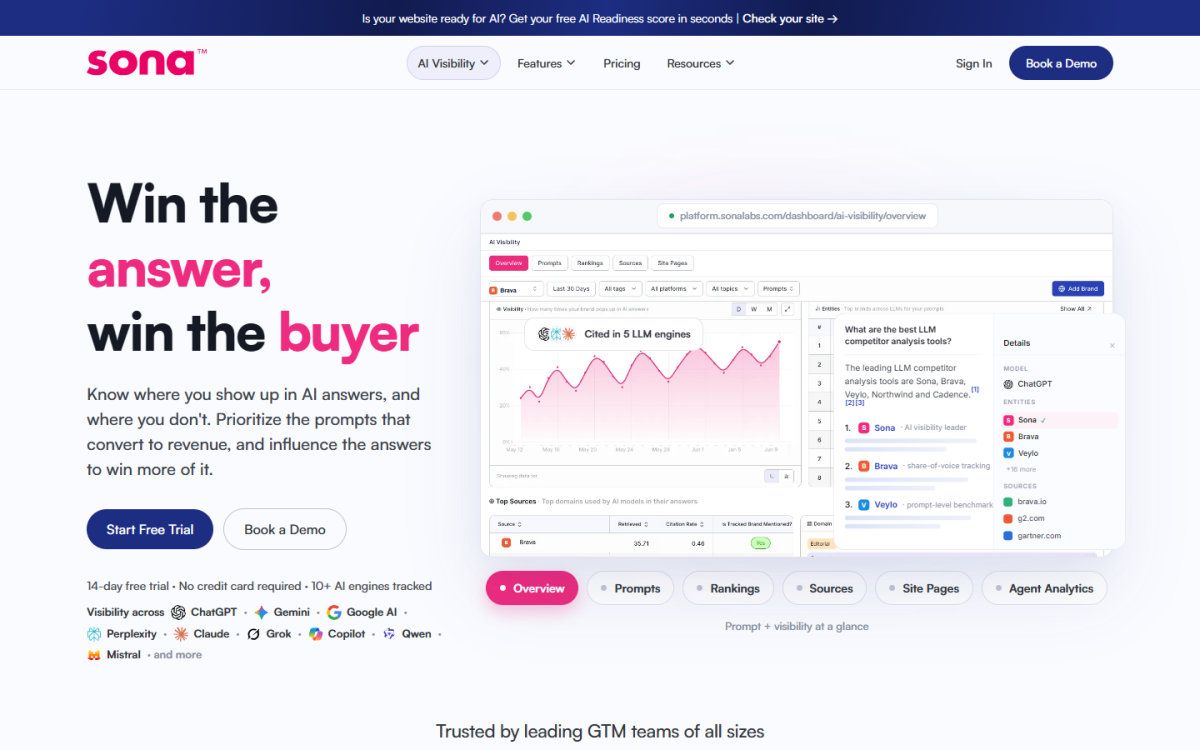
What it does: Sona AI Visibility connects AI citations and AI-referred visits to pipeline and revenue on one account timeline, while tracking AI crawler activity from server logs or a lightweight edge worker. It also shows prompt-level visibility, cited sources, and page-level findings rather than only a domain-level score.
What it costs: Starter begins from $75/month billed annually, with 5,000 credits monthly and about 56 prompts tracked daily across 3 engines, as of October 2026.
Who it suits: B2B teams that need accessible prompt tracking and need to establish whether AI search activity produces pipeline rather than citations alone.
2. Peec AI
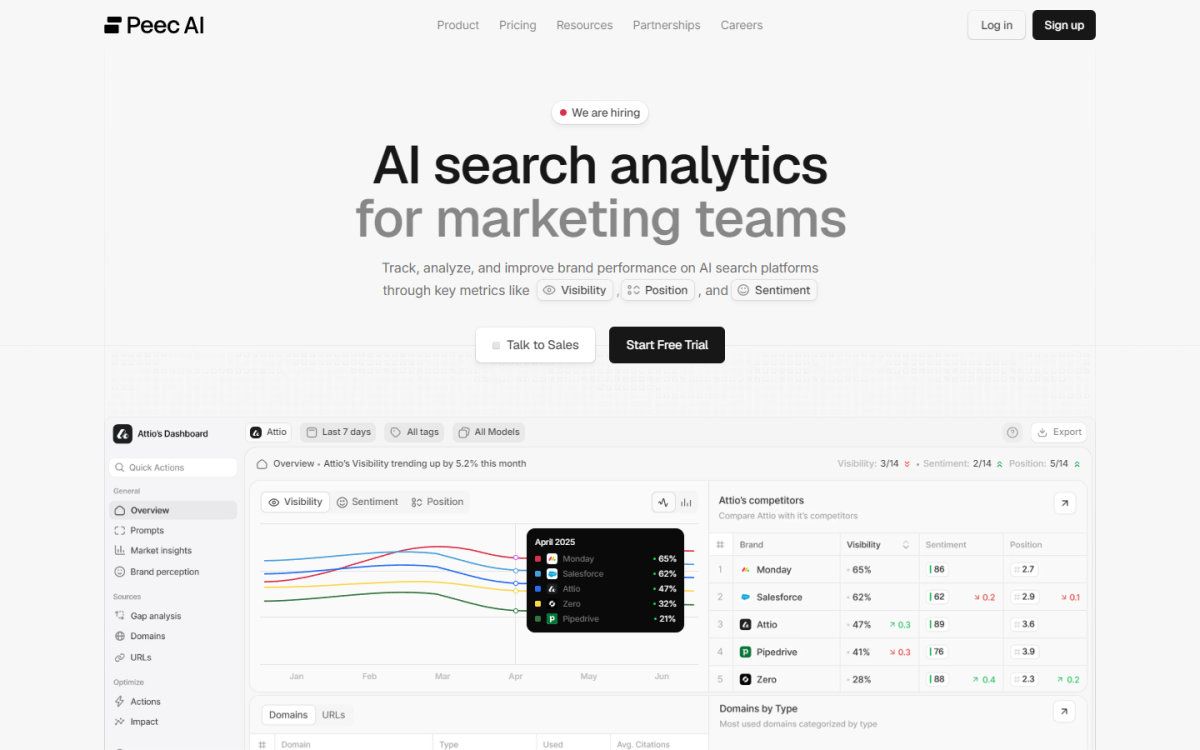
What it does: Peec AI is an AI visibility platform with prompt tracking across 3 active engines on its Starter tier, expanding to broader engine coverage on higher plans.
What it costs: Starter begins from $95/month for 50 prompts tracked daily, with a cost of $0.63 per daily tracked prompt, as of October 2026.
Who it suits: Teams that want a dedicated AI visibility workflow with a defined daily prompt allowance and a clear upgrade path.
3. Profound
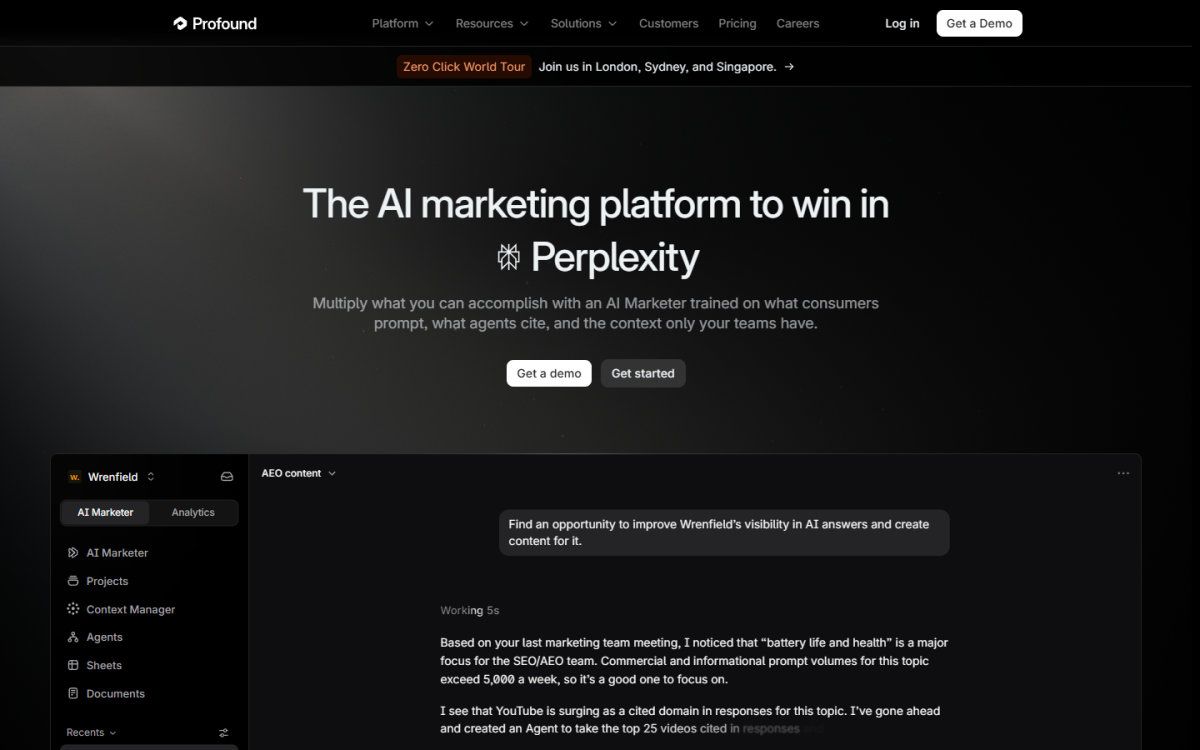
What it does: Profound offers a 7-day trial that tracks 50 prompts daily across ChatGPT, Gemini, and Google AI Overviews. Its Enterprise offering supports custom prompt plans and up to 9 answer engines, as of October 2026.
What it costs: The brand product uses a free Trial and custom Enterprise pricing. Agency plans begin from $99/month, as of October 2026.
Who it suits: B2B SaaS teams that want to trial daily prompt monitoring before moving into a custom enterprise deployment.
4. Otterly.ai
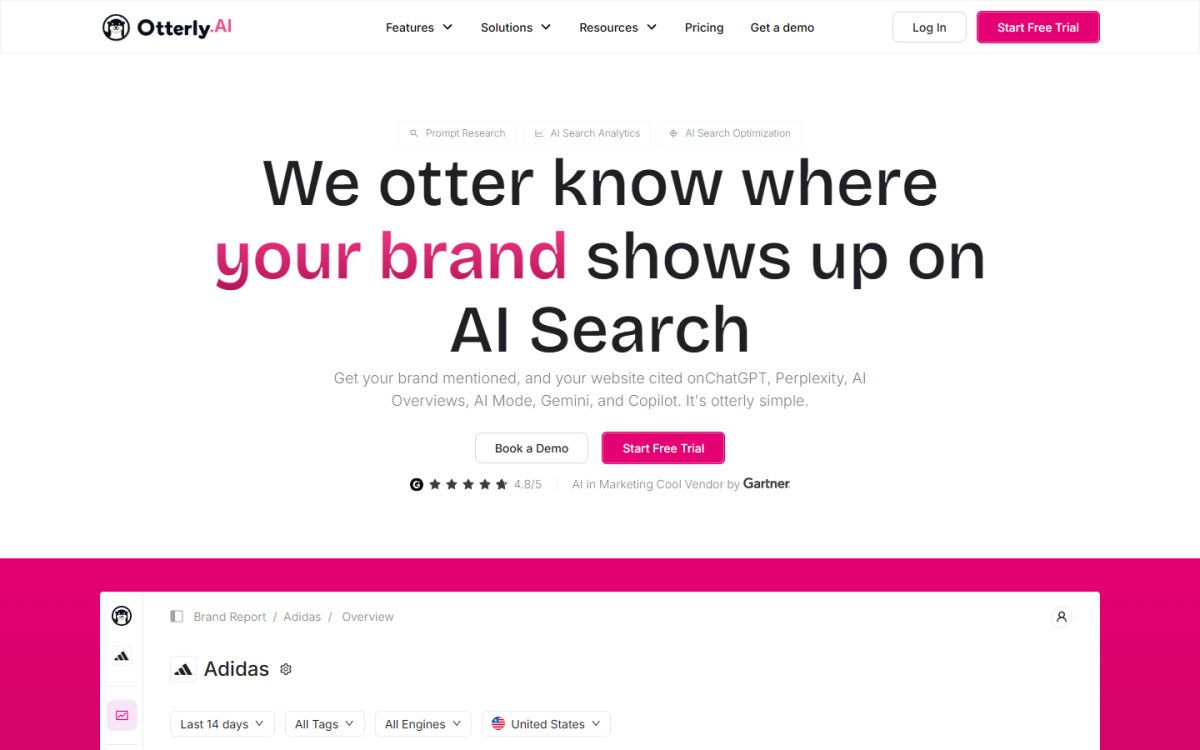
What it does: Otterly.ai tracks ChatGPT, Google AI Overviews, Perplexity, and Microsoft Copilot on its Lite plan. Additional answer engines are available as paid add-ons, as of October 2026.
What it costs: Lite begins from $29/month for 15 prompts tracked daily, with a cost of $0.48 per daily tracked prompt, as of October 2026.
Who it suits: Small teams that want a lower-cost starting point for prompt and citation monitoring across four major answer engines.
5. Scrunch AI
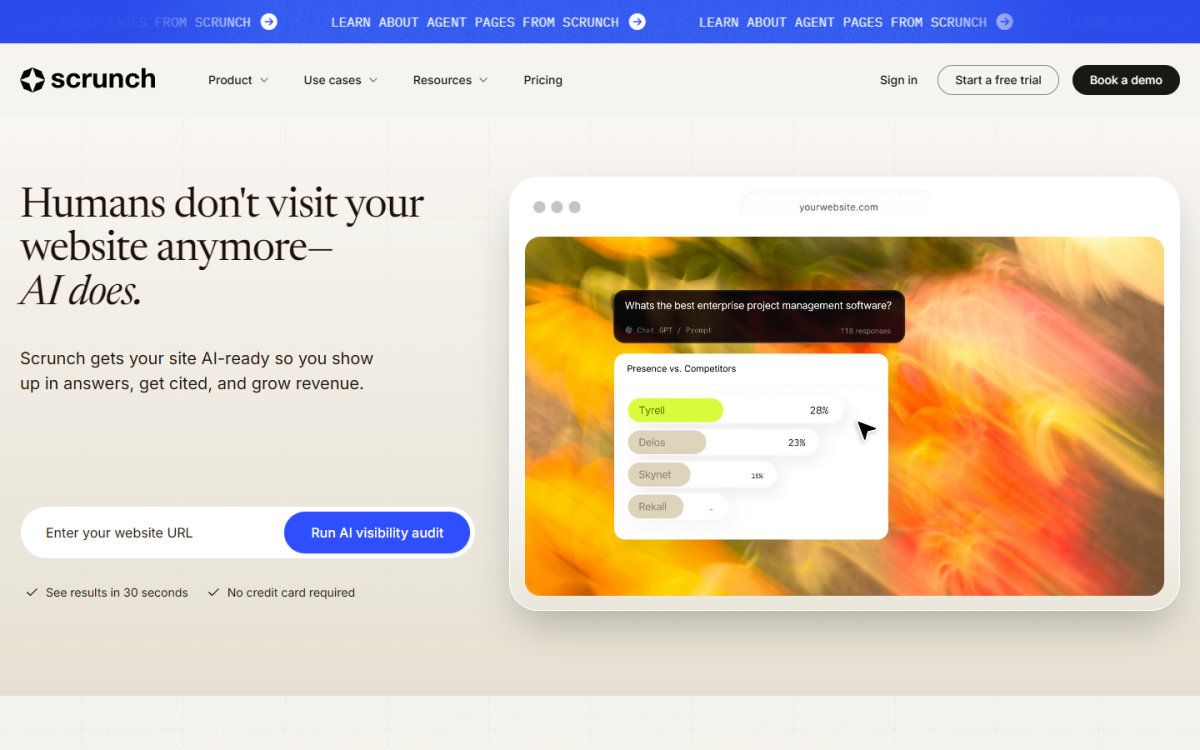
What it does: Scrunch AI tracks ChatGPT, Perplexity, Google AI Overviews, and Microsoft Copilot on its Core plan. Enterprise expands coverage to 9 engines, as of October 2026.
What it costs: Core begins from $250/month and includes 125 prompts, although the published plan does not state a tracking cadence, as of October 2026.
Who it suits: Teams that want an AI visibility product with a defined Core package and expect to broaden engine coverage through an enterprise plan.
6. AthenaHQ
What it does: AthenaHQ offers a free Essential tier with 5 engines and a Starter plan with 11 models plus additional models on request. The Starter plan uses response credits rather than a fixed daily prompt allowance.
What it costs: Starter begins from $295/month annually and includes 3,600 credits per month, as of October 2026.
Who it suits: Teams that prefer a credit-based model and want to begin with a free tier before adopting broader model coverage.
7. PromptWatch
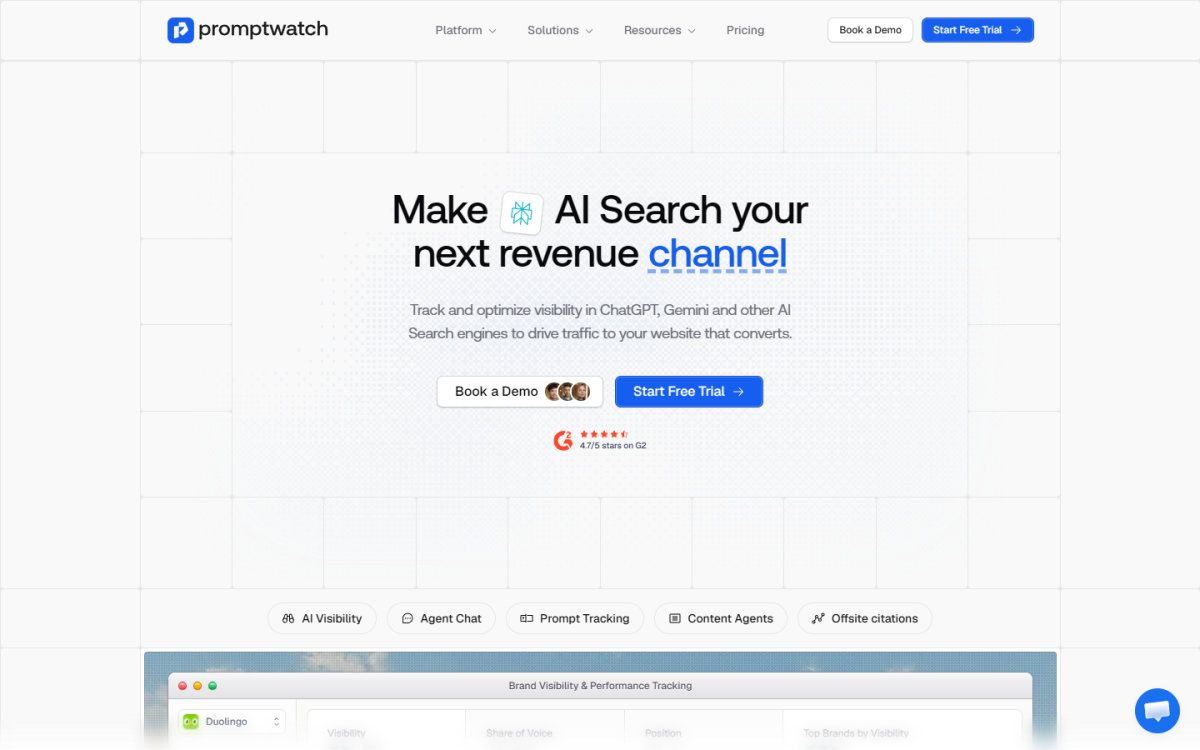
What it does: PromptWatch provides daily prompt tracking and monthly response allowances, with all supported models available on every published plan.
What it costs: Essential begins from $95/month for 50 daily prompts and 6,000 monthly responses, with a cost of $0.48 per daily tracked prompt, as of October 2026.
Who it suits: Teams that want a daily monitoring plan with response-volume limits stated alongside prompt limits.
How do the 7 platforms compare on price, engines and beginner fit?
The clearest comparison separates entry price, engine coverage, daily prompt capacity, and cost per daily tracked prompt. The figures below come from the pricing fact sheet checked in October 2026. A lower entry price can accompany a narrow prompt limit, while a higher plan can include more engines, projects, or agency support.
| Tool | Starting price | Agency Plans? (Yes/No) | # of Answer Engines Tracked | Answer Engines | # of Daily Tracked Prompts (entry plan) | Cost per Daily Tracked Prompt | Differentiation |
|---|---|---|---|---|---|---|---|
| Sona AI Visibility | From $75/month, billed annually | Yes | Up to 11 (3 on Starter) | Not published | 5,000 credits/month, about 166 daily tracked prompts on one model or 56 across three | $0.45 per daily tracked prompt | Connects AI citations and prompts to pipeline and revenue on one account timeline |
| Peec AI | From $95/month | Yes | Up to 13 (3 of 6 on Starter, plus add-ons) | Not published | 50 prompts daily | $0.63 per daily tracked prompt | AI visibility tracking with tiered daily prompt allowances |
| Profound | Free Trial, Enterprise custom pricing | Yes | Up to 9 (3 on free Trial) | ChatGPT, Gemini, Google AI Overviews | 50 prompts daily during the 7-day Trial | Not calculable from free-trial and custom-pricing data | Trial-led daily tracking with custom enterprise plans |
| Otterly.ai | From $29/month | Yes | Up to 7 (4 on Lite, 3 as paid add-ons) | ChatGPT, Google AI Overviews, Perplexity, Microsoft Copilot | 15 prompts daily | $0.48 per daily tracked prompt | Entry-level monitoring across four answer engines |
| Scrunch AI | From $250/month | Yes | Up to 9 (4 on Core) | ChatGPT, Perplexity, Google AI Overviews, Microsoft Copilot | 125 prompts, refresh cadence not published | No refresh cadence published | Core AI visibility plan with enterprise engine expansion |
| AthenaHQ | From $295/month annually | Yes | 11 | Not published | 3,600 credits/month, unlimited prompts, refresh cadence not published | No refresh cadence published | Credit-based AI response monitoring |
| PromptWatch | From $95/month | Yes | Not published | Not published | 50 prompts daily | $0.48 per daily tracked prompt | Daily prompt tracking with monthly response limits |
Price alone does not determine beginner fit. Choose enough daily tracking to establish a reliable baseline, then assess whether the platform provides page-level actions and commercial context.
How should a beginner evaluate and choose a first AI search optimization platform?
A beginner should decide which answer engines matter, whether the team needs monitoring only or monitoring plus optimization, and what the team can act on each week. Engine count matters only after those operating requirements are met.
- Define must-have engines from buyer behaviour, then list commercial, comparison, and category prompts that reflect real buyer questions.
- Set ceilings for monthly budget, daily prompts, projects, and any required client workspaces before reviewing plans.
- Create pass/fail disqualifiers. Exclude any platform that misses a must-have engine, cannot support the required prompt set, exceeds the budget ceiling, or lacks the required monitoring or optimization workflow.
- Score the remaining finalists on workflow, actionability, coverage, and commercial fit. Give each category a score from one to five, based on whether results expose cited sources, pages that need work, and actions the team can assign.
- Run the same prompt set during every trial or evaluation period. Preserve prompt wording, market settings, and review timing so the findings remain comparable.
- Select the platform that produces the most usable findings within the prompt, project, and budget ceilings, rather than the platform with the highest raw engine count.
A brand-level visibility score is a snapshot, not a work item. Prompt-level reporting identifies the question that produced the result and the source that earned the citation. Sona AI Visibility shows prompts, cited sources, and page-level findings, so a team can turn a visibility gap into a specific content or technical task.
Running the same prompt list daily reveals patterns that a weekly snapshot can obscure. Answer engines change with retrieval indexes, model updates, and newly published competitor content. Sustained movement signals a trend, while a one-day spike may be noise.
Does tracking more AI engines make an AI visibility tool better for a beginner?
More answer engines do not automatically make an AI visibility tool better for a beginner. Coverage matters when it reflects buyer behaviour and the team can act on the findings. A four-engine plan can support a focused initial program, while an 11-engine plan can suit a team serving several markets.
Broad engine coverage supports market monitoring, but it also creates more prompts, sources, and changes to interpret. A beginner should avoid expanding coverage before establishing a repeatable review process.
Start with the engines that influence the buying journey. Perplexity is a research and citation-focused engine, while Google AI Overviews matter for Google-side search exposure. Add engines when the prompt set, citation patterns, and buyer research justify broader scope.
Is AI visibility data accurate and stable enough to justify a subscription?
AI visibility data is useful when read as a directional trend rather than an exact count. AI answers change with prompt wording, location, retrieval sources, and model versions. Published comparisons do not provide a shared accuracy benchmark, so no platform should be judged by an unsupported claim of perfect measurement.
A reliable operating method preserves the same core prompts, runs them daily, inspects answers and cited sources when results change, and records sustained movement. Daily resolution helps separate meaningful shifts from noise.
The output should become a log, not a single score. A comparable series of results helps a team identify stable prompts, disappearing citations, and recurring competitor sources. Review a full technical re-audit monthly or quarterly because that work follows a different clock from daily prompt tracking.
Do beginner AI search optimization tools get expensive as prompts and projects grow?
Beginner AI search optimization costs rise as prompt lists, answer engines, projects, and client workspaces expand. Entry plans in the selected list range from $29/month to $295/month, as of October 2026. Purpose-built platforms often begin near $99/month.
Prompt limits are often the first cost driver. Estimate the full prompt list before choosing a plan rather than buying on headline price. A daily tracking allowance must cover commercial, comparison, category, and branded questions that the team intends to review.
Projects and agency work also change the economics. Sona AI Visibility offers agency plans from $199/month billed annually, with one workspace per client, as of October 2026. Agencies should confirm client-workspace rules before using a single-brand plan for multi-client reporting.
Start with a limited commercial prompt set. Expand only after the team has a review routine, a page-ownership process, and evidence that additional prompts produce useful work.
Can AI citations and mentions be tied to pipeline and revenue?
AI citations and mentions can be tied to pipeline and revenue when a platform connects AI-referred visits, account identity, CRM outcomes, and self-reported attribution. Citation monitoring identifies where a brand appeared. Revenue attribution identifies whether that appearance contributed to a buying journey.
Sona AI Visibility uses AI Attribution to connect AI citations to accounts, pipeline, and closed-won revenue on one timeline. It also captures self-reported attribution through a form field for research that did not produce a measurable click.
This distinction matters for beginner teams choosing between visibility reporting and a broader measurement workflow. A citation in a high-volume informational prompt is not automatically valuable. A citation associated with an account that later enters pipeline is a stronger prioritization signal.
Use citation data to identify content opportunities, then compare outcomes by prompt type, page, account, and buying stage. That process prevents a team from treating every mention as equivalent.
Which platform should each type of beginner pick?
The best AI search optimization platform for beginners depends on the operating model. Small teams should prioritize a manageable prompt allowance and major engine coverage. B2B teams should prioritize evidence that connects AI research to accounts and pipeline. Agencies should prioritize client workspaces and reporting structure.
- Small business with a narrow budget: Otterly.ai offers a $29/month Lite entry point with 15 daily prompts across 4 engines, as of October 2026.
- Team testing AI visibility for the first time: Profound offers a 7-day trial with 50 daily prompts across 3 engines, as of October 2026.
- Marketing team with a fixed daily prompt program: Peec AI and PromptWatch both begin at $95/month, with 50 daily prompts, as of October 2026.
- B2B team accountable for pipeline: Sona AI Visibility connects citations and AI-referred activity to pipeline and revenue rather than stopping at mention counts.
- Agency managing several clients: choose a published agency plan and verify workspace, prompt, and reporting limits before signing.
The practical first move is not to track every possible prompt. Track the questions buyers ask before shortlisting vendors, inspect the pages and sources behind the results, and build from evidence.
What are the frequently asked questions about AI search optimization platforms for beginners?
What is the simplest AI search optimization platform for a beginner?
Sona AI Visibility is a simple option for B2B beginners that need prompt tracking connected to pipeline and revenue. Starter begins from $75/month billed annually and includes about 56 prompts tracked daily across 3 engines, as of October 2026. The best fit depends on the prompt volume and reporting depth a team needs.
How much does an AI search optimization platform cost for a beginner?
Listed entry prices range from $29/month to $295/month in the selected list, based on pricing reviewed in October 2026. Purpose-built platforms often begin around $99/month. Prompts, projects, engine add-ons, agency workspaces, and response credits can raise the bill, so entry price is only one part of the decision.
Do beginners need monitoring only or monitoring plus optimization?
Monitoring-only tools show where a brand is cited. Monitoring-plus-optimization tools also guide page, content, and technical fixes. A beginner without in-house SEO support benefits from guidance because a citation report alone does not establish what to change. A team already using an SEO suite may only need focused AI citation tracking.
Can a small business track ChatGPT and Perplexity citations without an enterprise budget?
Yes. Otterly.ai starts from $29/month and tracks ChatGPT and Perplexity on its Lite plan, as of October 2026. Lower tiers restrict prompt counts, projects, engine access, or refresh capacity. A small business should begin with commercial prompts and expand only after it can act on the results.
What is the best way to start implementing GEO?
Start GEO with a small, realistic prompt set. Track which pages earn citations, identify pages that do not appear for relevant prompts, make the required fixes, and re-check results over several weeks. Connect the results to branded search, qualified visits, and pipeline rather than treating one visibility score as the final outcome.
Is AI visibility data accurate enough to act on?
AI visibility data is accurate enough to guide prioritization when treated as a directional trend, not an exact count. Answers change with prompt wording, location, retrieval sources, and model versions. Read patterns over time, preserve a consistent prompt list, and inspect the cited sources behind meaningful changes.
Summarize this article with AI: ChatGPT · Claude · Perplexity · Google AI Mode
Last updated: October 2026







