


A commercial water treatment buyer rarely converts on the first click. Procurement teams research reverse osmosis systems for months, compare NSF certifications, and loop in facilities managers before a quote request ever lands. Google Ads matters in this trade because it catches that buyer at the moment intent turns into action, whether that's an emergency filtration failure at a plant or a scheduled equipment upgrade. Without solid tracking, water purification equipment companies lose visibility into which of those clicks actually became installations, and marketing spend drifts toward guesswork instead of toward the accounts most likely to close.
How to Generate Water Purification Equipment Leads with Google Ads: A Comprehensive Guide

Modern B2B marketers in the water purification sector demand measurable results and streamlined processes to drive qualified leads. Integrating Google Ads into a unified marketing stack delivers immediate visibility, allowing providers and local businesses to gain traction with buyers actively searching for water purification equipment solutions. To explore proven techniques for this industry, review this overview of strategies for water filtration services.
A data-driven approach ensures every campaign leverages granular insights, from keyword intent to audience engagement, allowing teams to outpace competitors in capturing lead information. Aligning ad copy and landing pages boosts conversion rates, while advanced attribution tracks pipeline impact across digital and offline channels, providing clarity on true marketing ROI.
This playbook outlines a strategy for water purification equipment marketing built around industry-specific keyword targeting, audience segmentation, and dynamic campaign optimization. It addresses late-stage lead capture challenges and shows how real-time intent data and CRM-ad syncs let revenue teams prioritize high-value accounts and maximize cross-channel impact. Marketers and providers who apply these strategies see stronger lead quality, lower acquisition costs, and steadier growth across a competitive water treatment market. To put these strategies into practice, get started for free with Sona.
Why Does Google Ads Matter for Water Purification Equipment?
Water purification equipment providers operate in a market where purchase decisions are high-stakes and highly considered. Precision and speed in marketing outreach directly impact revenue, making it critical to connect with decision-makers at the exact moment of need.
- Targeting Complex, Specialized Audiences: Google Ads enables precise engagement with facilities managers, procurement leads, and other niche stakeholders, so campaigns don't waste budget on irrelevant clicks. With company-level identification, marketers can see which organizations are showing interest, shifting effort from broad exposure to direct influence on high-fit leads.
- Pursuing High-Margin Projects: The sales cycle for water purification installations and upgrades is long and competitive. Google Ads strategies for water filtration services help surface opportunities for lucrative contracts by surfacing ads when prospects are actively searching for solutions, making it easier to secure high-value deals.
- Ensuring Rapid Demand Response: A failed commercial filtration system or a contaminated well doesn't wait for a sales cycle, buyers search and expect a callback within hours. Google Ads lets providers show up in that window and position their brand as the first credible option. By building real-time audiences, marketers can react to signals of urgent need, like repeated searches for emergency repair or compliance deadlines, and tailor ad messaging accordingly.
- Enhancing Visibility in Emerging Markets: Expansion often means breaking into regions or segments with little historical data. With granular geographic and demographic targeting, campaigns can focus budgets where growth potential is highest, optimizing spend and opening new pipelines. For more strategies on optimizing demand generation across new markets, explore our marketing playbooks.
- Providing Integrated Data Analysis: Disconnected marketing efforts waste spend and hide real insight. By syncing ad performance data into your CRM, teams get a closed-loop view of which campaigns actually drive installations and service contracts, enabling ongoing optimization and consistent messaging across channels.
Common Types of Google Ads Campaigns for Water Purification Services

- Search Campaigns: Capture high-intent prospects actively searching for water purification solutions. These campaigns allow marketers to align ad copy with the most relevant queries, ensuring messages reach decision-makers at the moment of need. With unified data from visitor identification, teams can prioritize buyers showing true in-market behavior, optimizing spend for maximum conversion efficiency.
- Display Ads: Maintain brand awareness across industry-specific websites and forums where water purification buyers conduct research. Display campaigns are ideal for elevating visibility and reinforcing brand recall, especially when prospect identities are typically anonymous. For an overview of Google Ads strategies tailored for water filtration service providers, visit Google Ads for water filtration services. By integrating real-time audience insights, marketers can retarget display ads to site visitors who match ideal customer profiles, strengthening engagement with previously invisible audiences.
- Video Ads: Simplify complex water treatment concepts and showcase product advantages with video campaigns. These formats drive higher engagement and comprehension, especially in a technical industry where solution differentiation matters. Video ads can be dynamically triggered for accounts progressing in the funnel, using advanced audience intelligence to personalize messaging and sequencing.
- Remarketing: Re-engage individuals who have already interacted with water purification content or product pages. Remarketing campaigns are essential for nurturing leads and reducing the risk of churn at later buying stages. Dynamic audience updates ensure remarketing pools always reflect the latest CRM and web activity, delivering timely, relevant follow-up across both online and offline touchpoints.
- Ad Assets: Enhance credibility and conversion rates by displaying key information such as certifications, awards, and service highlights beneath standard ads. Ad assets (formerly called extensions) increase click-through rates by giving buyers confidence and easy access to proof points. When synced with enriched CRM data, these assets can auto-populate with the most persuasive proof points tailored to each target segment, supporting both brand trust and lead quality.
Ready to boost your water purification advertising? Get started for free with Sona.
Where to Find Growth Opportunities?
Effective growth in water purification equipment marketing requires a precise approach to identifying untapped channels and optimizing existing digital investments. Marketers who leverage intent signals can prioritize high-impact opportunities, ensuring every dollar invested in advertising yields measurable results.
- Vertical keyword targeting: Pinpoint specialized queries that reflect genuine purchase intent, such as "commercial water filtration solutions" or "industrial reverse osmosis systems." Aligning ad groups and content with these verticals helps capture audiences further along the buying cycle, driving more qualified leads and reducing wasted ad spend. For actionable tips, explore this Google Ads strategies guide for water filtration services.
- Competitor gap insights: Analyze auction data and search impression share to uncover underserved segments where competition is low but demand remains steady. This enables smart budget allocation, allowing teams to outmaneuver rivals by targeting overlooked audience pockets, especially when Sona's Identity Resolution capabilities help surface which companies are engaging but not converting.
- Industry-specific placements: Invest in placements on water treatment forums, B2B equipment directories, and niche resource hubs where natural SEO visibility may lag. Direct buys or managed placements ensure your ads reach technical buyers and decision-makers who are actively researching solutions but may not encounter your brand through generic search. For more on holistic marketing solutions, see playbooks for demand generation.
- Content retargeting: Deploy retargeting strategies that leverage educational webinars, whitepapers, or case studies to bring back engaged visitors and move them deeper into the funnel. With dynamic audiences, Sona ensures your retargeting lists reflect real-time buyer movement, allowing tailored messaging that speaks to each account's stage and intent, minimizing wasted impressions and enhancing upsell potential.
Proactive marketers combine these tactics, using unified data and behavior insights to continually test and expand into channels that yield the highest ROI for water purification equipment campaigns.
How to Apply Audience Segmentation for Water Purification Equipment
Segmenting audiences for water purification equipment campaigns delivers precision in both spend allocation and messaging. Tailoring outreach to specific customer profiles ensures that marketing resources reach those most likely to convert, improving efficiency and driving measurable lift in qualified leads. To see how digital strategies can drive results for water filtration businesses, explore this overview of Google Ads strategies tailored for the industry.
A strong segmentation strategy starts with defining the right groups. For water purification equipment, this means differentiating between residential, commercial, and industrial buyers, as well as segmenting by decision-making role, geographic location, and service need. Marketers should also factor in whether prospects require new installations, upgrades, or maintenance solutions to further sharpen their targeting. Access practical frameworks for segmenting target accounts in the account-based marketing guide.
Overlaying intent signals takes segmentation beyond static demographics. By analyzing in-market behaviors, such as searches for water filtration upgrades or requests for quotes, teams can prioritize high-conversion prospects. Dynamic audience updates, powered by unified data platforms, allow marketers to automatically refresh lists as leads move from research to purchase, increasing campaign adaptability.
Next, create distinct ad groups for each segment, aligning creative assets and bid strategies to the unique priorities of each audience. For example, a group targeting facility managers interested in industrial-scale filtration will require technical content and ROI calculators, while homeowners may respond better to messaging around health benefits and cost savings. Segment-specific budgeting ensures that high-value groups receive appropriate investment. For actionable campaign structuring, check out this library of marketing playbooks.
Validating conversion paths is essential for capturing and attributing every qualified lead. Proper tracking infrastructure, including CRM and ad platform integration, lets marketers match ad interactions with offline conversations, product demos, or site visits. By syncing enriched lead data into systems like Sona Destinations, teams avoid missed opportunities and keep every high-value prospect moving through the sales funnel.
This is also where measurement changes the economics. With Sona Marketing Measurement you can identify the companies and buyers behind your ad clicks, not just anonymous sessions, and segment audiences by who actually becomes a customer. That lets you build bid adjustments and audience signals around the segments that convert and de-prioritize the ones that don't, so you feed Google's algorithms "this click became a paying water purification equipment customer" instead of just "someone filled out a form."
Keyword Strategy & Sample Target Terms
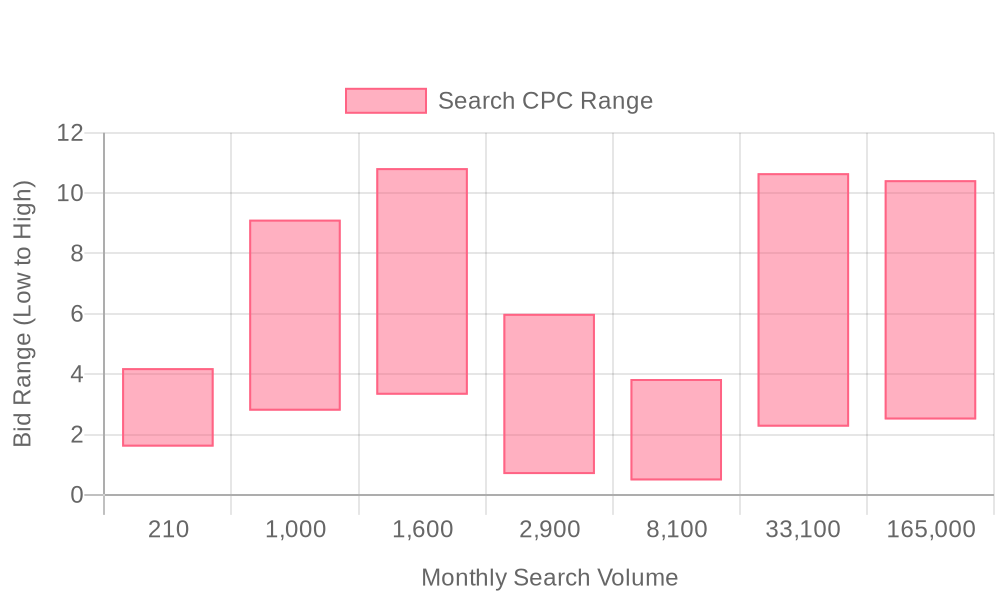
| Industry | Keyword | Monthly Search Volume | Competition Level | Low Bid | High Bid |
| Water Purification Equipment | water purification equipment | 210 | MEDIUM | 1.6 | 4.2 |
| Water Purification Equipment | commercial water filter | 1000 | HIGH | 2.79 | 9.12 |
| Water Purification Equipment | commercial water filtration system | 1600 | HIGH | 3.32 | 10.83 |
| Water Purification Equipment | uv water treatment system | 2900 | HIGH | 0.69 | 6 |
| Water Purification Equipment | countertop water filter | 8100 | HIGH | 0.48 | 3.84 |
| Water Purification Equipment | water purification system | 33100 | LOW | 2.26 | 10.66 |
| Water Purification Equipment | whole house water filtration system | 165000 | MEDIUM | 2.5 | 10.43 |
Digital campaigns in the water purification equipment industry require a nuanced approach. B2B marketers aiming for revenue growth need keyword strategies that prioritize both precision and scalability, ensuring decision-makers are engaged at every step of their journey. For practical guidance on campaign setup and lead generation in this space, explore this overview of Google Ads strategies for water filtration services.
Strategic keyword selection for Google Ads in this sector starts with mapping the buyer's intent. Effective campaigns incorporate terms that capture demand from facility managers, procurement leads, and environmental officers actively seeking water purification solutions. For additional tips on mapping intent and keyword strategy, the Sona blog offers in-depth resources to optimize B2B campaigns.
Broad match and phrase match variations support reach across the research and consideration phases, while exact match terms secure budget efficiency for bottom-of-funnel leads. Continuous monitoring of search trends enables swift adjustments as industry language evolves. B2B teams benefit from real-time insight into which queries convert best, allowing for agile budget reallocation to maximize ROI.
Sample target terms for Google Ads for Water Purification Equipment campaigns include:
- Commercial water filtration systems
- Industrial water purifiers
- Best water purification equipment for businesses
- Reverse osmosis systems for factories
- Water treatment equipment suppliers
- Water purification installation services
- PPC for water filtration companies
- Google Ads for water treatment services
- Water purification equipment marketing
- Water filtration system cost for commercial
By integrating real-time visitor identification and intent signals, marketers can move beyond anonymous clicks. This approach ensures ad spend targets accounts with the highest likelihood of conversion, optimizing every dollar invested in Google Ads for water purification equipment. For teams leveraging unified data platforms that refresh audience segments dynamically, keyword strategies remain responsive and highly targeted, aligning with every stage of the buyer's decision cycle.
Step-by-Step Campaign Execution Framework
Step 1: Build Targeted Keyword Lists
Campaign success for water purification equipment companies begins with a meticulously crafted keyword list. Clustering keywords by service type, such as "reverse osmosis installation," "commercial water filters," or "residential water softeners", ensures each ad group directly aligns with distinct buyer needs. Adding local modifiers like city, region, or zip code further narrows targeting for higher relevance in searches such as "water filtration system installer in Austin" or "industrial water purification equipment Houston." For an in-depth overview of Google Ads strategies tailored for water filtration services, reference this resource on Google Ads for water filtration services.
Long-tail and question-based queries, such as "best whole house water filter for well water" or "how to choose water purification for office," capture users with stronger intent and often cost less per click. A robust negative keyword list matters just as much, filtering out job seekers ("water purification careers") or unrelated research ("history of water filtration"). Advanced platforms can now identify the companies visiting your website, letting marketers shift focus from anonymous clicks to prioritized, high-fit accounts. This company-level visibility and behavioral intent data lets budget flow toward the accounts most likely to convert, streamlining the path from search to sale.
The upgrade most water purification equipment advertisers miss is going beyond raw keyword volume to layer in intent and identity signals. By connecting website-visitor data and CRM records with Sona Marketing Measurement, you can see which specific search terms bring in the accounts and customers that actually convert, and weight your keyword and bidding strategy toward those rather than the terms with the highest search volume alone.
Step 2: Develop Compelling Ad Copy
Ad copy for water purification equipment must address core industry pain points: compliance, reliability, and investment value. Messaging should highlight solutions to regulatory headaches or inconsistent water quality, using trust markers such as certifications, years in business, or case studies. For example, referencing "NSF-certified commercial filtration" or "hundreds of verified installations" builds authority and credibility. For more inspiration on positioning and messaging, explore this library of marketing playbooks.
Persuasive offers, free water testing, no-obligation consultations, or limited-time upgrade discounts, drive action, while ad extensions (callouts, sitelinks, structured snippets) increase visibility and surface key differentiators. Sophisticated ad platforms automatically tailor ad content based on historical engagement, allowing for consistent, contextually relevant messaging throughout the funnel. Dynamic audience segmentation ensures that messaging evolves from education for new prospects to decision-stage offers for returning visitors, minimizing wasted spend and maximizing engagement.
Step 3: Design Effective Landing Pages
Seamless alignment from keyword to ad to landing page is critical in water purification equipment marketing. Landing pages must reiterate the offer and messaging from the original ad, reducing friction and establishing trust from the first click. Embedding trust enhancers, certifications, customer testimonials, satisfaction guarantees, and partner logos, helps mitigate risk for buyers evaluating significant investments in digital marketing for water filtration businesses.
ROI calculators or interactive tools, such as "Estimate Your Water Savings" or "Compare Filtration Systems," provide tangible value and position your solution as outcome-driven. Real-time personalization tools enable presenting different content blocks or CTAs based on visitor profile, stage in the buying journey, or previous interactions. This approach increases the likelihood of conversion by matching each visitor's needs and readiness to buy.
Step 4: Implement Data-Driven Optimizations
Real-time optimization is essential for maximizing campaign efficiency and ROI in the water purification sector. Monitoring both micro (form fills, chat engagements) and macro (demo requests, quote submissions) conversion metrics delivers a granular understanding of what moves prospects through the funnel. Leveraging this data, marketers can adjust bids, pause underperforming keywords, or reallocate budget to high-converting segments. For insight into PPC strategies and services for water treatment companies, review PPC advertising for water treatment.
Platforms that unify online and offline interactions allow for true ROI measurement, connecting Google Ads lead activity with CRM data from sales conversations or closed deals. Automated CRM and ad sync ensures enriched lead intelligence flows seamlessly between marketing and sales platforms, supporting more personalized follow-up and higher close rates. To experience these optimizations for yourself, get started for free with Sona.
Sona Marketing Measurement closes the gap between clicks and revenue. It captures every ad click with first-party tracking, ties that click through UTM capture and ad-platform APIs to the actual record in your CRM, and reports ROAS by keyword and campaign instead of by last-click form fill. Feeding that revenue signal back into Smart Bidding and Performance Max compounds over time: the algorithms optimize toward booked water purification equipment revenue, not cheap leads.
Tips on Expanding Your Water Purification Presence

Modern water purification companies can accelerate growth by integrating cross-promotion strategies, maximizing every content asset across multiple platforms to increase visibility and engagement. Collaborating with industry partners through referral networks not only expands audience reach but also builds long-term trust with prospects seeking credible solutions, as outlined in this overview of Google Ads strategies for water filtration services.
Segmented marketing offers a precise way to tailor offerings based on customer profiles, allowing water purification providers to showcase specialized equipment and services that align with distinct buyer needs. Regional localization further refines this approach, helping businesses dominate key geographic markets by adjusting messaging, promotions, and product positioning to match local demand signals.
Analyzing search query data provides an ongoing source of high-value insights for future campaigns, enabling teams to spot shifting needs and emerging trends within the water purification sector. By acting on these insights quickly, marketers ensure that high-intent prospects are engaged early, supported by relevant content and timely follow-up, significantly improving the efficiency of their lead generation funnel. When paired with a unified go-to-market data platform, these efforts help identify and activate audiences in real time, ensuring that marketing budgets are allocated to prospects with the highest conversion potential and that both online and offline interactions are tracked for true ROI measurement.
Beyond Google Ads: Winning the AI Answers Water Purification Equipment Buyers Now Trust
Paid search captures demand at the moment someone types a query. But a fast-growing share of water purification equipment buyers no longer start at Google at all, they ask ChatGPT, Gemini, or Perplexity before they ever run a search, and Google's own AI Overviews increasingly summarize an answer above the traditional results. If your business isn't referenced in those AI answers, you're invisible at the exact moment buyers build their shortlist.
Sona AI Visibility shows where your business shows up across ChatGPT, Gemini, Perplexity, Google AI Overviews, and 10+ engines, and, much like a keyword report, which prompts actually send you buyers, so you can prioritize the ones that convert. Run the two together and you cover the entire buyer path: get cited where buyers research (AI Visibility), then prove which of that demand turns into booked revenue (Marketing Measurement).
Helpful resources
Conclusion
Google Ads works for water purification equipment sellers because it puts your business in front of a buyer exactly when a filtration failure, a compliance deadline, or a planned upgrade sends them searching. The keyword lists, audience segments, and ad copy covered here only pay off when they're paired with tracking that connects a click to a closed contract.
The next competitive line in this trade won't be drawn at the search box. As buyers increasingly ask AI tools to shortlist filtration vendors before they ever open Google, the providers who show up in both places, paid search and AI answers, will set the pace for the rest of the market.
FAQ
What are the best Google Ads strategies for water purification equipment?
The best strategies involve precision targeting using industry-specific keywords, real-time intent data, and dynamic campaign optimization to capture high-intent prospects and ensure every interaction advances the sales process.
How can I improve my Google Ads conversion rates for water purification equipment?
Improve conversion rates by aligning ad copy and landing pages, utilizing advanced attribution for pipeline tracking, and targeting high-value accounts with tailored messaging.
What are some successful case studies of Google Ads campaigns for water purification equipment?
While the article does not provide specific case studies, it highlights the effectiveness of using Google Ads for precision targeting and real-time engagement to capture high-value leads in the water purification sector.
How do I target the right audience with Google Ads for water purification equipment?
Target the right audience by using advanced visitor identification, segmenting audiences based on decision-making roles and needs, and leveraging real-time intent signals to prioritize high-conversion prospects.
What are some common mistakes to avoid when running Google Ads for water purification equipment?
Avoid mistakes such as inadequate tracking, targeting irrelevant audiences, and not aligning ad copy with landing pages, which can lead to lost opportunities and inefficient ad spend.







