


Waste compactor repair is an emergency trade as much as a maintenance one: a jammed baler or dead ram shuts down a loading dock, and the facilities manager searching for help wants a callback in minutes, not a nurture sequence. That urgency is why Google Ads sits differently in the marketing mix than it does for slower-consideration B2B categories. Trade shows, direct mail, and industry publications build the relationships and awareness that get a vendor onto a shortlist; Google Ads is what catches the buyer the moment a compactor fails and they start searching for someone who can fix it now. For Google Ads for Waste Compactor Repair Services businesses, that middle-funnel role is the connective tissue between long-term brand building and same-day service calls:
How to Generate Google Ads for Waste Compactor Repair Services Leads: A Step-by-Step Guide

A robust Google Ads strategy for waste compactor repair services can drive a steady pipeline of qualified leads, reaching decision-makers at the precise moment they need support. By integrating paid search into your overall marketing mix, you maximize visibility among high-intent prospects and eliminate wasted budget on low-value clicks. For strategies and actionable tips, explore the Sona blog.
This guide outlines a data-driven process for B2B marketers and local service providers to capture demand while aligning with broader business goals. Each tactic is designed to unify prospect and customer data, so every touchpoint, online or offline, feeds into your sales and marketing ecosystem.
A successful Google Ads program for waste compactor repair services hinges on precise targeting, audience segmentation, and real-time conversion tracking. Marketers can use visitor identification to go beyond anonymous web traffic and pinpoint companies actively searching for compactor repair solutions. As you deploy campaign budgets, real-time intent signals help shift spend toward accounts showing the highest likelihood of conversion, increasing efficiency and ROI.
Dynamic audience management is essential for maintaining relevance as leads progress through your funnel. By syncing enriched audiences and lead data across your CRM and ad platforms, you ensure that retargeting, exclusion, and upsell campaigns are always up-to-date. Advanced attribution and conversion tracking allow for full-funnel visibility, accurately connecting ad spend to pipeline and revenue outcomes for continuous optimization.
This playbook moves from keyword research to cross-channel integration, helping waste management advertising leaders grow market share, improve lead quality, and measure true marketing impact. Whether you manage local compactor repair services or scale enterprise waste solutions, these strategies form the foundation for sustainable growth in a competitive sector. Ready to accelerate your results? Get started for free with Sona.
Why does Google Ads matter for Waste Compactor Repair Services?
Waste compactor repair services operate in a market where timing, specialization, and targeted outreach determine success. Google Ads lets these providers reach high-intent prospects the moment they're searching for urgent solutions, filling a visibility gap that offline and passive channels can't close.
Complex, Specialized Audience: Facilities managers and maintenance directors are hard to reach through generic advertising. While LinkedIn builds broad awareness, Google Ads pinpoints decision-makers searching for compactor repair, reducing wasted impressions and surfacing your offer exactly when technical needs arise. Marketers benefit from the ability to identify website visitors and companies, turning anonymous interest into actionable leads.
Higher Margin Services: Securing lucrative projects like industrial compactor installations, major overhauls, and compliance-driven retrofits takes more than nurturing your existing database. Google Ads lets service providers reach prospects evaluating these high-value services for the first time, bypassing slower nurture channels and capturing urgent demand before it reaches a competitor's pipeline. Dynamic real-time audience updates keep ads relevant to the most profitable segments as leads progress or new opportunities arise.
Faster Demand Response: When downtime or a compliance audit triggers an urgent repair, Google Ads puts your business at the top of search results at that exact moment. Unlike social media, which builds brand equity over time, paid search drives direct inquiries and service requests within hours. Intent data lets marketers shift budget toward high-converting accounts, shortening sales cycles in urgent scenarios.
Visibility in Emerging Regions: As new industrial parks and commercial zones develop, expanding into untapped markets becomes essential. Traditional marketing covers established territories, but Google Ads enables precision targeting of specific zip codes or metro areas where demand is spiking. Syncing enriched audience lists from CRM systems keeps campaigns aligned with growth strategies in underserved locations.
Integrated Data Analysis: The effectiveness of any campaign depends on actionable analytics. Google Ads offers closed-loop measurement from click to contract, revealing which keywords, ads, and channels drive the highest ROI for waste compactor repair services. Integrating conversion tracking with revenue systems gives a comprehensive view of performance, supporting personalized engagement and segmentation across every touchpoint, and closes the gaps in incomplete data that hamper waste management advertising.
Common Types of Google Ads Campaigns for Waste Compactor Repair Services
- Search Campaigns: Search campaigns are essential for reaching businesses urgently seeking waste compactor repair services. By capturing high-intent queries, these campaigns convert interest generated through other marketing channels and deliver immediate solutions to companies with active needs. Leveraging unified go-to-market data allows marketers to identify which inbound leads come from high-value accounts, letting teams prioritize budget on searches most likely to generate revenue.
- Display Ads: Display campaigns help maintain visibility with facility managers and operations directors as they browse industry sites. This channel reinforces messaging from your email and social outreach, keeps your brand present during longer sales cycles, and mitigates lost opportunities by engaging users who previously interacted with your website. Marketers can now harness engagement signals to dynamically update audiences, ensuring only qualified contacts are served compelling creative as their intent intensifies.
- Video Ads: Video advertising excels at communicating the complexity and professionalism of waste compactor repair services. Short, targeted videos clarify differentiators, showcase your expertise, and build trust with prospects who prefer visual content. For a helpful overview of how Google Local Service Ads work specifically for waste management, watch this video explaining Google Local Service Ads. By linking data on video engagement to real-time buying signals, revenue teams can shift spend toward accounts showing the strongest in-market behavior and continuously refine messaging to mirror prospect needs.
- Remarketing: Remarketing campaigns recover leads who visited your site or abandoned a quote request. Targeted follow-up ads provide additional touchpoints, increasing conversion rates from previously interested businesses and maximizing the impact of both upper and mid-funnel investment. Integrating offline CRM data with digital behavior enables precise re-engagement, so teams can reach decision makers with tailored offers at the right stage of their evaluation process.
- Assets: Ad assets add credibility and urgency to your waste compactor repair services by displaying location, certifications, fast response times, and other trust signals. These enhancements validate the claims in your other marketing materials and drive higher click-through rates. With seamless CRM and ad platform integration, marketers can keep assets current and reflect the most relevant credentials as your service evolves.
Where to Find Growth Opportunities?

Effective online marketing for waste compactor repair services relies on identifying untapped channels that go beyond conventional digital advertising. Growth-oriented B2B teams consistently outperform by seeking out specialty audiences, using advanced data capabilities, and integrating intent signals for actionable insights.
- Vertical keyword targeting: Expand your PPC for waste management by focusing on keywords specific to related services such as industrial compactor maintenance, emergency compactor repairs, or scheduled waste equipment servicing. These categories often have lower competition, higher intent, and can complement your broader content strategy. By layering in real-time behavioral data, marketers can prioritize spend on high-converting niche segments, ensuring budget efficiency and more personalized outreach to decision-makers.
- Competitor gap analysis: Use auction insights and tools to discover segments where your competitors are underperforming. Analyzing impression share, ad position, and missed opportunities allows you to target audiences overlooked in standard compactor repair service marketing. By syncing CRM and ad data with Sona, enriched audience lists can be dynamically updated as new market gaps are discovered, letting you move quickly to capture demand before others react.
- Industry-specific placements: Target forums, trade directories, and waste management B2B communities where your organic presence might be limited. Many relevant buyers use these platforms for vendor research and peer recommendations. Industry discussions such as this Reddit thread on Local Service Ads for waste management highlight the importance of niche targeting. Integrating visitor identification with your ad placements bridges the gap between anonymous site traffic and qualified company leads, enabling tailored follow-up strategies.
- Content retargeting: Retarget visitors who engaged with checklists, whitepapers, or how-to videos connected to your waste compactor repair topics. Aligning retargeting campaigns with your content marketing calendar keeps your brand top of mind through the full buying cycle. Advanced audience management ensures retargeting lists reflect real-time funnel movement, so high-intent accounts receive timely, relevant messaging and lower-funnel offers.
Uncovering these growth opportunities takes a blend of strategic targeting, unified data, and continuous audience refinement. Revenue teams that operationalize these tactics gain a real edge in both lead quality and campaign ROI.
How to Apply Audience Segmentation for Waste Compactor Repair Services
Audience segmentation enables waste compactor repair service providers to deliver relevant messaging and drive higher engagement from the start. By tailoring campaigns to distinct buyer groups, marketers can maximize budget efficiency and move prospects efficiently through the funnel. For a deeper dive into actionable strategies, explore our marketing and sales playbooks.
- Define Segments: Begin by categorizing your market by operational context and location. Hospitals, industrial facilities, retail centers, and municipalities each have unique compactor repair needs, while urban and rural regions reflect different urgency, accessibility, and compliance requirements. These foundational segments shape everything from keyword selection to creative messaging, ensuring that campaigns address the real pain points and motivations of each audience. For additional context on industry targeting, review this discussion on adding waste management to Google Local Service Ads.
- Overlay Intent Signals: Identify behavioral triggers that show where a lead sits in the buying cycle. Routine maintenance searches versus emergency repair requests signal very different urgency and solution criteria. Sona's Identity Resolution helps marketers uncover which organizations are actively researching repairs or comparing vendors, so campaign managers can shift spend and messaging in real time to reach high-intent accounts before competitors do.
- Create Ad Groups by Segment: Set up dedicated ad groups aligned to each segment, customizing ad copy, landing pages, and bidding strategy. For example, industrial facilities may require messaging focused on uptime and operational losses, while healthcare buyers prioritize compliance and patient safety. Segment-specific budgets prevent wasted ad spend and support granular performance optimization. Dynamic audience management ensures lists update as organizations progress from research to purchase, keeping outreach highly relevant.
- Validate Conversion Paths: Ensure every quote request, phone call, and form fill is accurately tracked and automatically integrated into your CRM. This eliminates manual lead entry delays and enables precise attribution of revenue to specific ads, campaigns, and keywords. Connecting online and offline conversions reveals the full impact of PPC for waste management and highlights high-performing tactics. Real-time CRM and ad sync enables continuous enrichment of lead data, so sales teams have complete context when following up, shortening sales cycles and increasing win rates.
For marketers focused on retargeting strategies, segmentation also supports more effective follow-ups, moving prospects from initial inquiry to booked repair with personalized offers and reminders. This customer-centric approach consistently delivers higher lifetime value and ROI for waste compactor repair service campaigns.
This is also where measurement changes the economics. With Sona Marketing Measurement you can identify the companies behind your ad clicks, not just anonymous sessions, and segment audiences by which accounts actually become customers. That lets you build bid adjustments and audience signals around the segments that convert and de-prioritize the ones that don't, so you feed Google's algorithms "this click became a paying waste compactor repair services customer" instead of just "someone filled out a form."
Keyword Strategy & Sample Target Terms
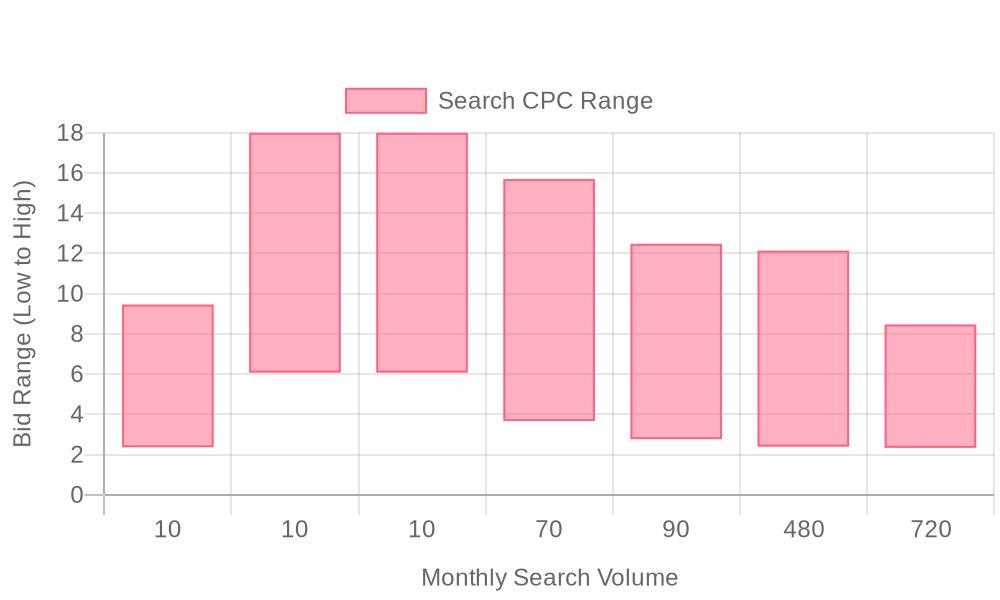
| Industry | Keyword | Monthly Search Volume | Competition Level | Low Bid | High Bid |
| Waste Compactor Repair Services | commercial trash compactor repair near me | 10 | MEDIUM | 2.37 | 9.46 |
| Waste Compactor Repair Services | industrial trash compactor repair | 10 | LOW | 6.08 | 18 |
| Waste Compactor Repair Services | industrial compactor repair | 10 | LOW | 6.08 | 18 |
| Waste Compactor Repair Services | trash compactor services | 70 | LOW | 3.67 | 15.7 |
| Waste Compactor Repair Services | commercial trash compactor repair | 90 | MEDIUM | 2.77 | 12.48 |
| Waste Compactor Repair Services | trash compactor repair | 480 | LOW | 2.4 | 12.14 |
| Waste Compactor Repair Services | trash compactor repair near me | 720 | MEDIUM | 2.34 | 8.47 |
B2B teams can intercept decision-makers at the precise moment they're searching for reliable waste compactor repair solutions by focusing on intent-rich keywords. Every dollar spent on these terms attracts prospects with immediate service needs, driving higher lead quality and more efficient pipeline growth. To turn anonymous web traffic into qualified pipeline, consider Sona's Identity Resolution for visibility into which companies are actively searching for your services.
- Precision Targeting: Campaigns should prioritize terms like “waste compactor repair near me,” “commercial trash compactor service,” “industrial waste compactor maintenance,” and “emergency compactor repair.” These phrases capture bottom-funnel buyers, often facility managers or operations directors, who are ready to engage vendors. Adding geo-targeted modifiers and industry-specific language further narrows audiences to those most likely to convert. For additional industry insights and peer discussions, see this Reddit thread on Local Service Ads for waste management.
- Measurable ROI: Selecting transactional terms such as “book waste compactor repair,” “waste management equipment service quote,” and “onsite compactor troubleshooting” is critical for tracking conversions from ad click through to quote request and closed deal. These keywords allow for full-funnel attribution, connecting online intent signals to offline sales outcomes.
- Channel Synergy: Building audiences from high-performing keywords unlocks efficient retargeting across Google’s display, YouTube, and social channels. For instance, prospects who click on “industrial waste compactor repair” ads can be retargeted with educational video content or case studies, nurturing them toward a service inquiry. Integrating CRM data with Sona Destinations ensures these dynamic audiences update as leads move through deal stages.
This approach to keyword strategy positions waste compactor repair providers to meet buyer intent with surgical precision. By connecting ad campaigns with unified intent data and leveraging real-time audience updates, teams can outpace competitors and consistently fill their sales pipeline with high-value opportunities. To explore how you can build effective retargeting workflows, see the intent-driven retargeting playbook. If you’re ready to enhance your pipeline, get started for free with Sona.
Step-by-Step Campaign Execution Framework
Waste compactor repair services operate within a highly localized, intent-driven market where search visibility and relevance directly impact lead volume. Success hinges on matching keyword strategy, ad messaging, and conversion paths to the precise needs and behaviors of decision-makers seeking urgent, compliant solutions. For ongoing industry insight, explore this Reddit discussion on waste management in Google Local Service Ads, a valuable resource for PPC marketers targeting this niche.
A unified, data-centric execution framework enables B2B revenue teams to achieve full-funnel visibility, optimize spend, and accelerate deal velocity by tightly integrating Google Ads with CRM, automation, and Sona.
Step 1: Build Targeted Keyword Lists
- Cluster by service type: Segment keywords by core offerings such as repairs, preventative maintenance, safety compliance, and emergency service. This ensures each ad group addresses a specific intent, improving quality scores and reducing wasted spend.
- Localize with modifiers: Incorporate city, neighborhood, and "near me" phrases to target buyers actively seeking local waste compactor repair services. Hyper-local targeting drives higher conversion rates and increases relevance for in-market queries.
- Include long-tail and question-based queries: Capture nuanced searches like "emergency waste compactor repair in [city]" or "how to fix commercial trash compactor." These terms often signal immediate purchase intent and lower competition.
- Apply negative keyword filters: Regularly exclude unrelated terms, such as residential trash compactor, DIY repair, or job-seeker queries like "compactor repair technician jobs," to eliminate unqualified clicks and keep spend focused on commercial and industrial buyers with active service needs.
- Integration point: Align keyword lists with the language and terminology used across your blog. When unified platforms are in place, every search term is tracked and mapped to buyer stages, making it easier to refine campaigns and sync audiences for retargeting or nurture sequences.
The upgrade most waste compactor repair services advertisers miss is going beyond raw keyword volume to layer in intent and identity signals. By connecting website-visitor data and CRM records with Sona Marketing Measurement, you can see which specific search terms bring in the accounts and customers that actually convert, and weight your keyword and bidding strategy toward those rather than the terms with the highest search volume alone.
Step 2: Develop Compelling Ad Copy
- Use industry pain points in headlines: Address critical issues like equipment downtime, compliance risks, or costly delays directly in your ad copy to resonate with facility managers and operations leads.
- Highlight trust markers: Feature certifications, high customer ratings, and notable case studies to establish authority and reduce friction in the evaluation stage. Trust-focused messaging reassures buyers comparing multiple vendors.
- Promote urgency with incentives: Offer limited-time promotions, free estimates, or same-day service to spur immediate action, especially for prospects dealing with malfunctioning equipment. See this YouTube overview for waste management for messaging inspiration.
- Use extensions strategically: Implement call extensions for direct outreach, structured snippets to showcase service breadth, and service highlights to surface differentiators.
- Integration point: Maintain messaging consistency across Google Ads, LinkedIn, and outbound email campaigns. When your ad platform syncs with your CRM and automated nurture flows, you can dynamically update messaging based on lead status and engagement history, ensuring prospects receive the most relevant value proposition at every touchpoint.
Step 3: Design Effective Landing Pages
- Create 1:1 alignment between keyword, ad, and page: Ensure each landing page directly answers the visitor’s query and delivers on the promise made in the ad copy. This alignment reduces bounce rates and increases conversion probability.
- Segment by service or vertical: Build dedicated pages for compactor repairs, baler maintenance, or compliance audits. Segmentation enables deeper personalization and more relevant CTAs.
- Include ROI calculators, trust badges, and FAQs: Equip visitors with cost-justification tools, third-party endorsements, and answers to common concerns, like expected turnaround time on an emergency call or whether a technician is licensed to service the specific compactor or baler model, to speed up the decision.
- Keep CTAs clear, persistent, and mobile-friendly: Prominently display contact forms, click-to-call buttons, and quote requests. Persistent navigation and form elements accommodate users on any device.
- Integration point: Connect all lead forms directly to your CRM and marketing automation tools. When platforms like Sona are leveraged, enriched contact records flow instantly to sales and nurture sequences, enabling rapid follow-up and accurate attribution of every lead source, down to the keyword level.
Step 4: Implement Data-Driven Optimizations
- Track micro and macro conversions: Monitor both immediate actions (form fills, calls) and longer-term engagement (content downloads, repeat visits) to build a holistic performance picture.
- Use smart bidding strategies: Deploy Target CPA or Max Conversions automated bidding, which adjusts spend to favor high-value leads in real time. Smart bidding adapts to account-level performance signals, improving ROI.
- A/B test ad headlines, CTA placement, and page layout: Continually experiment with messaging, visual hierarchy, and form positioning to identify the combinations that yield the highest conversion rates, and watch how these shift seasonally as facilities plan preventive maintenance versus scramble for emergency repairs.
- Import offline conversions: Sync closed-won deals or qualified appointments from your CRM back into Google Ads to refine bidding algorithms with true revenue data, not just click metrics.
- Integration point: Use Google Ads performance data to inform blog content and sales enablement for cross-channel campaigns. When platforms centralize ad and CRM data, you can build dynamic retargeting audiences, trigger intent-based workflows, and ensure every campaign is grounded in actual buyer behavior and real pipeline impact.
For a deeper dive into optimizing your campaigns, get started for free with Sona and unlock advanced attribution, segmentation, and audience building tools tailored for B2B marketers.
Sona Marketing Measurement closes the gap between clicks and revenue. It captures every ad click with first-party measurement, ties that click through UTM capture and ad-platform APIs to the actual record in your CRM, and reports ROAS by keyword and campaign instead of by last-click form fill. Feeding that revenue signal back into Smart Bidding and Performance Max compounds over time: the algorithms optimize toward booked waste compactor repair services revenue, not cheap leads.
Tips on Expanding Your Waste Compactor Repair Services Presence
Expanding your waste compactor repair services presence requires a strategic blend of digital marketing, audience insight, and local market adaptation. High-performing teams leverage unified data to drive relevant campaigns, continually surfacing in front of buyers when and where it matters.
- Cross-promote educational assets in retargeting: Use retargeting campaigns to deliver educational assets, such as maintenance checklists or troubleshooting guides, to previous site visitors. This approach nurtures leads, reinforces your expertise, and draws potential customers back to your content hub, supporting both lead generation and content marketing goals.
- Upsell related services via segmented audiences: By segmenting your CRM data, you can identify customers likely to need additional services, such as routine maintenance, emergency repairs, or equipment upgrades. Targeted upsell campaigns maximize customer lifetime value and keep your solutions top of mind as operational needs evolve.
- Partner with industry associations for referral traffic: Strategic partnerships with waste management associations or facilities management groups open new referral channels. Co-branded ads and shared educational content amplify credibility and expand reach among decision-makers seeking trusted vendors. For insights on industry-specific advertising, explore this discussion on Google Local Service Ads for waste management.
- Localize by state or metro areas: Geographically targeted campaigns boost visibility in priority regions, helping you fill gaps in market share and establish brand recognition where competition is lower. Adapting messaging and offers for local regulations and service needs further strengthens regional engagement.
- Use search query data for new content topics: Regularly analyze search term reports to uncover trending service needs, pain points, and competitor gaps. Feed these insights into your content strategy to create timely, relevant materials that address what buyers are actively seeking.
Effective execution in waste compactor repair marketing means unifying online and offline data, so every campaign is informed by real audience behavior. Marketers using advanced platforms can identify site visitors down to the company level, push dynamic audiences into Google Ads, and attribute leads across channels, which shows up as higher conversion rates and lower acquisition costs. Integrating CRM data keeps audience segments current as contacts move through the funnel, supporting precision targeting and more personalized engagement at every touchpoint.
Beyond Google Ads: Winning the AI Answers Waste Compactor Repair Services Buyers Now Trust
Paid search captures demand at the moment someone types a query. But a fast-growing share of waste compactor repair services buyers no longer start at Google at all, they ask ChatGPT, Gemini, or Perplexity before they ever run a search, and Google's own AI Overviews increasingly summarize an answer above the traditional results. If your business isn't referenced in those AI answers, you're invisible at the exact moment buyers build their shortlist.
Sona AI Visibility shows where your business shows up across ChatGPT, Gemini, Perplexity, Google AI Overviews, and 10+ engines, and, much like a keyword report, which prompts actually send you buyers, so you can prioritize the ones that convert. Run the two together and you cover the entire buyer path: get cited where buyers research (AI Visibility), then prove which of that demand turns into booked revenue (Marketing Measurement).
Helpful resources
Conclusion
The compactor that jams on a Tuesday afternoon doesn't wait for a nurture campaign, and that's the advantage Google Ads gives waste compactor repair providers over slower-moving channels: it puts your business in front of the facilities manager at the moment the equipment fails. Precise targeting, urgency-driven messaging, and tight keyword-to-landing-page alignment turn that moment into a booked service call rather than a lost lead to a competitor.
The bigger shift ahead is measurement: as more of the buying journey moves through AI tools and AI-generated search summaries, the providers who track which keywords and campaigns actually produce paying customers, not just form fills, will be the ones who keep winning the bid auctions that matter. That's the work worth doing now, while competitors are still optimizing for clicks instead of revenue.
To put these strategies to work with unified, revenue-grounded data behind them, start for free with Sona.
FAQ
How can I set up a successful Google Ads campaign for waste compactor repair services?
A successful campaign requires precise targeting, audience segmentation, and real-time conversion tracking. Use visitor identification to pinpoint companies searching for solutions, and shift spending toward high-likelihood conversions using real-time intent signals.
What are the best keywords for Google Ads in the waste compactor repair industry?
Focus on intent-rich keywords like intent-rich keywords such as 'waste compactor repair near me,' 'commercial trash compactor service,' and 'emergency compactor repair' to capture high-intent prospects.
How much does it cost to run Google Ads for waste compactor repair services?
The cost varies based on competition and targeting but optimizing spend with precise targeting and real-time intent signals can increase efficiency and ROI.
What are the conversion rates for Google Ads in the waste management sector?
Conversion rates depend on factors like keyword strategy, ad relevance, and audience targeting. Using advanced attribution and conversion tracking helps connect ad spend to revenue outcomes.
How can I track the ROI of my Google Ads campaign for waste compactor repair services?
Integrate conversion tracking with revenue systems for full-funnel visibility, and use advanced attribution to connect ad spend with pipeline and revenue outcomes for continuous optimization.







