


A utility locating crew that misses a call by twenty minutes can lose the job to a competitor who answered first. That urgency is what makes Google Ads such a natural fit for the trade, and also why so many locating companies waste budget on it: they capture the click but lose the lead in the gap between form-fill and follow-up. With precise targeting, measurement, and ROI tracking, businesses in utility locating services can intercept decision-makers at the exact moment they're searching for specialized detection or emergency mapping. This guide walks through the best practices and advanced strategies for using Google Ads in utility locating marketing, including how tools like Sona improve data integration and lead qualification without adding another manual step for your team.
How to Generate Utility Locating Services Leads with Google Ads: A Step-by-Step Guide
Utility locating services operate in a complex, high-stakes environment where precision and speed drive business value. Digital advertising, when aligned with market realities, delivers a clear advantage by connecting specialized providers with construction firms, municipalities, and contractors seeking reliable underground detection. For a look at best practices tailored to the industry, see this Google Ads for utility locating resource.
A data-driven Google Ads approach is essential for capturing high-value jobs and filtering out low-intent inquiries. Modern B2B teams require immediate insight into which accounts are engaging, what intent signals are surfacing, and how to prioritize marketing investment for maximum impact. Discover more strategies in our blog on measuring marketing's influence.
- Adopt a data-driven approach tailored for utility locating services, ensuring you don't miss out on high-value prospects by integrating CRM systems for real-time tracking.
Utility locating businesses thrive when every lead is traceable from ad click to closed job. Integrating CRM systems with Google Ads allows teams to track each inquiry's journey, matching ad spend directly to revenue outcomes. With company-level identification, marketers can move beyond anonymous clicks to pinpoint organizations with active projects, improving follow-up and qualification. Real-time syncing between Google Ads, Salesforce, and other platforms moves high-intent leads into sales outreach without delay, cutting the risk of missed opportunities from slow manual processes.
- Apply targeted keyword strategies to attract high-intent local buyers, addressing pain points where static audience lists become rapidly outdated.
Utility locating campaigns demand keywords that reflect urgent business needs and local project specifics. By leveraging real-time audiences that update as leads engage across digital touchpoints, you can ensure campaigns focus budget on companies actively planning excavations or site development. For further keyword research, use the Google Ads Keyword Planner.
- Align your ad creatives with landing pages for optimal conversion, making sure leads captured do not face delays in outreach.
Conversion rates skyrocket when ad messaging, landing pages, and CRM workflows are tightly integrated. For utility locating advertising, this means ad creatives should speak directly to pain points, such as project delays and regulatory penalties, while landing pages reinforce expertise with case studies, certifications, and rapid response CTAs. When a prospect submits a request, buyer journeys and enriched lead data flow into your sales system, triggering immediate engagement from your team. For actionable frameworks, explore our playbooks for demand generation.
- Implement cross-channel tactics to support integrated marketing initiatives, using predictive analytics from Sona to refine targeting.
Utility locating marketing strategies benefit from a unified view across channels. By combining Google Ads targeting for services with social, programmatic, and content marketing data, teams spot patterns that reveal which sources and messages produce the most valuable deals. Predictive analytics let you anticipate future demand and reallocate budget to the audiences most likely to convert, powering sustainable growth for digital marketing in utility services.
Why Does Google Ads Matter for Utility Locating Services?
Utility locating services face distinct market pressures where every project lead can mean a significant contract. Google Ads enables these businesses to intercept prospective clients at the exact moment they search for emergency detection or pre-construction mapping, minimizing missed opportunities and increasing win rates for high-value projects.
The immediacy of online advertising for utility locating allows firms to respond quickly in situations where timing is critical, such as urgent excavations or infrastructure emergencies. By leveraging Google Ads for Utility Locating Services, providers ensure their solutions appear before potential clients while competitors are still cold-calling or waiting for referrals. For more insights into marketing strategies that drive pipeline, explore our B2B marketing blog.
Precision targeting in Google Ads empowers utility locating businesses to reach new markets or underserved geographies without the inefficiencies of blanket advertising. Campaigns can be calibrated to only appear in regions with available crews, meaning marketing dollars are allocated efficiently and buyer journey data remains actionable and centralized.
Integrating campaign data with CRM systems allows every inquiry to be tracked from initial click through contract signature. With dynamic audience syncing, marketers can automatically update and retarget high-value leads as they progress through the sales funnel, ensuring no prospect slips through the cracks and all online and offline engagements are attributed accurately.
This unified approach streamlines utility locating marketing strategies, making Google Ads not just a channel for immediate lead generation but a long-term driver of utility locating business growth and operational efficiency. To see the impact for yourself, get started for free with Sona.
Common Types of Google Ads Campaigns for Utility Locating Services

- Search Ads: Utility locating businesses rely on the Search format to capture high-intent prospects who are actively seeking services, often under urgent circumstances. These ads align with the moments when decision-makers are ready to act, using advanced intent signals and enriched data to reach the most qualified leads. Responsive search ads, which let Google test multiple headlines and descriptions automatically, work well here since search phrasing for emergency versus planned locating jobs varies widely. Leveraging unified data sources, marketers can move beyond basic keyword targeting and identify not just anonymous traffic, but the companies and individuals showing real purchase intent. This targeted approach enables immediate budget shifts toward high-value accounts, minimizing wasted spend and increasing conversion efficiency.
- Display Ads: Display advertising keeps utility locating brands visible across industry-relevant content, supporting consistent awareness during longer purchase cycles. Sophisticated audience segmentation ensures that ads adjust dynamically as user profiles evolve, letting marketers maintain relevance without constant manual updates. When integrated with real-time behavioral analytics, display campaigns can automatically prioritize impressions for visitors showing increasing interest or nearing decision points. This results in more consistent lead nurturing and a steady pipeline of qualified opportunities as prospects transition between research and buying phases.
- Video Ads: Video campaigns offer a compelling way to explain complex utility locating services, especially when technical differentiation is a key part of the value proposition. Well-crafted video content can visually demonstrate advanced detection methods, safety benefits, and project outcomes, making it easier for prospects to understand service advantages. By analyzing in-market viewing behavior and engagement signals, marketers can ensure video ads are served to audiences most likely to convert, accelerating the path from initial interest to request for proposal. For practical guidance on setup and optimization, see this video tutorial on Google Ads location targeting.
- Remarketing: Remarketing campaigns are essential for reconnecting with site visitors who have shown interest but not yet engaged a salesperson or requested a quote. Automated segmentation tools allow these campaigns to adapt in real time, targeting prospects based on their on-site actions, content consumption, and intent score. As leads progress through the funnel, remarketing lists update automatically, ensuring messaging and offers remain relevant at every touchpoint. This persistent, data-driven follow-up increases return rates, shortens sales cycles, and maximizes the lifetime value of every marketing dollar.
- Ad Assets for Trust and Validation: Callout and location assets add credibility to every ad by displaying key proof points, such as service certifications, coverage areas, or rapid response times. These assets also streamline the conversion process, offering direct paths to schedule an appointment or request a call. When audience and conversion data are unified across CRM and ad platforms, these assets can be tailored to the prospect's location or stage in the buying journey, driving higher engagement and reinforcing the brand's reliability in a competitive market. To explore how to implement and maximize ad assets, review best practices in this guide to Google Ads assets.
Where to Find Growth Opportunities?
Proactive utility locating businesses can accelerate market share by deploying strategies grounded in data and intent signals. Focusing on high-value segments minimizes wasted spend and positions your services ahead of shifting demand curves.
- Niche keyword targeting: Identify and bid on specialty phrases that reflect unique underground locating capabilities, such as “GPR utility detection,” “private line locating,” or “emergency underground mapping.” By continuously monitoring real-time search data, businesses can adapt their keyword portfolio as new industry terms and urgent needs emerge. To discover the most effective keywords for your campaigns, leverage resources like the Google Ads Keyword Planner tool, and keep your campaigns relevant by using dynamic audience segmentation for tailored messaging.
- Competitor gap analysis: Use predictive modeling to uncover market segments your competitors under-serve. For example, if competitors focus only on public utility marking, identify gaps in private utility or municipal infrastructure projects. When you layer historical engagement data with forecasted industry trends, you can proactively scale advertising toward sectors likely to surge, such as fiber-optic cable installation or smart grid upgrades. For actionable strategies and analytics, explore our collection of playbooks.
- Industry forums and directories: Expand reach by placing targeted ads or sponsored content within trade association sites, construction lead portals, and regional utility directories where organic SEO may fall short. Automated engagement tracking allows you to measure which placements drive qualified inquiries and refine your spend accordingly, ensuring every advertising dollar supports measurable impact.
How to Apply Audience Segmentation for Utility Locating Services

Precise audience segmentation is essential for utility locating services aiming to maximize the impact of Google Ads campaigns. By leveraging CRM data and real-time digital signals, marketers can identify the most relevant business segments, such as utilities, construction management firms, engineering consultancies, and municipal agencies, ensuring ad spend is directed where it delivers the greatest value. This strategic clarity empowers teams to tailor outreach, align messaging, and deliver highly relevant offers that resonate with each segment’s current needs.
Aligning segmentation with each stage of the customer journey unlocks more opportunities for engagement and conversion. For example, integrating dynamic data enables marketers to distinguish between prospects seeking emergency location services and those researching scheduled maintenance or long-term infrastructure projects. Applying layered intent signals ensures that no lead opportunity is missed due to outdated or incomplete information, as audience segments automatically update when new buying signals are detected.
Ad groups become significantly more effective when creative, offers, and calls to action are customized to each segment’s pain points and purchasing triggers. For utility locating services, this approach could mean highlighting rapid response times and compliance expertise for emergency requests, while showcasing technical accuracy and comprehensive reporting for planned construction partners. Regularly updating these segments based on evolving CRM and digital engagement data keeps campaigns sharply attuned to the market. Learn more about optimizing Google Ads location targeting to further enhance your PPC strategy.
Real-time intent validation, powered by Sona's Identity Resolution, ensures that only high-probability leads receive the most aggressive budget allocation and personalized messaging. By syncing enriched audiences and lead data into Google Ads and major CRM systems, teams can close the loop between online engagement and offline outcomes. This approach improves targeting accuracy and streamlines campaign management, letting sales and marketing focus on high-value accounts as they move through the funnel.
This is also where measurement changes the economics. With Sona Marketing Measurement you can identify the companies and buyers behind your ad clicks, not just anonymous sessions, and segment audiences by who actually becomes a customer. That lets you build bid adjustments and audience signals around the segments that convert and de-prioritize the ones that don't, so you feed Google's algorithms "this click became a paying utility locating services customer" instead of just "someone filled out a form."
Keyword Strategy & Sample Target Terms
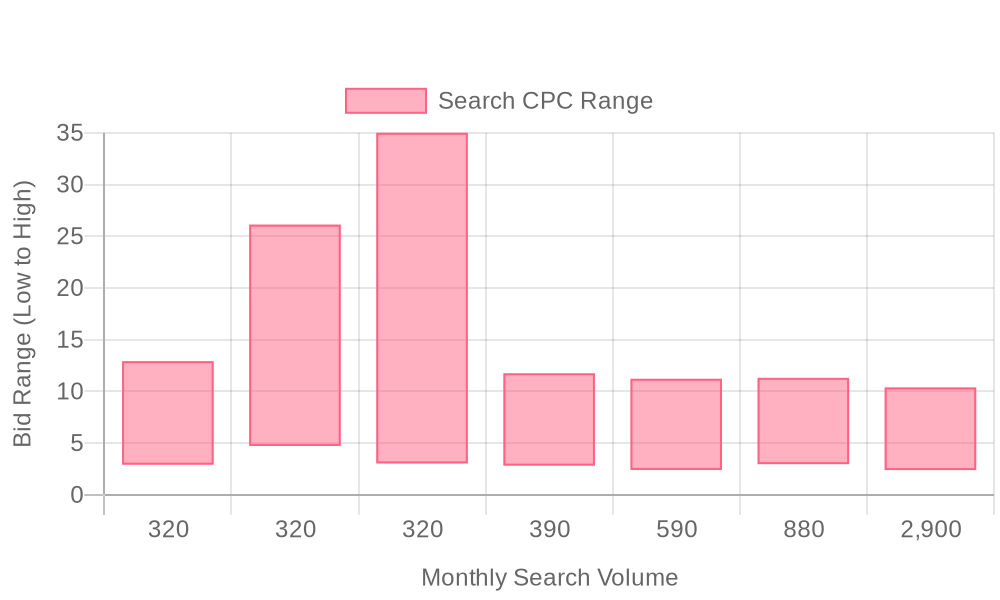
| Industry | Keyword | Monthly Search Volume | Competition Level | Low Bid | High Bid |
| Utility Locating Services | private utility locator near me | 320 | MEDIUM | 2.92 | 12.92 |
| Utility Locating Services | water line locator service near me | 320 | HIGH | 4.73 | 26.12 |
| Utility Locating Services | water main leak detection | 320 | HIGH | 3.04 | 35 |
| Utility Locating Services | underground utility locating services | 390 | LOW | 2.83 | 11.75 |
| Utility Locating Services | private utility locating companies near me | 590 | MEDIUM | 2.41 | 11.22 |
| Utility Locating Services | private utility locating | 880 | LOW | 2.97 | 11.31 |
| Utility Locating Services | utility locating services | 2900 | LOW | 2.4 | 10.38 |
Developing a high-impact keyword strategy is fundamental to maximizing the effectiveness of Google Ads for Utility Locating Services. An advanced approach begins by prioritizing high-volume, high-intent keywords such as "utility locating services near me" or "underground utility detection." These phrases directly reflect urgent searcher needs and capture local buyers ready to engage. Using up-to-date keyword research tools, marketers can continuously refine and expand their lists as new trends and regional terminology emerge. To dive deeper into tactical approaches, review our B2B marketing reports guide for actionable templates and KPIs.
Targeting long-tail keywords that specify service types or unique situations, like "private fiber optic line locating" or "emergency gas line detection," allows utility locating businesses to align messaging with niche demand. These terms attract highly qualified prospects who know exactly what service they require, reducing wasted spend and boosting Quality Scores. When data from CRM and previous campaign performance is integrated, related long-tail opportunities surface that might otherwise go unnoticed. Sona's audience tools can help by building dynamic, intent-driven segments that sync directly with your ad platforms.
Implementing robust negative keyword lists is equally critical. By filtering out irrelevant searches such as "utility locating jobs," "DIY line marking," or unrelated industries, marketers minimize budget loss and avoid low-quality leads. The most effective teams leverage CRM-enriched insights to identify patterns in unqualified traffic, using this intelligence to update negative lists in real time. With the right platform, these negative keywords can be applied dynamically as new data flows in, further optimizing spend and targeting precision. Explore our playbook on buying stage segmentation to refine your approach.
Modern search insights tools provide a competitive edge by surfacing intent signals and search term trends that are invisible to static keyword planners. These tools help marketers spot shifts in local demand, competitor movements, or seasonal spikes, such as the spring construction ramp-up that drives a surge in locating requests, allowing for proactive adjustments to keyword portfolios. When connected to ad platforms and CRM systems, audience segments update automatically as leads progress or change status, tightening targeting and focusing budget on accounts with heightened purchase intent.
Step-by-Step Campaign Execution Framework
Modern utility locating companies face fierce competition and complex buying cycles, making precision in digital advertising essential. Success hinges on campaigns that adapt in real time to shifting demand, turn website activity into identified accounts, and consistently drive measurable outcomes.
Top performers in utility locating advertising focus on unifying intent data signals, enriching lead profiles, and aligning every stage of the campaign to genuine project needs. This step-by-step framework delivers a clear, practical path to higher-quality conversions and sustainable business growth in Google Ads for Utility Locating Services.
Step 1: Build Targeted Keyword Lists
Effective keyword lists are the backbone of any high-performing Google Ads strategy for utility locating services. Start by mapping specialized search terms that capture both technical needs ("private utility location," "GPR scanning") and urgent project intent ("emergency utility detection," "same-day underground marking"). Utility locating demand shifts with construction cycles, frost-line thaw in early spring, and regulatory call-before-you-dig deadlines, so keyword portfolios need regular attention rather than a set-and-forget list. Watching search volume and emerging terminology lets marketers pivot budgets and messaging toward the most lucrative opportunities. By leveraging unified intent data, teams can detect when a company is actively researching services and prioritize those keywords immediately, so spend goes where a job is most likely to close. For additional guidance, explore Google Ads Keyword Planner to uncover valuable terms and volume trends.
The upgrade most utility locating services advertisers miss is going beyond raw keyword volume to layer in intent and identity signals. By connecting website-visitor data and CRM records with Sona Marketing Measurement, you can see which specific search terms bring in the accounts and customers that actually convert, and weight your keyword and bidding strategy toward those rather than the terms with the highest search volume alone.
Step 2: Craft Compelling Ad Copy
Ad copy for utility locating must do more than describe services; it needs to address specific pain points and present solutions that resonate with technical decision-makers. Incorporate real-world scenarios, delayed projects due to unknown lines, regulatory fines, or costly repairs, to make the messaging relatable and urgent. Headlines should highlight response time, detection accuracy, and compliance credentials, while descriptions reinforce your ability to prevent downtime and protect client investments. Ad personalization thrives when in-market intent signals are integrated, so copy dynamically adjusts based on account activity and stage in the buying journey. This approach not only improves relevance but also positions your brand as responsive and trustworthy in a high-stakes field. For inspiration on effective ad copy, see these Google text ad examples.
Step 3: Design Landing Pages with Clear CTAs
Landing pages for Google Ads targeting utility locating services must deliver immediate clarity, guiding visitors from ad click to action without confusion. Align headlines and copy closely with ad messaging to reinforce continuity and trust. Use prominent calls-to-action tailored to the visitor’s stage, whether requesting a rapid site assessment, downloading a compliance checklist, or scheduling a direct consultation. Integrating behavioral insights and past engagement data allows the landing page to dynamically adjust CTAs and content, streamlining the buyer’s path and minimizing drop-off. This ensures that every visitor receives a personalized, context-driven experience that maximizes the likelihood of qualified lead capture. For more tips, review these Google Ads landing page best practices.
Step 4: Implement Ongoing Optimization
Continual optimization is necessary for sustained results in digital marketing for utility services. Move beyond surface-level metrics by segmenting campaigns based on predicted buying stages and audience signals, and adjust bids, creative, and audiences as new data arrives. Advanced conversion tracking, spanning both online form fills and offline contract wins, gives a fuller picture of campaign ROI and true sales impact. Automated audience updates keep engagement relevant as prospects move from initial research to urgent project needs. Syncing enriched lead and account data into your CRM and Google Ads creates a closed loop where performance insights drive campaign refinement directly, supporting growth at every step.
Sona Marketing Measurement closes the gap between clicks and revenue. It captures every ad click with first-party tracking, ties that click through UTM capture and ad-platform APIs to the actual record in your CRM, and reports ROAS by keyword and campaign instead of by last-click form fill. Feeding that revenue signal back into Smart Bidding and Performance Max compounds over time: the algorithms optimize toward booked utility locating services revenue, not cheap leads.
Tips on Expanding Your Utility Locating Services Presence
Utility locating providers can accelerate business growth by strategically expanding their digital presence and reinforcing their brand as an industry authority. Consistently integrating advanced digital tactics with localized outreach enables utility locating teams to build trust and capture high-intent leads across competitive markets. Explore more actionable tactics in our utility locating playbooks.
- Leverage educational content in remarketing: Cross-promote whitepapers, case studies, or explainer videos through Google Ads remarketing campaigns to keep your business top-of-mind for prospects. This approach ensures your brand is consistently associated with technical expertise and up-to-date industry knowledge, establishing credibility with both new and returning visitors. When remarketing lists are dynamically updated based on real-time audience data, your campaigns stay relevant and nurture prospects throughout the buying journey.
- Form industry partnerships for credibility: Engage with local and national utility associations to increase brand recognition and unlock new referral channels. By collaborating on webinars, technical workshops, or industry events, your company can reinforce its market authority and tap into established networks. These partnerships not only generate backlinks and PR but also allow you to share your expertise with decision-makers seeking reliable utility locating partners.
- Localize campaigns for targeted growth: Tailor your Google Ads for utility locating services to specific service areas using geo-targeting and localized ad copy. Localized campaigns resonate more strongly with property owners, contractors, and municipalities searching for nearby providers, leading to higher engagement and conversion rates. Automated audience data sync ensures your campaign targeting adapts as new service locations open or as high-value markets emerge, preventing wasted spend and maximizing market share in each region.
- Mine search query data for content ideas: Analyze Google Ads search terms and website analytics to discover trending topics and customer pain points. Use these insights to inform your utility locating blog content, FAQ, or video strategy, ensuring your website answers the most common and urgent questions in the utility locating field. For more on optimizing Google Ads location targeting, check out this guide to Google Ads location targeting.
Google Ads bridges online research with offline service demand, making it a critical tool for utility locating business growth. By synchronizing CRM data with ad platforms, teams can identify which prospects are most likely to convert, enrich audience segments, and deliver timely, personalized offers. Real-time integrations eliminate stagnant audience lists and let marketers optimize campaigns as user intent and market conditions shift, giving utility locators a measurable edge in both lead generation and brand positioning. Ready to level up your digital strategy? Get started for free with Sona.
Beyond Google Ads: Winning the AI Answers Utility Locating Services Buyers Now Trust
Paid search captures demand at the moment someone types a query. But a fast-growing share of utility locating services buyers no longer start at Google at all, they ask ChatGPT, Gemini, or Perplexity before they ever run a search, and Google's own AI Overviews increasingly summarize an answer above the traditional results. If your business isn't referenced in those AI answers, you're invisible at the exact moment buyers build their shortlist.
Sona AI Visibility shows where your business shows up across ChatGPT, Gemini, Perplexity, Google AI Overviews, and 10+ engines, and, much like a keyword report, which prompts actually send you buyers, so you can prioritize the ones that convert. Run the two together and you cover the entire buyer path: get cited where buyers research (AI Visibility), then prove which of that demand turns into booked revenue (Marketing Measurement).
Helpful resources
Conclusion
Google Ads gives utility locating companies a way to be first in line the moment a contractor or municipality searches for help, but the channel only pays off when the data loop closes: when a click can be traced to a booked job, not just a form fill.
The locating companies that pull ahead over the next few years will be the ones that treat Google Ads as one input into a larger measurement system, tying search spend to identified accounts, closed jobs, and now, increasingly, to what AI answer engines say about them before a search ever happens. That's the next front worth watching.
To take your strategy further, start for free and see how Sona turns ad clicks into tracked revenue.
FAQ
What are the best practices for using Google Ads for utility locating services?
Best practices include adopting a data-driven approach with CRM integration for real-time tracking, using targeted keyword strategies to attract high-intent local buyers, aligning ad creatives with landing pages for optimal conversion, and implementing cross-channel tactics with predictive analytics to refine targeting.
How can I target local customers effectively with Google Ads?
To target local customers effectively, use geo-targeting and localized ad copy, ensure campaigns focus on companies planning local projects, and align messaging with local project specifics to resonate with nearby property owners and contractors.
What are Local Service Ads and how do they work for utility locating?
While the article does not specifically mention Local Service Ads, Google Ads for utility locating services can intercept prospective clients during searches for emergency detection or pre-construction mapping, effectively reaching clients at critical moments.
What keywords should I use for Google Ads in the utility locating industry?
Use high-volume, high-intent keywords like 'utility locating services near me' and long-tail keywords such as 'private fiber optic line locating' to target urgent and niche demands, ensuring alignment with local buyer needs.
How can I measure the success of my Google Ads campaigns for utility locating services?
Measure success by tracking conversion rates from ad click to closed job, integrating CRM for real-time insights, and using advanced conversion tracking to evaluate both online form fills and offline contract wins, ensuring a holistic view of campaign ROI.







