


Transportation consulting deals rarely close on the first click. A fleet operator researching freight audit services or a supply chain executive weighing regulatory compliance options might spend weeks comparing firms before ever filling out a form, and Google Ads is one of the few channels that can catch that search the moment it happens. Done well, it lets transportation consultants intercept decision-makers at the exact point of need, measure ROI against real contracts rather than clicks, and reinforce every other marketing channel already in motion.
How to Generate Transportation Consultant Leads with Google Ads: A Step-by-Step Guide

Transportation consultants face a complex market where buyer journeys span multiple stakeholders and decision cycles. Success relies on precise audience identification, conversion-driven creative, and the ability to pivot strategies as industry trends shift. With paid search, consultancies can directly reach logistics managers, fleet operators, and supply chain executives who are actively searching for solutions to operational problems and regulatory challenges.
Search advertising in the transportation sector rewards a structured, data-driven approach. Integrating advanced marketing technology lets consultants identify the companies behind anonymous website visits and turn those touchpoints into actionable leads. Real-time behavioral analysis further informs campaign budget allocation, ensuring that high-intent accounts receive immediate attention and personalized messaging. For deeper insights on maximizing paid search, explore the role of a Google Ads consultant in optimizing campaigns for your industry.
A unified data strategy transforms lead generation for transportation consultants. When CRM and Google Ads platforms are seamlessly connected, enriched audience segments and lead data automatically flow between systems. This ensures that only qualified prospects see your ads and that every marketing dollar is tracked to its true revenue impact, including both online and offline conversions. By continuously updating audiences as prospects progress through the funnel, consultancies maintain engagement with decision-makers exactly when they are ready to act. Ready to connect your marketing and sales data? Get started for free with Sona.
Why Does Google Ads Matter for Transportation Consultants?

Transportation consultants operate within a highly specialized and competitive environment where every client engagement can represent a significant contract. The ability to reach transportation directors and procurement leads at the exact moment they initiate searches for consulting expertise is essential for driving consistent lead flow and maximizing revenue opportunities. Effective digital advertising for transport ensures that consultants are visible to decision-makers as soon as demand arises, avoiding missed deals in a rapidly shifting market.
The nature of transportation consulting involves long sales cycles, multiple stakeholders, and complex buying journeys. Google Ads allows consultants to nurture high-value relationships while also activating new business in real time. Sona surfaces intent signals from across the digital landscape, ensuring every ad aligns with a prospect's stage in the buying cycle, whether that's a fleet manager comparing vendors or a compliance officer researching new regulations. This dynamic targeting is crucial for capturing opportunities as companies expand into new markets or respond to regulatory changes.
Transportation consultants must be prepared to pivot quickly during industry disruptions, such as supply chain bottlenecks or seasonal spikes. Google Ads enables teams to adjust targeting, budgets, and messaging on the fly, redirecting spend towards high-converting accounts during peak demand. When integrated with advanced platforms, real-time visitor identification and in-market behavior tracking allow marketers to prioritize accounts showing immediate interest, shifting spend to the highest value opportunities.
Expanding into developing regions requires precise marketing execution. Account-level targeting through Google Ads provides granular control, ensuring campaigns reach only those businesses operating within specific geographic or operational parameters. As consultants use audience data that updates dynamically, they can tailor their outreach by location and service offering, establishing a strong foothold in new markets with minimal wasted spend.
A unified approach to marketing analytics is indispensable for transportation consultants seeking to demonstrate clear ROI. Google Ads, when combined with integrated data systems, tracks the complete customer journey, from online ad interaction through offline consultation and contract signing. This comprehensive attribution enables consultants to optimize their strategies, connect ad spend to closed revenue, and deliver transparent performance metrics to stakeholders. With seamless CRM and ad platform integration, enriched lead and audience data can be automatically synced, streamlining follow-up and accelerating the sales cycle.
Common Types of Google Ads Campaigns for Transportation Consultants

- Search Campaigns: Search campaigns allow transportation consultants to intercept high-intent queries at the moment of need. By prioritizing keywords that reveal immediate buying signals, such as “freight audit consultant near me” or “transportation compliance advisory”, these campaigns deliver a steady stream of leads primed for conversion. Within Search, Responsive Search Ads let you test multiple headlines and descriptions to find the combination that resonates with a given query, and pairing that format with Sona's Identity Resolution lets marketers pinpoint not just anonymous clicks, but also the companies and decision-makers engaging with ads, leading to more effective follow-up and higher ROI. For a deeper look at how Google Ads consultants can transform your PPC strategy, explore this resource on optimizing paid search campaigns.
- Display Ads: Display campaigns extend brand influence across industry-relevant websites, keeping transportation consulting services top-of-mind throughout a complex research cycle. These ads reinforce core messaging for logistics and supply chain audiences who may not yet be ready to engage directly. Integrating Sona’s Audiences tool ensures that display ads reach users as they shift from initial awareness to deeper consideration, maximizing exposure to the right stakeholders at every stage.
- Video Ads: Video formats are ideal for explaining complex transportation solutions and demonstrating the tangible impact of consulting engagements. Consultants can use video ads to showcase before-and-after case studies, walk through intricate logistics workflows, or highlight executive testimonials. When Sona's Intent Signals show a prospect spending significant time on service pages, budgets can be shifted to prioritize video placements for high-potential accounts, driving engagement and accelerating funnel velocity.
- Remarketing: Remarketing campaigns re-engage previous site visitors with highly personalized messaging based on their latest interactions. By leveraging Sona's Audiences tool, transportation consultants can tailor offers and content to the prospect's exact journey stage, such as inviting a recent visitor to book a follow-up consultation or download a new whitepaper. Sona's Ad Conversions tracks online and offline attribution together, enabling consultants to measure true campaign effectiveness and optimize retargeting strategies accordingly.
- Assets: Ad assets add layers of credibility and trust, which are crucial in the transportation consulting space. Incorporating certifications, industry affiliations, or local office details within assets helps ads stand out and align with conversion goals. Through Sona's Destinations, enriched contact and firmographic data can flow directly into both Google Ads and sales platforms, ensuring that every lead is scored and routed for rapid follow-up and maximizing the likelihood of closed deals. If you're ready to see these strategies in action, get started for free with Sona.
Where to Find Growth Opportunities?
Transportation consultants can accelerate growth by systematically uncovering untapped market segments and refining their digital presence. The most effective approaches leverage both data-driven research and targeted outreach to ensure visibility among high-value prospects in logistics, freight, and supply chain management. By identifying where industry decision-makers congregate online and matching service offerings to real client needs, consultants maximize their advertising impact and drive quality lead generation.
- Vertical Keyword Targeting: Deepening keyword strategies beyond broad transportation terms reveals niche opportunities in areas like intermodal optimization, regulatory audits, or last-mile consulting. This allows for precise targeting of buyers seeking specialized expertise. Using advanced intent data, marketers can recognize when site visitors search for tailored solutions, making ad spend more efficient and raising conversion rates among high-intent decision-makers.
- Competitor Gap Analysis: By analyzing gaps in competitor campaigns and tracking where prospects spend significant time online, transportation consultants can identify underserved verticals or geographic regions. Modern marketing platforms make it easy to identify anonymous site visitors, helping teams prioritize accounts that align with their ideal client profiles and shift budget toward segments with the highest propensity to convert.
- Industry-Specific Placements: Engaging logistics buyers through trade forums, industry directories, and professional associations increases reach while ensuring relevance. Effective PPC strategies for logistics highlight the value of custom audience segments built from these high-traffic placements, supporting ongoing remarketing as leads move from awareness into consideration. When audiences are dynamically synced with CRM and ad platforms, consultants can keep messaging tightly aligned with the buyer’s current interests.
- Content Retargeting: Informational assets such as benchmarking reports, compliance checklists, and whitepapers serve as magnets for engaged transportation executives. Retargeting campaigns can nurture these visitors, using conversion signals to update audience lists in real time as prospects engage deeper with content. Integrated conversion tracking that links both digital and offline touchpoints offers consultants a clear view of campaign ROI, making it possible to invest with confidence and scale the highest-performing strategies.
How to Apply Audience Segmentation for Transportation Consultants

Audience segmentation gives transportation consultants a precise way to match digital marketing efforts with the actual journey of prospective clients. By dividing audiences based on logistics, freight transport, or supply chain specialization, consultants can focus their campaigns on the highest-value decision makers and tailor messaging to each buyer’s operational pain points. This approach ensures that ad spend prioritizes prospects with immediate needs, such as fleet modernization or regulatory compliance, and that each group receives content relevant to their stage in the decision cycle. For a deeper dive into digital marketing strategies tailored to transportation and logistics, explore digital marketing for logistics companies.
Layering intent signals further refines targeting accuracy. For example, by analyzing signals such as recent searches for “fleet upgrade grants” or “freight audit services,” campaigns can dynamically adjust who sees which ad creative. Consultants benefit from integrating these signals with existing CRM data, which enables real-time audience updates as leads move from awareness to consideration. This real-time intent data also allows for precise budget reallocation, ensuring investment remains focused on accounts showing readiness to engage or buy.
To maximize conversion opportunities, ad groups and budgets should be customized to align with CRM insights. For instance, if logistics executives in a specific metro area consistently engage with compliance-focused content, dedicated ad groups with increased bids and custom creative can be deployed. When CRM and Google Ads are connected, marketers can capture both online and offline actions, such as consultation bookings by phone or in-person event signups, creating a unified conversion path. This advanced approach to attribution reveals which segments and channels deliver the highest ROI, allowing for ongoing optimization of transportation industry marketing strategies.
Syncing CRM and ad platforms ensures that enriched audience segments and high-quality leads flow seamlessly into ongoing campaigns. As audiences evolve, segment definitions update automatically, supporting continuous retargeting and nurturing. Transportation consultants can then deliver the right message at the right moment, leveraging unified data to accelerate conversions and drive measurable results from targeted advertising for consultants and audience segmentation.
This is also where measurement changes the economics. With Sona Marketing Measurement you can identify the companies and buyers behind your ad clicks, not just anonymous sessions, and segment audiences by who actually becomes a customer. That lets you build bid adjustments and audience signals around the segments that convert and de-prioritize the ones that don't, so you feed Google's algorithms "this click became a paying transportation consultants customer" instead of just "someone filled out a form."
Keyword Strategy & Sample Target Terms
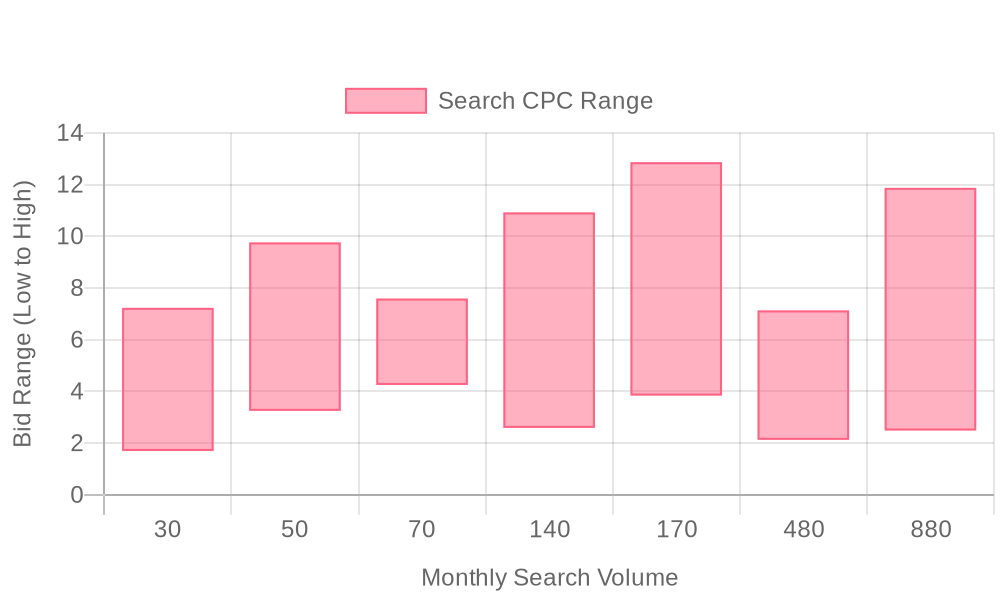
| Industry | Keyword | Monthly Search Volume | Competition Level | Low Bid | High Bid |
| Transportation Consultants | traffic consultants near me | 30 | LOW | 1.7 | 7.23 |
| Transportation Consultants | freight consultants | 50 | LOW | 3.25 | 9.76 |
| Transportation Consultants | traffic consultant | 70 | LOW | 4.25 | 7.59 |
| Transportation Consultants | traffic engineering consultants | 140 | LOW | 2.59 | 10.92 |
| Transportation Consultants | trucking consultant | 170 | LOW | 3.84 | 12.86 |
| Transportation Consultants | transportation consultants | 480 | LOW | 2.13 | 7.13 |
| Transportation Consultants | traffic engineers near me | 880 | LOW | 2.49 | 11.87 |
Intent-driven keyword strategy defines the success of digital marketing for transport consultants. High-value terms connect your offer directly with executive buyers seeking expertise in logistics efficiency, contract optimization, and freight management solutions. Prioritizing granular, purchase-intent phrases ensures your campaigns consistently reach the professionals most likely to convert. Explore more actionable tactics in our B2B marketing playbooks.
- Precision Targeting: Focusing on transactional terms like "transport logistics consultants near me" and "freight transport management services" captures decision-makers as they evaluate partners. These keywords reflect immediate business needs, allowing you to intercept demand at the moment of solution search. Incorporating variants for specific service lines or geographic qualifiers further narrows the audience to those ready for consultation. For industry-aligned PPC strategies, see effective PPC for transportation and logistics.
- Measurable ROI: Using multi-touch attribution, you can track each lead from initial search through booked meeting or signed contract. Advanced conversion tracking links online inquiries, form fills, and offline sales calls, providing a comprehensive view of campaign impact. With enriched attribution, revenue teams can optimize spend toward keywords that drive high-value deals, not just clicks.
- Channel Synergy: Integrating keyword data with real-time audience signals enables dynamic retargeting across Google and social platforms. Syncing CRM-enriched audiences ensures ads reach contacts at every stage: from initial research on transportation service contracts to post-demo follow-ups. As prospects progress through the funnel, dynamic audience updates keep messaging relevant, increasing engagement and accelerating deal cycles.
Sample target terms such as "transport logistics consultants near me," "freight transport management services," and "transportation service contracts" form the foundation of a results-oriented Google Ads for Transportation Consultants strategy. Supplementing these with industry-specific and localized modifiers positions your campaigns for maximum impact in the competitive transportation industry marketing landscape.
Step-by-Step Campaign Execution Framework
Step 1: Build Targeted Keyword Lists
Transportation consultants gain the most from a keyword strategy that mirrors the specificity and complexity of the services they offer. Segmenting keywords by service type, such as "fleet optimization consulting," "logistics process audit," or "transportation compliance advisory", ensures relevance at every stage of the buying cycle. Incorporating local modifiers, like city or regional identifiers, connects your ads with decision-makers searching for expertise in their immediate market. For more on PPC strategies tailored to logistics and transportation, see effective PPC strategies and keyword targeting.
Negative keywords are critical for budget protection. Filtering out unrelated searches, including job-seekers or low-value requests, ensures only high-intent traffic sees your campaigns. By layering in market intelligence, marketers can leverage platforms that identify company-level search activity. This means moving beyond anonymous clicks to focus spend on organizations actively evaluating logistics or supply chain consulting, amplifying both efficiency and conversion rates.
The upgrade most transportation consultants advertisers miss is going beyond raw keyword volume to layer in intent and identity signals. By connecting website-visitor data and CRM records with Sona Marketing Measurement, you can see which specific search terms bring in the accounts and customers that actually convert, and weight your keyword and bidding strategy toward those rather than the terms with the highest search volume alone.
Step 2: Develop Compelling Ad Copy
Effective ad copy for transportation consultants must address the urgent pain points that motivate prospects to act quickly. Delayed lead capture frequently results in lost opportunities, so messaging should reinforce prompt solutions to immediate challenges, like capacity bottlenecks or compliance deadlines. Statements such as "Accelerate your freight audit turnaround" or "Mitigate regulatory risk in real time" resonate with executives seeking actionable outcomes. Discover actionable PPC best practices to further improve your ad effectiveness.
Trust is non-negotiable when high-value contracts are at stake. Featuring credentials, industry certifications, and client success metrics within ad text builds confidence among skeptical buyers. Incentivizing offers, such as complimentary readiness assessments or access to proprietary benchmarking data, align with the prospect’s evaluation stage and drive higher engagement. Insights drawn from real-time audience behavior can inform these offers, ensuring the call-to-action is timely and relevant to each account.
Step 3: Design Effective Landing Pages
A seamless transition between ad copy and landing page content is essential for transportation consultants. When a prospect clicks on an ad about "intermodal cost reduction," the corresponding landing page must deliver tailored value, such as interactive ROI calculators or case studies from similar verticals. This 1:1 alignment not only improves Quality Score but also increases conversion likelihood by directly satisfying searcher intent. Explore digital marketing strategies for logistics companies to guide your landing page approach.
Embedding clear, account-specific CTAs encourages immediate action, whether that’s scheduling a consultation or downloading a detailed whitepaper. Advanced platforms allow for personalized landing experiences by recognizing visiting companies and dynamically adapting messaging or resource offers. These capabilities result in higher lead quality and more meaningful engagements, propelling prospects deeper into the funnel with less friction.
Step 4: Implement Data-Driven Optimizations
Continuous optimization is the foundation of sustainable lead generation for transportation consultants. Utilizing Test CPA and similar automated bidding approaches ensures that spend aligns with actual performance, not just forecasts. Importing offline data, such as sales-qualified meeting completions or closed deals, enriches campaign learning, allowing for full-funnel attribution and more precise bid adjustments. For a comprehensive guide to maximizing lead generation through PPC, review PPC advertising strategies and best practices.
Real value is unlocked when online and offline conversion data sync seamlessly with ad platforms. This unified view empowers marketers to refine audience segments in real time, updating targeting as prospects advance or convert. Dynamic audience syncing ensures that ads reach only those companies still in-market, reducing wasted impressions and elevating overall campaign ROI. By integrating these optimization techniques, transportation consultants can confidently scale their digital marketing for transport while maintaining cost-efficiency and relevance.
Sona Marketing Measurement closes the gap between clicks and revenue. It captures every ad click with first-party, company-level tracking, then ties that click through UTM capture and ad-platform APIs to the actual record in your CRM, and reports ROAS by keyword and campaign instead of by last-click form fill. Feeding that revenue signal back into Smart Bidding and Performance Max compounds over time: the algorithms optimize toward booked transportation consultants revenue, not cheap leads.
Tips on Expanding Your Transportation Consulting Presence
Expanding your transportation consulting presence requires orchestrated digital strategies that prioritize both visibility and authority. B2B revenue teams can achieve significant growth by leveraging targeted advertising for consultants and advanced measurement to capture buying signals across the customer journey. For comprehensive insights on improving your analytics and attribution, visit the Sona blog.
- Cross-promote educational content in retargeting ads: Reinforce engagement by serving tailored content to website visitors who exhibit intent, such as exploring case studies or service pages. By dynamically identifying these high-value visitors and their companies, marketers can personalize retargeting efforts and optimize spend toward those most likely to convert. Real-time data activation enables swift adaptation, ensuring prospects see the most relevant resources as their interests evolve.
- Use localized campaigns to increase regional visibility: Transportation consultants benefit from precise regional targeting, as service delivery often depends on geographic proximity and local market dynamics. Localized campaigns, supported by granular data mapping, direct ad spend to high-potential regions and decision-makers. Real-time insights into in-market behavior allow budget to shift toward areas where conversion likelihood is highest, providing a measurable lift in lead quality and cost efficiency.
- Partner with industry bodies for enhanced credibility: Strategic alliances with logistics associations and transportation networks position your brand alongside trusted industry voices. By analyzing aggregated engagement data from educational content, you can identify which topics resonate most with your audience and guide partnership initiatives. This approach increases trust and opens new channels for value-driven lead generation.
- Exploit search query data for content development: Analyzing the language and queries used by your audience reveals emerging needs and pain points in transportation services marketing. Feeding this intelligence into your content strategy ensures you address the most relevant topics, creating high-impact resources that not only attract but qualify leads. Audience and conversion data can further refine these efforts, aligning content with the stages of the buyer journey for maximum engagement.
Successful Google Ads strategies for transportation consultants are built on sophisticated keyword targeting, audience intelligence, and creative tailored to address industry challenges. To maximize ROI, synchronize all campaign and audience data with your CRM and sales platforms, enabling continuous optimization and holistic attribution of online and offline conversions. This integrated approach transforms online advertising for transportation into a sustainable engine for lead generation and accelerated growth.
Beyond Google Ads: Winning the AI Answers Transportation Consultants Buyers Now Trust
Paid search captures demand at the moment someone types a query. But a fast-growing share of transportation consultants buyers no longer start at Google at all, they ask ChatGPT, Gemini, or Perplexity before they ever run a search, and Google's own AI Overviews increasingly summarize an answer above the traditional results. If your business isn't referenced in those AI answers, you're invisible at the exact moment buyers build their shortlist.
Sona AI Visibility shows where your business shows up across ChatGPT, Gemini, Perplexity, Google AI Overviews, and 10+ engines, and, much like a keyword report, which prompts actually send you buyers, so you can prioritize the ones that convert. Run the two together and you cover the entire buyer path: get cited where buyers research (AI Visibility), then prove which of that demand turns into booked revenue (Marketing Measurement).
Helpful resources
Conclusion
The transportation consulting firms that win the next decade of client acquisition won't just outbid competitors on "freight audit consultant near me," they'll be the ones whose data infrastructure tells them which keywords, accounts, and messages actually turn into signed contracts. Google Ads gives you the reach; connecting it to your CRM and revenue data is what turns that reach into compounding advantage.
As AI search and Performance Max reshape how transportation consultants get discovered, the firms that win will be the ones measuring all of it, clicks, calls, and closed contracts, as one system. Start for free to see what that looks like for your pipeline.
FAQ
What are the best practices for using Google Ads in the transportation sector?
Best practices include precise audience identification, conversion-driven creative, and real-time strategy pivots. Utilizing advanced marketing technology and connecting CRM with Google Ads platforms enhances lead data flow and conversion tracking.
How can transportation consultants effectively use Google Ads to generate leads?
Transportation consultants can generate leads by using targeted search campaigns to reach high-intent queries, leveraging display and video ads for brand influence, and employing remarketing techniques to re-engage previous site visitors.
What keywords should transportation consultants target in their Google Ads campaigns?
Consultants should target keywords that reveal immediate buying signals, such as 'freight audit consultant near me' or 'transportation compliance advisory,' along with niche opportunities like intermodal optimization and regulatory audits.
How do I measure the success of my Google Ads campaigns for transportation services?
Success can be measured through comprehensive ROI tracking, including both online and offline conversions, multi-touch attribution, and integration of CRM data to understand the complete customer journey.
What budget should I allocate for Google Ads as a transportation consultant?
Budget allocation should be informed by real-time behavioral analysis and campaign performance data, ensuring high-intent accounts receive immediate attention and personalized messaging.







