


Seminar organizers lose their best prospects quietly: a compliance officer researches an upcoming regulatory workshop, compares three vendors, and leaves without filling out a form, invisible to the marketing team that paid to reach her. That gap between interest and identification is where registrations go to die. Google Ads closes it by surfacing seminar-related searches at the moment intent is highest and, paired with visitor identification, turning anonymous research sessions into named accounts a sales team can follow up with. This guide walks through building that system: audience segmentation, keyword strategy, ad creative, and the measurement layer that ties ad spend to actual seats filled.
How to Generate Google Ads for Seminar Marketing Leads: A Step-by-Step Guide

B2B teams aiming to fill seminar seats face higher stakes and competition than consumer marketers. Success depends on swiftly identifying and engaging high-intent prospects, then delivering seamless, relevant experiences that drive registrations before interest cools. To discover how to leverage Sona for identifying website visitors and intent, explore our guide to account identification.
A unified, data-driven approach to Google Ads for Seminar Marketing lets teams tap into the full spectrum of available signals: from real-time intent to firmographic details. Leveraging advanced audience segmentation and automated syncing between ad platforms and CRM ensures that outreach is always timely, precise, and aligned with current buying stages.
- Establish a data-driven approach specific to your audience: Move beyond generic demographic filters. Use granular data sources to define audiences by company size, industry, title, and role, since a compliance seminar draws different buyers than a leadership offsite. Real-time intent monitoring surfaces companies actively researching seminar-related topics, from continuing-education credits to regulatory deadlines, allowing budget prioritization toward accounts most likely to convert.
- Implement targeted keyword and audience strategies using dynamically updated lists to avoid outdated and ineffective campaigns: Regularly update keyword sets and audience lists based on live CRM and website engagement data. Integrating ad platforms with visitor identification tools lets marketers recognize anonymous traffic and continuously refresh lookalike and retargeting audiences.
- Align ad creative and landing pages to boost conversion rates and ensure that valuable leads aren't lost due to delayed manual follow-up: Tailor ad messaging and landing page content to align with each segment’s stage in the buying journey. Syncing enriched lead data directly into CRM and marketing workflows enables instant, relevant follow-up, eliminating drop-off caused by lag time or inaccurate contact details. For implementation strategies, see our buyer journeys guide.
- Optimize performance with regular data analysis and adjustments: Monitor campaign results through unified analytics dashboards that combine online and offline engagement metrics. Advanced attribution connects ad spend to attended registrations and pipeline impact, enabling true ROI analysis for each seminar campaign.
- Integrate Google Ads insights to strengthen your holistic marketing ecosystem, using intent signals to refine target audiences: Feed ad engagement and conversion insights back into your broader marketing stack, refining ABM tactics, email nurtures, and sales outreach. For marketers seeking up-to-date digital ad education, Google's advertising webinars offer practical insights to help optimize future campaigns.
This framework turns Google Ads for seminar marketing from a siloed lead-gen tool into a coordinated engine for sustained event growth. If you're ready to streamline your seminar lead generation with real-time intent and seamless CRM integration, get started for free with Sona.
Why Google Ads Matters for Seminar Marketing

Reaching the right professionals at the exact moment they search for educational opportunities is critical for seminar organizers and B2B marketers. Google Ads provides unmatched access to in-market decision-makers, fueling higher attendance rates and driving relevant leads into the funnel.
- Capture Specialized Audiences: Google Ads pinpoints professionals actively searching for seminars and workshops, ensuring your campaigns focus on high-intent prospects. By layering demographic filters, intent signals, and contextual keywords, marketers can engage executives, HR leaders, or industry specialists who are already motivated to register or recommend attendance.
- Immediate Results for Urgent Needs: When timing is essential, Google Ads delivers instant visibility for time-sensitive events. Paid placements appear at the top of search results and across targeted digital channels, allowing marketers to address urgent educational needs and drive action before competitors reach the same audience.
- Precision Targeting: Campaigns powered by Google Ads benefit from granular targeting and advanced segmentation. Using real-time audience data, revenue teams can prioritize campaigns toward companies and individuals demonstrating active interest in relevant topics. Integrating unified go-to-market data further refines audience segments, enabling dynamic updates as prospects move through the registration journey and increasing conversion rates for seminar advertising.
Marketers leveraging Google Ads for seminar marketing gain a strategic edge by aligning spend with active, qualified demand, driving registrations, maximizing ROI, and ensuring every advertising dollar supports tangible event growth. To see how advanced data and targeting can elevate your campaigns, get started for free with Sona.
Common Types of Google Ads Campaigns for Seminar Marketing

- Search Campaigns: Capture immediate seminar inquiries from high-intent professionals searching for relevant topics, speakers, or industry events. By leveraging keyword targeting, teams can ensure ads surface precisely when decision-makers are actively researching seminars, maximizing qualified traffic and direct registrations. With unified visitor identification, marketers can pinpoint which companies and roles are expressing active interest, allowing for in-market budget shifts toward high-converting accounts. For a deeper understanding of search advertising opportunities, visit Google search ads.
- Display Ads: Maintain ongoing engagement with prospects by serving banners and rich media across industry-relevant websites and forums. Display placements enable exposure to targeted companies even before intent is explicit, nurturing awareness throughout longer B2B sales cycles. Integrating real-time data insights, marketing teams can adapt creative and placements dynamically as audience segments evolve, ensuring continued relevance and maximizing event visibility.
- Video Ads: Visually showcase the seminar’s value proposition through compelling video content on platforms like YouTube and partner networks. Video campaigns are effective for demonstrating speaker credibility, agenda highlights, and attendee testimonials, capturing attention during research or downtime. As leads interact with video assets, audience lists update in real time, enabling more precise retargeting and message sequencing for those showing interest.
- Remarketing: Re-engage professionals who have previously visited the seminar landing page, interacted with content, or started but not completed registration. By leveraging advanced segmentation, marketers can tailor messages based on user stage and previous touchpoints, improving conversion rates among warm prospects. Automated syncing between CRM and ad platforms ensures that remarketing lists remain accurate, with new leads and existing contacts dynamically updated to reflect real pipeline movement.
- Performance Max: Run a single goal-based campaign across Search, Display, YouTube, and Gmail to find registrants wherever they're already spending time, useful for filling remaining seats close to an event date. Feeding it enriched conversion data, such as which leads actually attended rather than just registered, helps the algorithm prioritize the accounts most likely to show up.
Keyword Strategy & Sample Target Terms
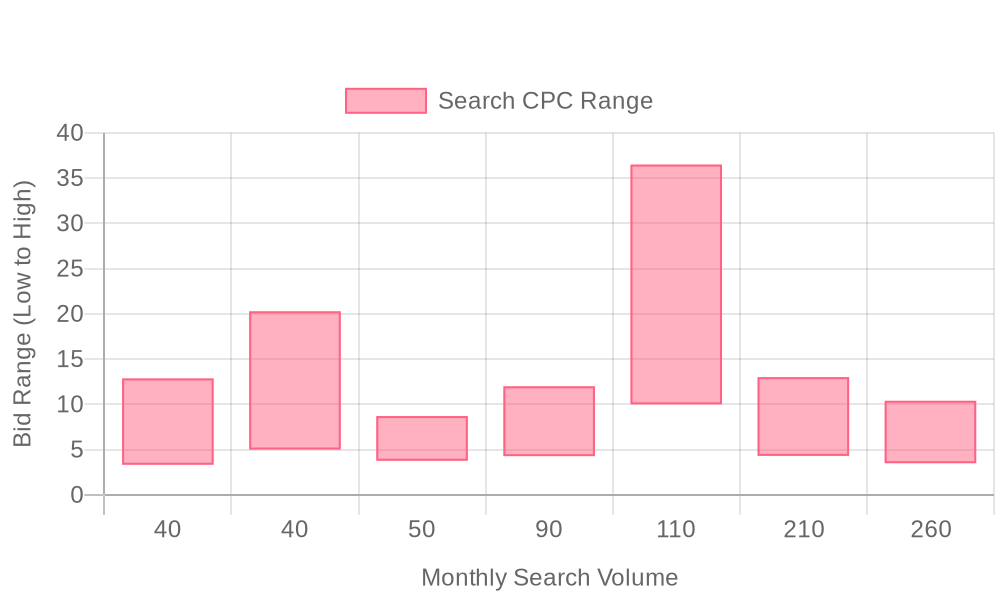
| Industry | Keyword | Monthly Search Volume | Competition Level | Low Bid | High Bid |
| Seminar Marketing | social media marketing seminar | 40 | MEDIUM | 3.33 | 12.86 |
| Seminar Marketing | online marketing workshops | 40 | LOW | 5.01 | 20.28 |
| Seminar Marketing | online marketing seminars | 50 | LOW | 3.77 | 8.71 |
| Seminar Marketing | marketing seminars near me | 90 | HIGH | 4.28 | 11.99 |
| Seminar Marketing | financial advisor seminar marketing | 110 | LOW | 10 | 36.49 |
| Seminar Marketing | digital marketing seminar | 210 | MEDIUM | 4.31 | 13.01 |
| Seminar Marketing | seminar marketing | 260 | MEDIUM | 3.5 | 10.39 |
Sophisticated seminar marketing requires precise keyword targeting matched to audience intent and market shifts. Success hinges on anticipating how potential attendees search and adapting campaigns as preferences evolve in real time. For teams seeking to unify intent data with campaign management, leveraging real-time audience insights can help you identify and reach high-value prospects at the right moment.
- Target high-intent queries: Focus on search terms that indicate strong interest in seminar participation, such as "register for business seminar," "virtual seminar sign-up," and "executive seminar registration." These queries often signal readiness to take action, making them ideal for conversion-focused Google Ads for seminar marketing strategies.
- Localize with geographic modifiers: Enhance relevance and conversion rates by tailoring keywords with city, region, or industry-specific modifiers, for example, "leadership seminar in Chicago" or "tech seminar New York." Localized targeting captures searchers who are most likely to attend based on location. For further strategies, explore our marketing playbooks.
- Leverage niche phrases: Include specialized long-tail keywords such as "online seminar promotion," "seminar advertising tips," and "digital marketing for seminars." These terms attract users seeking actionable advice or tactical solutions, aligning ad copy and landing pages for higher quality leads. Access more insights in our blog on intent data.
Modern revenue teams benefit from platforms that track keyword effectiveness at a granular level, mapping shifts in search intent to engagement and conversion data. For example, dynamic keyword strategies can update in real time as visitor behavior reveals new high-intent segments, ensuring that ad spend shifts immediately to audiences with the strongest likelihood to register or engage. By unifying audience insights and keyword performance, marketers reduce wasted spend and prioritize the most valuable opportunities for seminar promotion. To experience these capabilities, get started for free with Sona.
How to Apply Audience Segmentation for Seminar Marketing

Reaching the right attendees for your seminar requires more than broad targeting. Audience segmentation allows marketers to ensure every ad dollar is directed at high-potential prospects, maximizing registration rates and minimizing wasted spend. For deeper insights into effective marketing practices, explore our blog articles.
Defining audience segments starts with clear professional interests and behavioral data. For seminars, this means separating personas such as educators, HR managers, and corporate trainers, then layering in company-level engagement signals. Looking beyond static lists, advanced segmentation leverages intent signals such as recent content downloads on continuing education or prior event attendance to surface audiences actively seeking growth opportunities. This dynamic approach allows you to refine targeting as prospects move through the funnel, ensuring messaging stays relevant and timely.
Integrating intent-driven segmentation into your Google Ads seminar marketing strategy unlocks real-time opportunities to engage high-converting accounts. Marketers can pinpoint visitors and companies showing in-market behavior, then shift budget toward segments with the highest likelihood to register. With enriched CRM and ad platform sync, audience data remains current and actionable: as leads interact with seminar touchpoints, their audience membership updates, supporting personalized retargeting and consistent engagement across channels.
Conversion tracking is essential for validating the effectiveness of segmented campaigns. By ensuring CRM integrations are robust and conversion paths are properly tracked, marketers gain clarity on which segments are driving registrations and pipeline. This holistic view, including both online and offline touchpoints, delivers accurate ROI measurement and allows for continuous optimization of audience strategies in digital marketing for seminars.
This is also where measurement changes the economics. With Sona Marketing Measurement you can identify the companies behind your ad clicks, not just anonymous sessions, and segment audiences by which accounts actually become customers. That lets you build bid adjustments and audience signals around the segments that convert and de-prioritize the ones that don't, so you feed Google's algorithms "this click became a paying seminar marketing customer" instead of just "someone filled out a form."
Step-by-Step Campaign Execution Framework

Modern B2B marketers require more than superficial impressions or clicks; achieving measurable seminar registrations and qualified leads demands a data-driven campaign structure. Executing a Google Ads for Seminar Marketing strategy involves granular audience segmentation, personalized messaging, and cross-channel attribution to ensure every dollar accelerates pipeline growth. For ongoing guidance on digital marketing measurement, visit the Sona blog.
A unified approach to digital marketing for seminars drives higher engagement and conversion rates by aligning every campaign component with your target audience's intent. By leveraging advanced data enrichment and real-time behavioral insights, teams can focus spend on prospects most likely to register and engage, maximizing marketing efficiency.
Step 1: Build Targeted Keyword Lists
- Cluster by seminar niche: Start by segmenting keywords according to each seminar's vertical or specialization. This ensures your ads surface for prospects actively seeking relevant topics, from leadership training to industry compliance.
- Use local and niche variations: Integrate geo-targeted phrases and industry-specific queries, such as "cybersecurity seminar in Boston" or "CFO leadership workshop online." Refining by location and specialty increases relevance and reduces wasted ad spend.
- Add negative keywords: Include terms that filter out unrelated searches (e.g., "free webinar," "unaccredited event") to maintain audience quality. This prevents budget leakage to low-value clicks.
- Align with content strategy: Coordinate keyword choices with ongoing content initiatives, such as downloadable guides or thought leadership articles, to capture in-market prospects across the funnel and amplify event marketing efforts.
Marketers using unified intent data can identify not just which keywords drive clicks, but which audiences are demonstrating real buying signals. For a comprehensive overview of how Google Ads can help you reach potential seminar attendees, explore Google Ads for businesses.
The upgrade most seminar marketing advertisers miss is going beyond raw keyword volume to layer in intent and identity signals. By connecting website-visitor data and CRM records with Sona Marketing Measurement, you can see which specific search terms bring in the accounts and customers that actually convert, and weight your keyword and bidding strategy toward those rather than the terms with the highest search volume alone.
Step 2: Ad Copy & Messaging Development
- Leverage seminar pain points: Use headlines that speak to the specific challenges your target audience faces, such as "Overcome Regulatory Hurdles with Expert Guidance" or "Master AI Trends at Our Executive Summit."
- Showcase trust and credibility: Incorporate participant testimonials, industry awards, or accreditation logos. These elements boost click-through rates and build immediate confidence, critical for high-consideration events.
- Drive urgency with offers: Highlight limited-time discounts or exclusive bonuses, like "Early bird pricing ends soon" or "First 50 registrants receive VIP access." This tactic accelerates decision-making and boosts sign-ups.
Access to real-time account-level insights enables teams to personalize ad messaging at scale. As new attendee data is captured, ad copy can be adjusted to speak directly to active accounts or industries showing high intent, ensuring relevance and increasing conversion probability.
Step 3: Creating High-Impact Landing Pages
- Match ad to landing intent: Each ad group should direct users to a landing page tailored for that seminar, reinforcing the offer and information promised in the ad. Consistency between ad messaging and page content reduces bounce rates and drives higher conversions.
- Embed trust signals: Prominently display reviews, client logos, or industry accreditations. Third-party validation is especially important for B2B buying committees evaluating event investments.
- Optimize for conversion and mobile: Use streamlined registration forms, clear calls to action, and ensure responsive design. Simplifying the sign-up process increases completion rates, particularly for mobile-first professionals.
With advanced visitor identification, marketers can go beyond anonymous web traffic and pinpoint which companies and decision makers are visiting landing pages. For additional strategies on building effective landing pages for ad campaigns, consult Google’s guide to setting up ad campaigns.
Step 4: Performance Optimization
- Monitor key metrics: Track conversions, cost per registration, and downstream pipeline impact, not just clicks or impressions. Continuous monitoring allows for agile budget reallocation and campaign tuning.
- Leverage smart bidding: Utilize automated bidding strategies like Target CPA, which optimize for registrations using dynamically updated audience lists and real-time intent signals.
- A/B test for improvement: Routinely experiment with headlines, images, and landing page layouts. Testing uncovers the combinations that drive the highest registrations for each seminar segment.
Integrating advanced conversion tracking, including both online sign-ups and offline sales, delivers a holistic view of ROI. By syncing enriched audience data with CRM and ad platforms, revenue teams achieve true closed-loop attribution, informing future ad spend and messaging strategy. For more on optimizing re-engagement, see retargeting strategies for high-value events.
Ready to modernize your seminar marketing? Get started for free with Sona.
Sona Marketing Measurement closes the gap between clicks and revenue. It captures ad clicks with first-party measurement, then ties that click through UTM capture and ad-platform APIs to the actual account record in your CRM, and reports ROAS by keyword and campaign instead of by last-click form fill. Feeding that revenue signal back into Smart Bidding and Performance Max compounds over time: the algorithms optimize toward booked seminar marketing revenue, not cheap leads.
Tips on Expanding Your Seminar Marketing Presence
Expanding your seminar marketing presence requires more than increasing ad spend. Success comes from implementing multi-channel strategies that create sustained engagement and maximize return on every touchpoint.
- Cross-promote seminars in retargeting campaigns to reinforce engagement: Retargeting builds familiarity and keeps your seminar top of mind as prospects move between research and registration. With unified visitor data and Sona's Intent Signals, marketers can segment audiences based on previous interactions, such as landing page visits or partial registration, and serve tailored ads that address lingering objections or highlight exclusive session topics. For actionable tips on campaign setup, explore Google's official guide.
- Upsell related offerings, like seminar materials or follow-up workshops, integrating insights from visitor behaviors: Analyze attendee engagement data to identify upsell opportunities, such as exclusive content, certification add-ons, or advanced workshops. By syncing CRM and ad platforms, marketers can deploy dynamic audiences that update as prospects engage with various seminar assets, allowing for highly personalized upsell campaigns through Google Ads.
- Leverage industry partnerships to co-promote and increase reach: Collaborate with industry partners to access new, qualified audiences and expand your event’s visibility. Co-branded campaigns can target the combined CRM lists of both organizations, while intent signals help prioritize budget toward segments showing active research behaviors. If you're ready to elevate your seminar marketing strategy, get started for free with Sona.
Insights and Strategies
Event marketing experts consistently emphasize the value of aligning Google Ads campaigns for seminars with the evolving stages of the buyer journey. Precision in targeting and messaging drives higher sign-up rates, particularly when campaigns utilize real-time audience segmentation to tailor outreach to prospects' current intent and readiness to engage.
Leveraging industry benchmarks for Google Ads in seminar marketing helps teams calibrate expectations and budget allocation. By referencing performance data such as average cost per acquisition (CPA), click-through rates (CTR), and conversion rates for B2B events, marketers can set realistic goals while minimizing data silos. Marketers interested in learning more about Google's ad resources can explore live and on-demand webinars for up-to-date strategies. Unified platforms that connect CRM, web analytics, and ad performance data empower marketers to see the complete attendee acquisition funnel, facilitating optimizations in real time.
Live case studies demonstrate how segmented audiences and intent-driven campaigns outperform generic outreach. Teams that move beyond anonymous website traffic, using Sona's Identity Resolution to identify both visitors and their companies, can personalize retargeting and messaging, increasing seminar attendance from high-value accounts. Real-time behavioral data allows marketers to dynamically update audience segments, ensuring that ad spend focuses on in-market prospects and moves with leads as they progress through the funnel. When CRM systems and Google Ads work in sync, every touchpoint, from initial click to in-person attendance, is measurable, enabling precise attribution and continual improvement of seminar advertising strategies. For a deeper look into audience segmentation, review retargeting strategies that maximize campaign relevance.
Beyond Google Ads: Winning the AI Answers Seminar Marketing Buyers Now Trust
Paid search captures demand at the moment someone types a query. But a fast-growing share of seminar marketing buyers no longer start at Google at all, they ask ChatGPT, Gemini, or Perplexity before they ever run a search, and Google's own AI Overviews increasingly summarize an answer above the traditional results. If your business isn't referenced in those AI answers, you're invisible at the exact moment buyers build their shortlist.
Sona AI Visibility shows where your business shows up across ChatGPT, Gemini, Perplexity, Google AI Overviews, and 10+ engines, and, much like a keyword report, which prompts actually send you buyers, so you can prioritize the ones that convert. Run the two together and you cover the entire buyer path: get cited where buyers research (AI Visibility), then prove which of that demand turns into booked revenue (Marketing Measurement).
Helpful resources
Conclusion
Google Ads gets a seminar in front of the professional who is already searching for it. What separates campaigns that fill seats from those that just generate clicks is whether that initial search connects to everything downstream: the company behind the visit, the keyword that actually produced a paying attendee, and the retargeting sequence that brings back the prospect who didn't convert on the first visit.
The organizers who pull ahead won't be the ones spending more on Search, they'll be the ones who can say which keyword, which account, and which follow-up sequence turned a click into a filled seat, and who increasingly show up in the AI-generated answers buyers consult before they ever open Google.
Ready to take the next step in modernizing your seminar marketing? Start for free to see how unifying your marketing data turns ad clicks into measurable registrations.







