


A property manager searching "armed security guard near me" at 11pm has a very different urgency than a facilities director comparing quotes for a six-month contract, and Google Ads is one of the few channels that can tell those two buyers apart in real time. For security guard companies, the challenge isn't getting clicks, it's routing the right ones: filtering out job seekers and cybersecurity searches while catching property managers, event planners, and site supervisors at the exact moment they need coverage. Incomplete account data undercuts that targeting, flattening distinct buyers into one generic audience. Enriching and maintaining that data lets security firms build campaigns that actually match how these contracts get bought. This guide walks through how Google Ads can bridge online search intent and offline contract wins, from keyword structure to measurement, so security guard businesses can intercept decision-makers and prove ROI across both digital and physical touchpoints.
How to Generate Security Guard Leads with Google Ads: A Step-by-Step Guide

Security guard firms face a unique landscape in digital marketing, where every click must translate into real leads that drive contract wins. The most effective teams balance granular audience targeting with robust data integration, using advanced digital strategies to maintain a pipeline of high-intent prospects. For more actionable insights on optimizing your marketing, explore our blog collection.
Modern businesses are moving past outdated, static lists by leveraging platforms that enable real-time audience refresh and dynamic segmentation. This approach ensures that campaigns consistently reach property managers, event organizers, and decision-makers who are actively seeking security services, reducing wasted spend and boosting conversion rates.
The following step-by-step guide outlines a proven framework for lead generation with Google Ads for security guard services. Each stage focuses on targeted campaign execution, measurement, and optimization, providing actionable tactics to elevate both lead quality and deal velocity.
Common Types of Google Ads Campaigns
- Search Campaigns: These campaigns place your security guard services at the top of search results when potential clients are actively looking for solutions. By focusing on high-intent keywords such as “on-site security guard near me,” these ads capture prospects at the moment of need and drive qualified traffic directly to your landing pages.
- Display Campaigns: Visual ads on Google’s network build brand awareness and retarget visitors who previously interacted with your site. They keep your firm top-of-mind for facilities managers, commercial landlords, and other B2B buyers navigating multi-step procurement cycles.
- Local Campaigns: These campaigns help target users in specific geographic areas, ensuring your ads are seen by businesses and event planners within your operational footprint. Leveraging local intent, such as “patrol services in [city],” increases relevance and drives higher conversion rates.
- Remarketing Campaigns: By re-engaging site visitors who did not convert on their first visit, remarketing campaigns nurture prospects over time. Dynamic audience updates allow your messaging to adapt as leads move through the funnel, ensuring the right offer reaches the right person at the right moment.
Step 1: Build Targeted Keyword Lists
Start by identifying high-converting, intent-driven keywords specific to security guard services. Use search term research to prioritize phrases like "armed security for commercial property," "construction site guard services," and "event security personnel." Exclude irrelevant searches, such as "cybersecurity" or "security software," by implementing a robust negative keyword list. This ensures your budget is directed at buyers seeking physical security solutions, not unrelated technology or job seekers.
The upgrade most security guards advertisers miss is going beyond raw keyword volume to layer in intent and identity signals. By connecting website-visitor data and CRM records with Sona Marketing Measurement, you can see which specific search terms bring in the accounts and customers that actually convert, and weight your keyword and bidding strategy toward those rather than the terms with the highest search volume alone.
Step 2: Create Audience Segments
Segment your audiences based on buyer role, industry, and stage in the funnel. For example, separate property management companies from event planners, and tailor your messaging to address their unique needs. Integrating advanced tools enables you to move beyond anonymous traffic by pinpointing visiting companies and syncing enriched audience profiles directly into your CRM and Google Ads accounts. This ensures your lists remain current, and your ads reach decision-makers who are most likely to convert.
Step 3: Align Landing Pages with Ad Groups
Develop dedicated landing pages that match each ad group’s intent, armed guard services, event security, or mobile patrols. Every page should feature clear calls-to-action, trust signals like licensing and response times, and mobile-optimized contact forms. For best practices on aligning landing pages with audience and search intent, see our comprehensive guide.
Step 4: Launch and Monitor Campaigns
Deploy your campaigns using manual CPC bidding to maintain full control as you gather initial conversion data. Activate ad assets such as callouts, location, and structured snippets to increase ad visibility and drive more engagement. Real-time visitor identification allows you to surface high-value accounts as they land on your site, enabling immediate outreach or budget shifts toward segments that demonstrate strong purchase intent.
Sona Marketing Measurement closes the gap between clicks and revenue. It captures every ad click with first-party measurement, then ties that click through UTM capture and ad-platform APIs to the actual record in your CRM, and reports ROAS by keyword and campaign instead of by last-click form fill. Feeding that revenue signal back into Smart Bidding and Performance Max compounds over time: the algorithms optimize toward booked security guards revenue, not cheap leads.
Step 5: Optimize with Real-Time Insights
Monitor performance across all channels, measuring both online and offline conversions. Integrate advanced conversion tracking to connect form fills, phone calls, and contract signings back to specific campaigns, providing a holistic view of ROI. Real-time intent signals let you reallocate budget dynamically, ensuring your spend prioritizes high-converting audiences as soon as they emerge.
Step 6: Retarget and Nurture Leads
Implement remarketing strategies to re-engage site visitors who did not convert. Dynamic audience updates ensure that as new decision-makers engage or existing leads show renewed interest, they receive tailored messaging across Google Ads and connected platforms. Syncing CRM data with Google Ads keeps your audience lists fresh and enables cross-channel orchestration, moving prospects seamlessly from initial interest to closed contract.
Following this framework, security guard companies can consistently generate qualified leads, cut wasted spend, and get more out of their Google Ads budget. If you're ready to streamline your pipeline, get started for free with Sona today.
Why Does Google Ads Matter for Security Guard Companies?

Security guard companies operate in a highly competitive landscape where timing, trust, and relevance determine who wins the most valuable contracts. Google Ads offers a direct channel to reach decision-makers and property managers searching for immediate security solutions, converting high-intent searches into qualified leads at the moment of greatest need. Leveraging digital marketing for security guards ensures budgets are invested in prospects who are actively searching for on-site protection, rapid response, or specialist event security, rather than wasting impressions on less relevant audiences.
Traditional marketing approaches often struggle to identify and prioritize the accounts most likely to convert or generate high contract value. With advancements in real-time audience segmentation, security guard companies can now filter out low-fit prospects and focus resources on commercial clients, property developers, and organizations with urgent needs. This approach not only boosts advertising ROI but also shortens the sales cycle, as teams can quickly identify which inbound leads are ready for engagement and move them through the funnel efficiently. By integrating enriched firmographic and behavioral insights, marketers ensure every dollar spent on Google Ads for security guards is aligned with business growth objectives.
Common Types of Google Ads Campaigns for Security Services

- Search Campaigns: Search campaigns are the foundation for security guard lead generation. These campaigns target users who are actively searching for specific services, like “commercial security guards near me” or “emergency event security.” Keyword intent is paramount: ads must map directly to urgent needs and highlight credibility signals such as licensing, rapid response, or industry certifications. By segmenting search campaigns by service type, region, or urgency, marketers can ensure that messaging resonates with each audience segment, maximizing conversion rates and reducing wasted spend. Integrating real-time visitor identification allows teams to move beyond anonymous clicks, connecting high-value searches to actual company accounts for prioritized follow-up and more relevant ad creative.
- Display Campaigns: Display campaigns build brand awareness and reinforce trust by reaching decision-makers while they browse industry sites, local news, or property management resources. Visual banners and dynamic creative can showcase security guard teams in action, client testimonials, or unique value propositions that differentiate your service. Precise audience targeting, leveraging intent signals, demographic filters, and company-level data, ensures ads are served to facility managers, event coordinators, or business owners most likely to require security services. When audience lists are dynamically updated as prospects engage or become customers, advertising dollars are continually focused on the most relevant opportunities.
- Video Ads: Video campaigns introduce a compelling storytelling layer to security service promotion. Short, authoritative clips can highlight a company’s rapid response protocols, staff professionalism, or real-world incident prevention. YouTube placement provides broad reach, but remarketing video ads to prior website visitors or CRM-matched lists drives significantly higher engagement. With advanced conversion tracking, every video view, click-to-call, or landing page visit is attributed to specific accounts, enabling revenue teams to measure true ROI and refine content based on what actually influences decision-makers.
- Remarketing Campaigns: Remarketing is essential in PPC for security services, nurturing leads who have shown initial interest but have not yet converted. Custom-tailored ads remind property managers or event organizers of your unique benefits, prompt them to request a quote, or offer downloadable checklists for vetting security vendors. As leads progress through the buying cycle and interact with your content, remarketing audiences can be automatically updated in real time. For an in-depth overview of Google Ads strategies tailored specifically for security companies, including lead generation tips, campaign structure, and industry-specific best practices, see this Google Ads overview for security companies.
Each campaign type plays a distinct role within a full-funnel approach to digital marketing for security guards. Unifying ad data, audience insights, and conversion attribution lets security companies continuously optimize spend, personalize engagement, and outpace competitors who are still buying keywords blind.
Where to Find Growth Opportunities?

Security guard companies that want to increase qualified leads and grow market share must look beyond standard keyword bidding. High-value growth opportunities often emerge through vertical keyword targeting, which uncovers underutilized phrases aligned with specialized services. By focusing on industry-specific intent, like "emergency event security" or "overnight construction site patrol," businesses can reach buyers at critical decision points. Segmenting campaigns by vertical, from retail guard services to executive protection, opens new pathways to audiences that generic security advertising cannot capture. For more on uncovering new PPC strategies for security firms, explore this overview of Google Ads strategies for security companies.
Competitor gap analysis is a powerful lever for expanding reach and lowering acquisition costs in digital marketing for security guards. This approach involves mapping your competitors' keyword coverage, ad copy, and landing page experience to expose areas where your business can stand out, missed geographies, underserved verticals like healthcare or logistics facilities, or service differentiators nobody else is bidding on. Integrating Sona's Identity Resolution helps marketers see which companies are landing on their site, enabling proactive engagement with high-value accounts that competitors may be missing.
Accurate ROI measurement remains elusive for many security firms because offline conversions, such as phone calls or site visits, often go untracked. Capturing these offline events and attributing them to the correct Google Ads campaigns is essential for understanding true performance. Advanced conversion tracking links every inquiry, whether digital or offline, back to its source, delivering a full-funnel view of campaign effectiveness. With Sona's Destinations, audience lists dynamically update as prospects move through the sales process, ensuring that budgets are always focused on the highest-converting leads. This unified approach enables security companies to identify revenue gaps and reinvest in the most profitable channels, driving scalable lead generation for security guards.
How to Apply Audience Segmentation for Security Guards

Security guard companies thrive when they deliver precisely targeted messaging that matches a prospect’s immediate needs. Effective audience segmentation enables marketers to identify high-priority groups, such as those searching for emergency response or event-specific protection, and deliver tailored ads that resonate at each stage of the customer journey. For a closer look at industry-specific Google Ads strategies, see Google Ads for security companies.
Segmenting audiences based on data-driven customer journey mapping allows security providers to allocate budget to segments most likely to convert. By distinguishing between organizations needing routine patrols, event security, or urgent coverage, companies can prioritize spend and messaging to maximize impact. For example, a property manager seeking ongoing patrol contracts requires a different approach than an event organizer with a one-time need. This segmentation ensures advertising security services speak directly to the pain points and priorities of each group. For practical tactics, review our account-based marketing guide.
Applying dynamic segmentation in Google Ads for Security Guards goes beyond basic demographic or keyword filters. Using real-time audience engagement signals, marketers can identify visitors actively researching guard services and distinguish them from those casually browsing. Sona's Identity Resolution recognizes anonymous traffic at the company level, surfacing decision-makers at high-value accounts who may otherwise remain invisible. As these leads engage further, downloading a case study or requesting a quote, their audience status updates automatically, moving from general awareness to high-intent, ready-to-convert segments.
With advanced audience segmentation, security guard companies can automate ad message adjustments and budget allocation. When a potential client signals urgent intent, such as viewing emergency dispatch pages or engaging with pricing calculators, campaigns shift spend to serve timely offers and direct call-to-action prompts. Conversely, prospects still in research mode receive educational content or testimonials, nurturing trust until they’re ready to engage. This dynamic, intent-based approach elevates Google Ads strategies for security by ensuring each interaction is personalized, relevant, and conversion-focused.
Finally, seamless CRM and ad platform integration unifies audience data and ensures real-time updates as prospects progress through the funnel. This allows for more precise retargeting, consistent messaging across digital marketing for security guards, and accurate measurement of online and offline conversions. The result is a continuous cycle of audience refinement and higher-quality lead generation for security guards.
This is also where measurement changes the economics. With Sona Marketing Measurement you can identify the companies and buyers behind your ad clicks, not just anonymous sessions, and segment audiences by who actually becomes a customer. That lets you build bid adjustments and audience signals around the segments that convert and de-prioritize the ones that don't, so you feed Google's algorithms "this click became a paying security guards customer" instead of just "someone filled out a form."
Keyword Strategy & Sample Target Terms
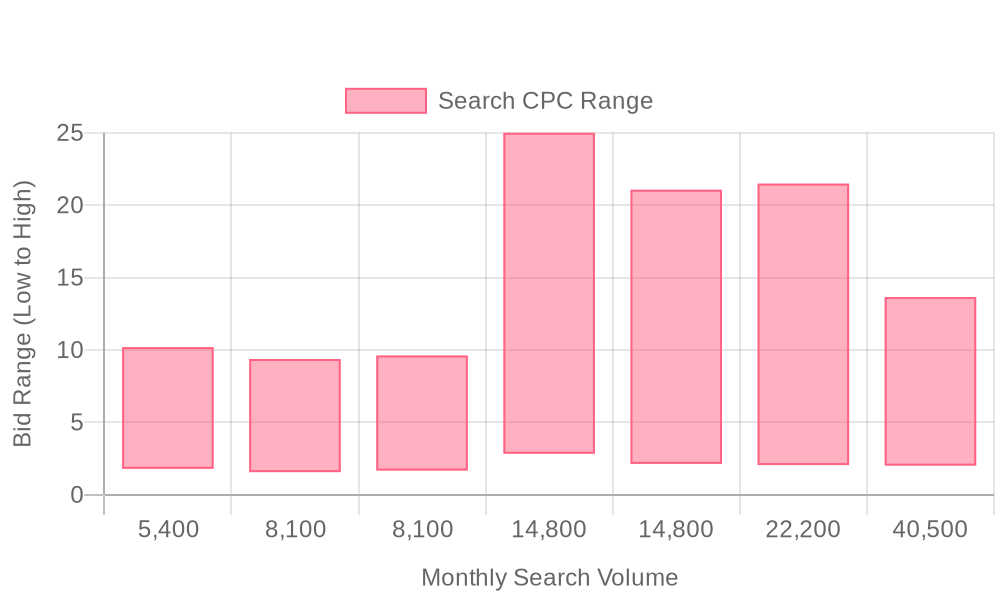
| Industry | Keyword | Monthly Search Volume | Competition Level | Low Bid | High Bid |
| Security Guards | private security companies | 5400 | LOW | 1.8 | 10.2 |
| Security Guards | private security | 8100 | LOW | 1.57 | 9.38 |
| Security Guards | armed security guard | 8100 | LOW | 1.68 | 9.62 |
| Security Guards | security guard services | 14800 | LOW | 2.84 | 25 |
| Security Guards | security guard companies | 14800 | LOW | 2.14 | 21.07 |
| Security Guards | security guard companies near me | 22200 | LOW | 2.06 | 21.49 |
| Security Guards | security guards | 40500 | LOW | 2.02 | 13.66 |
A focused keyword strategy is vital for any security guard company aiming to maximize Google Ads performance. High-intent keywords attract prospects ready to engage, while strategic exclusions reduce wasted spend and improve lead quality. Security guard firms that consistently analyze and refine keyword selection can find more tips for Google Ads lead generation in the security sector and drive more qualified opportunities into the pipeline.
Success hinges on targeting keywords closely aligned with buyer intent and specific service offerings. For security guard lead generation, prioritize terms reflecting urgent needs, geographic relevance, and commercial contract searches. This includes transactional phrases such as “armed security guards for hire,” “24/7 security patrols,” and “emergency security guard services.” For a deeper dive into optimizing keyword strategies for B2B growth, review this step-by-step guide to TAM, SAM, and SOM.
Long-tail keywords play a critical role in capturing niche segments and local demand. Phrases like “event security guards in [city],” “construction site security teams,” or “licensed mobile patrol services” attract leads seeking specialized solutions, often at a lower CPC than broader categories. Implementing negative keywords such as “security guard jobs,” “cyber security,” or “security guard training” further refines targeting, filtering out irrelevant searches and boosting the percentage of actionable inquiries.
Top-performing security guard campaigns also leverage dynamic keyword insertion and continuous search term analysis. By regularly reviewing query reports, marketers identify emerging trends and new high-converting phrases. This iterative approach ensures campaigns adapt as market conditions shift, keeping ad spend focused on terms that deliver measurable value. For actionable playbooks on campaign optimization, explore our marketing and sales playbooks.
Audience intent signals can be further refined using real-time audience data. For example, monitoring which keywords trigger on-site engagement or repeated visits allows marketers to shift budget toward those driving the most qualified leads. Integrating visitor identification and intent analytics enables security firms to move beyond anonymous clicks, pinpointing which companies or buyers are interacting with specific services.
Enriching Google Ads campaigns with CRM and sales data enhances keyword performance across the funnel. Syncing enriched audiences, lead status, and conversion outcomes into campaign management tools supports advanced attribution, revealing which keywords drive not only clicks but true revenue. This closed-loop feedback ensures that security guard advertising strategies remain data-driven, responsive, and aligned with revenue goals. To see how this works in practice, get started for free with Sona.
Step-by-Step Campaign Execution Framework
Step 1: Build Targeted Keyword Lists
Precision in keyword selection is foundational for successful Google Ads campaigns in the security guard industry. Start by clustering keywords according to service type: armed guards, event security, commercial site patrol, and mobile security. This tactic allows campaigns to tightly match searcher intent, maximizing relevance and quality score. Localization adds another layer of value, as appending city names, neighborhoods, or points of interest to core keywords pinpoints high-intent local searches such as "event security guards in Chicago" or "construction site security near me." Negative keyword filters should be set up immediately to prevent spend waste on irrelevant clicks, such as those searching for cybersecurity or security guard jobs. For industry-specific guidance on keyword targeting and PPC structure, this Google Ads for security services resource provides actionable insights.
Aligning keyword strategy with your broader content roadmap is critical. Security firms benefit from mapping high-value keywords to both PPC ad groups and supporting website content. This creates a feedback loop, where paid search insights uncover new long-tail phrases, which can then be incorporated into landing pages and organic content. With Sona's Identity Resolution, marketers can reveal which companies are searching for these terms, allowing for outreach tailored to the most valuable prospects.
When audience lists are dynamically enriched and synced with ad platforms, the targeting precision continues to improve as prospects move through the funnel, ensuring ad spend is continuously directed at those demonstrating real buying intent. To learn more about developing a robust keyword strategy and mapping it to your overall marketing efforts, visit our blog.
Step 2: Develop Compelling Ad Copy
Effective ad copy for security guard services must address the urgent pain points of potential clients, property safety, rapid response, and trust. Headlines should speak directly to these concerns: "Licensed Security Guards for Immediate Protection" or "24/7 Event Security, Rapid Dispatch Guaranteed." Including trust builders like certifications, years of experience, and insurance coverage further differentiates a provider in a competitive market. For more inspiration on messaging and positioning, review real-world Google Ads examples used by security guard services.
Short, benefit-focused descriptions that highlight unique selling points, such as "No Long-Term Contracts" or "Veteran-Led Guard Teams," drive engagement from decision-makers who value reliability and professionalism. Consistency across ad channels is essential. When ad messaging aligns with organic content, social posts, and email nurture sequences, prospects receive a unified brand experience at every touchpoint. Advanced platforms like Sona enable marketers to identify which messages resonate with specific segments and adjust headlines or offers in real time for high-intent audiences.
By syncing enriched audience data and segmented messaging into ad accounts, security guard companies can increase relevance and click-through rates, ensuring every impression delivers maximum impact. For more practical advice on crafting high-converting ads and messaging, explore our playbooks.
Step 3: Design Effective Landing Pages
Landing pages must create a seamless transition from ad to action, reinforcing the promise made in the ad copy and guiding visitors toward conversion. Each page should be tailored to the corresponding ad group’s intent, event security inquiries should see details about crowd management, while commercial property managers view case studies on business site protection. For a comprehensive overview of digital advertising strategies, including landing page best practices for security businesses, see this security advertisement insights resource.
Clear, prominent calls-to-action such as "Request a Free Security Assessment" or "Book a Guard Now" reduce friction and improve lead flow. Integrating fast-loading forms that automatically send submissions to your CRM eliminates delays and enables prompt follow-up, which is vital in a security emergency context. With Sona Destinations, you can seamlessly sync high-quality lead data into your CRM and ad platforms, ensuring real-time follow-up.
Advanced tracking infrastructure ensures every touchpoint is captured, whether the lead comes via web form, phone call, or live chat. Connecting landing page analytics with CRM and ad accounts creates a closed-loop system where lead quality and source attribution are visible in a single dashboard. This enables marketing and sales teams to prioritize high-value accounts and immediately act on hot leads. For further guidance on optimizing landing pages for conversion, browse our latest blog insights.
Step 4: Implement Data-Driven Optimizations
Ongoing optimization is where high-performing security guard campaigns separate from the rest. Conversion tracking must extend beyond basic web forms to include phone calls, scheduled appointments, and offline contract closes. This guide to Google Ads best practices offers proven methods for optimizing performance and accurately measuring ROI.
Feeding this data back into the bidding algorithm allows for smarter decisions, bids can be adjusted in real time to prioritize search terms and audience segments that drive actual revenue, not just clicks. Sona surfaces intent signals so marketers can identify and prioritize high-intent prospects in real time, enabling personalized outreach and boosting conversion rates.
A/B testing headlines, offers, and landing page layouts uncovers the combinations that resonate best with your market. When offline conversion data is integrated, revenue teams gain a true picture of marketing ROI, allowing for confident scaling of successful strategies. For a step-by-step approach to integrating and optimizing data-driven marketing, visit our playbooks.
Beyond Google Ads: Winning the AI Answers Security Guards Buyers Now Trust
Paid search captures demand at the moment someone types a query. But a fast-growing share of security guards buyers no longer start at Google at all, they ask ChatGPT, Gemini, or Perplexity before they ever run a search, and Google's own AI Overviews increasingly summarize an answer above the traditional results. If your business isn't referenced in those AI answers, you're invisible at the exact moment buyers build their shortlist.
Sona AI Visibility shows where your business shows up across ChatGPT, Gemini, Perplexity, Google AI Overviews, and 10+ engines, and, much like a keyword report, which prompts actually send you buyers, so you can prioritize the ones that convert. Run the two together and you cover the entire buyer path: get cited where buyers research (AI Visibility), then prove which of that demand turns into booked revenue (Marketing Measurement).
Helpful resources
Conclusion
Security guard contracts get won by whoever shows up first with the right proof: licensing, response time, a track record on similar sites. Google Ads is the channel that puts you in front of the buyer at the exact moment they're vetting vendors, but only if the account is built around how this trade actually gets bought, urgent needs, recurring contracts, and credibility signals that a generic B2B template won't capture.
The firms pulling ahead now are pairing that search-intent capture with visibility further upstream, showing up when buyers ask an AI assistant to shortlist security vendors before a query ever hits Google. Building both muscles at once, intent capture on search and presence in AI answers, is what will separate the security firms winning contracts next year from the ones still bidding on keywords alone.
FAQ
What are the best practices for Google Ads in the security industry?
Best practices include building targeted keyword lists, creating audience segments, aligning landing pages with ad groups, launching and monitoring campaigns, optimizing with real-time insights, and retargeting leads.
How can security guard companies effectively generate leads through Google Ads?
Security guard companies can generate leads by using search campaigns for high-intent keywords, display campaigns for brand awareness, local campaigns for geographic targeting, and remarketing campaigns to re-engage potential clients.
What type of ad copy works best for security services?
Ad copy should address urgent pain points of potential clients, include trust builders like certifications, and highlight unique selling points such as 'No Long-Term Contracts' or 'Veteran-Led Guard Teams'.
How do I optimize my Google Ads for a security guard service?
Optimize by using data-driven insights to adjust bids in real-time, perform A/B testing on ad elements, integrate offline conversion data, and continuously refine audience segments based on engagement signals.
What budget should I allocate for Google Ads in the security sector?
The article does not specify an exact budget, but suggests focusing spend on high-intent keywords and real-time audience segments to ensure efficient allocation and maximize ROI.







