


A walk-in cooler failing on a Friday night service, or a fryer going down during a lunch rush, doesn't wait for business hours, and the repair company that shows up first usually wins the account for years. Many restaurant equipment repair services miss high-value prospects who search once, don't convert immediately, and quietly call a competitor instead. Google Ads gives repair companies a way to reach facility managers and kitchen owners at the exact moment a piece of equipment breaks down or a maintenance contract is up for renewal. Tools that identify and track these searchers let you follow up before the lead goes cold, whether the query is for an emergency callout or a routine service plan. This guide walks through how to build a Google Ads strategy around that urgency and turn it into a dependable pipeline of qualified leads.
How to Generate Restaurant Equipment Repair Service Leads with Google Ads: A Step-by-Step Guide

Restaurant equipment repair services operate in a market where downtime means lost revenue for clients. Decision-makers need rapid, reliable solutions, making targeted digital marketing crucial to capture leads in real time. Delivering measurable ROI and a steady pipeline of qualified leads requires precision across every stage of the Google Ads strategy.
The most effective campaigns reflect a deep understanding of the customer journey, adapting keyword targeting and messaging to the unique triggers that drive commercial repair inquiries. By leveraging granular audience insights and aligning campaign tactics to real purchase intent, repair businesses can connect with operators and facility managers at the moment they are ready to act.
- Data-Driven Approach: Integrating customer journey insights with search and behavioral data provides a foundation for campaigns that reach active buyers, not just browsers. Modern marketers use advanced tracking to capture intent, mapping each touchpoint so that ad spend is allocated to channels and keywords that consistently produce high-value opportunities. When solutions like Sona are layered in, marketers can also identify anonymous site visitors and enrich them with firmographic data, surfacing new targets and prioritizing outreach to accounts with the highest revenue potential.
- Targeting Strategies: Restaurant equipment repair campaigns succeed when they blend geographic precision with service-level targeting. Focusing on commercial hotspots and aligning messaging to high-value pain points ensures every impression is served to a relevant decision-maker. Using real-time intent signals, marketers can dynamically adjust budgets to favor regions or accounts exhibiting urgent repair needs, ensuring spend is always optimized toward the most likely conversions.
- Creative Optimization: Converting clicks into leads starts with creative that speaks directly to operational urgency and technical credibility. Landing pages and ad copy should align, using clear, benefit-focused messaging that addresses the specific challenges of commercial kitchen operations. Featuring trust signals, certifications, and fast response guarantees boosts conversion rates, while continuous A/B testing refines each element for maximum impact.
- Performance Tracking: Comprehensive analytics are essential for demonstrating the value of Google Ads for Restaurant Equipment Repair Services. By connecting ad platforms with robust offline conversion tracking, marketers gain visibility into the full revenue impact of every campaign. Integrated solutions enable tracking of both online form submissions and offline events like calls or service appointments, closing the loop for more accurate ROI measurement and campaign optimization.
- Cross-Channel Integration: Unifying Google Ads data with CRM and offline sources provides a holistic view of performance and customer engagement. Syncing enriched leads and dynamic audiences back into ad platforms allows marketers to automate retargeting, nurture high-value prospects, and ensure messaging evolves as accounts progress through the funnel. This data-driven approach mitigates blind spots and helps allocate marketing resources where they drive measurable business outcomes.
Why Does Google Ads Matter for Restaurant Equipment Repair Services?
Restaurant equipment repair businesses operate in a market where urgency and timing are crucial. Traditional outreach methods often fail to deliver leads at the exact moment when a kitchen breakdown disrupts operations, resulting in missed revenue and customer frustration. For a deep dive on how to set up and optimize campaigns in this niche, check out this comprehensive guide to Google Ads for appliance repair.
With Google Ads, these service providers can pinpoint and engage restaurant owners or facility managers precisely when they are searching for immediate solutions. By leveraging precise audience intelligence, repair companies can capture leads efficiently and move the sales process forward before competitors have a chance to respond.
- Complex Audience Engagement: Restaurant equipment failures are typically high-stress situations for business owners. By deploying intent-based campaigns, repair services can reach the right audience, those actively seeking urgent repairs, without relying on scattered or delayed follow-ups. To implement these strategies and see how intent signals boost engagement, explore this playbook for intent-driven retargeting.
- Immediate Demand Fulfillment: Restaurant equipment repair is often a race against time. Google Ads enables providers to surface their services to prospects in critical need, creating opportunities for immediate conversions. Leveraging real-time intent signals means rapid response, capturing high-margin projects and building a reputation for reliability within the local market.
- Regional Competitiveness: The ability to outbid and outrank local competitors through targeted geographic campaigns is a major advantage. To understand the mechanics of effective location targeting for local campaigns, review this blog post on Google Ads location targeting. By tailoring ads to specific zip codes, repair businesses ensure their solutions appear in the searches that matter most.
- Data-Driven Decisions: Advanced analytics within Google Ads provide closed-loop insights, tracking every step from initial click to final contract. For B2B revenue teams, measuring marketing’s influence is crucial for smarter budget allocation and campaign refinement, resulting in higher ROI and predictable lead flow. Using unified data sources, marketers can identify which ad spend directly leads to new business, optimize messaging, and confidently invest in channels delivering the greatest impact.
By harnessing these capabilities, restaurant equipment repair companies enable their sales and marketing teams to deliver timely, measurable, and high-value results.
Common Types of Google Ads Campaigns for Restaurant Equipment Repair Services
- Search Campaigns: Restaurant equipment repair services rely on search campaigns to capture commercial intent at the exact moment a facility manager or kitchen owner seeks urgent help. Targeting high-intent queries such as “restaurant equipment repair near me” or “commercial oven service” ensures ads are shown to those most likely to convert, supporting a lower cost per acquisition and stronger lead quality. With Sona's Identity Resolution, marketers can pinpoint not just anonymous visitors but the specific businesses searching for critical repairs, enabling sales teams to prioritize outreach and personalize follow-up within minutes of an inquiry.
- Display Ads: Display campaigns build brand awareness and keep your repair services top of mind for potential clients browsing related industry sites and online publications. These banners and visuals reach decision-makers before an emergency occurs, nurturing them through the funnel with educational content or seasonal offers. Marketers can leverage real-time audience data to dynamically shift display budgets toward accounts that show increased interest in equipment repair topics, maximizing visibility with the right audience at the right stage.
- Remarketing Campaigns: Remarketing allows restaurant equipment repair businesses to re-engage visitors who previously explored their site but left before requesting service or booking a call. By tailoring ads to address specific concerns or highlight special offers, these campaigns effectively revive cooled-off leads and encourage them to re-enter the sales pipeline. As leads progress or return, dynamic audiences update automatically, ensuring that remarketing messages remain highly relevant whether a facility manager is comparing providers or ready to schedule emergency service. For a step-by-step tutorial on setting up Google Ads for appliance repair services, see this Google Ads for appliance repair guide.
- Assets Utilization: Call and location assets are crucial for driving direct interactions in the commercial repair space. These ad enhancements give prospects instant access to phone numbers and mapped service areas, validating your business's credibility and making it easy for clients to request rapid assistance. When assets are enriched with real-time data from CRM and booking platforms, every ad interaction is logged and attributed across both online and offline channels, allowing for accurate measurement of campaign ROI and continuous optimization of ad spend.
Where to Find Growth Opportunities?
Restaurant equipment repair companies can unlock sustained growth by sharpening their approach to digital advertising. Strategic investments in Google Ads for Restaurant Equipment Repair Services help businesses reach high-value commercial clients, reduce wasted spend, and achieve measurable ROI from every campaign. For more digital marketing strategies tailored to B2B service providers, explore the Sona blog for actionable insights.
- Keyword Targeting: Focusing on specialty service keywords such as “emergency commercial oven repair” or “restaurant refrigeration maintenance” ensures your ads connect directly with decision-makers facing urgent equipment issues. By aligning keyword strategy with the specific pain points of restaurant operators and facility managers, campaigns attract qualified leads ready to engage. Using granular keyword segmentation also filters out low-intent or residential queries, maximizing budget for the most lucrative service calls.
- Competitive Analysis: Market leaders rely on auction insights and real-time data to pinpoint gaps in local and regional advertising landscapes. By tracking which competitors dominate certain ad placements and uncovering underserved search queries, repair services can deploy budget more effectively toward untapped segments. Integration with advanced identification tools allows you to see not just who clicks, but which companies are actively searching for repair solutions, enabling a shift in spend to high-converting accounts at the precise moment of need.
- Content Integration: Incorporating authentic case studies and positive customer reviews directly in your ads and landing pages builds trust with restaurant operators under pressure to resolve equipment failures quickly. These social proof elements demonstrate proven expertise and reliability, increasing conversion rates among commercial clients. When enriched audience data from CRM systems is synced into your ad platforms, you can dynamically retarget prospects who have interacted with educational content or previously submitted inquiries, driving repeat engagement and nurturing long-term contracts.
By combining intent-driven keyword strategies, granular competitor gap analysis, and trust-building content, restaurant equipment repair companies can consistently capture new business, increase contract values, and improve their overall Google Ads ROI. Real-time audience enrichment and ad sync further enhance these growth levers by ensuring every marketing dollar reaches the right decision maker at the right stage of the buying journey.
How to Apply Audience Segmentation for Restaurant Equipment Repair
Segmenting your audience is foundational to maximizing the relevance and impact of your restaurant equipment repair advertising. By dividing your market into meaningful groups, you deliver messaging that resonates with the exact needs and priorities of each segment, increasing conversion rates and reducing wasted ad spend.
- Define Segments: Differentiate between small independent restaurants and large multi-location chains to tailor your creative, offers, and calls to action. Small operations may prioritize fast, affordable fixes, while regional or national chains look for reliability, compliance, and preventative maintenance partnerships. With robust segment insights, marketers can craft engagement strategies that speak directly to the operational realities of each group. For an in-depth look at purchasing, repairing, and selling restaurant equipment, review this comprehensive guide for operators and managers.
- Contextual Signals: Use real-time data such as search queries, website visits, and on-site behaviors to distinguish urgent repair seekers from those exploring routine maintenance. For example, a restaurant owner searching “emergency oven repair 24/7” signals immediate need, while someone browsing “commercial kitchen maintenance best practices” is likely planning ahead. Advanced platforms let marketers use identity resolution to identify visitors down to the company level, so resources and budget can be shifted dynamically towards accounts demonstrating high purchase intent. This ensures urgent prospects never slip through the cracks while still nurturing future contract opportunities.
- Ad Groups by Segment: Align your ad creative, landing pages, and budget with the distinct needs of each audience segment. Create dedicated ad groups for urgent repair, scheduled maintenance, and contract-based services, each with its own tailored offers and messaging. Dynamic audience capabilities automatically update lists as leads move through the funnel, so campaigns always reflect the prospect’s latest context and intent. When CRM and ad platforms are fully synchronized, sales and marketing teams gain a unified view of every account’s journey, making follow-up seamless and personalized. This approach not only improves Google Ads ROI but also drives more consistent pipeline for service business marketing teams.
This is also where measurement changes the economics. With Sona Marketing Measurement you can identify the companies behind your ad clicks, not just anonymous sessions, and segment audiences by which accounts actually become customers. That lets you build bid adjustments and audience signals around the segments that convert and de-prioritize the ones that don't, so you feed Google's algorithms "this click became a paying restaurant equipment repair services customer" instead of just "someone filled out a form."
Keyword Strategy & Sample Target Terms
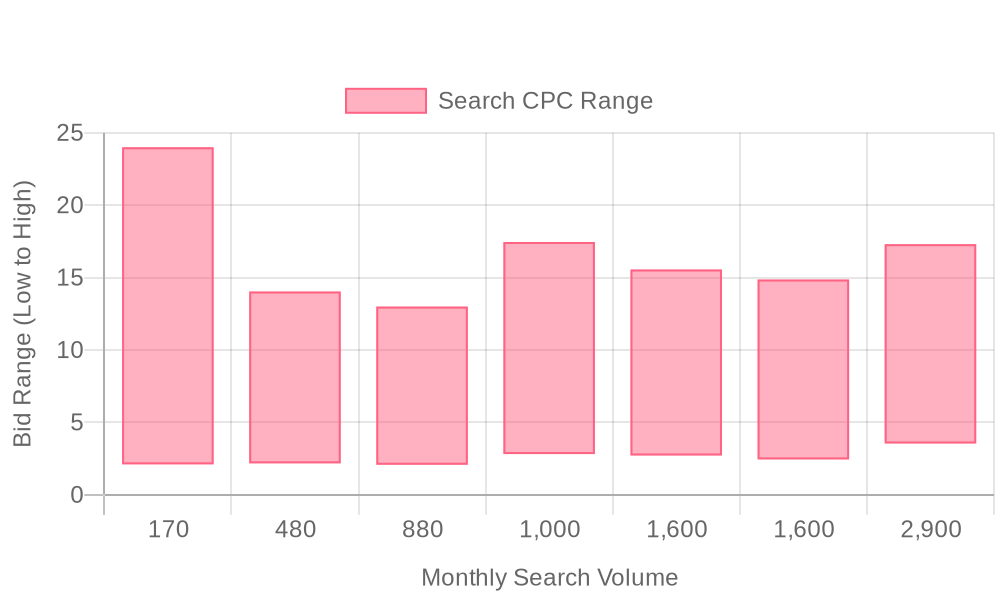
| Industry | Keyword | Monthly Search Volume | Competition Level | Low Bid | High Bid |
| Restaurant Equipment Repair Services | restaurant equipment repair services | 170 | LOW | 2.11 | 24 |
| Restaurant Equipment Repair Services | commercial fryer repair | 480 | LOW | 2.18 | 14.04 |
| Restaurant Equipment Repair Services | commercial oven repair near me | 880 | MEDIUM | 2.08 | 13 |
| Restaurant Equipment Repair Services | commercial oven repair | 1000 | MEDIUM | 2.82 | 17.46 |
| Restaurant Equipment Repair Services | commercial ice machine repair near me | 1600 | MEDIUM | 2.72 | 15.56 |
| Restaurant Equipment Repair Services | commercial appliance repair near me | 1600 | LOW | 2.45 | 14.87 |
| Restaurant Equipment Repair Services | restaurant equipment repair | 2900 | LOW | 3.55 | 17.31 |
Developing a robust keyword strategy is essential for restaurant equipment repair businesses seeking to maximize results from their Google Ads investments. By pinpointing search phrases that reflect real commercial intent, teams can reach decision-makers like restaurant owners and facility managers precisely when they are most likely to need urgent repair services. This focus on intent-driven keywords ensures your ads appear for searches directly linked to revenue opportunities, strengthening your pipeline and driving more qualified leads.
To achieve this, prioritize high-intent terms such as "24/7 restaurant repair services" and "emergency commercial appliance repair." These keywords capture prospects ready to act, often in moments of operational urgency, and help your campaigns attract leads with immediate needs. Expanding into equipment-specific long-tail queries, such as "walk-in cooler repair for restaurants" or "commercial oven technician near me," positions your business as the go-to solution for specialized requests. For a step-by-step approach to building Google Ads campaigns that capture these terms, explore this comprehensive guide to keyword matching options.
Local intent keywords, like “restaurant equipment repair near me” or “commercial kitchen service in [city],” align your ads with searches from nearby businesses actively seeking solutions within your service area. Grouping these locally focused terms into dedicated ad sets allows for tailored messaging and landing pages, reflecting your presence and expertise in each target geography. This hyperlocal approach consistently boosts click-through and conversion rates by matching user intent with clear, location-specific value propositions. For additional B2B marketing guidance, visit our blog.
Filtering out irrelevant queries is equally important. Implement negative keywords such as “home,” “DIY,” or “residential” to prevent your ads from surfacing for consumer-focused searches. This ensures your budget is reserved for commercial prospects, safeguarding your ROI and increasing efficiency. Align each keyword group with tightly themed ad copy and dedicated landing pages to reinforce relevance and trust, which streamlines the path from first click to closed deal.
Modern marketers can further refine targeting with identity resolution, which goes beyond anonymous web traffic to pinpoint the companies and decision-makers engaging with your ads and landing pages. This data-driven approach reveals exactly which businesses are researching commercial repairs, enabling you to prioritize outreach and shift budget to high-converting accounts in real time. As prospects move through the funnel, dynamic audience updates ensure your ads reach only the most sales-ready decision-makers, enhancing precision and boosting overall campaign ROI. By syncing enriched audience data directly from your CRM into Google Ads, you maintain consistent messaging and maximize every opportunity to convert high-value commercial leads.
Step-by-Step Campaign Execution Framework
A structured Google Ads campaign for restaurant equipment repair services unlocks fast, scalable visibility among decision-makers managing commercial kitchens. Precision at every phase, from keyword curation to conversion tracking, drives cost-efficient lead generation and ensures marketing spend translates into measurable business growth. This framework provides a practical blueprint for B2B marketers and revenue teams focused on commercial appliance repair, local service ads, and high-intent advertising for repair services.
Step 1: Build Targeted Keyword Lists
Success in Google Ads for restaurant equipment repair services starts with a comprehensive keyword strategy that targets commercial intent. Service-specific keywords such as "commercial oven repair," "restaurant refrigerator emergency," or "industrial dishwasher maintenance" attract facility managers and restaurant owners actively searching for solutions. Geographic modifiers like city names, neighborhoods, or even ZIP codes further refine audience reach, delivering ads only to those within operational areas.
Negative keyword filters are critical for eliminating irrelevant searches that drive up costs but do not convert, such as queries containing "DIY," "home," or "residential." By refining keyword lists to exclude these terms, campaigns stay laser-focused on high-value commercial leads. Leveraging real-time audience platforms, marketers can identify which keywords are most likely to convert based on historical campaign outcomes and real-time visitor intent, ensuring budget goes toward in-market buyers ready to take action. For a comprehensive tutorial on setting up and optimizing Google Ads, see this step-by-step Google Ads guide for appliance repair.
The upgrade most restaurant equipment repair services advertisers miss is going beyond raw keyword volume to layer in intent and identity signals. By connecting website-visitor data and CRM records with Sona Marketing Measurement, you can see which specific search terms bring in the accounts and customers that actually convert, and weight your keyword and bidding strategy toward those rather than the terms with the highest search volume alone.
Step 2: Develop Compelling Ad Copy
Effective ad copy differentiates your restaurant equipment repair service in a crowded marketplace by highlighting what matters most to business buyers: reliability, speed, and certification. Headlines such as "24/7 Emergency Restaurant Equipment Repair" or "Certified Technicians, Fast Response" immediately address urgency and trust, two factors that drive commercial decision-makers to act. Supporting descriptions reinforce value by mentioning service guarantees, rapid dispatch, or partnerships with major equipment brands.
Ad extensions, such as sitelinks to maintenance plans or callouts featuring "Free Estimates," increase the real estate of your ad and provide multiple pathways for engagement. When data from past conversions and CRM interactions is unified, marketers can personalize ad messaging to specific segments, like facilities managers or multi-location franchises, resulting in higher relevance and improved conversion rates. For more tips on effective ad copy, refer to these ad copy examples.
Step 3: Design Effective Landing Pages
A seamless transition from ad click to landing page creates a frictionless experience and encourages immediate action. Landing pages for restaurant equipment repair should mirror ad messaging, prominently display emergency contact forms or click-to-call buttons, and highlight certifications, service guarantees, and testimonials from reputable commercial clients. Visuals of technicians at work or case studies detailing rapid repairs provide social proof and build trust quickly.
Clear, focused landing pages reduce distractions and guide visitors to take the next step, whether requesting a quote, scheduling a service, or downloading a maintenance checklist. Advanced platforms allow for real-time audience sync, so landing page content dynamically adapts based on the user’s previous engagement or firmographic profile. For guidance on optimizing your restaurant equipment maintenance experience, review this best practices article.
Step 4: Implement Data-Driven Optimizations
Continuous improvement is essential for maximizing advertising for repair services. Campaign managers should regularly review performance metrics, such as conversion rate, cost per lead, and engagement by equipment category. By integrating offline conversion data, like closed contracts or repeat service bookings, from CRM systems, marketers gain a full-funnel view of ROI and can attribute revenue back to specific campaigns or keywords.
Data-driven optimizations may include reallocating budgets to campaigns with the highest lead quality, pausing underperforming keywords, or updating ad copy based on seasonal trends in restaurant equipment repair. Real-time intent signals from unified reporting platforms enable marketers to adjust targeting and bids as soon as new opportunities emerge, capturing demand at peak buying moments. With dynamic audience lists that update as prospects move through the sales funnel, retargeting efforts become more precise, ensuring continued engagement with the most promising accounts and driving sustainable growth in commercial appliance repair markets. To put these strategies into action, get started for free with Sona.
Sona Marketing Measurement closes the gap between clicks and revenue. It captures every ad click with first-party tracking, ties that click through UTM capture and ad-platform APIs to the actual record in your CRM, and reports ROAS by keyword and campaign instead of by last-click form fill. Feeding that revenue signal back into Smart Bidding and Performance Max compounds over time: the algorithms optimize toward booked restaurant equipment repair services revenue, not cheap leads.
Tips on Expanding Your Restaurant Equipment Repair Presence
Restaurant equipment repair providers who localize their campaigns can dramatically increase visibility among commercial kitchens and hospitality operators. State or metro-level targeting ensures your ads reach decision-makers within your actual service range, reducing wasted impressions and improving lead quality. For a step-by-step approach to optimizing Google Ads for appliance repair, explore this comprehensive guide for appliance repair campaigns. Additionally, focusing bids and creative assets on specific geographies can drive higher click-through rates and more relevant inbound inquiries during urgent equipment failures.
Content-driven engagement is essential for nurturing prospects who may not convert immediately but are primed for future service needs. Educational content such as maintenance checklists, troubleshooting guides, or equipment lifecycle tips can be promoted through remarketing, keeping your brand top of mind while establishing your expertise. Use intent signals to track which resources drive downstream conversions, so you can shift budget toward the most effective retargeting sequences and maximize each interaction.
Collaborating with local businesses in adjacent industries further widens reach and creates powerful referral engines. Partnering with restaurant supply distributors, commercial real estate agents, or culinary schools can place your brand in front of high-value accounts at strategic moments. Explore additional ideas to amplify your marketing in the Sona playbooks, and consider joint campaigns or cross-promoted content to extend your footprint and capture incremental demand.
Integrating campaign data with advanced analytics platforms elevates every aspect of your strategy. Unified reporting connects ad engagement to offline conversions, such as phone-in service requests or signed maintenance contracts, providing a comprehensive view of marketing ROI. With identity resolution and real-time intent signals, you can focus ad investment on companies actively searching for commercial appliance repair, update your dynamic audiences as leads progress, and sync enriched contacts directly into your CRM or sales automation. To see how you can put these strategies into action, get started for free with Sona.
Beyond Google Ads: Winning the AI Answers Restaurant Equipment Repair Services Buyers Now Trust
Paid search captures demand at the moment someone types a query. But a fast-growing share of restaurant equipment repair services buyers no longer start at Google at all, they ask ChatGPT, Gemini, or Perplexity before they ever run a search, and Google's own AI Overviews increasingly summarize an answer above the traditional results. If your business isn't referenced in those AI answers, you're invisible at the exact moment buyers build their shortlist.
Sona AI Visibility shows where your business shows up across ChatGPT, Gemini, Perplexity, Google AI Overviews, and 10+ engines, and, much like a keyword report, which prompts actually send you buyers, so you can prioritize the ones that convert. Run the two together and you cover the entire buyer path: get cited where buyers research (AI Visibility), then prove which of that demand turns into booked revenue (Marketing Measurement).
Helpful resources
Conclusion
Google Ads works for restaurant equipment repair services because it meets buyers at the moment a fryer dies or a walk-in cooler starts failing, not weeks later when a directory ad might get noticed. Targeted keywords, urgency-driven ad copy, and location-based bidding turn that moment into a booked service call rather than a missed opportunity.
The next competitive edge is showing up before the click happens at all. As more buyers ask AI tools where to find a repair company before they ever open Google, pairing Search campaigns with visibility into AI answers and closed-loop revenue tracking will separate the repair services that grow from the ones still waiting for the phone to ring.
If you're ready to integrate these strategies and see the impact firsthand, start for free to experience our platform's capabilities today.
FAQ
What are the best practices for Google Ads in restaurant equipment repair?
Best practices include using a data-driven approach, targeting campaigns geographically and by service level, optimizing creative for urgency and reliability, and integrating cross-channel data for comprehensive performance tracking.
How can I optimize my Google Ads for restaurant services?
You can optimize by leveraging audience insights, using real-time intent signals, engaging with decision-makers through precise keyword targeting, and continuously testing and refining ad copy and landing pages.
What budget should I allocate for Google Ads in this industry?
Budgets should be dynamically adjusted based on real-time signals and geographic targeting to maximize conversions, focusing on regions or accounts with urgent repair needs.
Are there specific keywords that work best for restaurant equipment repair?
Keywords such as 'emergency commercial oven repair' and 'restaurant refrigeration maintenance' are effective, along with location-specific phrases like 'restaurant equipment repair near me.'
How do I measure the success of my Google Ads campaigns for repair services?
Success can be measured by integrating analytics with offline conversion tracking, assessing metrics like conversion rate and cost per lead, and using closed-loop insights to attribute revenue to specific campaigns.







