


Families searching for residential care rarely have the luxury of time. A parent's fall, a diagnosis, a caregiver who can no longer keep up, these moments push people online to search for placement options within days, sometimes hours. Google Ads matters in residential care because it meets that urgency head-on, putting your facility in front of decision-makers at the exact moment they're searching, rather than hoping a brochure or a referral gets there first. Missing high-value prospects because they aren't tracked in the CRM is a common frustration in this industry, and it's one Google Ads, used well, can solve.
How to Generate Google Ads for Residential Care Leads: A Step-by-Step Guide

A successful residential care marketing strategy demands data-driven precision at every step. Modern paid search tactics now allow revenue teams to connect ad spend directly to high-value decision makers, moving beyond generic impressions to actionable engagement. To deepen your understanding of attribution and data-driven marketing, explore the Sona blog for actionable insights.
Integrating Google Ads for Residential Care within your broader digital mix unlocks advanced targeting, intent-based segmentation, and cross-channel tracking. Sophisticated marketers can now identify the companies behind anonymous website visits and match them to real accounts, ensuring that every click is traceable and every lead is enriched for full-funnel impact.
- Leverage real buyer intent: The latest Google Ads strategies for residential care rely on identifying in-market behavior signals. With real-time audience segmentation, you can shift budget toward accounts that show immediate interest in home care, senior living, or memory care services. For a foundational overview of campaign setup, see this step-by-step Google Ads guide for estate and senior home care.
- Build precise, dynamic audiences: Targeting residential care clients requires more than broad demographic filters. The best results come from continuously updating audience segments as prospects engage with your brand and move through the decision process. Dynamic lists allow you to retarget users who have shown strong intent, and exclude those who have already converted or are not qualified, ensuring budget efficiency and higher conversion rates.
- Align creative and landing experiences for conversion: To increase inquiries and drive occupancy, your Google Ads campaigns must connect click experiences to relevant landing pages. Using intent-driven visitor data, marketers can personalize landing page content for each segment, whether families searching for dementia care or professionals seeking assisted living partnerships. Early capture of lead information, paired with seamless integration into your CRM and ad platforms, ensures that sales and marketing teams can act on every opportunity in real time. Google Ads assets, like sitelinks and call extensions of old, now called call assets, add urgency-relevant detail directly in the ad, such as a direct line to a care advisor or a link to same-day tour availability.
- Optimize for full-funnel ROI: Performance optimization goes beyond tracking clicks and form fills. Advanced conversion tracking links both online and offline touchpoints, providing a true picture of campaign effectiveness from initial search to signed contract. With attribution models that account for every step of the buyer journey, marketing teams can allocate spend toward the tactics and keywords that generate the highest-value leads.
- Orchestrate cross-channel engagement: Google Ads for home care is most effective when integrated with your other channels, SEO, social, and direct outreach. By syncing enriched audiences into platforms like Salesforce or HubSpot, marketers create unified messaging and retargeting sequences, maximizing the impact of every dollar spent. For best practices in PPC tailored to home care, review this PPC and Google Ads strategy guide for home care providers. This holistic approach ensures no high-intent account is left unengaged and every marketing effort is measurable against real business outcomes.
These techniques form the backbone of a modern, results-focused approach to PPC for residential care. Through tight data integration, intent-driven targeting, and seamless cross-channel orchestration, teams achieve better lead quality, higher occupancy, and a measurable lift in marketing ROI. Ready to see how these strategies can work for you? Get started for free with Sona.
Why does Google Ads matter for Residential Care?
Residential care providers operate in a market defined by urgency, specialized needs, and high-value decisions. Google Ads for Residential Care creates direct connections with families and decision-makers precisely when they are searching for solutions, targeting high-intent queries that signal readiness to engage. This approach bypasses the broad, slow-burn awareness of social channels, instead positioning your services at the top of search results just as the need materializes.
Speed matters more in residential care than in almost any other consumer decision. Traditional advertising falls short when a family needs placement within days, but Google Ads surfaces your facility to in-market households in real time. Marketers can lean on intent-based audience segments to focus budget on the households most likely to convert, so spend follows urgency rather than guesswork, improving both efficiency and occupancy.
Integrated data analysis turns advertising from a guessing game into a strategic growth engine. By connecting digital ad engagement with offline outcomes, admissions, tours booked, contracts signed, marketers can finally close the loop on ROI measurement. Utilizing advanced attribution and CRM integration, campaigns reveal which keywords, audiences, and creative assets actually drive admissions, not just clicks.
Common Types of Google Ads Campaigns for Residential Care Services

- Search Campaigns: Search campaigns are foundational for reaching families and decision-makers actively seeking residential care, often under time pressure. These campaigns capture demand the moment it arises, serving ads to searches like "senior living near me" or "24-hour Alzheimer's care." Segmenting by service line, memory care, skilled nursing, assisted living, and by urgency signals like "available now" or "same-day tour" lets you match message to moment. Marketers using precise audience intelligence can see which companies or referral sources are actually engaging with these ads, so follow-up is fast and personal rather than generic.
- Display Ads: Display campaigns maintain brand visibility outside of search, placing your facility’s messaging across relevant news sites, medical portals, and lifestyle content. These ads reinforce awareness among audiences who may have researched your services but require more touchpoints before initiating contact. By integrating real-time visitor identification, marketers can shift budgets toward placements most likely to influence high-value accounts, aligning ad spend with segments showing genuine interest in residential care solutions.
- Video Ads: Video campaigns showcase the atmosphere, amenities, and unique services of your residential care facility through compelling visual storytelling. This format is especially effective for building trust and emotional connection with families during their research phase. When combined with dynamic audience insights, video ads can be retargeted to those who have shown intent or engaged with previous campaigns, increasing the likelihood of moving prospects further down the funnel.
- Remarketing: Remarketing campaigns re-engage visitors who have interacted with your site but have not yet converted, nurturing them through the lengthy decision process common in residential care selection. Advanced platforms enable dynamic audience updates, ensuring that remarketing lists remain accurate as leads progress or disengage. With CRM and ad platform syncs, marketers can serve tailored messages based on the actual sales stage or recent interactions, maximizing the effectiveness of each touchpoint and driving higher inquiry rates. For an in-depth overview of Google Ads fundamentals for home care agencies, review this Google Ads for home care basics.
To see how unified marketing analytics and real-time data can drive more qualified leads for your residential care business, get started for free with Sona.
Where to Find Growth Opportunities?
Expanding growth in residential care marketing begins with vertical keyword targeting. By layering service-focused and condition-specific keywords on top of traditional search terms, teams capture nuanced search intent that aligns with families’ specific needs. This approach surfaces high-conversion opportunities that generic or broad targeting often misses, especially when data-driven segmentation reveals gaps in current campaigns. When marketers integrate vertical keyword strategies, they not only reach prospects actively seeking residential care but also unlock overlooked segments with distinct requirements.
Competitor gap analysis is essential for identifying untapped market segments. Evaluating which audiences and topics competitors dominate, and where they are absent, enables teams to prioritize spend more efficiently. Many residential care marketers struggle with incomplete company interaction data, which leads to misallocated budgets and missed opportunities. Using visitor identification, teams can reveal which high-value companies are slipping through the cracks. This insight empowers revenue leaders to reallocate resources to segments with the greatest growth potential, eliminating guesswork and maximizing campaign ROI.
Exploring industry-specific content placements elevates brand visibility among targeted decision-makers. Placing educational resources, case studies, or expert interviews on platforms frequented by families and healthcare professionals ensures that messaging reaches an audience primed for engagement. These placements drive qualified traffic and build authority in the residential care space, especially when paired with precise audience intelligence. Marketers who leverage data to identify which industry channels deliver the highest return can continuously optimize placements for scale and relevance.
Retargeting with educational assets, such as guides, how-to articles, or virtual tour invitations, nurtures prospects who are not yet ready to convert. Leveraging advanced conversion tracking and CRM integration, marketers can build dynamic audiences that evolve as leads engage with different content types. This enables personalized retargeting sequences that move families through the decision journey, increasing touchpoint relevance and reducing drop-off. By syncing enriched lead data directly into ad platforms and marketing automation tools, revenue teams ensure that every retargeting effort is informed by the most current engagement and intent signals. To start building smarter retargeting campaigns, get started for free with Sona.
Applying Audience Segmentation in Residential Care

Audience segmentation is essential for residential care marketing teams striving to maximize engagement and lead quality. By identifying distinct client types, such as seniors needing memory care, assisted living, or skilled nursing, marketers can align campaigns with specific needs and decision timelines. Segmentation anchored in firmographic data, like family decision-maker profiles and local referral patterns, resolves poor engagement by enabling personalized messaging that resonates across each stage of the customer journey.
Integrating real-time intent signals into audience segmentation allows marketers to distinguish between families urgently seeking placement and those planning for future transitions. Behavioral data, such as repeat website visits to cost calculators or frequent downloads of care guides, signals readiness for outreach or tailored offers. With dynamic audience capabilities, segments automatically update as leads move from early-stage research to active inquiry, ensuring ad creative and budget shift toward the highest-converting prospects.
Within Google Ads for Residential Care, segmenting ad groups by service type or urgency level ensures that messaging, calls to action, and value propositions align closely with each audience's immediate priorities. Marketers can allocate larger budgets to segments demonstrating strong in-market behaviors, improving cost efficiency and inquiry rates. By syncing enriched audience data and CRM insights directly into ad platforms, teams maintain precise, up-to-date targeting while measuring true ROI with advanced conversion tracking across both online and offline touchpoints. This unification of segmentation, targeting, and measurement drives the sustained growth and operational efficiency that revenue teams expect from modern, data-driven residential care marketing.
This is also where measurement changes the economics. With Sona Marketing Measurement you can identify the companies behind your ad clicks, not just anonymous sessions, and segment audiences by who actually becomes a resident or referral source. That lets you build bid adjustments and audience signals around the segments that convert and de-prioritize the ones that don't, so you feed Google's algorithms "this click became a paying residential care customer" instead of just "someone filled out a form."
Keyword Strategy & Sample Target Terms
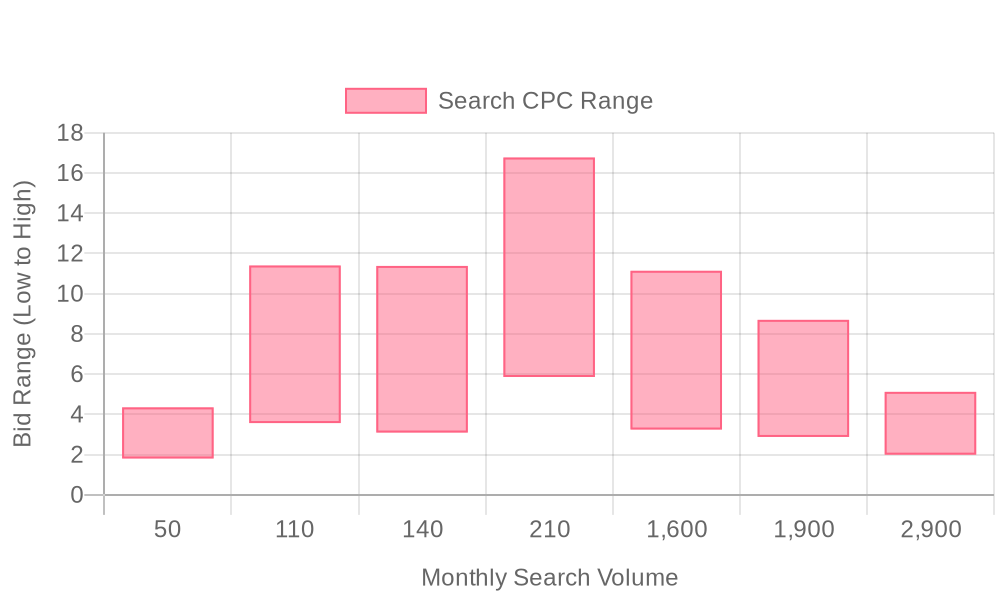
| Industry | Keyword | Monthly Search Volume | Competition Level | Low Bid | High Bid |
| Residential Care | average monthly cost of retirement home | 50 | LOW | 1.81 | 4.35 |
| Residential Care | residential respite care | 110 | LOW | 3.57 | 11.4 |
| Residential Care | aged care homes | 140 | LOW | 3.1 | 11.38 |
| Residential Care | residential care homes for elderly | 210 | LOW | 5.86 | 16.77 |
| Residential Care | residential care homes | 1600 | LOW | 3.25 | 11.14 |
| Residential Care | residential care | 1900 | LOW | 2.88 | 8.7 |
| Residential Care | rcfe | 2900 | LOW | 2 | 5.12 |
A robust keyword strategy is fundamental for any residential care provider aiming to maximize the impact of their Google Ads campaigns. High-intent families searching for immediate solutions rely on specific terms to find the right care, making it essential to target keywords that capture this urgency and intent. By focusing on high-volume, service-specific queries, such as "24-hour memory care near me," "assisted living in [city]," or "residential dementia care with availability", marketers can position their facility at the top of search results, directly in front of those most likely to convert. For additional keyword ideas tailored to assisted and senior living, refer to top-performing keywords for senior living.
To ensure only the most qualified leads reach your landing pages, deploying strategic negative keywords is critical. Excluding phrases like “jobs in senior care,” “free elderly care,” or “volunteer opportunities” filters out irrelevant clicks and preserves budget for prospective resident families. This approach not only increases conversion rates but also improves cost efficiency across entire campaigns, allowing teams to allocate more spend toward keywords proven to drive valuable inquiries. For more actionable tips, you can explore our marketing playbooks for campaign optimization.
Audience data plays a transformative role in refining keyword targeting over time. By integrating visitor identification and real-time intent signals, marketers can uncover which searchers are actively evaluating care options, filter out low-quality visits, and dynamically adjust spend toward segments that show the highest likelihood to engage. With advanced tools, these insights feed directly into CRM and ad platforms, syncing enriched audiences and enabling continuous optimization. As a result, every campaign iteration brings tighter alignment between searcher intent and ad spend, with dynamic audiences updating as leads move through the funnel. This level of specificity ensures that residential care facilities not only attract more inquiries but also drive higher-quality conversations, supporting occupancy goals and long-term growth.
Step-by-Step Campaign Execution Framework
A stepwise campaign execution framework ensures residential care marketers maximize every dollar spent on Google Ads. Streamlined processes help teams move from scattered, underperforming campaigns to organized, data-driven programs that consistently generate qualified leads for home care, senior living, and specialized residential care services. For additional insights, visit our marketing analytics blog.
This framework emphasizes precision at every stage: from intent-driven keyword selection to seamless CRM and ad platform integration. Marketers leveraging unified data workflows realize faster feedback cycles, clearer attribution, and agile optimization, critical for improving occupancy rates and controlling acquisition costs.
Step 1: Build Targeted Keyword Lists
Success in Google Ads for Residential Care begins with assembling high-intent, service-specific keyword lists. Focus on combinations like “memory care near me,” “24-hour Alzheimer’s home care,” and “senior living in [city].” Layer geographic modifiers to capture searchers within your actual service radius. This approach delivers more relevant traffic and reduces wasted clicks from people outside your market. For a list of top-performing keywords in this industry, explore this external resource.
Sona's Identity Resolution and in-market behavior signals let revenue teams go beyond static keyword lists. Marketers can surface hidden demand: uncovering which companies and accounts are searching for residential care options. This enables dynamic audience building, where keywords and targeting criteria continually update based on real-world intent signals and CRM data enrichment.
The upgrade most residential care advertisers miss is going beyond raw keyword volume to layer in intent and identity signals. By connecting website-visitor data and CRM records with Sona Marketing Measurement, you can see which specific search terms bring in the accounts and customers that actually convert, and weight your keyword and bidding strategy toward those rather than the terms with the highest search volume alone.
Step 2: Develop Compelling Ad Copy
Effective ad copy for residential care must resonate with families facing urgent, emotional decisions. Prioritize headlines that address core pain points, such as safety, specialized care, and peace of mind. Use clear calls to action like “Book a Virtual Tour” or “Speak with a Care Advisor Today.” Strong ad copy differentiates your services and cuts through the noise of generic, template-based marketing. For step-by-step guidance, check out this Google Ads guide for senior care.
Teams using real-time audience insights can craft even more relevant messaging. When ad platforms sync with CRM profiles and engagement history, every impression can reflect the lead’s stage in the decision process. Personalized ads improve click-through rates, keep acquisition costs in check, and boost overall Google Ads effectiveness for home care and residential care providers.
Step 3: Design Effective Landing Pages
Every Google Ads click should land on a page tailored to the searcher’s intent. Build dedicated landing pages for each major service line: memory care, assisted living, respite services, and more. Streamline the experience with concise copy, visible contact forms, and direct phone or chat options. Avoid generic homepages that dilute message match and lower conversion rates.
With modern marketing technology, teams can track not only online form fills but also offline actions, like phone inquiries and in-person visits. Connecting these offline conversion events back to specific ad groups closes the attribution loop. Granular, cross-channel measurement enables smarter budget allocation and helps pinpoint which service pages and marketing messages truly drive home care lead generation.
Step 5: Review, Report, and Reallocate Budget
Ongoing optimization is essential for maintaining campaign profitability in the competitive residential care sector. Set up conversion tracking that covers web forms, phone calls, and offline admissions, since a single missed phone inquiry can look like wasted spend if it's never tied back to the keyword that generated it. Analyze cost-per-inquiry, conversion rate by service line, and seasonal engagement trends, residential care demand often spikes after winter falls or holiday visits reveal a parent's decline. For practical optimization strategies, see how Google Ads helps home care providers.
Leverage real-time intent data to shift spend toward high-converting accounts. When audiences update dynamically as leads move through the funnel, marketers can retarget families who are still evaluating options and suppress spend on those already placed. Syncing CRM-enriched audiences into Google Ads keeps targeting fresh, ensures compliance, and maximizes return on ad spend for every campaign. This closed-loop, data-driven approach turns PPC for residential care into a true growth engine.
Ready to put these strategies into action? Get started for free with Sona.
Sona Marketing Measurement closes the gap between clicks and revenue. It captures every ad click with first-party measurement, no reliance on third-party cookies, then ties that click through UTM capture and ad-platform APIs to the actual record in your CRM, and reports ROAS by keyword and campaign instead of by last-click form fill. Feeding that revenue signal back into Smart Bidding and Performance Max compounds over time: the algorithms optimize toward booked residential care revenue, not cheap leads.
Tips on Expanding Your Residential Care Presence

Expanding the digital reach of residential care services requires a coordinated approach that aligns paid advertising with broader marketing initiatives. By leveraging cross-promotion strategies, care providers can amplify their campaigns’ impact, ensuring each marketing asset drives awareness and engagement across multiple channels. Integrating Google Ads with email sequences, social content, and educational resources enables facilities to stay top-of-mind with families evaluating care options. For a deeper dive into the basics of using Google Ads for home care, explore Google Ads for home care.
Partnering with industry associations and local care networks extends visibility and builds credibility. These collaborations often grant access to exclusive advertising opportunities and referral networks, placing your facility in front of larger, more targeted audiences. When these partnership-driven leads are tracked and attributed alongside Google Ads data, marketers can pinpoint which alliances produce the highest-converting prospects, enabling smarter budget allocations. Learn more about account identification techniques to uncover high-value visitors for sales targeting.
Geographic targeting remains critical for residential care organizations. By focusing ad spend on specific zip codes or regions, providers can attract inquiries from families within their actual service area, eliminating wasted impressions. Using dynamic audience segmentation, marketers can adjust their targeting as demand shifts, ensuring that campaigns always reach those most likely to convert. For multi-location operators, this approach helps tailor messaging and offers to the unique needs of each local market.
Analyzing search data from Google Ads uncovers emerging trends and content gaps, directly informing blog topics, FAQs, and downloadable resources that resonate with prospective clients. By unifying ad data with on-site behavior and CRM insights, residential care marketers move beyond surface-level metrics to identify true buying signals and high-potential accounts. This data-driven feedback loop empowers teams to refine messaging, anticipate common questions, and build content that supports every stage of the family decision journey.
Optimizing Google Ads for residential care goes beyond traditional PPC tactics. Success depends on strategic keyword targeting, granular audience segmentation, and a unified view of user behavior across touchpoints. When marketers apply real-time insights and predictive analytics to campaign management, they can shift budget toward high-intent accounts, adjust messaging in response to live market trends, and measure performance with both online and offline attribution. This results in actionable, measurable outcomes that fuel sustainable growth and maximize marketing effectiveness for residential care organizations. To see how you can unify your digital campaigns and drive measurable results, get started for free with Sona.
Winning the AI Answers Residential Care Buyers Now Trust
Paid search captures demand the moment someone types a query. But a growing share of residential care buyers now start elsewhere, asking ChatGPT, Gemini, or Perplexity before they ever run a search, while Google's own AI Overviews increasingly summarize an answer above the traditional results. If your business isn't referenced in those AI answers, you're invisible at the exact moment a family builds its shortlist.
Sona AI Visibility shows where your business shows up across ChatGPT, Gemini, Perplexity, Google AI Overviews, and 10+ engines, and, much like a keyword report, which prompts actually send you buyers, so you can prioritize the ones that convert. Run AI Visibility alongside Marketing Measurement and you cover the entire buyer path: get cited where families research, then prove which of that demand turns into booked revenue.
Helpful resources
Conclusion
Google Ads gives residential care providers something rare in this business: the ability to reach a family at the exact hour they decide they need help, rather than weeks earlier when a brochure might catch their eye. The tactics here, intent-driven keywords, CRM-linked audiences, offline attribution, only work when they're tied together, not run as separate checkboxes.
The providers who win the next few years won't just run better search campaigns, they'll be the ones visible when a family asks an AI assistant where to turn, and able to prove which of those conversations actually became a signed resident agreement. That's the standard worth building toward now, not after a competitor gets there first.
FAQ
How can I effectively use Google Ads for my residential care business?
To effectively use Google Ads for your residential care business, focus on data-driven precision, integrate with CRM systems, and use real-time audience segmentation to target in-market behaviors. Ensure your ads connect with relevant landing pages and optimize for cross-channel engagement.
What budget should I allocate for Google Ads in residential care?
The budget for Google Ads in residential care should dynamically target high-intent accounts and focus on campaigns that show immediate interest in services like home care or senior living, optimizing spend for efficiency and higher conversion rates.
What keywords are most effective for Google Ads in the home care sector?
Effective keywords for Google Ads in home care include high-intent, service-specific terms such as '24-hour memory care near me,' 'assisted living in [city],' and 'residential dementia care with availability.' Negative keywords like 'jobs in senior care' help filter out irrelevant clicks.
How do I measure the success of my Google Ads campaigns for residential care?
Success is measured by linking online and offline touchpoints using advanced conversion tracking and attribution models, analyzing metrics like cost-per-inquiry and conversion rate by service, and syncing these insights with CRM data for continuous optimization.
What are common mistakes to avoid when using Google Ads for residential care?
Common mistakes include not integrating Google Ads with CRM systems, using broad demographic filters instead of dynamic audience segmentation, failing to align ad experiences with landing pages, and neglecting cross-channel engagement.







