


Real estate loan borrowers rarely browse. They search with a closing date already in mind, a rate lock expiring, or a property under contract, which makes Google Ads one of the few channels that can reach them at the moment financing decisions actually get made. The harder problem is what happens after the click: prospects compare rates across three or four lenders, abandon application pages mid-form, and vanish into anonymous traffic unless a lender can see who they are and follow up while the deal is still live. Understanding how borrowers search, and building campaigns that catch them at that exact moment, is what separates efficient lead generation from wasted spend.
How to Generate Real Estate Loan Leads with Google Ads: A Step-by-Step Guide

Generating quality real estate loan leads with Google Ads takes precise audience segmentation, timely engagement, and a data-driven approach to campaign management. The best strategies pair granular targeting with agile optimization, so every dollar centers on borrowers actively searching for real estate financing. For a practical, step-by-step walkthrough tailored to financial marketers, see this guide to Google Ads for hard money lenders. Marketers looking to pinpoint which companies are engaging with their ads can use Sona's Identity Resolution to reveal and score visitor intent for focused budget allocation.
- Keyword and Audience Targeting: High-conversion keywords like "real estate loans," "mortgage brokers," or narrower phrases like "commercial property financing" and "bridge loan for multifamily" reflect borrowers who are already comparing lenders, not just browsing rates. The strongest campaigns layer these terms with audience signals such as in-market real estate research, refinance triggers, and seasonal patterns tied to buying season or rate movement. Enhance targeting by referencing this curated list of mortgage keywords for Google Ads. Marketers can further improve segmentation by leveraging Sona Audiences, which combines intent, account attributes, and buying stage for hyper-personalized reach.
- Landing Page Optimization: A landing page converts high-intent traffic into leads when it mirrors the borrower's search, states rates and eligibility plainly, and gets out of the way of the application. See best practices for Google Ads landing pages in real estate for conversion-focused layouts. To maximize personalization, sync landing page content with segmented audiences using Sona Destinations for seamless data activation across platforms.
- Ad Copywriting: Ad copy should state a clear value proposition, name a real advantage, and close with a direct call to action. Language needs to fit the borrower: investors want speed and certainty of close, homeowners want low rates and plain-English terms. For actionable inspiration, explore this guide to Google Ads ad copy for real estate professionals. Real-time updates to ad messaging become possible by tracking buyer progress with Sona Buyer Journeys.
- Optimization and Tracking: Conversion tracking sharpens bidding and keeps spend efficient. Modern platforms capture both online and offline attribution, so a funded loan three weeks after the click still counts. Stay compliant by reviewing Google Ads policies for financial services before launching campaigns. Marketers can unify and activate enriched audience data with Sona Destinations, keeping cross-platform optimization current.
Why Does Google Ads Matter for Real Estate Loans?

Google Ads for real estate loans connects lenders with in-market borrowers at the moment financing decisions get made. This channel lets real estate financiers outpace slower marketing by targeting audiences who show clear intent through precise search behavior. When revenue teams use company-level visitor identification, they can unmask anonymous traffic and prioritize outreach to the companies showing qualified interest in real estate financing.
- Captures High-Intent Leads: Prospects searching real estate loan terms are ready to inquire or apply, which lets campaign targeting and messaging match immediate borrower needs. Using Sona's Intent Signals, teams can surface high-potential leads and sharpen the efficiency of outreach.
- Provides Measurable ROI: Every click and conversion is trackable, enabling marketers to directly assess which campaigns and ads generate the most value. For enhanced marketing analytics and attribution, consult best practices for revenue attribution to unify online and offline data for accurate performance measurement and budget allocation.
- Offers Immediate Visibility: Google Ads campaigns can be launched rapidly, driving instant traffic to loan offers or rate promotions to support time-sensitive objectives. Leveraging real-time audience segmentation ensures that spend can shift dynamically toward high-conversion segments, maintaining campaign relevance and agility.
Real estate lending faces its own PPC pressures: fragmented data across brokers and lenders, compliance requirements that limit how aggressively a lender can retarget, and a bidding environment where mortgage and loan keywords carry some of the higher costs-per-click in Google Ads. Streamlined analytics and dynamic audience management cut through that, making every dollar accountable and every borrower interaction personalized. If you're ready to drive more qualified leads and maximize marketing efficiency, get started for free with Sona.
Common Types of Google Ads Campaigns for Real Estate Loans

Choosing the right campaign type is fundamental for real estate loan marketers who need to reach distinct borrower personas without wasting budget. Search, Display, Video, Performance Max, and remarketing each play a different role in the borrower's decision, and generic, catch-all campaigns typically waste spend and miss prospects. For a deep dive into structuring and managing Google Ads accounts specifically for real estate, explore best practices for real estate Google Ads.
- Search Campaigns: These target high-intent prospects actively searching for financing, with queries like "mortgage loan approval" or "hard money lender near me." Pairing granular keyword targeting with location and device filters keeps visibility focused on borrowers ready to act, and Responsive Search Ads let a single ad group test multiple headlines and descriptions to find the combination that converts. Enhanced by visitor identification and real-time intent data, teams can shift budget toward in-market accounts or fast-track high-value loan applicants, lifting conversion rate and pulling down average CPC.
- Display Ads: Display placements expand reach to audiences browsing real estate, investment, and financial websites, catching early-stage borrowers or investors researching their options. Custom creative and audience-specific messaging ensure relevance, while dynamic audience syncing enables marketers to update targeting as prospects advance in the loan funnel. Integration with CRM data further refines these audiences, allowing for more precise segmentation and exclusion of existing clients, which results in lower wasted spend and improved campaign efficiency.
- Video Ads: Video formats, especially on YouTube, allow loan providers to visually explain complex products, demystifying terms, processes, and value propositions for potential borrowers. Engaging video narratives build trust early, and when layered with in-market audience signals, they reach viewers most likely to need financing in the near term. Real-time behavioral data captured from video engagement helps marketers retarget viewers who demonstrate genuine interest, ensuring follow-up messaging is both timely and relevant.
- Remarketing: Remarketing reconnects with past visitors who left with questions unanswered, reinforcing the key benefits that got them there in the first place. By leveraging dynamic audience updates, marketers can serve tailored ads to users who, for example, ran the numbers on a loan calculator or started an application but didn't finish. Advanced conversion tracking links that ad engagement to offline loan consultations or approvals, mapping the full customer journey and revealing the true ROI of remarketing.
Orchestrating these campaign types with unified data insights gets each prospect the right message at the right time, driving higher quality leads for real estate loan providers.
Where to Find Growth Opportunities?

Identifying scalable growth opportunities in real estate lending demands a refined mix of data-driven targeting and smart campaign architecture. By leveraging granular audience insights, revenue teams can prioritize high-conversion segments, streamline outreach, and maximize marketing investment.
- Vertical Keyword Targeting: Precision in vertical keyword selection unlocks borrower audiences that generic campaigns often overlook. For example, layering real estate-specific terms such as “bridge loan for multifamily purchase” or “fix-and-flip financing in Austin” can surface motivated prospects seeking niche loan products. Integrated with unified audience enrichment, marketers can dynamically update campaigns as new high-intent signals are detected, ensuring relevant offers reach borrowers when they’re most likely to engage.
- Competitor Analysis: Thorough competitor analysis using auction insights and share-of-voice metrics reveals where rivals are underinvesting or misaligned. By overlaying real-time intent data, marketers can shift budget to capitalize on untapped geographies or borrower types, targeting segments that show conversion momentum but lack strong competitive presence. Linking campaign performance data with enriched CRM records provides a feedback loop, informing future bidding and messaging strategies while surfacing growth whitespace.
- Content Retargeting: Educational content, such as webinars on real estate investment strategies or refinancing tips, is a proven lever for nurturing leads deeper into the funnel. When audience membership updates in real time, based on actions like webinar attendance or guide downloads, retargeting campaigns become more adaptive, serving relevant ads and offers as prospects advance. Real estate lenders can measure true ROI by connecting online interactions with offline conversions, closing the loop on which content assets drive funded loan applications.
Growth in Google Ads for real estate loans comes from uniting granular targeting, competitive intelligence, and dynamic engagement. Teams that connect campaign and CRM data can isolate high-value opportunities and act on them before competitors do, fueling more predictable and efficient lead generation.
How to Apply Audience Segmentation for Real Estate Loans

Effective audience segmentation elevates real estate loan campaigns, ensuring every dollar spent is directed at the highest-value prospects. By leveraging segmentation, revenue teams can focus on the unique motivations of distinct borrower profiles, ultimately driving higher conversion rates and more efficient ad spend. For additional strategies on structuring Google Ads for real estate, see this best practices guide for real estate accounts.
- Define Segments: Differentiating between first-time homebuyers and seasoned investors is fundamental. First-time buyers are typically motivated by educational content and mortgage affordability, while investors prioritize return on investment, speed of funding, and flexible loan terms. Segmenting these audiences allows marketers to create messaging that resonates on a personal level, whether highlighting low down-payment programs or expedited approval for repeat investors. For more actionable ideas, explore our account-based marketing strategies.
- Overlay Intent Signals: Digital footprints provide rich signals for audience refinement. Real estate loan marketers can identify potential movers and refinance candidates before they submit a lead form, using behavioral data from website visits, content downloads, and engagement with loan calculators. In-market intent signals surface opportunities to shift budget dynamically, focusing resources on accounts showing real-time indicators of financing need or property research activity. Sona's Identity Resolution helps marketers move beyond anonymous web traffic, enabling precise segmentation by company, buyer stage, and decision-maker profile.
- Create Tailored Ad Groups: With granular audience segments in place, crafting specialized ad groups becomes seamless. Ad copy and creative are developed to align with each segment’s life stage and financing phase, such as messaging around “fast approval for multi-property investors” or “step-by-step guidance for first-time buyers.” As prospects move through the funnel, dynamic audience updates ensure users see the most relevant offers, such as transitioning a casual browser into a high-intent retargeting group once they engage with a loan application or rate quote tool. This approach supports both personalized engagement and efficient budget allocation, with enriched CRM data syncing to Google Ads for persistent optimization.
Audience segmentation, powered by real-time data and behavioral insights, lets real estate lenders outpace the market. By unifying online and offline intent signals, revenue teams maximize reach, minimize wasted impressions, and keep every campaign tightly aligned to borrower needs and business goals. To see these capabilities in action, get started for free with Sona.
This is also where measurement changes the economics. With Sona Marketing Measurement you can identify the companies behind your ad clicks, not just anonymous sessions, and segment audiences by who actually becomes a customer. That lets you build bid adjustments and audience signals around the segments that convert and de-prioritize the ones that don't, so you feed Google's algorithms "this click became a paying real estate loans customer" instead of just "someone filled out a form."
Keyword Strategy & Sample Target Terms
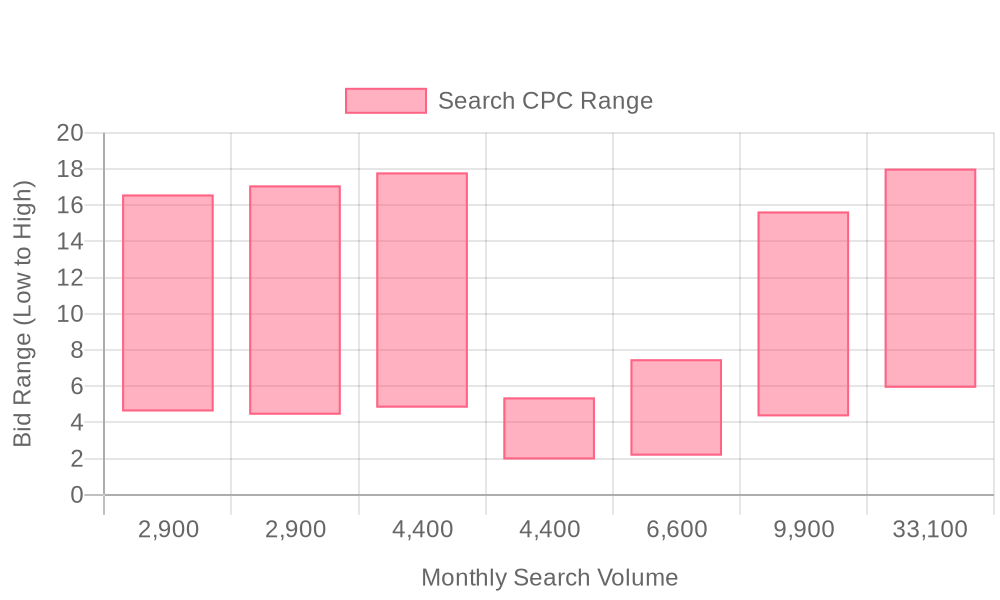
| Industry | Keyword | Monthly Search Volume | Competition Level | Low Bid | High Bid |
| Real Estate Loans | real estate loans | 2900 | LOW | 4.61 | 16.59 |
| Real Estate Loans | commercial mortgage | 2900 | LOW | 4.43 | 17.09 |
| Real Estate Loans | private mortgage lenders | 4400 | MEDIUM | 4.82 | 17.81 |
| Real Estate Loans | commercial mortgage rates | 4400 | MEDIUM | 1.96 | 5.38 |
| Real Estate Loans | investment property mortgage rates | 6600 | MEDIUM | 2.17 | 7.49 |
| Real Estate Loans | investment property loans | 9900 | MEDIUM | 4.34 | 15.65 |
| Real Estate Loans | hard money lender | 33100 | MEDIUM | 5.92 | 18.02 |
Effective keyword strategy is the backbone of successful Google Ads campaigns in real estate lending. Marketers who prioritize granular keyword research can selectively target high-intent borrowers, such as those searching for “Google Ads for mortgage brokers,” “commercial property loans,” or “real estate investment financing.” For additional ideas, explore this curated list of mortgage keywords to further refine your targeting and reduce wasted spend, ultimately improving campaign ROI.
Negative keywords protect every advertising dollar. Filtering out terms like "personal loans," "free property advice," or unrelated financial services keeps ads showing only for relevant searchers. This improves lead quality and sharpens audience segments, essential for real estate PPC campaigns where conversion costs can climb fast without careful control. Sona's Intent Signals help marketing teams spot intent-rich search patterns and update negative keyword lists as market dynamics shift.
Sophisticated keyword planning extends beyond initial research. Marketers should structure ad groups around loan products, property types, and geographic modifiers, such as “Google Ads targeting for loans in Los Angeles” or “hard money financing New York.” As leads move through the funnel, Sona’s Audiences tool allows dynamic audience updates, ensuring keywords and ad messaging evolve in real time alongside changing buyer behavior. This alignment between keyword strategy and live intent signals makes it possible to deploy budgets with precision, focusing on segments most likely to close.
Step-by-Step Campaign Execution Framework
A successful Google Ads for Real Estate Loans campaign begins with a framework that connects business goals to every tactical layer of execution. Precision in targeting, relevancy in messaging, and data-driven iteration shape high-performance campaigns that consistently generate high-value leads for lenders, brokers, and real estate finance teams. For more insights on maximizing ROI and aligning marketing initiatives, explore revenue operations as a process.
Step 1: Build Targeted Keyword Lists
Strategic keyword selection is foundational for real estate loan lead generation. High-conversion terms like “hard money loans in [city],” “investment property mortgage rates,” or “bridge financing for commercial real estate” consistently attract borrowers with strong intent. By leveraging industry trends, search volume data, and seasonality, marketers can identify both broad and long-tail keywords that align with unique loan products. With audience identification tools that surface which companies are actually searching, teams can prioritize keywords representing the best fit and highest purchase potential, not just volume.
Additionally, negative keyword refinement is essential. Filtering out irrelevant queries, such as “personal loans” or “free apartment listings”, prevents wasted spend and improves cost-per-click (CPC) for real estate ads. Marketers who integrate CRM data can map closed-won deals to the originating queries, creating a feedback loop that sharpens keyword investments over time. For a curated list of top-performing mortgage-related keywords, consider leveraging external keyword resources.
Most real estate loans advertisers stop at keyword volume. The upgrade is layering in intent and identity signals: connecting website-visitor data and CRM records with Sona Marketing Measurement shows which specific search terms bring in the accounts and customers who actually convert, so keyword and bidding strategy can weight toward those terms rather than the ones with the highest search volume alone.
Step 2: Develop Compelling Ad Copy
Effective ad copy for real estate loan campaigns addresses borrower concerns directly, highlighting fast approvals, flexible terms, or unique loan features. Messaging must transition seamlessly from ad to landing page, reinforcing the offer and reducing friction. Personalization at scale becomes possible when ad variants dynamically insert property types, loan amounts, or city names based on segmented real-time audience profiles.
By analyzing in-market intent signals, teams can craft timely messaging that resonates with prospects at critical points in the decision cycle.
Step 3: Design Effective Landing Pages
Landing pages must carry forward the ad's promise: a clear value proposition, the regulatory disclosures lenders are required to show, and a streamlined application. Borrowers expect transparency, so rates, fees, and eligibility criteria need to be visible without digging. Strong calls-to-action, such as "Get My Custom Rate" or "Pre-Qualify in Minutes," drive conversions and separate serious applicants from casual browsers. For best practices on structuring and managing Google Ads accounts in real estate, see this external guide.
Dynamic landing pages that adapt content based on the source audience or previous engagement accelerate conversion rates and enable granular measurement. When enriched lead data flows into CRM and marketing automation platforms, sales teams can prioritize follow-up with prospects who demonstrate the highest intent, ensuring no qualified lead slips through the cracks. Learn more about optimizing multi-touch attribution models to connect landing page actions with revenue outcomes.
Step 4: Implement Data-Driven Optimizations
Continuous optimization is the engine behind scalable Google Ads for real estate loans. Real-time analytics uncover which keywords, ad variations, and landing page flows yield the strongest ROI, allowing marketers to reallocate budget towards high-performing segments. With advanced attribution models, both online and offline conversions (such as booked calls or funded loans) are captured, revealing the true value of each interaction. For official advertising requirements and compliance in finance-related campaigns, review Google Ads policy for financial products.
Audience segments update as leads move through the funnel, enabling retargeting that nurtures prospects from initial inquiry to application submission. Automated syncing between CRM, ad platforms, and analytics tools is streamlined with Sona Destinations, keeping campaign data current and powering smarter bidding, tailored creative, and rapid response to market shifts.
Sona Marketing Measurement closes the gap between clicks and revenue. It captures every ad click with first-party measurement, then ties that click through UTM capture and ad-platform APIs to the actual record in your CRM, and reports ROAS by keyword and campaign instead of by last-click form fill. Feeding that revenue signal back into Smart Bidding and Performance Max compounds over time: the algorithms optimize toward booked real estate loans revenue, not cheap leads.
Tips on Expanding Your Real Estate Loan Presence
Expanding your real estate loan market presence requires a blend of data-driven advertising, strategic audience engagement, and local market adaptation. Leveraging Google Ads for Real Estate Loans unlocks immediate access to high-intent borrowers while enabling continuous campaign refinement based on real, actionable insights. For a practical overview of effective strategies, see this guide to Google Ads for real estate. To further deepen your knowledge on data-driven campaign optimization, explore our marketing and attribution insights.
- Cross-Promote Content: Retargeting reinforces brand authority and nurtures prospects through the purchase journey. With Sona's Identity Resolution, marketers can go beyond anonymous web traffic to recognize companies and decision-makers engaging with educational loan content. That makes it possible to build dynamic retargeting lists so high-value content, lending guides or market outlooks, keeps surfacing for users showing genuine in-market interest. As leads revisit the site, automated audience updates keep messaging aligned with their current stage, driving engagement and speeding conversion.
- Localize Campaigns: Real estate loan demand varies considerably by region, shaped by market cycles, property values, and borrower profiles. Localizing campaigns involves customizing ad creatives and landing pages to address pain points specific to each area, from competitive interest rates in major metros to fast-closing solutions in growth corridors. Marketers using real-time intent data can identify surges in search activity within targeted ZIP codes or cities, reallocating budget towards geographies with the highest conversion potential. This local focus not only improves relevance but also reduces CPC for real estate ads by minimizing wasted impressions on out-of-market users.
- Integrated CRM Use: Synchronizing Google Ads campaigns with CRM systems creates a unified platform for real estate lead generation and pipeline management. When enriched audience segments and newly qualified leads are automatically synced between advertising platforms and CRMs, revenue teams gain clarity on every touchpoint, from the first click to closed deals. This integration allows for advanced conversion tracking, including both online form fills and offline funding events, providing a true measurement of ROI. Additionally, mapping advertising data to customer journey milestones enables more personalized follow-up, timely nurturing, and accurate forecasting across all real estate marketing initiatives.
Beyond Google Ads: Winning the AI Answers Real Estate Loans Buyers Now Trust
Paid search captures demand at the moment someone types a query. But a fast-growing share of real estate loans buyers no longer start at Google at all, they ask ChatGPT, Gemini, or Perplexity before they ever run a search, and Google's own AI Overviews increasingly summarize an answer above the traditional results. If your business isn't referenced in those AI answers, you're invisible at the exact moment buyers build their shortlist.
Sona AI Visibility shows where your business shows up across ChatGPT, Gemini, Perplexity, Google AI Overviews, and 10+ engines, and, much like a keyword report, which prompts actually send you buyers, so you can prioritize the ones that convert. Run the two together and you cover the entire buyer path: get cited where buyers research (AI Visibility), then prove which of that demand turns into booked revenue (Marketing Measurement).
Helpful resources
Conclusion
Real estate loan borrowers now compare lenders across paid search, AI chat answers, and word of mouth before they ever fill out a form. Winning that comparison takes precise targeting, campaigns built for how borrowers actually search, and, increasingly, visibility into what the AI engines that now sit ahead of Google are telling those borrowers.
The lenders who pull ahead over the next few years will be the ones who treat AI Visibility and Marketing Measurement as one system: get cited where borrowers now research, then prove which of that attention actually closes as funded loans.
To unlock the full potential of your Google Ads campaigns, start for free and put these strategies to work today.
FAQ
Do Google Ads work for mortgage brokers?
Yes, Google Ads can be effective for mortgage brokers by allowing them to connect with high-intent borrowers through targeted campaigns and precise audience segmentation.
Is $500 enough for Google Ads?
The effectiveness of a $500 budget on Google Ads will depend on factors such as keyword selection, audience targeting, and campaign structure, but it can be a starting point for attracting leads with careful management.
How much do Google Ads cost for real estate agents?
The cost of Google Ads for real estate agents can vary widely based on competition, keyword selection, and campaign settings, making it important to optimize for cost-per-click and conversion rates.
What are the best practices for Google Ads in real estate?
Best practices for Google Ads in real estate include precise audience segmentation, keyword targeting, landing page optimization, compelling ad copy, and continuous data-driven optimization.
How can I optimize my Google Ads for real estate loans?
To optimize Google Ads for real estate loans, focus on using high-conversion keywords, tailored ad copy, optimized landing pages, and real-time data insights for audience segmentation and retargeting.







