


A buyer searching "homes for sale near me" at 9 p.m. on a Sunday is closer to signing an offer than one browsing Zillow on a Tuesday afternoon, and Google Ads is the one channel built to catch that moment. It puts a real estate agency in front of people actively hunting for an agent, a listing, or a valuation, right as they search, and it pairs naturally with the open houses, direct mail, and referral networks agencies already run. This guide walks through setting up and optimizing Google Ads campaigns built specifically for real estate agencies.
How to Generate Google Ads for Real Estate Agencies Leads with Google Ads: A Step-by-Step Guide

Real estate agencies aiming for rapid lead generation must align every campaign element with measurable business outcomes. Precision targeting, seamless CRM integration, and actionable performance data are now prerequisites for running profitable Google Ads for Real Estate Agencies. For deeper insights on setting up and optimizing Google Ads specifically for real estate, see this step-by-step guide to Google Ads for real estate agents.
Success in real estate advertising depends on an agency's ability to identify, target, and engage the most valuable prospects at the moment of intent. Modern data-driven platforms now empower revenue teams to unify prospect signals at the company level, import in-market accounts directly into ad audiences, and ensure no high-potential lead slips through the cracks. Learn more about leveraging real-time audience segments for tailored ad targeting.
- Define Objectives: Establish clear key performance indicators, lead volume, cost per lead, click-through rate, and, most importantly for real estate, the ratio of leads that turn into showings and closings. Agencies often lose high-value prospects when a lead who requested a valuation on the website never gets tied back to the ad that brought them, especially when CRM data lags behind. Solutions built for revenue teams close that gap by importing net-new prospects directly into customer match lists, so an engaged visitor is tracked from first click through the sales funnel. That visibility lets marketing and sales concentrate on the buyers and sellers most likely to transact, closing the loop between ad engagement and pipeline. To learn more about attribution, visit our blog on marketing attribution and analytics.
- Keyword and Audience Targeting: Pair location-specific terms with property-type modifiers, luxury, condo, waterfront, new construction, so ads reach buyers and sellers with immediate intent rather than casual browsers. The strongest Google Ads strategies for real estate lead generation use intent signals from website interactions and offline engagement to build audiences that shift as buying signals change. Marketers can identify the companies behind anonymous visits and prioritize segments that have shown clear intent, feeding only the most relevant accounts into Google Ads campaigns. That prioritization protects ad spend and keeps the agency's message in front of people who are actually considering a transaction, not just window-shopping listings.
- Creative Alignment: Match ad messaging, headlines, and landing pages to the needs of each segment. Real estate marketing punishes generic copy; a downsizing empty-nester and a first-time buyer are searching for entirely different things, and relevance is what drives clicks into conversions. Updating landing page content and ad creative as leads move through the funnel improves the experience and lifts conversion rates. Connecting CRM data to ad platforms means a prospect viewing luxury condos sees different messaging than someone shopping starter homes, a distinction that's central to maximizing both click-through and conversion in real estate agency marketing.
- Performance Optimization: Monitor campaign metrics continuously and refine targeting, bids, and creative. Without a unified view of which companies or individuals are engaging with top-performing listings and content, ad spend drifts away from the neighborhoods and property types actually producing showings. Platforms that provide full-funnel attribution, linking online clicks to offline closings, let agencies measure true ROI and optimize budgets accordingly. Syncing enriched lead and opportunity data between the CRM and ad channels keeps Google Ads campaigns calibrated to the agency's current pipeline priorities, whether that's a new listing surge or a seasonal slowdown, so marketing dollars land where they matter.
Handled this way, Google Ads stops being a simple lead generator and becomes a demand engine that keeps feeding the pipeline with buyers and sellers who are actually ready to move. To see how your agency can benefit, get started for free with Sona.
Why Does Google Ads Matter for Real Estate Agencies

Real estate agencies consistently face the challenge of connecting with serious buyers and sellers at the exact moment they're ready to act. Google Ads provides a direct line to these high-intent audiences, so marketing dollars reach people actively searching for properties or agents in a specific local market. Using advanced data unification and behavioral analytics, agencies can tell which website visitors represent real prospects instead of anonymous traffic, sharpening Google Ads targeting and lifting engagement rates. For a deeper dive into setting up and optimizing Google Ads for real estate marketing, review this step-by-step guide for real estate agents.
- Targeted Reach: Google Ads lets real estate agencies capture attention at the critical search stage, targeting prospects based on location, property type, and purchase intent. By identifying the companies behind site visitors and their buyer journey status, teams can segment audiences with real accuracy, matching ad creative and offers to each segment's readiness to transact. That audience management keeps refining itself as leads interact with listings, open emails, or return to the site, helping marketers prioritize the accounts most likely to convert.
- Higher ROI: Campaigns designed for niche segments, such as luxury homes, commercial properties, or downsizing sellers, see measurable improvement in cost efficiency and closing rates. When sales and marketing platforms are connected, agencies can dynamically allocate budgets to the campaigns and audiences showing real-time buying signals, rather than relying on static segments or out-of-date CRM lists. The result: consistent spend alignment with the most lucrative market opportunities, maximizing the return on advertising investment and reducing wasted impressions.
- Agility: The real estate market shifts rapidly with seasonal trends, inventory changes, and buyer sentiment. Google Ads enables agencies to react in real time, launching new campaigns or adjusting creative as soon as new listings become available or demand spikes in a specific neighborhood. By syncing sales and marketing data, all teams stay informed on campaign performance, allowing for immediate pivots based on verified lead quality and pipeline impact. This agility ensures that every ad dollar supports current business goals, not just historical assumptions.
Looking to transform how your agency targets, engages, and converts high-value clients? Get started for free with Sona.
Common Types of Google Ads Campaigns for Real Estate Agencies Services

Real estate agencies operate in a market where timing and intent drive success. Effective digital marketing strategies depend on selecting the right campaign types to engage high-value prospects and maximize return on advertising spend. Leveraging Sona's Identity Resolution lets teams reveal which companies and people are engaging with your ads and website, even when they remain anonymous, so outreach can be timely and relevant.
- Search Campaigns: Search campaigns connect real estate agencies with prospects actively researching homes, agents, or investment opportunities. Targeting high-intent queries such as "homes for sale near me" or "best real estate agency in [city]" positions an agency at the exact moment buyers and sellers are ready to act, including the seasonal spikes around spring listing season and the urgency that comes with a lease ending or a job relocation. For a detailed guide to setting up effective Google Ads in this industry, review this step-by-step approach for real estate agents. Agencies that use precise audience intelligence can move beyond anonymous clicks, identifying the companies behind visits and qualifying which ones match the lead's buying stage.
- Display Ads: Display campaigns elevate brand visibility by placing visually appealing ads on real estate content sites, news platforms, and lifestyle blogs. These ads are essential for maintaining consistent brand recognition across a broader audience, especially for agencies looking to build trust in local markets. When combined with real-time intent analytics, display placements can be intentionally shifted toward segments showing increased in-market behavior, ensuring that ad budgets are spent on audiences most likely to convert.
- Video Ads: Video campaigns showcase property tours, agent expertise, and client testimonials in a format that builds emotional engagement and trust. Short, high-impact videos on YouTube and partner sites can drive qualified traffic, especially from buyers seeking immersive previews before scheduling in-person viewings. Agencies benefit from dynamic audience management, where video viewers are automatically segmented for personalized follow-ups as they express specific interests, such as luxury listings or family-friendly properties.
- Remarketing: Remarketing campaigns enable agencies to re-engage previous website visitors or app users with tailored messaging based on their on-site behavior. By monitoring pages viewed, search filters used, or properties favorited, agencies can deliver ads that address each lead’s unique needs and preferences. Modern platforms streamline this process by syncing enriched audience data back into Google Ads and connected CRMs, allowing for synchronized messaging and attribution across every touchpoint. For actionable tips and examples of successful remarketing and overall campaign strategies, explore this Google Ads for real estate industry guide.
This strategic blend of campaign types empowers real estate agencies to build brand authority, deliver relevant offers, and maintain a persistent presence with their most valuable prospects. If you’re ready to optimize your campaigns, get started for free with Sona and see how unified audience insights drive better results.
Where to Find Growth Opportunities

Growth in real estate digital marketing hinges on identifying segments with high conversion potential before competitors saturate them. Teams that systematically surface and act on these untapped opportunities consistently outperform in both lead generation and cost efficiency. For marketers looking to streamline this process, using real-time audience insights can help pinpoint high-intent segments and dynamically adapt campaigns as opportunities arise.
- Vertical Keywords: New growth often starts with vertical keyword research, targeting niche markets such as luxury real estate, eco-friendly homes, or investment properties. Keyword tools can surface long-tail phrases that capture specific buyer intent, like "solar-powered homes in Austin" or "lofts with river views," directing spend toward searchers who are far along in deciding what they want, not just browsing. Paired with unified intent data, marketers can go beyond generic targeting to identify the companies and individuals actively searching for these specialized listings. For actionable ideas on structuring campaigns and surfacing high-converting keywords, see this step-by-step guide to Google Ads for real estate agents.
- Competitor Analysis: Effective real estate agency marketing requires a deep understanding of where competitors win and where they leave gaps. Disconnected intent signals, such as static audience lists or outdated keyword sets, often result in missed opportunities, particularly when buyers move quickly between search, portal, and social channels. By leveraging dynamic audience updates, teams can immediately reallocate budget to high-converting segments whenever a surge in demand is detected for a certain neighborhood or property type. For additional best practices on optimizing ad spend and benchmarking against industry leaders, browse our marketing playbooks.
- Industry Placements: Higher engagement often comes from meeting prospects where they already spend time. For real estate, that means specialized platforms such as Zillow, Realtor.com, or Trulia for targeted placements, alongside Google Ads campaigns. Strategic industry placements keep ads visible during peak research periods, such as weekends or right after a new property alert goes out. When audience data is unified with website and CRM insights, marketers get a single view of the prospect's journey, enabling more personalized follow-up.
How to Apply Audience Segmentation for Real Estate Agencies

Real estate agencies can unlock superior campaign performance by segmenting audiences with precision, turning broad targeting into tailored, high-conversion marketing. Sharper segmentation enables teams to match unique buyer and seller profiles with relevant offers, messaging, and creative, boosting both lead quality and engagement throughout the funnel. For more strategies, explore the ultimate guide to account-based marketing.
- Define Segments: The first step is to break down your audience into actionable segments such as residential versus commercial prospects, or buyers versus sellers. Each group brings distinct goals and expectations: residential buyers may prioritize school districts and neighborhood amenities, while commercial clients focus on square footage, zoning, or proximity to transit. By identifying these groups, agencies can tailor campaigns that resonate with the right audience and address their specific needs, rather than relying on generic messaging. For a deeper dive into setting up and optimizing a Google Ads account for real estate, check out this step-by-step real estate Google Ads guide.
- Intent Signals: Real estate transactions are driven by clear intent signals, including dwelling type preferences, budget ranges, or readiness to transact. Reading these signals lets marketers refine segments further, creating subgroups such as "first-time homebuyers under $500K" or "investors seeking multi-unit properties." Sona surfaces intent signals from web visits, CRM activity, and offline engagement, giving real-time insight into which segments are showing high purchase intent.
- Ad Group Customization: Once segments and intent signals are mapped, ad groups can be customized to deliver relevant content at every stage of the buyer’s journey. For example, an ad group targeting luxury property sellers will feature messaging around high-end marketing services and aggressive listing strategies, while another targeting renters emphasizes affordability and flexible lease terms. Sona’s audiences tool enables dynamic audience updates, ensuring individuals move seamlessly between segments as their status changes, for instance, when a prospect transitions from browsing to booking a viewing.
This is also where measurement changes the economics. With Sona Marketing Measurement you can identify the companies and buyers behind your ad clicks, not just anonymous sessions, and segment audiences by who actually becomes a customer. That lets you build bid adjustments and audience signals around the segments that convert and de-prioritize the ones that don't, so you feed Google's algorithms "this click became a paying real estate agencies customer" instead of just "someone filled out a form."
Keyword Strategy & Sample Target Terms
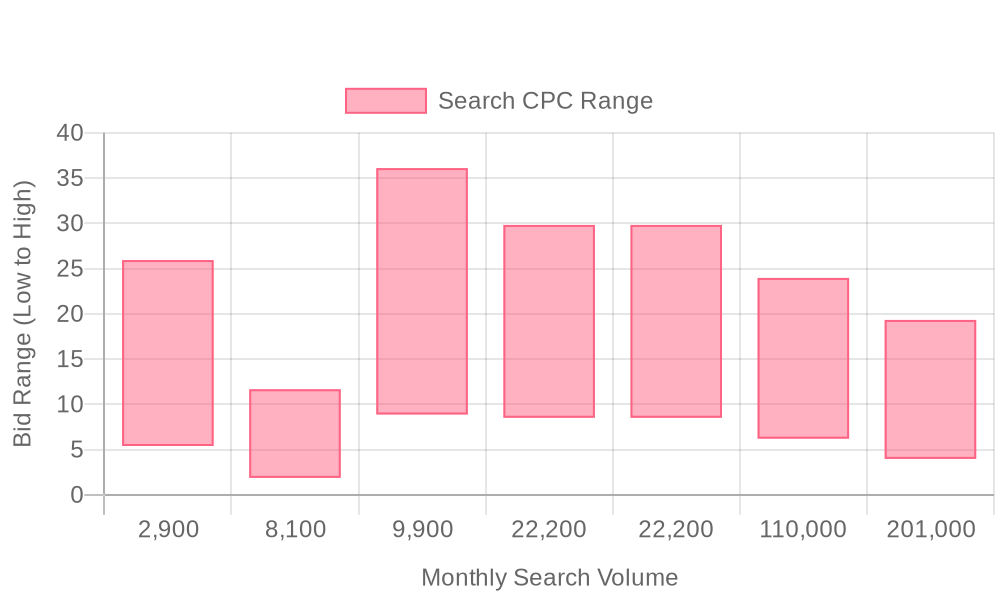
| Industry | Keyword | Monthly Search Volume | Competition Level | Low Bid | High Bid |
| Real Estate Agencies | estate agents near me | 2900 | LOW | 5.4 | 25.94 |
| Real Estate Agencies | real estate agencies | 8100 | LOW | 1.88 | 11.67 |
| Real Estate Agencies | find a realtor | 9900 | MEDIUM | 8.88 | 36.1 |
| Real Estate Agencies | best real estate agent near me | 22200 | MEDIUM | 8.52 | 29.82 |
| Real Estate Agencies | best realtor near me | 22200 | MEDIUM | 8.52 | 29.82 |
| Real Estate Agencies | real estate agents near me | 110000 | LOW | 6.21 | 23.97 |
| Real Estate Agencies | realtors near me | 201000 | MEDIUM | 3.98 | 19.33 |
Effective keyword strategy forms the backbone of successful Google Ads for Real Estate Agencies. Agencies that master search intent and precise term selection consistently attract high-intent buyers and sellers, outperforming competitors relying on generic advertising. By focusing on tailored queries, marketers can ensure their budgets drive measurable real estate lead generation rather than passive browsing. For further guidance on keyword selection and campaign structure, explore this step-by-step guide.
Top-performing campaigns invest heavily in high-converting terms such as "homes for sale near me," "luxury real estate," and "real estate agencies near me." These keywords capture active searchers, potential clients ready to engage with an agent or schedule a viewing. Segmenting terms by intent (buyer vs. seller, residential vs. luxury, local vs. regional) enables smarter audience segmentation and message personalization, a critical lever for real estate digital marketing.
Strategic use of negative keywords, such as excluding "real estate jobs" or unrelated career search terms, prevents wasted spend on non-revenue traffic. This proactive filtering ensures every click is more likely to be a prospective client, not a job seeker or unrelated visitor. When negative keywords are updated dynamically based on campaign performance, agencies minimize irrelevant impressions and further improve conversion rates.
Keyword strategy becomes even more powerful when integrated with identity and intent data. By linking keyword triggers to real-time visitor identification, marketers can move beyond anonymous clicks and pinpoint which companies or individuals are searching for specific property types. With this intelligence, budget allocation shifts automatically toward the highest-converting audiences as they move through the funnel. This approach transforms Google Ads targeting from static keyword lists to adaptive, data-driven audience building, driving incremental gains in both ROI and lead quality for real estate agency marketing.
Ready to turn your keyword strategy into qualified pipeline? Get started for free with Sona.
Step-by-Step Campaign Execution Framework
Step 1: Build Targeted Keyword Lists
Effective real estate agency marketing with Google Ads begins with a tailored keyword strategy that reflects the full scope of property buying and selling journeys. Identifying intent-driven phrases such as "luxury condos for sale in [city]" or "sell my home fast" enables marketers to capture high-quality leads actively searching for solutions. By leveraging intent signals, revenue teams can continuously fine-tune keyword lists according to real-time market demand, surfacing terms that align with shifting buyer behavior and emerging trends in local property markets. To discover the most effective real estate keywords and targeting tips, review this list of high-performing real estate keywords. This approach not only improves targeting precision but ensures that every ad dollar is directed toward audiences most likely to convert.
The upgrade most real estate agencies advertisers miss is going beyond raw keyword volume to layer in intent and identity signals. By connecting website-visitor data and CRM records with Sona Marketing Measurement, you can see which specific search terms, "condos for sale downtown" versus "home valuation estimate," bring in the accounts and customers that actually close, and weight your keyword and bidding strategy toward those instead of the terms with the highest search volume alone.
Step 2: Develop Compelling Ad Copy
Ad copy must do more than inform, it should differentiate. Highlighting unique selling propositions like neighborhood expertise, industry certifications, or exclusive listings gives real estate agencies a competitive edge in crowded search results. Top-performing teams use CRM insights to personalize messaging, dynamically adjusting headlines or value propositions based on lead stage and property interest. For more strategies on creating effective ad campaigns, explore our actionable playbooks. This data-driven approach ensures that every impression resonates, increasing both click-through rates and downstream conversion for real estate lead generation.
Step 4: Data-Driven Optimizations
Continuous improvement is vital for scaling real estate digital marketing. Modern revenue teams go beyond basic reporting by using advanced tools to enrich CRM profiles, track offline and online intent signals, and attribute conversions across touchpoints. For additional strategies and industry benchmarks, see these Google Ads benchmarks for real estate. Real-time identification of website visitors and in-market behaviors allows agencies to dynamically adjust bids, shift budget to high-converting property segments, and suppress audiences as they progress through the sales funnel. With seamless CRM and ad platform sync, enriched audiences can be pushed to Google Ads for more timely and relevant retargeting, while closed-loop attribution provides a true picture of ROI from both digital and offline interactions. This unified approach to data and activation drives higher efficiency and measurable growth in PPC for real estate. To accelerate your success, get started for free with Sona.
Sona Marketing Measurement closes the gap between clicks and revenue. It captures every ad click with first-party, company-level measurement rather than individual tracking, ties that click through UTM capture and ad-platform APIs to the actual record in your CRM, and reports ROAS by keyword and campaign instead of by last-click form fill. Feeding that revenue signal back into Smart Bidding and Performance Max compounds over time: the algorithms optimize toward booked real estate agencies revenue, not cheap leads.
Tips on Expanding Your Google Ads for Real Estate Agencies Presence
Real estate agencies thrive when their brand consistently engages prospects across channels and touchpoints. Expanding Google Ads for Real Estate Agencies demands a mix of creative outreach, local relevance, and data-driven tactics to capture attention and convert interest into qualified leads. For foundational guidance on campaign setup and optimization, explore this step-by-step guide to Google Ads for real estate. To deepen your understanding of advanced tactics, visit the Sona blog.
- Cross-Promotion: Retargeting is essential for nurturing prospects who interact with your listings, blog content, or virtual tours but have not yet converted. By reconnecting with these visitors through tailored display or video ads, agencies can reinforce their value proposition and guide users back to high-converting landing pages. Marketers who leverage visitor identification can go beyond basic retargeting by pinpointing the companies and individuals engaging most deeply with their web content. This enables a more personalized approach, optimizing ad spend toward audiences with the highest intent signals and boosting real estate lead generation efficiency.
- Localization: Effective real estate marketing hinges on hyperlocal relevance. Tailoring Google Ads campaigns to specific cities, neighborhoods, or even developments ensures ads reflect local interests, trends, and property demand. Customized messaging, such as highlighting new listings in a popular district or promoting open houses in a targeted ZIP code, dramatically increases engagement rates. Marketers can further localize efforts by leveraging dynamic audience segments that automatically update as prospects move through the funnel or as local market data changes, ensuring ongoing relevance and maximizing PPC for real estate ROI.
- Partnerships: Collaborating with local businesses unlocks co-marketing opportunities that broaden reach while lending credibility. Joint campaigns, such as featuring a neighborhood coffee shop in virtual tour ads or co-hosting seminars on home buying and local amenities, create a unified approach to audience targeting. Real estate agencies that sync their audience data with CRM and ad platforms can ensure that cross-promotional efforts reach both their own sphere and their partner’s customer base. This strategic integration enriches real estate online advertising, enabling seamless tracking of engagement and conversions across all participating channels, and drives measurable results for every partner involved.
Ready to elevate your Google Ads strategy? Get started for free with Sona.
Beyond Google Ads: Winning the AI Answers Real Estate Agencies Buyers Now Trust
Paid search captures demand at the moment someone types a query. But a fast-growing share of real estate agencies buyers no longer start at Google at all, they ask ChatGPT, Gemini, or Perplexity before they ever run a search, and Google's own AI Overviews increasingly summarize an answer above the traditional results. If your business isn't referenced in those AI answers, you're invisible at the exact moment buyers build their shortlist.
Sona AI Visibility shows where your business shows up across ChatGPT, Gemini, Perplexity, Google AI Overviews, and 10+ engines, and, much like a keyword report, which prompts actually send you buyers, so you can prioritize the ones that convert. Run the two together and you cover the entire buyer path: get cited where buyers research (AI Visibility), then prove which of that demand turns into booked revenue (Marketing Measurement).
Helpful resources
Conclusion
The agencies pulling ahead right now aren't just running more ads, they're closing the loop between the click and the closing, feeding Google's bidding algorithms proof of which searches actually produced buyers and sellers rather than just form fills. As AI answer engines take over more of the early research phase, that same discipline, knowing what's working and showing up where buyers are actually looking, will decide who gets found first and who gets left off the shortlist.
Ready to take your real estate marketing to the next level? Start for free to see how it can turn ad clicks into a clearer, faster path to closings.
FAQ
What are the best practices for using Google Ads in real estate?
Best practices include defining clear objectives, leveraging keyword and audience targeting with location-specific terms, aligning ad creatives with audience segments, and continuously optimizing performance by monitoring campaign metrics.
How can real estate agencies generate leads through Google Ads?
Real estate agencies can generate leads by integrating Google Ads with CRM systems, targeting high-intent keywords, and using dynamic audience segments to ensure ads reach prospects actively considering a transaction.
What types of Google Ads work best for real estate?
Effective Google Ads types for real estate include search campaigns for high-intent queries, display ads for brand visibility, video ads for engagement, and remarketing campaigns to re-engage previous visitors.
What is the cost of running Google Ads for real estate agencies?
The cost varies based on factors like campaign objectives, keyword competition, and targeting strategies, but optimizing ad spend through data-driven audience targeting can maximize ROI.
How do I create a successful Google Ads campaign for my real estate business?
To create a successful campaign, start with targeted keyword lists, develop compelling ad copy, design high-impact landing pages, and apply data-driven optimizations to continuously improve performance.







