


A burst seal or a failed impeller doesn't wait for business hours, and the buyer searching for help wants a technician on-site, not a brand-awareness campaign. Google Ads gives pump repair companies a way to catch that moment: the plant manager whose cooling system just went down, the facilities director comparing maintenance contracts before a slow leak becomes a shutdown. This guide covers how to structure Google Ads for pump repair lead generation, from campaign types and keyword strategy to the tracking that connects a click to a closed deal.
How to Generate Google Ads for Pump Repair Leads

Pump repair businesses operate in a high-intent, urgent-response market where capturing demand in real time drives substantial revenue growth. Leveraging Google Ads for pump repair enables B2B marketers and service providers to intercept buyers at the moment of need, using precise audience intelligence and data-driven optimization to maximize lead quality and minimize wasted spend.
A solid Google Ads setup for pump services starts with aligning paid search to your broader digital marketing strategy. Search, display, and remarketing should reinforce each other rather than run as separate efforts, so a facilities manager who clicks a search ad today still sees your brand in a remarketing banner next week. Sona's Identity Resolution can also connect anonymous web traffic to the companies behind it, turning visitors who never filled out a form into accounts your sales team can actually follow up with.
- Data-driven paid search: Sona's Intent Signals, industry keywords, and negative keyword filters focus impressions on buyers with urgent repair needs, whether that's a burst commercial line or a routine maintenance renewal, so budget goes toward the searches most likely to turn into service calls.
- Audience targeting: Segment campaigns by urgency, location, and business type, such as commercial facility managers or residential homeowners. Modern audience solutions allow marketers to enrich targeting lists with CRM data and real-time web behavior, automatically updating as leads progress through the funnel.
- Landing page and creative alignment: Tailor landing pages and ad copy to reflect the urgency and specifics of pump repair scenarios. Dynamic content and quick-call options help convert high-value leads at the peak of their intent.
- Performance optimization: Continuously monitor conversion rates, cost per acquisition, and offline revenue attribution. Use advanced conversion tracking to tie Google Ads spend directly to closed deals, service tickets, and repeat business.
- Cross-channel integration: Sync CRM platforms and marketing automation with your Google Ads campaign for pump repair. This creates a unified ecosystem where enriched lead profiles seamlessly flow between ad platforms and sales teams, supporting personalized follow-up and retargeting.
In a trade as competitive as pump repair, identifying the companies behind anonymous site visits and layering in in-market signals lets you prioritize spend on the decision-makers most likely to engage. Sona's Identity Resolution surfaces those companies, and combined with unified lead management, you can apply Google Ads best practices from repair services while scaling pipeline efficiency. Ready to streamline your pipeline? Get started for free with Sona.
Why Does Google Ads Matter for Pump Repair?
Pump repair businesses operate in a highly time-sensitive environment where capturing the attention of in-market buyers is crucial to winning new contracts. Google Ads gives revenue teams the ability to connect with both commercial and residential decision-makers exactly when urgent repair needs arise, maximizing lead volume and response opportunities. For a practical example, see this case study on Google Ads for pump manufacturers.
Google Ads for pump repair puts your business in front of buyers actively searching for specialized help, shortening the gap between search and service call. It supports rapid-response campaigns that deliver local visibility exactly when downtime is costing a client money. Real-time audience segmentation keeps that targeting current as intent signals and market conditions shift.
- Captures high-intent decision-makers: Google Ads positions your business in front of buyers at the precise moment they're searching for pump repair solutions, ensuring every click is an opportunity for qualified engagement.
- Wins new high-value projects: Early targeting of prospects in the buying journey helps secure large-scale repair or maintenance contracts before competitors can intervene.
- Delivers instant results for urgent needs: When pumps fail, prospects are not browsing, they are searching for immediate help. Real-time ad delivery ensures your services are available at the peak of urgency.
- Targets underserved regions with accuracy: Geo-targeting capabilities allow teams to expand into emerging markets or focus on high-value service areas, adjusting spend and messaging based on local demand.
- Enhances analytics and closed-loop measurement: Google Ads provides granular insights into every stage of the funnel, allowing teams to measure true campaign ROI and optimize spend for pump repair lead generation. To further improve your marketing performance measurement, explore our blog for actionable insights.
A slow follow-up can cost you the job, especially when a client is dealing with a pump failure that's already disrupting operations. Sona's Identity Resolution identifies the companies visiting your site, so your team can prioritize urgent leads and respond with timely, relevant offers, improving both conversion rates and customer satisfaction. If you're ready to strengthen your pump repair lead generation, get started for free with Sona.
Common Types of Google Ads Campaigns for Pump Repair Services

A complete Google Ads strategy for pump repair blends several campaign formats, each suited to a different stage of the buying decision, from the facility manager searching for an emergency fix tonight to the plant operations lead comparing service contracts for next quarter. Layering in precise audience intelligence lets revenue teams improve both acquisition volume and lead quality across every format.
- Search Campaigns: These capture users with immediate intent, someone searching "emergency pump repair near me" or "commercial pump maintenance." Structuring ad groups by service type and urgency keeps spend on prospects most likely to convert. Layering in Sona's Identity Resolution lets marketers prioritize accounts actively researching repair solutions, shifting budget toward the segments most likely to close.
- Display Ads: Display campaigns keep pump repair brands top-of-mind for prospects who may not be ready to engage immediately. Targeting relevant industry sites and forums lets businesses reach facilities managers, contractors, and property owners during early research phases. By syncing enriched audiences from CRM and web interactions, display placements adapt in real-time to follow high-value leads as they progress through the consideration funnel.
- Video Ads: Video ads visually demonstrate the effectiveness and reliability of pump repair services, building trust with both B2B and residential audiences. Tutorials, case studies, and technician showcases can educate prospects on solutions and qualifications, accelerating the decision timeline. Performance marketers enhance video targeting by dynamically updating audiences based on who watches key segments or revisits service pages, ensuring message relevance at every touchpoint. For a hands-on walkthrough of Google Ads campaign setup and best practices, see this video tutorial.
- Remarketing: Remarketing campaigns re-engage previous website visitors or those who abandoned quote requests. By layering in real-time site actions, companies deliver hyper-personalized offers that directly address each lead’s interests. When remarketing lists are dynamically enriched with CRM and offline conversion data, ads automatically prioritize the most engaged and valuable prospects.
- Assets: Ad assets, location, certifications, reviews, and call buttons, build trust and lift conversion rates by answering key prospect questions inside the ad itself. Showing different certifications to commercial versus residential searchers, based on enriched lead profiles, makes ads more persuasive and drives higher response rates.
Where to Find Growth Opportunities?

Growth in pump repair advertising relies on precision and strategic visibility. B2B marketers benefit most from identifying untapped demand, refining their keyword approach, and leveraging industry placements that competitors overlook. By focusing on data-driven targeting, pump repair businesses can accelerate their lead generation and capture higher-value contracts, especially in competitive markets where urgency and specialization drive decision-making.
- Vertical keyword targeting for specialty services: Expand beyond generic terms by building keyword clusters around specific pump types, urgent scenarios, and commercial applications. Targeting phrases such as "industrial pump repair," "emergency sump pump fix," or "chemical transfer pump maintenance" brings in prospects with immediate needs and higher budgets. This granular approach keeps ad spend focused on prospects most likely to convert and allows for messaging tailored to each segment's compliance and licensing requirements.
- Competitor gap analysis for underserved segments: Audit the competitive landscape to reveal service areas or industries that are underrepresented in search ads. Analyze which geographies, pump models, or industry verticals (e.g., food processing, water treatment) have low ad saturation. By overlaying analytics data, marketers can pinpoint which types of companies are engaging with site content but are not yet being adequately targeted. This enables revenue teams to prioritize outreach toward accounts with clear intent but less competition, improving both lead quality and acquisition cost.
- Industry-specific placements in trade forums: Place display and native ads on trade association websites, technical forums, and industry publications where organic pump repair content may not appear. These environments attract decision-makers researching solutions, ensuring ads reach an audience that is both relevant and actively seeking services. Marketers using visitor identification tools can track which businesses interact with these placements, surfacing actionable insights for sales follow-up.
- Content retargeting with educational assets: Implement retargeting campaigns that serve whitepapers, case studies, or explainer videos to visitors who have engaged with high-value pages but have not converted. Dynamic audience capabilities ensure that as leads consume more educational content or demonstrate new in-market behaviors, they are automatically moved into higher-priority ad sequences. This adaptive approach keeps your messaging aligned with the lead’s stage in the buying cycle and maximizes conversion rates.
Without a clear view of which companies are engaging with your campaigns and site, follow-up becomes guesswork. Sona's Identity Resolution identifies the companies behind anonymous traffic and enriches those profiles with firmographic data and behavioral signals. That intelligence lets you prioritize pipeline activity, shift budget toward high-intent accounts in real time, and synchronize CRM audiences with Google Ads, for campaigns that are more targeted and easier to measure. To see how this works in practice, get started for free with Sona.
How to Apply Audience Segmentation for Pump Repair

Audience segmentation transforms pump repair advertising by ensuring every message reaches the right prospect at the ideal moment. Modern B2B revenue teams leverage segmentation to prioritize high-value accounts, reduce wasted spend, and deliver hyper-relevant campaigns that accelerate the sales funnel. Learn more about building real-time, signal-based segments to target your ideal customers.
Segment targeting begins by clearly defining core audiences, such as industrial buyers managing mission-critical equipment and residential customers facing home water emergencies. Each segment brings unique needs and urgency levels: industrial contacts may seek scheduled maintenance or contract-based solutions, while residential leads often require immediate pump repair. Overlaying intent signals, like recent website activity, service inquiry forms, or emergency search queries, allows marketers to further refine these segments and respond with timely offers.
To maximize impact, build dedicated ad groups for each audience type and tailor creative to their specific pain points. Industrial campaigns might focus on minimizing plant downtime with certified technicians, while residential ads highlight rapid response and transparent pricing. CRM integration keeps conversion paths validated and nurtured, syncing enriched lead data into both sales and marketing systems automatically. Sona's Identity Resolution helps pinpoint high-potential accounts among your web visitors and dynamically updates audience lists for retargeting. For a practical example of segmentation and campaign optimization in pump repair, see this pump manufacturing case study.
This is also where measurement changes the economics. With Sona Marketing Measurement you can identify the companies and buyers behind your ad clicks, not just anonymous sessions, and segment audiences by who actually becomes a customer. That lets you build bid adjustments and audience signals around the segments that convert and de-prioritize the ones that don't, so you feed Google's algorithms "this click became a paying pump repair customer" instead of just "someone filled out a form."
Keyword Strategy & Sample Target Terms
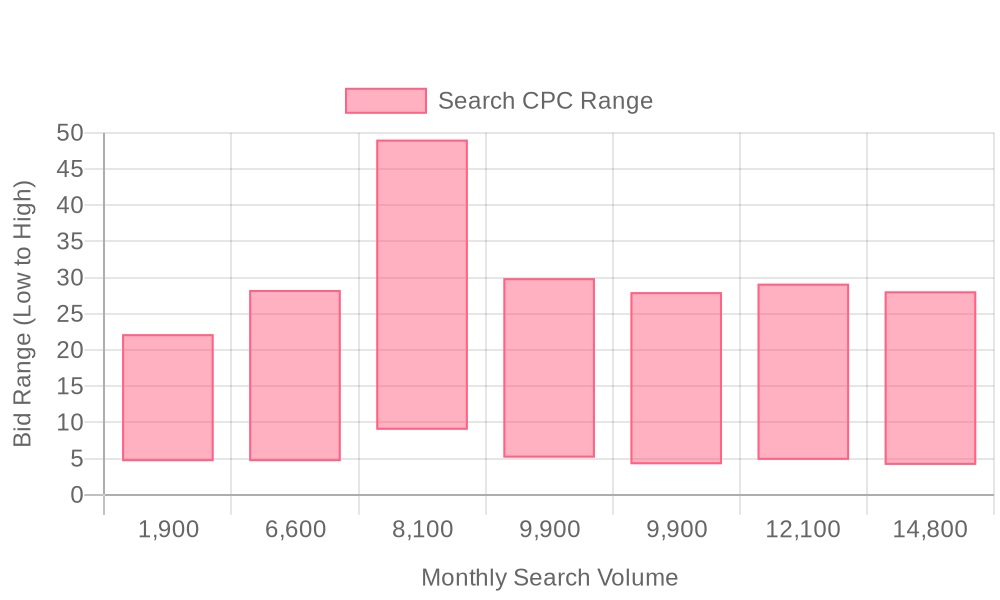
| Industry | Keyword | Monthly Search Volume | Competition Level | Low Bid | High Bid |
| Pump Repair | pump repair | 1900 | LOW | 4.66 | 22.19 |
| Pump Repair | sump pump replacement | 6600 | HIGH | 4.66 | 28.29 |
| Pump Repair | sump pump repair near me | 8100 | MEDIUM | 9 | 49.05 |
| Pump Repair | well pump repair near me | 9900 | MEDIUM | 5.15 | 29.92 |
| Pump Repair | well repair near me | 9900 | MEDIUM | 4.24 | 28 |
| Pump Repair | well pump service near me | 12100 | MEDIUM | 4.84 | 29.16 |
| Pump Repair | sump pump installation | 14800 | LOW | 4.14 | 28.1 |
Google Ads for pump repair enables businesses to capture decision-makers at the precise moment when equipment failure or urgent maintenance needs arise. By aligning targeted keywords with high-intent search behavior, companies can consistently engage prospects who are most likely to convert, maximizing both lead quality and marketing efficiency.
- Precision Targeting: Keywords such as "emergency pump repair near me," "industrial pump service," and "24/7 sump pump repair" put your ads in front of buyers with immediate need or recurring issues. Segmenting by intent, urgent, maintenance, or replacement, lets you tailor messaging and bids for each scenario. Layering in CRM data and Sona's Identity Resolution keeps these audiences current, so premium bids and personalized content go to the prospects most likely to close.
- Measurable ROI: Every click is an investment. Tracking conversions from first click through to contract or offline service call is essential for optimizing spend. Integrating offline events, such as phone inquiries or field technician dispatches, with your Google Ads campaign for pump repair provides a complete view of customer interactions. Unifying these touchpoints with your CRM allows revenue teams to see which search terms and ad groups drive the most revenue, not just the most clicks, allowing for refined budget allocation and smarter campaign adjustments.
- Channel Synergy: Retarget web visitors who previously engaged with your pump repair advertising but did not convert, leveraging display and video ads across multiple platforms. With dynamic audiences that update in real time as leads progress through the funnel, you can nurture interest and re-engage high-value accounts with relevant offers. This advanced segmentation ensures that nurture campaigns are always in sync with buyer intent, driving higher conversion rates and reducing wasted impressions.
Step-by-Step Campaign Execution Framework
Step 1: Build Targeted Keyword Lists
Precision in keyword targeting forms the backbone of successful Google Ads for pump repair campaigns. Focus on service-specific phrases, such as "emergency pump repair," "water pump replacement," or "industrial pump maintenance," and always pair them with local modifiers like city names or ZIP codes. This approach narrows the audience to those most likely to convert while filtering out generic or non-serviceable queries. Apply comprehensive negative keyword filters to exclude unrelated searches, such as "DIY pump repair" or "pump repair for cars," which attract irrelevant clicks and drain budget.
A unified data platform can further refine targeting by identifying the actual companies or users behind each search, letting marketers prioritize high-value accounts. When lead and website activity data sync in real time, audience lists automatically update, ensuring that ads reach the right prospects as they move through the buying cycle. This integration consistently improves the quality and intent alignment of inbound leads, focusing spend on the accounts most likely to engage.
If you want to see how a local service provider can structure and optimize Google Ads campaigns for lead generation, review this guide for pool cleaners.
The upgrade most pump repair advertisers miss is going beyond raw keyword volume to layer in intent and identity signals. By connecting website-visitor data and CRM records with Sona Marketing Measurement, you can see which specific search terms bring in the accounts and customers that actually convert, and weight your keyword and bidding strategy toward those rather than the terms with the highest search volume alone.
Step 2: Develop Compelling Ad Copy
Effective PPC for pump repair hinges on ad copy that addresses urgent pain points and sets your service apart. Headlines should highlight speed, locality, and reliability: for instance, “24/7 Emergency Pump Repair in [City]” or “Certified Pump Technicians, Rapid Response.” Use descriptions to reinforce trust with proof points like “Licensed & Insured” or “Trusted by 200+ Commercial Clients.” Ad extensions, such as call buttons, location maps, and structured snippets, make it easy for users to take immediate action while showcasing your specialties.
Integrating CRM intelligence allows marketers to tailor messaging to different customer segments, commercial prospects can see contract-focused offers, while residential prospects see seasonal maintenance deals. As campaigns progress, ad creative can dynamically adjust based on which services or solutions the audience has shown interest in, driving higher engagement and conversion rates. For more practical tips on campaign improvement, explore our blog on marketing performance.
Step 3: Design Effective Landing Pages
Landing pages for pump repair advertising must provide a seamless, intent-matched experience from ad click to inquiry. Each landing page should reinforce the service type and location promised in the ad, with above-the-fold contact options like click-to-call, fast quote forms, and live chat. Trust elements, such as client testimonials, association badges, and transparent warranties, reduce friction and support confident decision-making.
When data from Google Ads and CRM platforms sync, landing pages can preload forms with known user or company data, shortening the path to conversion. Visitors who have previously engaged can be recognized and routed toward tailored offers or higher-value service tiers, further boosting conversion rates. For actionable guidance on aligning landing page and ad strategy, visit our playbooks hub.
Step 4: Implement Data-Driven Optimizations
Effective Google Ads setup for pump services is never static. Conversion tracking must be implemented across all touchpoints, capturing phone calls, web form submissions, and even offline bookings. With advanced tracking and smart bidding, marketers attribute revenue to specific campaigns, keywords, and ads, not just clicks or impressions. This granular insight enables continuous smart bidding, automatically adjusting bids to maximize conversions from the highest-value segments.
Unified platforms empower revenue teams to monitor performance in real time, shift budgets between emergency and maintenance campaigns, and pause underperforming ad groups. As audiences and performance data flow seamlessly between CRM and ad accounts, remarketing lists are dynamically updated. This approach ensures that high-intent leads receive timely follow-up and that advertising dollars are always aligned with measurable business outcomes. To see how to optimize underperforming Google Ads campaigns, consider these five quick fixes.
Ready to put these strategies into action? Get started for free with Sona.
Sona Marketing Measurement closes the gap between clicks and revenue. It captures every ad click with first-party, company-level tracking, ties that click through UTM capture and ad-platform APIs to the actual account in your CRM, and reports ROAS by keyword and campaign instead of by last-click form fill. Feeding that revenue signal back into Smart Bidding and Performance Max compounds over time: the algorithms optimize toward booked pump repair revenue, not cheap leads.
Tips on Expanding Your Pump Repair Presence
Expanding your pump repair business requires a unified approach across digital channels, with Google Ads as a powerful lever for growth. Pump repair specialists who integrate targeted advertising with educational content and local partnerships outperform competitors by building authority and trust at every stage of the buyer’s journey. For a detailed look at using Google Ads specifically for pump-related services, check out this pump company case study, or browse the latest marketing insights on the Sona blog.
- Cross-promote educational assets in retargeting campaigns: Use retargeting to deliver maintenance checklists, troubleshooting videos, and guides to visitors who showed interest but didn't convert. This nurtures hesitant prospects and positions your brand as the knowledgeable option, increasing the odds of future inquiries and bookings. With Sona's Identity Resolution in place, retargeting lists update automatically as new leads engage with your content, keeping follow-ups relevant.
- Upsell related services using segmented audiences: Segment your audience based on service history, location, or pump type, then tailor ad messages to promote complementary offerings such as maintenance contracts or emergency response plans. By syncing enriched audience data through Sona Destinations, you can trigger personalized upsell campaigns immediately after a repair service, maximizing lifetime value and driving repeat business.
- Partner with industry associations: Collaborate with local or national pump industry associations to co-create webinars, certification programs, or joint ad campaigns. These partnerships expand your reach to a targeted, high-value audience and reinforce your business credibility in commercial and municipal segments. Leveraging website visitor identification, you can pinpoint which association-driven leads are engaging with your ads and route them to specialized sales teams for higher conversion rates.
- Localize efforts to target specific regions more effectively: Customize ad copy, bidding strategies, and landing pages by city, neighborhood, or ZIP code to ensure your pump repair advertising resonates with local searchers. Geo-targeted campaigns prevent wasted spend in regions outside your service area and can be adjusted in real time as weather events or local demand surges occur. Integrating real-time intent signals allows you to automatically shift budget toward regions with the highest likelihood of conversion, improving efficiency and ROI.
- Use search query data for new content topics: Analyze the exact search terms that drive clicks and conversions to uncover gaps in your website or ad creative. Develop new landing pages, blog posts, or FAQs addressing these emerging topics, attracting a broader audience and strengthening your Google Ads setup for pump services. This data-driven content strategy supports both organic and paid efforts while informing future campaign optimizations for pump repair lead generation.
Executing these strategies with a unified data platform streamlines your pump repair marketing efforts, enabling seamless audience segmentation, real-time campaign adjustments, and accurate revenue attribution. This holistic approach ensures every marketing dollar is accountable and every campaign is primed for measurable, sustainable growth. To see how this can work for your business, get started for free with Sona.
Beyond Google Ads: Winning the AI Answers Pump Repair Buyers Now Trust
Paid search captures demand at the moment someone types a query. But a fast-growing share of pump repair buyers no longer start at Google at all, they ask ChatGPT, Gemini, or Perplexity before they ever run a search, and Google's own AI Overviews increasingly summarize an answer above the traditional results. If your business isn't referenced in those AI answers, you're invisible at the exact moment buyers build their shortlist.
Sona AI Visibility shows where your business shows up across ChatGPT, Gemini, Perplexity, Google AI Overviews, and 10+ engines, and, much like a keyword report, which prompts actually send you buyers, so you can prioritize the ones that convert. Run the two together and you cover the entire buyer path: get cited where buyers research (AI Visibility), then prove which of that demand turns into booked revenue (Marketing Measurement).
Helpful resources
Conclusion
Pump repair is a trade where the buyer's timeline is set by a failure, not a marketing calendar, and Google Ads works because it meets that timeline directly. Targeted keywords, urgency-matched ad copy, and location targeting put your business in front of the facilities manager or homeowner searching right now, and every dollar spent should be traceable to whether that search became a booked job.
The businesses winning pump repair contracts now are the ones that can tie a specific search term to a specific closed job, and adjust bids accordingly instead of guessing. Start for free to connect your Google Ads spend to real revenue and start making that call with evidence instead of instinct.
FAQ
What are the best strategies for Google Ads in pump repair?
The best strategies include using data-driven paid search with intent signals and industry keywords, audience targeting by urgency and location, aligning landing pages and ad copy to specific repair scenarios, and integrating cross-channel efforts with CRM platforms for personalized follow-up.
How much should I budget for Google Ads for pump repair?
The budget should be allocated to target high-intent audiences most likely to generate service requests by using precise audience intelligence and data-driven optimization to minimize wasted spend.
What keywords should I use for Google Ads targeting pump repair?
Use service-specific keywords like 'emergency pump repair near me,' 'industrial pump service,' and '24/7 sump pump repair,' along with local modifiers to target audiences with immediate needs.
How do I measure the success of my Google Ads for pump repair?
Success can be measured by tracking conversion rates, cost per acquisition, and offline revenue attribution, tying Google Ads spend directly to closed deals and repeat business.
Are there specific ad formats that work best for pump repair services?
Effective ad formats include search campaigns for immediate intent, display ads for brand awareness, video ads for building trust, and remarketing to re-engage previous visitors, supported by ad extensions to increase trust and conversion rates.







