


A mobile home foundation failure doesn't announce itself gently: it shows up as a stuck door, a cracked skirting panel, or a failed inspection ahead of a sale, and the homeowner or park manager starts searching within hours. Google Ads is built for that moment. It puts your business in front of buyers who are already comparing installers, retrofitters, and inspectors, closing the gap between a general awareness campaign and an actual signed job. For mobile home foundation businesses, the risk isn't a lack of demand, it's that decision-makers research quietly and often contact only one or two providers before choosing. Google Ads lets you intercept them while they're still evaluating, target by technical specification (pier and beam, slab, engineered retrofit) rather than broad category, and track ROI from click through quote to closed job.
How to Generate Mobile Home Foundation Leads with Google Ads: A Step-by-Step Guide

Market demand for mobile home foundations is rapidly evolving, with buyers seeking trustworthy providers who can deliver on quality and compliance. Businesses that leverage Google Ads for Mobile Home Foundations can activate high-intent search traffic and connect with prospects at the exact moment they’re evaluating vendors.
Digital marketing for mobile homes rewards precision and speed. Modern platforms let revenue teams identify the companies behind otherwise anonymous site visits, optimize campaigns in real time, and coordinate cross-channel engagement, giving marketers a measurable edge in a crowded market.
This playbook outlines a proven approach to generating qualified mobile home foundation leads through Google Ads, blending industry-specific targeting, creative alignment, and continuous performance improvement. The guide details how to:
- Pinpoint motivated buyers: Use granular audience and keyword strategies to reduce wasted ad spend.
- Align landing pages and creative: Ensure messaging and offers resonate with mobile home foundation prospects.
- Optimize campaign performance: Adapt quickly to shifts in buyer interest and channel behavior.
- Integrate cross-channel data: Break down silos and unify lead intelligence for full-funnel visibility.
Throughout this guide, you'll learn how to unify targeting, tracking, and retargeting, using platforms that reveal which companies are visiting your site, even when the individual visitor stays anonymous. As leads progress, dynamic audience updates and CRM-ad sync streamline qualification and follow-up, turning more of that interest into booked consultations. Ready to boost your results? Get started for free with Sona.
Why Does Google Ads Matter for Mobile Home Foundations

Mobile home foundation providers operate in a highly specialized market where timing, precision, and lead quality directly impact revenue. Google Ads enables these businesses to reach decision-makers such as plant managers and procurement heads exactly when they're actively researching solutions, filling gaps left by less proactive channels and bringing high-value prospects into the pipeline. For a deeper understanding of how Google Local Services Ads can generate local leads, watch this overview of Google Local Services Ads.
For mobile home foundation advertising, real-time intent data ensures that campaigns align with genuine buyer behavior, allowing budgets to focus on high-converting accounts and underserved regions. Marketers benefit from advanced analytics, which track every touchpoint from the initial click to the signed contract, making it possible to measure and optimize ROI with clarity. Automated retargeting capabilities keep brands visible to prospects as they move through their buying journey, while dynamic audience management ensures ads reflect up-to-date funnel stages and seasonal demand spikes. By integrating enriched CRM data with Google Ads, teams can sync qualified leads and accelerate follow-up, resulting in faster conversions and higher win rates.
Common Types of Google Ads Campaigns for Mobile Home Foundations Services

- Search Campaigns: Search campaigns are foundational for mobile home foundation services, targeting prospects actively seeking installation, repair, or inspection solutions. Within Search, responsive search ads let you test multiple headlines and descriptions so Google can serve the combination that best matches a given query, whether that's "emergency foundation repair" or "FHA foundation certification." Layering in real-time intent signals and enriched audience data lets marketers shift spend toward the accounts most likely to convert, sharpening both budget allocation and lead quality.
- Display Ads: Display campaigns extend your brand presence across relevant websites, maintaining visibility even when prospects are not actively searching. Mobile home foundation advertising through display keeps your service top-of-mind on industry portals, home improvement blogs, and local news sites. With dynamic audience updates, you can continually refresh targeting as users engage with your funnel, ensuring ads reach those showing new buying signals or moving closer to decision.
- Video Ads: Video campaigns offer a powerful way to visually showcase the expertise and process involved in mobile home foundation work. Tutorials, case studies, and before-after project highlights build trust and help demystify complex service offerings. This YouTube tutorial demonstrates how to optimize Google Local Service Ads for better visibility and conversions. When combined with advanced visitor identification, marketers can attribute engagement to specific viewers and prioritize follow-up with high-intent prospects who interact with key video content.
- Remarketing Campaigns: Remarketing ensures potential buyers who visit your site but do not convert are re-engaged with relevant messaging. This approach prevents lost opportunities due to delayed decision-making or distraction. By syncing CRM and ad data, remarketing lists automatically update as leads progress, so campaigns always reflect the latest engagement stage and avoid wasted spend on already-converted or disqualified contacts.
- Ad Assets: Ad assets, such as callouts for certifications, reviews, or rapid response times, enhance the credibility and click-through rate of your ads. For mobile home foundation services, these trust signals matter in local markets where buyers are wary of unlicensed or fly-by-night contractors. Using advanced conversion tracking, marketers can tie asset-driven engagement back to both online and offline outcomes, giving a fuller view of campaign ROI.
Where to Find Growth Opportunities

Vertical keyword targeting uncovers intent-rich searches for specialty services like mobile home foundation repair, installation, or inspection. By refining your Google Ads for Mobile Home Foundations strategy with granular search terms, you capture high-value buyers further down the funnel, reducing wasted spend and increasing qualified lead acquisition.
Competitor gap analysis using auction insights reveals underserved geographic areas or niche service categories. Marketers can spot zones where competitors are underperforming or absent, then deploy targeted local advertising for mobile homes to fill those gaps. This approach is amplified when leveraging platforms that transform anonymous website visits into identified companies and contacts, allowing for more precise outreach.
Industry-specific placements, such as advertising on trade forums or community boards catering to mobile home professionals and homeowners, drive targeted traffic that generic channels miss. This context-rich traffic is more likely to convert, especially when combined with dynamic audience building: audiences update in real time as prospects engage with foundation-related content, ensuring ads remain relevant throughout the buying journey.
Content retargeting through assets like whitepapers, how-to videos, or case studies sustains engagement after the initial click. Many teams struggle with follow-up inefficiency, losing warm prospects to competitors. By syncing CRM data and enriched audiences directly into Google Ads, marketers can automate nurture sequences and retarget prospects with tailored creative, tracking online and offline conversions for full-funnel attribution. This data-driven approach maximizes ROI and positions your brand as a trusted resource for mobile home foundation solutions. To explore these capabilities and accelerate your growth, get started for free with Sona.
How to Apply Audience Segmentation for Mobile Home Foundations

Effective audience segmentation transforms Google Ads for Mobile Home Foundations from generic campaigns into high-performing, precision-targeted programs. By aligning segments to distinct customer profiles and intent signals, revenue teams capture higher-quality leads and reduce wasted ad spend. This approach is essential in digital marketing for mobile homes, where the complexity of buying cycles demands relevance at every touchpoint.
Segmenting your audiences starts with mapping the customer journey for mobile home foundation buyers. Typical segments may include property management firms, individual homeowners, and commercial clients such as hospitals or industrial plants. Each segment exhibits different triggers, like urgent repairs for facilities management or scheduled upgrades for residential clients. Overlaying real-time audience insights allows marketers to tailor messaging and offers that speak directly to in-market prospects.
Ad group creation by segment is critical for engagement and efficiency. Separate ad groups for each audience ensure that ads, extensions, and landing pages resonate with the unique needs of mobile home buyers or maintenance managers. For example, campaigns aimed at targeting mobile home buyers should highlight trust signals and financing options, while those for industrial facilities might focus on compliance and uptime guarantees. Advanced platforms can identify anonymous visitors and dynamically update audience segments as leads engage, ensuring real-time alignment between ad spend and conversion potential.
Validating conversion paths with CRM data further refines segmentation accuracy. Syncing enriched audiences and lead data into Google Ads, Salesforce, or HubSpot ensures that high-fit accounts receive appropriate follow-up and retargeting. For a step-by-step guide on attracting higher-quality leads, explore Google Ads for home builders. Ultimately, well-executed audience segmentation empowers B2B teams to maximize ROI, optimize PPC for mobile home foundations, and sustain a steady flow of qualified mobile home foundation leads. To see how segmentation can elevate your approach, get started for free with Sona.
This is also where measurement changes the economics. With Sona Marketing Measurement you can identify the companies and buyers behind your ad clicks, not just anonymous sessions, and segment audiences by who actually becomes a customer. That lets you build bid adjustments and audience signals around the segments that convert and de-prioritize the ones that don't, so you feed Google's algorithms "this click became a paying mobile home foundations customer" instead of just "someone filled out a form."
Keyword Strategy & Sample Target Terms
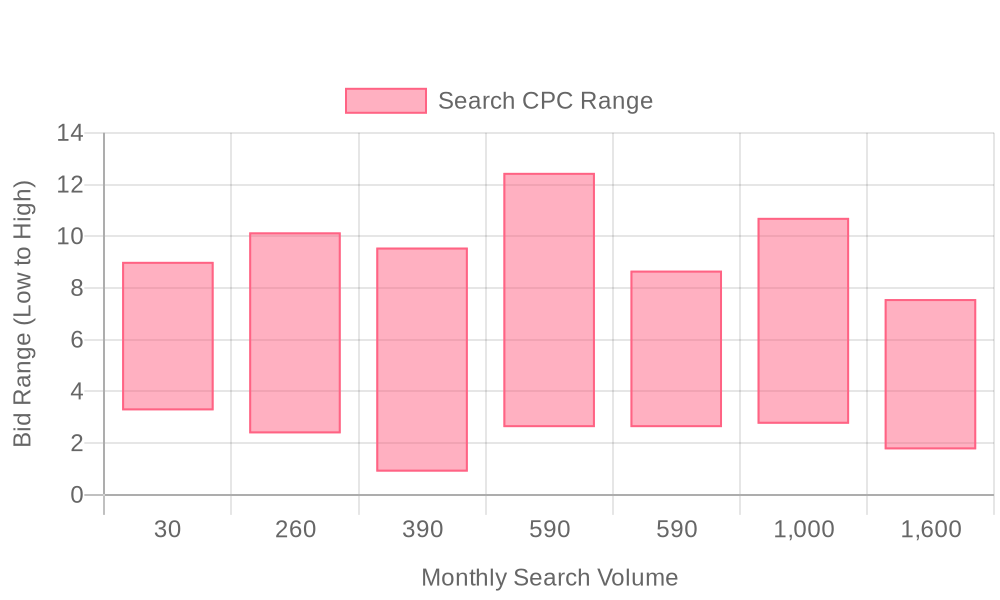
| Industry | Keyword | Monthly Search Volume | Competition Level | Low Bid | High Bid |
| Mobile Home Foundations | va loan manufactured home permanent foundation | 30 | LOW | 3.27 | 9.01 |
| Mobile Home Foundations | mobile home foundation cost | 260 | LOW | 2.38 | 10.15 |
| Mobile Home Foundations | foundation skirting | 390 | HIGH | 0.9 | 9.56 |
| Mobile Home Foundations | cheapest permanent foundation for mobile home | 590 | LOW | 2.62 | 12.45 |
| Mobile Home Foundations | manufactured home foundation | 590 | LOW | 2.62 | 8.67 |
| Mobile Home Foundations | permanent foundation for mobile home | 1000 | LOW | 2.75 | 10.71 |
| Mobile Home Foundations | mobile home foundations | 1600 | LOW | 1.76 | 7.57 |
A successful Google Ads strategy for mobile home foundations starts with precise keyword clustering. Segmenting by service type, such as “mobile home foundation installation,” “retrofit mobile home foundations,” or “engineered foundation inspection”, enables coverage of all relevant buyer intents without diluting budgets on irrelevant queries. Integrating location-specific modifiers, including city names or geo-targeted phrases, ensures your ads only show to prospects within your business footprint, increasing both lead quality and local relevance. For additional tips on structuring campaigns for home services, watch this Google Local Services Ads overview.
Negative keywords are essential for filtering out unqualified traffic. By excluding terms like “DIY,” “free,” or unrelated services, campaigns preserve budget for high-intent searches while reducing the risk of incomplete ROI reporting from untracked or irrelevant conversions. Advanced marketers consistently review search term reports to add new negatives and refine their lists, ensuring evolving audience needs are met without wasted spend. For more strategies on maximizing paid media efficiency, explore our marketing playbooks.
Marketers leveraging unified go-to-market platforms can go further by pinpointing the companies and individuals behind search queries rather than relying solely on anonymous clicks. This level of visitor identification transforms keyword targeting from generic to account-specific, allowing for real-time shifts toward in-market prospects showing conversion signals. As dynamic audience segments update based on funnel movement, ad spend is constantly optimized toward those most likely to convert, closing the loop on performance measurement and budget allocation. For organizations integrating CRM and ad platforms, enriched audience data from both online and offline sources ensures no opportunity is missed, and attribution modeling provides a complete ROI picture on every keyword and campaign. To see how you can elevate your campaigns, get started for free with Sona.
Step-by-Step Campaign Execution Framework
Modern digital marketing for mobile home foundation services demands targeted precision, data integration, and actionable insights. High-performing teams streamline every stage of their Google Ads campaign setup to attract qualified mobile home buyers and maximize ROI, minimizing wasted spend and manual effort. For practical tips on setting up and managing Google Ads Local Services, check out this tutorial on YouTube.
This framework delivers a proven process for PPC for mobile home foundations, unifying keyword strategy, creative, landing page experience, and conversion optimization. Each phase leverages data-driven targeting and dynamic audience management to increase the efficiency of local advertising for mobile homes and drive measurable growth in mobile home foundation leads.
Step 1: Build Targeted Keyword Lists
- Service-based keyword clusters: Segment keywords by specific mobile home foundation solutions, such as "pier and beam foundations," "slab foundation repair," or "engineered foundation certifications." This approach enables granular control over ad groups and improves relevance for each audience segment.
- Localize search terms: Integrate geo-modifiers like city, neighborhood, or regional identifiers to reach prospects actively searching for mobile home foundation services in targeted areas. This localization strengthens intent matching and supports Google Ads for home services.
- Apply negative keywords: Filter out unrelated searches, terms like "mobile home decor" or "modular home sales", to focus budget exclusively on high-quality, conversion-ready traffic.
Unified data platforms allow marketers to pinpoint not only anonymous site visitors but also identify the companies and individuals showing in-market intent, increasing the efficiency of targeting mobile home buyers. By leveraging real-time behavioral signals, campaigns can dynamically shift budget toward high-converting keyword clusters as intent emerges.
The upgrade most mobile home foundations advertisers miss is going beyond raw keyword volume to layer in intent and identity signals. By connecting website-visitor data and CRM records with Sona Marketing Measurement, you can see which specific search terms bring in the accounts and customers that actually convert, and weight your keyword and bidding strategy toward those rather than the terms with the highest search volume alone.
Step 2: Develop Compelling Ad Copy
- Address pain points in headlines: Write copy that surfaces the urgent challenges faced by mobile home owners, such as “Avoid Foundation Settlement Issues” or “Get Certified for FHA/VA Loans Fast.” Emotional resonance increases engagement and drives prospects to click.
- Incorporate trust markers: Highlight industry certifications, local experience, and customer testimonials to address segment-specific concerns. Including badges like “Licensed & Insured” or “Foundation Specialists Since 1995” builds credibility.
- Promote urgency with offers: Use time-sensitive incentives such as “Free Foundation Assessment, Book by Friday” or “Next-Day Estimates Available” to encourage immediate action.
With connected marketing and sales systems, enriched audience data ensures every ad is tailored to the prospect’s lifecycle stage. Audiences update in real time as leads interact with content, ensuring that messaging remains relevant and aligned to their current needs, a critical advantage for digital marketing for mobile homes.
Step 3: Design Effective Landing Pages
- 1:1 ad-to-page alignment: Every ad group should direct to a landing page that delivers precisely on the promise of the keyword and ad copy, such as a dedicated “mobile home foundation inspection” page for inspection-related queries.
- ROI calculators and transparent FAQs: Embedding tools that estimate project costs or timelines increases transparency and trust, while comprehensive FAQs address common objections and support prospects in their decision-making journey.
- Offline conversion support: When not every deal closes online, landing pages should collect detailed lead data, which can later be attributed to ad spend, supporting full-funnel mobile home foundation SEO and PPC measurement.
By syncing CRM and ad data, marketers can unify lead information from form fills, calls, and offline conversations directly into Google Ads and sales platforms, enabling closed-loop attribution and more accurate campaign optimization.
Step 4: Implement Data-Driven Optimizations
- Monitor micro and macro conversions: Track every key action, from brochure downloads and quote requests to scheduled site visits and signed contracts. This granular data helps identify which touchpoints drive pipeline and revenue.
- Smart bidding strategies: Use Target CPA or Max Conversions bidding to automatically adjust bids based on conversion probability, increasing efficiency and scaling campaigns as new data comes in.
- Continuous improvement: Regularly review performance data, test new creative, and reallocate budget to top-performing keyword and audience segments.
Platforms that offer advanced online and offline conversion tracking empower teams to measure the true ROI of their Google Ads for Mobile Home Foundations campaigns. By syncing enriched lead and audience data across Google Ads, HubSpot, Salesforce, and other systems, teams can seamlessly retarget high-value prospects and refine strategies for sustainable growth in mobile home foundation leads.
For more on optimizing follow-ups, see retargeting strategies. If you’re ready to streamline your campaigns, get started for free with Sona and unlock unified, real-time audience data and attribution.
Sona Marketing Measurement closes the gap between clicks and revenue. It captures ad clicks with first-party, company-level tracking, then ties each click through UTM capture and ad-platform APIs to the actual record in your CRM, and reports ROAS by keyword and campaign instead of by last-click form fill. Feeding that revenue signal back into Smart Bidding and Performance Max compounds over time: the algorithms optimize toward booked mobile home foundations revenue, not cheap leads.
Tips on Expanding Your Mobile Home Foundations Presence
A targeted approach is essential for mobile home foundation businesses seeking sustained visibility across diverse regions and buyer segments. Precision in advertising and outreach leads to higher engagement and ensures marketing spend converts into qualified opportunities. For more on structuring campaigns like this, see the Google Ads for Home Builders guide, which offers tactics that translate well to mobile home foundation services.
Avoiding generic outreach is critical: use industry-specific assets in your retargeting campaigns, such as foundation inspection guides or case studies tailored to manufactured housing. Segment retargeting audiences based on prior interactions, upsell related services like crawl space repairs, and leverage data from site visits to match messaging to the buyer’s stage. By syncing real-time visitor intent data with ad platforms and CRM systems, teams can quickly identify high-value prospects and dynamically update audiences as they progress from initial inquiry to booking a site assessment.
Partnering with respected industry associations adds a robust layer of credibility, building trust with both end-customers and referral partners. Participation in local or state-level housing events, as well as strategic sponsorships, can help your business gain recognition and authority while supporting community engagement. This localized focus, when combined with granular geo-targeting in Google Ads, ensures your PPC for mobile home foundations efforts resonate within each metro or state market.
Localizing your digital marketing for mobile homes allows you to tailor ad creatives and messaging to specific regulatory environments, soil conditions, or climate challenges unique to each area. This nuanced approach helps maintain engagement and relevance, even as your catchment area expands. By integrating first-party data and real-time behavioral insights, marketers can optimize spend and messaging for the audiences most likely to convert, ensuring your Google Ads strategies for mobile homes stay agile and performance-driven. To see how these tactics can drive results for your business, get started for free with Sona.
Beyond Google Ads: Winning the AI Answers Mobile Home Foundations Buyers Now Trust
Paid search captures demand at the moment someone types a query. But a fast-growing share of mobile home foundations buyers no longer start at Google at all, they ask ChatGPT, Gemini, or Perplexity before they ever run a search, and Google's own AI Overviews increasingly summarize an answer above the traditional results. If your business isn't referenced in those AI answers, you're invisible at the exact moment buyers build their shortlist.
Sona AI Visibility shows where your business shows up across ChatGPT, Gemini, Perplexity, Google AI Overviews, and 10+ engines, and, much like a keyword report, which prompts actually send you buyers, so you can prioritize the ones that convert. Run the two together and you cover the entire buyer path: get cited where buyers research (AI Visibility), then prove which of that demand turns into booked revenue (Marketing Measurement).
Helpful resources
Conclusion
The mobile home foundation businesses winning on Google Ads aren't the ones with the biggest budgets, they're the ones who've stopped optimizing for clicks and started optimizing for booked jobs. That means keyword lists built around real service categories, landing pages that answer the specific question a query implies, and a measurement layer that tells you which campaigns produced paying customers rather than which produced the most form fills.
The next twelve months will separate businesses that treat Google Ads as a lead-generation tactic from those that treat it as a revenue system, tied to CRM data, weighted toward jobs that actually close, and increasingly extended into how AI tools answer buyer questions before a search ever happens. Start building that system now, and the algorithm learns your business faster than your competitors' does.
FAQ
What are the best practices for Google Ads targeting mobile home foundations?
Best practices include using granular audience and keyword strategies to reduce wasted ad spend, aligning landing pages and creative to resonate with prospects, and integrating cross-channel data for full-funnel visibility.
How can I create effective Google Ads for mobile home foundations?
Create effective ads by pinpointing motivated buyers with precise keyword strategies, aligning landing pages with ad copy, optimizing campaign performance in real-time, and using dynamic audience management.
What budget should I allocate for Google Ads in the mobile home foundation niche?
Budgets should focus on high-converting accounts and underserved regions, using advanced analytics to optimize ROI from initial clicks to signed contracts.
What keywords should I use for Google Ads targeting mobile home foundations?
Use service-based keywords like 'mobile home foundation installation,' 'retrofit mobile home foundations,' and location-specific modifiers to target prospects actively searching for services in your area.
How do I measure the success of my Google Ads for mobile home foundations?
Success can be measured by tracking every touchpoint from initial clicks to signed contracts, using automated retargeting, and integrating CRM data to ensure accurate conversion tracking and ROI measurement.







