


A snapped line at 2 a.m. off a sandbar doesn't wait for business hours, and the towing company that shows up in the search results at that moment usually wins the job. Google Ads lets marine towing operators intercept that exact instant of need, when a boater or marina manager is searching, panicked, for help. But many operators still lose high-value leads to incomplete tracking, unable to see which searches actually turned into dispatched tows. Newer tools now let companies fold that missed visitor data back into their marketing, closing the gap between ad spend and paying customers.
How to Generate Marine Towing Leads with Google Ads: A Step-by-Step Guide
Marine towing companies operate in a niche where fast response and digital visibility directly impact customer acquisition and revenue. Strategic use of Google Ads ensures your services appear at the exact moment high-intent clients search for urgent help, maximizing every ad dollar. For a detailed walkthrough on setting up and optimizing campaigns, see this step-by-step Google Ads guide for towing companies.
A data-driven approach to paid search reveals which keywords, times, and locations deliver the best return. By connecting search data to campaign analytics, revenue teams cut wasted spend and find new ways to engage customers. Sona's Identity Resolution and intent signals help move you from anonymous clicks to identified companies and actionable leads.
Targeting marine towing audiences requires more than generic keyword lists. By analyzing client search behavior and segmenting audiences by vessel type, urgency, and location, you can deliver hyper-relevant ads that stand out in a crowded market. Real-time audience segmentation further refines targeting as prospects engage with your site, ensuring your message always matches their current intent.
Optimized landing pages are vital for conversion. Each click from a Google ad should lead to a page with clear messaging, fast load times, and a direct call to action. When ad and landing page data are unified, attribution gaps close, letting you see precisely which campaigns and keywords actually close business. For more, browse our library of marketing playbooks.
Performance optimization is an ongoing process. Regular analysis of conversion rates, cost-per-lead, and customer lifetime value identifies areas for improvement. Advanced tracking solutions now enable revenue teams to measure both online and offline conversions, offering a holistic view of ROI and enabling smarter budget allocation across all marine towing service promotions. Discover more about maximizing ROI through offline channels.
Integrating Google Ads with other marketing channels creates a unified lead generation engine. Syncing CRM data and enriched audiences with ad platforms ensures that every campaign targets the right companies and decision-makers. Automated audience syncing and real-time follow-up, powered by connected sales and marketing workflows, keep marine towing leads warm and shorten the path from search to signed contract. If you’re ready to unify your digital lead generation, book a demo with Sona and see how you can accelerate marine towing business growth.
Why does Google Ads matter for Marine Towing
Immediate visibility is crucial in marine towing where potential clients often require urgent assistance. Google Ads delivers an efficient avenue to capture demand exactly when decision-makers are searching for towing support, ensuring that high-value prospects are never missed.
Precise audience targeting is essential for reaching marina operators, boat owners, and marine managers who drive business growth. Modern campaigns now leverage precise audience intelligence to refine segmentation, delivering ads to the right contacts at the right time and preventing wasted spend on low-intent clicks.
- Complex Audience Targeting: Advanced advertising platforms let marine towing firms pinpoint key decision-makers, marina operators, fleet managers, insurance adjusters, in real time. Identity Resolution extends this by recognizing the companies behind both anonymous and known site visitors, turning quiet browsing into an actionable lead.
- High-Value Lead Generation: Google Ads captures premium marine towing leads, emergency callouts, 24-hour dispatch requests, salvage jobs, that convert fast when followed up quickly. Pairing campaign data with Sona's Intent Signals lets teams prioritize the accounts most likely to convert and cut the risk of a delayed callback costing the job.
- Instant Demand Fulfillment: Urgent marine towing scenarios, such as breakdowns or weather emergencies, demand rapid response. With location targeting and dynamic audience updates, your advertising reaches the right users at their moment of need, resulting in faster lead acquisition and improved customer satisfaction.
- Expanded Visibility: Breaking into new marinas, lakes, or coastal regions requires more than generic outreach. Google Ads' precise targeting, supported by unified audience data, allows marine towing providers to efficiently test and scale campaigns into untapped markets, maximizing their share of voice.
- Actionable Insights: Connecting every ad interaction to downstream actions, calls, bookings, and service requests, yields a closed-loop measurement system that sharpens marketing ROI. By integrating conversion tracking and syncing CRM data, marine towing companies can optimize spend and continuously improve campaign efficacy.
Common Types of Google Ads Campaigns for Marine Towing Services
- Search Campaigns: Search campaigns are foundational for marine towing companies. These campaigns target high-intent keywords such as “emergency marine towing” or “boat towing near me,” ensuring your services surface when prospects need immediate assistance. By combining advanced visitor identification and real-time intent signals, marketers can focus spend on accounts demonstrating urgent needs, maximizing budget efficiency and lead quality. For a comprehensive step-by-step guide on setting up and optimizing Google Ads campaigns tailored for towing companies, refer to this Google Ads for towing companies guide.
- Display Ads: Display campaigns keep your brand visible to potential clients who may not be actively searching but have shown interest in marine-related content. With dynamic audience capabilities, display ads can automatically update targeting parameters as leads progress through the sales funnel. This ensures ads remain relevant and tailored, supporting brand recall and nurturing prospects until they are ready to engage.
- Video Ads: Video ads provide an opportunity to showcase your operational expertise, fleet reliability, and emergency readiness. Compelling visuals help build trust and differentiate your marine towing services. By syncing enriched audience data, video campaigns can prioritize distribution to viewers with the highest likelihood of converting, streamlining customer acquisition.
- Remarketing: Remarketing campaigns re-engage website visitors who didn’t convert on their first visit. Leveraging advanced tracking, marketers can identify previously anonymous visitors and companies, turning lost opportunities into actionable leads. Automated audience updates ensure your remarketing lists always reflect the most sales-ready prospects, increasing the likelihood of recapturing high-value accounts.
- Ad Assets: Ad assets (formerly called extensions) enhance your ads with additional service information, coverage areas, and certifications. This builds credibility and gives prospects what they need to choose your company with confidence. Integrating CRM and ad platforms keeps location-specific offers and contact details in sync, so messaging stays relevant across campaigns.
Where to Find Growth Opportunities?
Expanding your marine towing marketing reach requires a systematic approach to identifying untapped segments and leveraging high-intent channels. Professionals in this industry achieve the strongest results by combining granular keyword targeting with advanced data analysis, ensuring every marketing dollar is invested where it has the greatest impact.
- Vertical Keyword Targeting: Specializing your Google Ads for Marine Towing strategy around niche services, such as emergency boat recovery, marina-to-marina towing, or salvage operations, enables tailored messaging that resonates with urgent customer pain points. For a step-by-step walkthrough on campaign setup and optimization, this Google Ads for towing companies guide details proven tactics for capturing high-intent leads. By focusing on these verticals, campaigns become highly relevant, which improves ad quality scores, reduces CPC, and attracts leads further along in the buying process.
- Competitor Gap Analysis: Using competitive intelligence tools, marketers can detect overlooked keywords, underserved geographic locations, or customer segments that competitors miss. These gaps are valuable for marine towing businesses seeking cost-effective lead generation. When competitive data is unified with CRM and ad analytics, teams can quickly pivot budgets toward high-yield segments and build campaigns that fill these whitespace opportunities with precise, intent-driven offers.
- Industry-Specific Placements: Placing ads on marine forums, boating safety blogs, and niche maritime directories captures in-market audiences where organic content is sparse. Targeting these placements ensures your marine towing advertising appears in relevant environments and reaches decision-makers actively seeking support. Sona's Identity Resolution lets marketers pinpoint not just anonymous traffic but the actual companies and contacts engaging with these placements, making retargeting and follow-up more personalized and effective.
- Content Retargeting: Deploying educational content, such as how-to guides for boaters or safety checklists, in your retargeting strategy adds value at every touchpoint. When audiences engage with informational assets, their intent and readiness to convert become clearer. Leveraging real-time audience syncing as leads interact with your site ensures that marine towing service promotions are always tailored to the prospect’s stage in the funnel. This approach increases engagement, enables accurate measurement of both online and offline conversions, and streamlines the path from engagement to action.
Each of these growth opportunities compounds when fragmented data sources connect into one system, giving you real-time insight, precise targeting, and seamless audience syncing across Google Ads, CRM, and sales platforms. That ecosystem approach is what separates steady, scalable growth from one-off campaign wins for towing companies. To see how this works for your team, get started for free with Sona.
How to Apply Audience Segmentation for Marine Towing

Effective audience segmentation in marine towing empowers marketers to reach the right prospects at the right moment, maximizing the relevance of each campaign. Strategic segmentation transforms generic outreach into personalized engagement, increasing both conversion rates and marketing ROI. To dive deeper into segmentation and analytics, explore our marketing analytics articles.
- Define Segments: Distinguishing between customer needs is foundational. For marine towing, clients seeking emergency assistance have different expectations and urgency compared to those arranging scheduled maintenance or seasonal boat transport. Segmenting audiences by service urgency, vessel type, or commercial versus private needs lets you craft more relevant Google Ads campaigns for marine towing, resulting in higher engagement and stronger lead quality.
- Overlay Intent Signals: Incorporating real-time intent data ensures your segments reflect live market demand. For example, behavioral signals like searches for "immediate marine towing near me" or visits to specific service pages help marketers adjust budgets toward high-converting, in-market accounts. Platforms that unify intent signals across web visits, CRM updates, and ad interactions enable tighter audience targeting and more responsive campaign management, supporting marine towing business growth through dynamic, data-driven segmentation.
- Create Segment-Specific Ad Groups: Tailored messaging is critical when segmenting audiences. Build specific ad groups for each segment, such as "emergency towing for commercial fleets" or "scheduled yacht transport," and align ad copy with the user’s urgency and context. This approach increases ad relevance, improves quality scores, and drives down the cost per click for PPC for marine towing. By syncing enriched audience segments from your CRM or analytics platform directly into Google Ads, you can ensure your message reaches the right customers as their needs evolve.
- Validate Conversion Paths: Mapping the journey from ad click to conversion reveals which segments respond best and where follow-up should be prioritized. Consistent tracking across landing pages, CRM entries, and offline calls clarifies attribution, letting marketers optimize spend for the most valuable segments. Integrating conversion tracking and CRM sync ensures both online and offline actions are attributed correctly, showing which marine towing lead generation efforts actually deliver ROI. That clarity supports smarter budget allocation and continuous improvement across every campaign.
This is also where measurement changes the economics. Sona Marketing Measurement identifies the companies behind your ad clicks, not just anonymous sessions, and lets you segment audiences by which of those companies actually became customers. That lets you build bid adjustments and audience signals around the segments that convert and de-prioritize the ones that don't, so you feed Google's algorithms "this click became a paying marine towing customer" instead of just "someone filled out a form."
Keyword Strategy & Sample Target Terms
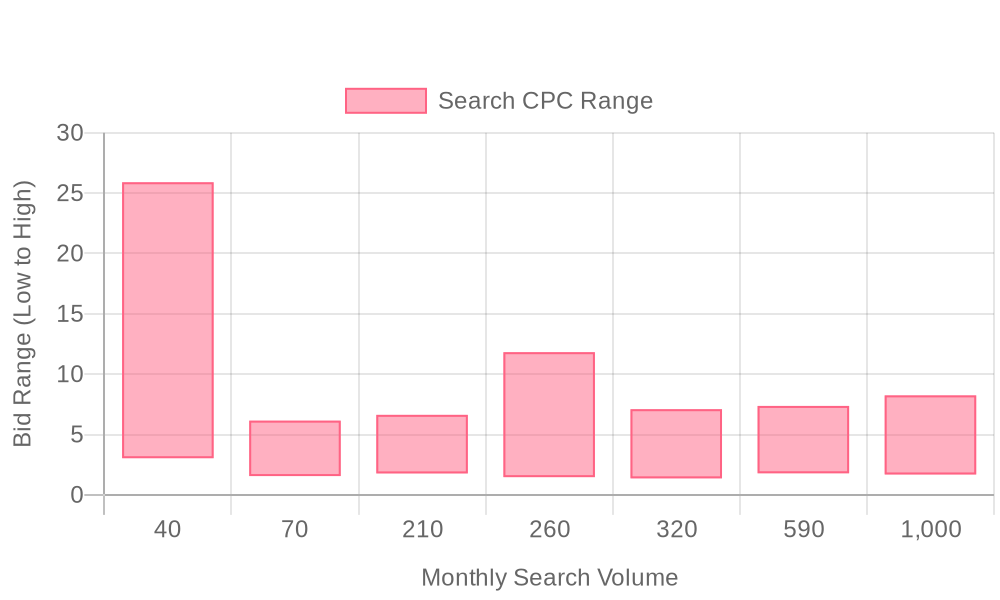
| Industry | Keyword | Monthly Search Volume | Competition Level | Low Bid | High Bid |
| Marine Towing | marine towing near me | 40 | MEDIUM | 3.04 | 25.9 |
| Marine Towing | marine towing services | 70 | LOW | 1.56 | 6.15 |
| Marine Towing | boat towing company | 210 | LOW | 1.78 | 6.63 |
| Marine Towing | marine towing | 260 | LOW | 1.47 | 11.82 |
| Marine Towing | west marine tow boat us | 320 | MEDIUM | 1.37 | 7.1 |
| Marine Towing | boat towing services near me | 590 | LOW | 1.79 | 7.37 |
| Marine Towing | boat towing service | 1000 | LOW | 1.69 | 8.24 |
A robust keyword strategy ensures marine towing companies reach high-intent buyers at the precise moment of need. Targeted terms like "24-hour marine towing near me" and "emergency boat towing service" capture urgent demand, driving immediate engagement from decision-makers seeking fast solutions. This level of precision not only minimizes wasted ad spend but also elevates the quality of inbound leads, supporting scalable marine towing business growth.
Precision targeting in Google Ads for Marine Towing requires more than selecting broad industry terms. Effective campaigns leverage granular modifiers such as location, service urgency, and vessel type to filter out low-value clicks. Marketers can further enhance keyword targeting by integrating first-party site data with real-time visitor identification, transforming anonymous clicks into actionable profiles. This approach allows teams to optimize budgets by shifting spend to audiences proven to convert, rather than relying solely on generic marine towing advertising.
To achieve measurable ROI, it is critical to connect ad interactions with actual conversions, both online and offline. Using advanced attribution, B2B revenue teams can track the full customer journey from initial keyword search to closed deal, factoring in calls, form fills, and offline contracts. When platforms sync enriched lead data directly into Google Ads and connected CRMs, marketers create feedback loops that continuously refine audience models. Insights gained from these connected data streams are also invaluable for retargeting strategies, improving marine towing lead generation efforts across every digital channel.
Channel synergy is essential for long-term marine towing business growth. By analyzing intent signals, call outcomes, and online engagement, teams can identify which keywords, ad formats, and messaging drive the highest-value conversions. This intelligence not only powers future Google Ads campaigns but also informs broader online marketing for towing services, including marine towing SEO and social targeting, so every marketing dollar drives measurable, predictable results.
Step-by-Step Campaign Execution Framework
Step 1: Build Targeted Keyword Lists
Precise keyword targeting underpins every effective Google Ads for Marine Towing campaign. Segment keywords by specific marine towing services, such as emergency towing, vessel recovery, or marina transport, and align them with commercial or urgent-intent phrases. Grouping terms like “boat towing near me,” “marine emergency tow,” and “harbor breakdown assistance” ensures ads surface for high-value searchers who need immediate help. For a practical example of campaign structure and optimization, see this step-by-step guide for towing companies.
Dynamic keyword management becomes more strategic when connected to unified data flows. Marketers using platforms that identify visitor intent can refine these lists in real time, adapting spend to target accounts demonstrating urgent towing needs. Integrating CRM and ad data enables continuous refresh of audience segments, letting revenue teams focus on buyers displaying the strongest marine towing intent. Explore more targeting tactics in our library of actionable playbooks.
The upgrade most marine towing advertisers miss is going beyond raw keyword volume to layer in intent and identity signals. By connecting website-visitor data and CRM records with Sona Marketing Measurement, you can see which specific search terms bring in the accounts and customers that actually convert, and weight your keyword and bidding strategy toward those rather than the terms with the highest search volume alone.
Step 2: Develop Compelling Ad Copy
Effective ad copy for marine towing must address customer urgency and clarify immediate solutions. Highlight differentiators such as 24/7 response, licensed operators, or specialized marine equipment, using concise language that resonates with distressed vessel owners. Including strong calls to action like “Call for Fast Marine Rescue” or “Immediate Harbor Response Available” increases qualified click-throughs.
Leveraging real-time behavioral signals, marketers can personalize ad messaging based on a prospect’s previous site activity or service interest. Automated audience updates allow messaging to adapt as leads progress, ensuring each searcher sees the most relevant offer. This approach transforms marine towing advertising from generic to hyper-targeted, improving both lead quality and ad spend efficiency. Discover more tips in our blog on marketing analytics and campaigns.
Step 3: Design Effective Landing Pages
Conversion-focused landing pages are essential for capitalizing on paid traffic. Each ad group should route to a landing page tailored to the specific marine towing service and urgency level highlighted in the ad. For example, a campaign for “emergency marine towing” should land users on a page featuring a direct hotline, fast response guarantees, and customer testimonials relevant to crisis scenarios. Review a comprehensive PPC guide for towing companies to see best practices in action.
Advanced attribution and analytics tools let marketers measure which landing pages and offers drive the highest conversion rates. By tying online actions to offline events, like a completed tow or a booked marina transport, revenue teams gain clarity on true ROI. Continuous syncing between ad platforms and CRM systems means landing page content and forms stay optimized for the most responsive marine towing segments.
Step 4: Implement Data-Driven Optimizations
Ongoing optimization is critical for sustainable marine towing business growth. Monitor performance metrics such as click-through rates, cost per lead, and conversion rates to pinpoint what’s driving results. Test variations in keywords, ad copy, and landing page layouts to continually raise campaign efficiency. For additional strategies, explore this roadmap to Google Ads success for towing services.
Platforms that unify Google Ads data with CRM and sales outcomes help marketers attribute revenue directly to specific search terms or audience segments. This unified view supports rapid pivoting, shifting budget to top-performing marine towing lead generation channels or pausing underperforming campaigns. The result is a feedback loop where every paid click is informed by the most up-to-date, actionable insights. Get started for free with Sona to experience advanced campaign attribution and optimization.
Sona Marketing Measurement closes the gap between clicks and revenue. It captures every ad click with first-party measurement, then ties that click through UTM capture and ad-platform APIs to the actual record in your CRM, and reports ROAS by keyword and campaign instead of by last-click form fill. Feeding that revenue signal back into Smart Bidding and Performance Max compounds over time: the algorithms optimize toward booked marine towing revenue, not cheap leads.
Tips on Expanding Your Marine Towing Presence
Expanding your marine towing presence requires an agile approach to digital marketing and customer engagement. A blend of data-driven tactics and targeted outreach ensures every channel works towards sustainable business growth. If you want to see how unified analytics can help, you can get started for free with Sona.
- Cross-Promote Content: Retargeting remains a powerful tactic for keeping your brand top-of-mind among prospective clients. By identifying site visitors and segmenting them based on content engagement, you can serve tailored ads that reinforce service value and move prospects closer to conversion. Leveraging real-time audience data enables marine towing marketers to pinpoint which audiences are actively researching services, allowing budget to be shifted toward in-market accounts most likely to convert.
- Service Upsells: Understanding customer intent is essential for identifying upsell opportunities. By analyzing interaction patterns and previous service engagements, you can anticipate customer needs and offer relevant add-ons such as emergency response upgrades or annual service packages. Integrating real-time intent insights with your CRM ensures that both sales and marketing teams align efforts, driving higher average deal sizes through strategic, data-backed recommendations.
- Partnerships: Collaborating with marine associations or local boating groups can significantly increase referral opportunities and amplify marketing reach. Joint promotions and co-branded campaigns benefit from shared credibility, while unified data platforms make it easier to track campaign performance and attribution across all sources. This ensures both parties have visibility into lead quality and conversion outcomes.
- Local SEO Adjustments: Regional targeting is critical for marine towing providers who rely on hyper-local demand. Optimizing your business listings, leveraging region-specific keywords, and updating service pages for each coverage area improve local visibility. Modern platforms streamline the process by surfacing granular location-based search trends, informing SEO adjustments that drive more high-intent traffic for marine towing service promotions.
- Market Insight Gathering: Search data is a gold mine for understanding what marine towing customers want and when they need it. By analyzing keyword trends and on-site search queries, you can create content that answers urgent questions and addresses common pain points. For step-by-step guidance tailored to towing businesses, check out this Google Ads for towing companies guide. With Identity Resolution, marketers can identify the companies and titles engaging with their digital assets, refining content strategy to capture demand and accelerate marine towing lead generation.
Beyond Google Ads: Winning the AI Answers Marine Towing Buyers Now Trust
Paid search captures demand at the moment someone types a query. But a fast-growing share of marine towing buyers no longer start at Google at all, they ask ChatGPT, Gemini, or Perplexity before they ever run a search, and Google's own AI Overviews increasingly summarize an answer above the traditional results. If your business isn't referenced in those AI answers, you're invisible at the exact moment buyers build their shortlist.
Sona AI Visibility shows where your business shows up across ChatGPT, Gemini, Perplexity, Google AI Overviews, and 10+ engines, and, much like a keyword report, which prompts actually send you buyers, so you can prioritize the ones that convert. Run the two together and you cover the entire buyer path: get cited where buyers research (AI Visibility), then prove which of that demand turns into booked revenue (Marketing Measurement).
Helpful resources
Conclusion
A marine towing operator that shows up first when a boater searches, and can prove which of those clicks became dispatched jobs, has a real edge over competitors still guessing at attribution. The tactics here, urgency-matched keywords, segment-specific ad copy, landing pages built for panic-mode users, only work as a system when the data behind them is connected.
The operators who pull ahead this season will be the ones who can trace a search query all the way to a signed tow contract, and adjust their bidding accordingly. That loop, not any single tactic, is what turns Google Ads from a cost center into the most reliable source of dispatch calls a towing company has.
Start for free and put your ad spend, CRM, and conversion data on one system built to show which campaigns actually put boats back on the water.
FAQ
What are the best Google Ads strategies for marine towing services?
The best strategies include precise audience targeting, using high-intent keywords, integrating CRM data, and employing real-time audience segmentation to maximize ad relevance and lead quality.
How can I optimize my Google Ads for a marine towing business?
Optimize Google Ads by targeting high-intent keywords, refining audience segments based on urgency and location, and ensuring landing pages are conversion-focused with clear calls to action.
What keywords should I target for marine towing in Google Ads?
Target keywords like '24-hour marine towing near me,' 'emergency boat towing service,' and terms that include location and service urgency to capture high-intent prospects.
What budget should I allocate for Google Ads in marine towing?
Allocate budget based on campaign performance metrics such as conversion rates and cost-per-lead, adjusting spend towards high-performing keywords and segments.
How do I measure the success of my Google Ads campaigns for marine towing?
Measure success by analyzing conversion rates, cost-per-lead, and customer lifetime value, and by integrating both online and offline conversions to get a holistic view of ROI.







