


A birthday party booked six weeks out, a baby shower planned the week of, a corporate holiday event locked in months ahead: home party planners juggle wildly different buying timelines, and most of that demand never fills out a form before it disappears to a competitor. Advanced identification tools now make it possible to spot the companies and households browsing your site anonymously, turning what used to be a lost visit into a workable lead. Google Ads is the tool that converts this kind of interest into bookings, putting your services in front of hosts at the exact moment they're searching for party help. Target that moment precisely, and a home party planning business can compete on more than word of mouth.
How to Generate Home Party Planning Leads with Google Ads: A Step-by-Step Guide

Home party planning businesses face a unique challenge: connecting with local prospects who are actively seeking event services but rarely leave a clear digital trail. Making the most of every lead opportunity requires a performance-driven approach that ensures your marketing budget reaches genuine decision-makers. For actionable tips on maximizing your digital marketing, visit the Sona blog.
Integrating Google Ads as a core marketing channel enables home party services to efficiently capture high-intent searches, drive measurable engagement, and close attribution gaps across the funnel. For an overview of advertising solutions tailored to reach new customers, explore the official Google Ads homepage. By leveraging advanced targeting and real-time data, teams can continuously refine their outreach, shifting spend to audiences most likely to convert.
- Centralizing Google Ads in your strategy: Using Google Ads as the backbone of your digital marketing for home parties allows for precise audience targeting and rapid feedback loops. Real-time tracking of ad performance exposes which messages resonate and which audiences are most profitable. Marketers can then optimize for both volume and quality, reducing wasted spend on low-intent clicks and increasing bookings from buyers ready to act. To further boost results, tap into Sona's Identity Resolution to identify which companies are visiting your website, even if no one fills out a form.
- Data-driven approach to targeting: A data-first mindset prevents the common pitfall of casting too wide a net and attracting unqualified visitors. With solutions that unify go-to-market data, marketers can pinpoint the companies and individuals behind anonymous traffic, then segment and target based on true in-market intent. This ensures that every dollar in your Google Ads campaign setup for events is spent reaching prospects with genuine purchasing power.
- Niche keyword strategies for high relevance: Success in Google Ads for Home Party Planning hinges on deeply understanding consumer search behavior. Identifying long-tail keywords and event-specific phrases helps align ads with the needs of people actively searching for party services in your area. For guidance on keyword and audience segmentation, check out this playbook for buying stage segmentation.
- Cohesive landing page experiences: A seamless transition between ad and landing page is critical for converting interest into qualified leads. Ensuring that your landing pages mirror the tone, offer, and messaging of your ads increases engagement and reduces friction. Integrating advanced conversion tracking, including both online and offline attribution, provides clear insight into true ROI, highlighting which touchpoints drive results throughout the sales cycle.
- Continuous optimization and performance review: Regularly reviewing campaign data prevents lost opportunities from misaligned messaging or overlooked segments. Leveraging unified insights, marketers can adjust bids, creative, and audience segments in real time, ensuring campaigns remain competitive and conversion-focused. By syncing enriched audience lists back into Google Ads and your CRM, you close the loop on lead quality and nurture high-value prospects through every stage of the funnel using Sona for seamless data activation.
This framework gives home party planners a practical way to turn Google Ads into a steady booking engine, one that outperforms scattered, disjointed marketing. Ready to transform your lead generation? Get started for free with Sona.
Why Google Ads Matter for Home Party Planning Businesses

Digital advertising enables home party planners to move beyond traditional word-of-mouth networks, capturing new demand from high-intent prospects who are actively searching online. With Google Ads, planners can efficiently allocate budgets, maximize visibility, and establish a direct line to customers ready to book services.
- Specialized Audience Targeting: Technology allows planners to reach segments of the market that were previously invisible, such as anonymous website visitors or individuals searching for very specific event services. By identifying visitor intent and company data, marketers can retarget these high-potential audiences, ensuring ad spend is focused where it counts most. Dynamic audience lists are updated in real time, reflecting shifts in lead quality and buyer readiness as prospects move through the funnel.
- High-Value Service Opportunities: Attracting new clients for milestone celebrations, themed gatherings, or seasonal parties becomes far more achievable when campaigns are data-driven. By leveraging online activity signals and enriching audience profiles, planners can identify and prioritize leads with the highest revenue potential, moving beyond relationship-driven sales to a scalable, results-based approach. Explore our B2B marketing playbooks for actionable strategies to drive qualified demand.
- Immediate Demand Response: Campaigns can be quickly adjusted to meet urgent or seasonal needs, addressing demand spikes around holidays, graduation seasons, or local events before competitors capture the opportunity. Real-time intent data supports agile budget shifts, so marketing efforts align with emerging trends and audience behaviors as they happen.
- Expanded Reach by Region: Google Ads targeting empowers planners to focus on new neighborhoods or regions where demand for certain party types is growing. By layering in regional data and demographic insights, campaigns can surface services to underserved audiences, expanding the planner's footprint efficiently and strategically. Learn more about optimizing campaign reach in our blog on audience segmentation.
- Comprehensive Analytics: Actionable metrics illuminate which campaigns, keywords, and creative assets drive engagement and conversions across both digital and offline touchpoints. Advanced attribution models connect online ad interactions to booked events, enabling planners to refine strategies and justify spend with confidence. CRM and ad platform integrations ensure that enriched lead and audience data is continuously synced, providing a unified view across marketing and sales.
Common Types of Google Ads Campaigns for Home Party Planning

- Search Campaigns: Connect directly with potential clients at the moment they express intent by searching for home party planning services. These campaigns capture high-value inquiries, converting urgent needs into qualified leads. When layered with real-time visitor identification and intent analytics, marketers can shift budget toward prospects exhibiting the strongest purchase signals, maximizing campaign ROI. For more practical insights on optimizing paid search, explore how Google Ads works.
- Display Ads: Maintain a consistent and engaging brand presence across digital spaces frequented by party planners and event-minded consumers. Display ads reinforce awareness while supporting other acquisition channels, ensuring your brand is recognized throughout the decision journey. Integrating unified data sources enables marketers to pinpoint which audiences are most likely to engage, refining spend allocation for greater efficiency. Get more tips from our marketing playbooks.
- Video Ads: Utilize compelling visual storytelling to showcase unique event concepts, setting your services apart in a crowded market. Video ads drive engagement by creatively communicating themes, packages, and testimonials to an audience seeking inspiration. With advanced audience sync, video campaigns can retarget viewers who have shown interest but not yet taken action, nurturing them toward conversion.
- Remarketing: Re-engage individuals who have previously interacted with your website or ads but have not yet booked or inquired. Remarketing campaigns keep your brand top-of-mind, reducing the risk of losing prospects to competitors due to delayed follow-up. Leveraging dynamic audience updates, marketers can automate remarketing triggers as leads move through the funnel, ensuring timely and relevant messaging. For in-depth strategies, check out our blog on marketing attribution.
- Assets: Enhance ad visibility and performance by adding sitelinks, callouts, or structured snippets that highlight special offers, packages, or differentiators. Assets ensure messaging consistency, helping set clear expectations for prospects and driving higher engagement rates. When synced with enriched CRM data, assets can dynamically adapt to showcase the most relevant offers to each audience segment, streamlining the path to conversion.
Where to Find Growth Opportunities?

Growth in the home party planning market depends on uncovering overlooked search intent and connecting with audiences where competitors have not yet established a presence. By focusing on nuanced keyword variations and precise audience intelligence, marketers can move beyond surface-level traffic to tap into qualified demand that is actively searching for party services.
- Keyword Variation Discovery: Analyzing long-tail and adjacent search terms allows for a broader capture of potential clients. Instead of relying solely on "home party planning," targeting searches like "kids' birthday party decor," "DIY party rentals," or "local catering for house parties" ensures ads appear for diverse, high-intent queries. This targeted approach drives higher relevance and increases conversion rates, especially when Google Ads campaigns are paired with real-time audience data that identifies which terms are trending locally.
- Competitive Insights for Market Segmentation: Examining competitors' ad placements, creative angles, and keyword selection reveals gaps where your campaigns can gain visibility. For example, if established brands focus on generic party keywords, shifting budget to niche event types or underserved locations allows for efficient audience capture. Platforms equipped to aggregate competitive intelligence and overlay it with in-market behavior data help teams prioritize segments that are most likely to convert, enabling agile budget allocation.
- Unexplored Placements in Forums and Communities: Online party forums, local event boards, and specialized social groups offer untapped inventory where highly engaged planners and attendees congregate. Running display or video ads in these environments increases brand exposure among participants at the earliest stages of event planning. Advanced audience identification ensures that even anonymous visitors from these forums can be retargeted with tailored messaging as they interact with your owned channels.
- Content Retargeting with Event-Focused Materials: Retargeting strategies that feature event checklists, theme inspiration guides, or digital RSVP tools keep your brand top of mind throughout the party planning journey. By dynamically updating audiences based on prospect activity, such as downloading a party planning checklist or engaging with a virtual event demo, marketers can serve relevant ads that reflect each user's current planning stage. Integrating CRM and ad platforms enables seamless syncing of enriched audience lists, ensuring retargeting efforts remain precise and personalized.
Growth in this market comes from granular keyword research, competitive analysis, and a willingness to test emerging placements before rivals do. Success comes from leveraging unified data to find, reach, and nurture high-value segments throughout the event planning lifecycle.
How to Apply Audience Segmentation for Home Party Planning
Effective audience segmentation transforms digital marketing for home parties by enabling teams to tailor messaging and offers for each unique customer group. Engaging with prospects based on their specific needs and event types drives higher-quality inquiries and increases the likelihood of booking conversions. For more insights on segmenting and identifying your best-fit website visitors, explore best practices for account identification.
- Define Segments: Modern PPC for home party businesses begins with granular customer segmentation. Differentiate audiences by event type: birthdays, anniversaries, baby showers, and themed gatherings each present distinct requirements and booking behaviors. Segmenting by guest count, location, and budget range further refines targeting, letting marketers deliver highly relevant messaging. By leveraging precise audience intelligence, teams can identify not only the demographic traits but also the behavioral signals that set one group apart from another.
- Overlay Intent Signals: Advanced Google Ads targeting for party planners requires monitoring real-time intent, such as on-site behaviors and search queries for immediate party bookings. Recognizing these signals early allows marketers to prioritize high-conversion accounts and shift budget dynamically to prospects who are ready to engage. Utilizing identification tools for anonymous traffic helps teams capture in-market leads before competitors do, ensuring no high-value inquiry slips through the cracks.
- Create Ad Groups by Segment: For Google Ads campaign setup for events, structuring ad groups around distinct segments ensures tailored ad copy, visuals, and offers speak directly to each audience's motivations. Allocate creative resources and bidding strategies based on the projected value and activity level of each group. Real-time audience updates keep ad groups synced with CRM status changes, so messaging evolves as leads progress from inquiry to booking, maximizing the impact of every digital marketing touchpoint.
- Validate Conversion Paths: Seamless attribution is critical for optimizing Google Ads for event planning. Connect every quote request or inquiry directly to your CRM to streamline lead follow-up and track which campaigns generate the most valuable bookings. Integrating online and offline conversion data into your reporting stack provides a clear view of ROI, empowering teams to optimize spend and ensure every dollar delivers measurable business results. Synchronized CRM and ad platforms enable enriched audiences and leads to flow automatically across systems, improving both targeting precision and sales efficiency. To see how easily you can activate these strategies, get started for free with Sona.
This is also where measurement changes the economics. With Sona Marketing Measurement you can identify the companies behind your ad clicks, not just anonymous sessions, and segment audiences by who actually becomes a customer. That lets you build bid adjustments and audience signals around the segments that convert and de-prioritize the ones that don't, so you feed Google's algorithms "this click became a paying home party planning customer" instead of just "someone filled out a form."
Keyword Strategy & Sample Target Terms
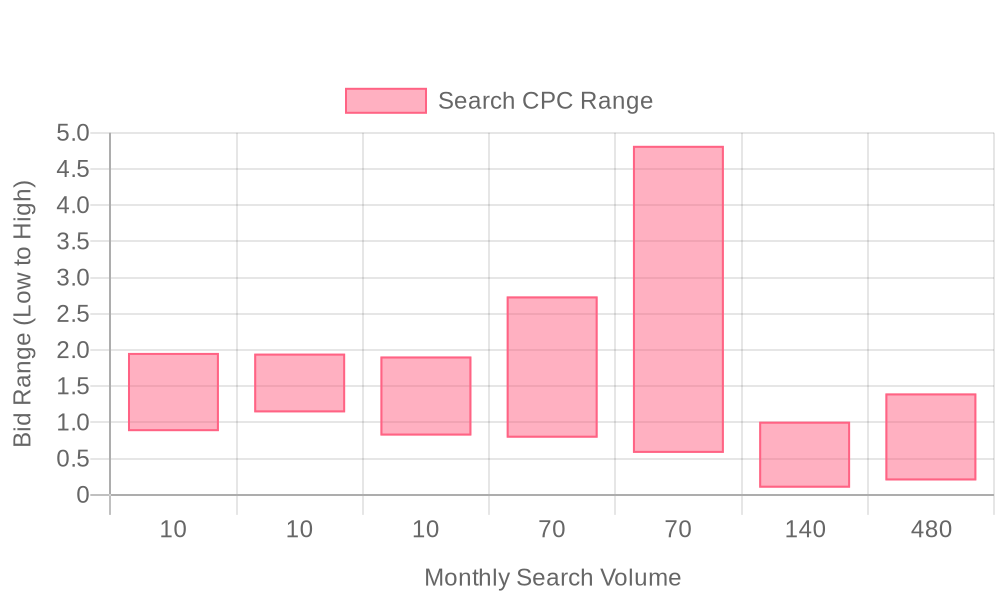
| Industry | Keyword | Monthly Search Volume | Competition Level | Low Bid | High Bid |
| Home Party Planning | home party organisers | 10 | MEDIUM | 0.88 | 1.96 |
| Home Party Planning | home birthday party organisers | 10 | HIGH | 1.14 | 1.95 |
| Home Party Planning | party planner for home party | 10 | LOW | 0.82 | 1.91 |
| Home Party Planning | party planners in my area | 70 | LOW | 0.79 | 2.74 |
| Home Party Planning | house party planner | 70 | LOW | 0.58 | 4.82 |
| Home Party Planning | planning a graduation party at home | 140 | HIGH | 0.1 | 1.01 |
| Home Party Planning | at home birthday ideas | 480 | MEDIUM | 0.2 | 1.4 |
Identifying and targeting high-intent search queries with Google Ads for home party planning and event services is vital for maximizing impact. Revenue teams that focus on terms reflecting immediate purchase or booking intent consistently capture leads farther down the funnel, driving higher conversion rates and more efficient campaign spend. For additional tactics on optimizing campaigns, explore our collection of actionable playbooks.
To deepen campaign performance, incorporate modifiers such as "near me," "book now," and "local" to quickly align with urgent, location-based searches. These precise modifiers help platforms deliver your ads to prospects ready to take action, ensuring ad impressions convert into quality inquiries. By leveraging real-time intent data, marketing teams can prioritize spend on segments that signal active interest, resulting in more efficient budget allocation and higher ROI.
Constructing robust negative keyword lists is equally important. Excluding irrelevant or low-value queries prevents wasted clicks and keeps campaign performance focused. When negative keywords are managed dynamically, revenue teams can continuously refine targeting as search trends evolve and new irrelevant queries emerge. This approach ensures that only qualified traffic reaches your landing pages, reducing acquisition costs and boosting lead quality.
Unified go-to-market platforms enhance this process by integrating CRM and site engagement data into keyword strategies. Marketers can align keyword targeting with real customer behaviors and offline touchpoints, further sharpening campaign relevance and ensuring every ad dollar supports pipeline growth. For modern B2B teams, synchronizing keyword lists with enriched audience data leads to campaigns that are both specific and adaptable, powering a cycle of ongoing optimization. To see how this works in practice, get started for free with Sona.
Step-by-Step Campaign Execution Framework
Step 1: Build Targeted Keyword Lists
Precision in keyword selection and matching sets the stage for every high-performing campaign in the home party planning market. By segmenting keywords by type and geographic relevance, marketers ensure ads reach only the most qualified local searchers. Prioritizing long-tail keywords, such as "kids birthday party planner in Austin" or "corporate home event specialist," helps capture niche and under-served searches with stronger purchase intent.
Sophisticated platforms now empower marketers to move beyond basic keyword targeting. By unifying CRM and behavioral data, professionals can pinpoint which searchers represent real businesses or high-value households, not just anonymous clicks. As prospects interact with landing pages, real-time audience updates ensure spend shifts toward those demonstrating in-market intent. This dynamic approach supports both local event planning advertising and delivers efficient and data-driven results.
The upgrade most home party planning advertisers miss is going beyond raw keyword volume to layer in intent and identity signals. By connecting website-visitor data and CRM records with Sona Marketing Measurement, you can see which specific search terms bring in the accounts and customers that actually convert, and weight your keyword and bidding strategy toward those rather than the terms with the highest search volume alone.
Step 2: Develop Compelling Ad Copy
Every ad impression is an opportunity to address the unique challenges faced by event hosts. Effective ad copy for home party planning combines clear value propositions with empathy for customer pain points, such as last-minute bookings, budget constraints, or the desire for memorable experiences. Incorporating solution-focused language builds trust instantly and drives higher quality click-throughs.
Ad assets further expand campaign visibility by adding direct links, call buttons, or service highlights beneath core ads. Using integrated data sources, marketers can dynamically tailor ad copy and assets based on the user's stage in the funnel or recent interactions. CRM and ad platform connectivity allow for seamless updates to messaging, ensuring relevance and boosting conversion, key for both event planning and PPC for home party businesses.
Step 3: Design Effective Landing Pages
A landing page must echo the promise of the ad that led a visitor there. High-converting pages tightly align headlines and offers with the keywords and messaging from each campaign. Including direct calls-to-action, such as "Book Your Free Consultation" or "Reserve Your Date Now," makes the next step explicit. Trust elements, like testimonials, event photos, and industry certifications, help reduce friction and build confidence.
Marketers can now close the loop by tracking which visitors engage, convert, or fall off. Advanced identification tools reveal which companies or high-value leads are interacting with specific offers, allowing for instant personalization of landing page content or follow-up outreach. This cross-channel insight is critical for optimizing Google Ads campaign setup for events and online marketing for party rentals.
Step 4: Implement Data-Driven Optimizations
Successful home party planning campaigns rely on continuous, granular optimization. Marketers analyze both micro conversions, such as brochure downloads or RSVP form starts, and macro conversions like confirmed bookings, to capture the complete customer journey. Using these insights, budget and bids can be refined in real time to prioritize the highest-converting audiences.
Intelligent bidding strategies, powered by unified go-to-market data, help maximize ROI by adjusting spend toward segments showing the strongest intent. Platforms with advanced attribution unify online and offline conversion data, providing a true measure of impact across every channel. Automated audience syncing ensures that as leads mature or new contacts are identified, targeting updates instantly in Google Ads and connected CRMs, fueling ongoing Google Ads optimization for event planners. Get started for free with Sona.
Sona Marketing Measurement closes the gap between clicks and revenue. It captures ad clicks with first-party measurement, ties that click through UTM capture and ad-platform APIs to the actual record in your CRM, and reports ROAS by keyword and campaign instead of by last-click form fill. Feeding that revenue signal back into Smart Bidding and Performance Max compounds over time: the algorithms optimize toward booked home party planning revenue, not cheap leads.
Tips on Expanding Your Home Party Planning Presence

A modern home party planning business thrives by connecting digital strategy with personal touches. Expanding your presence means blending data-driven marketing with authentic partnerships, resulting in higher engagement and more bookings.
- Cross-promotions and retargeting: Collaborate with complementary brands on social media to expand reach, then use retargeting ads to re-engage visitors who have shown interest but have not yet booked. With precise audience intelligence from unified go-to-market platforms, planners can identify which website visitors are most likely to convert and prioritize ad spend accordingly.
- CRM-driven upselling: Leverage CRM data to tailor follow-up offers, such as premium decor packages or last-minute add-ons, based on customer history and event type. When CRM and ad platforms sync in real time, planners can automatically update Google Ads audiences as leads move through the funnel, ensuring personalized offers reach the right prospects at the optimal moment. For a deeper dive into optimizing your ad targeting, explore how Google Ads works.
- Local business alliances: Build relationships with florists, caterers, entertainers, and rental companies to co-market services, offering bundled promotions that appeal to broader audiences. These alliances extend your brand's reach and establish a holistic support network, making your business the preferred choice for comprehensive home party solutions.
- Content refinement through search insights: Use keyword trends and search analytics to identify the topics and formats that resonate most with your audience. Track campaign performance closely and adjust messaging to address shifting customer intent, ensuring your digital marketing for home parties remains relevant and effective. Granular attribution capabilities help you see which channels drive bookings, enabling precise budget allocation and continuous improvement.
By integrating these approaches, home party planners foster stronger brand visibility, deeper customer loyalty, and a more predictable pipeline of new business. To streamline your digital marketing and audience targeting, get started for free with Sona.
Beyond Google Ads: Winning the AI Answers Home Party Planning Buyers Now Trust
Paid search captures demand at the moment someone types a query. But a fast-growing share of home party planning buyers no longer start at Google at all, they ask ChatGPT, Gemini, or Perplexity before they ever run a search, and Google's own AI Overviews increasingly summarize an answer above the traditional results. If your business isn't referenced in those AI answers, you're invisible at the exact moment buyers build their shortlist.
Sona AI Visibility shows where your business shows up across ChatGPT, Gemini, Perplexity, Google AI Overviews, and 10+ engines, and, much like a keyword report, which prompts actually send you buyers, so you can prioritize the ones that convert. Run the two together and you cover the entire buyer path: get cited where buyers research (AI Visibility), then prove which of that demand turns into booked revenue (Marketing Measurement).
Helpful resources
Conclusion
Google Ads gives home party planners something word of mouth can't: the ability to show up precisely when someone is searching for a birthday party planner, a baby shower stylist, or a corporate event host. Targeting, ad copy, and budget discipline determine whether that moment turns into a booking or a bounce.
The planners who win the next few booking seasons will be the ones who pair Google Ads with company-level identification and first-party measurement, so every campaign gets sharper about which searches actually turn into signed contracts. Start for free to see how Sona supports that shift.
FAQ
How can I set up a successful Google Ads campaign for my home party planning business?
To set up a successful Google Ads campaign, use Google Ads as the backbone for precise audience targeting, leverage advanced targeting and real-time data to refine outreach, and ensure a seamless transition between ads and landing pages for higher engagement.
What are the best keywords for Google Ads in the home party planning industry?
Focus on long-tail keywords and event-specific phrases like 'kids birthday party planner in Austin' or 'corporate home event specialist' to capture niche searches with stronger purchase intent.
How can I target the right audience for my home party planning services using Google Ads?
Use data-driven audience segmentation, integrate real-time intent signals, and leverage identification tools to capture and target high-value prospects effectively.
What is the average cost for Google Ads in the home party planning sector?
The article does not specify the average cost for Google Ads in the home party planning sector.
How can I track and measure the success of my Google Ads campaign for home party planning?
Implement advanced conversion tracking, including both online and offline attribution, to gain clear insights into ROI and track which touchpoints drive results.
What are some creative ad examples for home party planning businesses on Google Ads?
Creative ad examples include video ads showcasing unique event concepts and display ads maintaining brand presence across digital spaces frequented by event-minded consumers.
How can I optimize my Google Ads for better visibility and engagement in home party planning?
Continuously optimize campaigns by analyzing performance data, adjusting bids, creative, and audience segments, and using data-driven insights to refine strategies.
Are there any specific Google Ads features that are particularly useful for home party planning businesses?
Features like audience segmentation, dynamic audience lists, and real-time intent data are useful for targeting and engaging high-value prospects effectively.
What is the best strategy for remarketing to past clients in home party planning using Google Ads?
Use remarketing campaigns to re-engage individuals who have interacted with your website or ads but have not booked, ensuring timely and relevant messaging through dynamic audience updates.
How can I integrate Google Ads with my existing home party planning website and social media marketing?
Integrate Google Ads with your website by ensuring seamless transitions between ads and landing pages, and sync CRM data for cohesive audience targeting across platforms.







