


A ceiling fan that starts grinding at 11 p.m. or a warehouse exhaust system that dies during a heat wave doesn't leave much room for patience, and that urgency is exactly what makes Google Ads valuable for fan repair businesses. Search ads let you meet homeowners and facilities managers at the moment they're typing "fan repair near me," while other channels build the awareness that gets you on the shortlist earlier. Used well, Google Ads targets with precision, measures ROI down to the booked job, and reinforces the rest of your marketing rather than working in isolation. This guide walks through integrating Google Ads into a fan repair business's broader marketing strategy.
How to Generate Fan Repair Services Leads with Google Ads: A Step-by-Step Guide

Fan repair businesses can accelerate lead generation with a data-driven paid search strategy built for precision and speed. Capturing high-intent opportunities starts with precise audience intelligence and the ability to adjust campaigns as demand shifts, whether that's a summer spike in AC-adjacent fan failures or a facilities manager suddenly needing a same-week commercial repair.
Consistent results come from unified insight across every touchpoint, from first click to closed job. Connecting campaign data, audience intelligence, and attribution turns separate channels into one system, where each reinforces the next and lead quality holds steady over time. See more on building that kind of connected marketing strategy on our blog.
- A data-driven approach to paid search within your broader marketing mix: Fan repair is an urgent, largely reactive market, most customers start looking only once something has already failed, so the window to win them is short. Paid search, fed by connected data and real-time signals, lets you catch that demand right as it peaks, so your business is visible when buyers are ready to call. Tying campaign execution to broader marketing goals also means budget flows to the keywords and channels producing the highest-value leads, not just the most clicks. For a detailed walkthrough of campaign setup, see this step-by-step Google Ads guide for HVAC.
- Keyword and audience targeting strategies specific to fan repair buyers: Effective PPC for fan repair starts with understanding not just what prospects search but why and when. Pairing local service ads with symptom-based and urgency-driven terms, "fan repair near me" alongside "emergency ceiling fan fix", puts ads in front of people most likely to convert. Sona surfaces intent signals that let marketers prioritize high-propensity accounts and shift budget as in-market behavior changes, lowering acquisition costs and improving lead quality. With enriched audience profiles synced automatically between ad platforms and CRM, sales teams get prospect data the moment it matters.
- Landing page and creative alignment techniques for maximum conversion: The strongest fan repair campaigns send each ad to a landing page built for that visitor's intent, with a clear call to action and visible trust signals like licensing or reviews. Matching message across keyword, ad, and landing page lifts relevance and conversion rates alike. For inspiration, review these high-converting landing page examples. Sona's Identity Resolution tracks on-page behavior and identifies visiting companies, giving marketers a clear view of which campaigns produce real opportunities and which need work.
- Performance optimization tactics to continuously improve ROI: Advanced conversion tracking and attribution provide visibility into both online and offline leads, allowing marketers to optimize bids, creative, and audience segments based on real revenue, not just clicks. Ongoing analysis of search terms, negative keywords, and conversion paths informs continuous campaign refinement, while automated audience updates keep targeting fresh as prospects move through the buying cycle.
- Cross-channel integration methods to strengthen your entire marketing ecosystem: Google Ads for fan repair services works best when it's wired into the rest of your marketing, not run alongside it. Connecting campaign data with CRM and sales systems creates a real-time feedback loop, so teams can spot high-value accounts, personalize outreach, and keep nurturing leads well past the first click. That's how every dollar spent ends up tied to measurable growth in Google Ads ROI, not just impressions.
Why Does Google Ads Matter for Fan Repair Services?
Fan repair is a market where timing and relevance decide who wins the job. A broken fan rarely waits: homeowners search the moment a bedroom ceiling fan starts wobbling, and facilities managers move fast when an exhaust system failure threatens code compliance or shuts down part of a building. Showing up in that narrow window, especially during heat waves or peak summer months when call volume spikes, turns a moment of frustration into revenue. For a closer look at setting up and optimizing campaigns for home services, see this guide on HVAC Google Ads.
Most fan repair prospects don't convert on their first visit; they compare a few providers, check reviews, and come back later. Sona's Identity Resolution matches anonymous site visitors to the companies and households behind them, surfacing demand that would otherwise stay invisible and letting marketers direct spend toward the traffic showing real commercial intent. That kind of targeting cuts wasted budget and improves the odds of landing higher-margin work, smart home fan integrations, or multi-unit commercial contracts, from accounts not yet in your CRM.
Fan repair demand spikes with the weather, a heat wave or a sudden cold snap can double call volume in a matter of days, so speed to lead matters more than in steadier categories. Google Ads lets you deploy campaigns instantly in response to those triggers, while intent-based audience segments move qualified leads through the funnel faster. Pairing closed-loop measurement with CRM sync connects clicks to signed contracts, sharpens budget decisions, and keeps campaigns improving over time, the kind of attribution that's essential for maximizing Google Ads ROI in a crowded service market.
Common Types of Google Ads Campaigns for Fan Repair Services
- Search Campaigns: Search campaigns capture demand from homeowners and facilities managers searching for urgent solutions such as “emergency ceiling fan repair” or “fan motor replacement near me.” This campaign type is critical for intercepting high-intent prospects at the exact moment they need help. When integrated with platforms that unify web visitor and CRM data, marketers can identify which companies are engaging with ads and refine targeting for maximum lead quality. For a deep dive into campaign setup and optimization, review this HVAC Google Ads guide.
- Display Ads: Display ads ensure fan repair brands remain visible across relevant industry websites, forums, and blogs. This consistent presence nurtures awareness with both residential and commercial audiences considering future projects or scheduled maintenance. By leveraging real-time audience data, teams can shift budget to accounts that demonstrate surging interest in fan repair services, resulting in more efficient spend and improved engagement.
- Video Ads: Video ad formats allow businesses to visually explain complex services, such as diagnosing noisy fans or demonstrating rapid on-site repairs. These ads build trust and clarify the value proposition for clients who may be comparing multiple providers. Advanced audience segmentation enables delivery of specific video messages to leads who have shown intent but not yet converted, personalizing outreach at every funnel stage.
- Remarketing: Remarketing campaigns re-engage visitors who previously explored service pages, requested a quote, or abandoned booking forms. This tactic keeps fan repair providers top-of-mind until a decision is made, often accelerating conversion timelines. Dynamic audience updates ensure remarketing ads reflect each lead’s most recent interactions, prioritizing those who have progressed toward purchase.
- Disconnected Intent Signals: Addressing disconnected intent signals is vital for aligning ad content with the current needs of each prospect. Automatically syncing the latest web activity, CRM updates, and offline actions into dynamic Google Ads audiences ensures that every impression matches the buyer’s journey stage. This alignment reduces wasted ad spend and increases conversion rates by delivering the right message to the right user at the right time.
- Assets: Ad assets, including call, location, and review extensions, add trust signals directly to search results. They back up claims made elsewhere in your marketing and help overcome buyer hesitation. Paired with unified intent data, marketers can vary which assets appear based on user behavior, device, or location, sharpening credibility and lifting engagement for fan repair advertising.
Where to Find Growth Opportunities?
Fan repair businesses can unlock new growth by expanding beyond traditional marketing channels and focusing on high-value, specialty segments. Targeting precise vertical keywords like “industrial exhaust fan repair” or “ceiling fan installation for offices” captures niche demand that generic campaigns miss, driving better-qualified leads and reducing wasted spend. For step-by-step strategies on setting up and optimizing Google Ads in this space, see this guide for HVAC Google Ads campaigns.
Competitor gap analysis using auction insights reveals untapped segments where your ads can outperform others, such as specialized repair for commercial or multi-unit properties. Monitoring these insights in real time allows dynamic reallocation of budget to outperform rivals where your advantage is clear. For more ideas on uncovering niche opportunities, explore our essential guide to account-based marketing.
Industry-specific placements on HVAC trade forums, home improvement portals, and facilities management sites put your brand in front of decision-makers when they’re most receptive. Integrating content retargeting, such as follow-ups with visitors who read your whitepapers or watched fan repair how-to videos, keeps your brand top-of-mind throughout the buying journey. By identifying visitors and tracking in-market behaviors, you can update audiences dynamically and push tailored offers to leads before competitors reach them.
Advanced growth strategies also draw on unified data from website activity, CRM, and ad platforms to build high-converting audiences for Google Ads targeting. Syncing audience lists and lead data keeps every campaign focused on the right decision-makers, while precise attribution ties spend to pipeline impact rather than clicks or impressions. This is how fan repair businesses keep finding, and capitalizing on, new growth with ROI they can actually measure.
How to Apply Audience Segmentation for Fan Repair Services

B2B revenue teams in the fan repair sector see measurable improvements in lead quality when campaigns are structured around granular audience segments. Modern segmentation enables marketers to target both residential and commercial clients with tailored messaging, driving higher relevance and conversion rates throughout the sales funnel. Discover additional segmentation strategies in our actionable playbooks to enhance your approach.
- Define Segments: The foundation of effective segmentation begins by distinguishing residential customers from commercial clients. Residential customers typically seek quick solutions for malfunctioning ceiling fans or upgrades to smart home-compatible systems. In contrast, commercial clients prioritize preventative maintenance, compliance, and large-scale solutions for multi-unit properties or industrial environments. By mapping these distinctions, marketers can allocate spend and creative resources to the most profitable segments, ensuring each receives messaging aligned with their needs and urgency. Explore this detailed guide on HVAC Google Ads for tactics that can help you adapt messaging by customer type.
- Overlay Intent Signals: Once segments are established, layer in intent signals based on behavior and search patterns. Searches for common mechanical issues or worn-part replacement signal a need for quick-turn service. Searches mentioning "energy-efficient upgrades" or "smart home fan integration" point to interest in value-added work instead. Sona's Identity Resolution helps teams identify which accounts are actively researching fan repair or upgrades, so budget can shift toward high-intent, in-market prospects in real time. That precision keeps spend pointed at buyers who are actually ready to act.
- Create Ad Groups by Segment: Translating audience insights into account structure, create distinct ad groups for each segment and intent profile. For example, one ad group might target facilities managers searching for scheduled maintenance contracts, while another focuses on homeowners needing emergency repairs. Each group should deploy customized copy and landing pages that address segment-specific pain points and decision criteria. Using real-time enrichment and CRM integrations, teams can synchronize updated audience lists into Google Ads, ensuring the latest high-value targets receive the most relevant creative and offers. As customers move through the journey, from initial research to booking, audiences update dynamically, keeping campaigns responsive and maximizing conversion potential at every stage.
This is also where measurement changes the economics. With Sona Marketing Measurement you can identify the companies and buyers behind your ad clicks, not just anonymous sessions, and segment audiences by who actually becomes a customer. That lets you build bid adjustments and audience signals around the segments that convert and de-prioritize the ones that don't, so you feed Google's algorithms "this click became a paying fan repair services customer" instead of just "someone filled out a form."
Keyword Strategy & Sample Target Terms
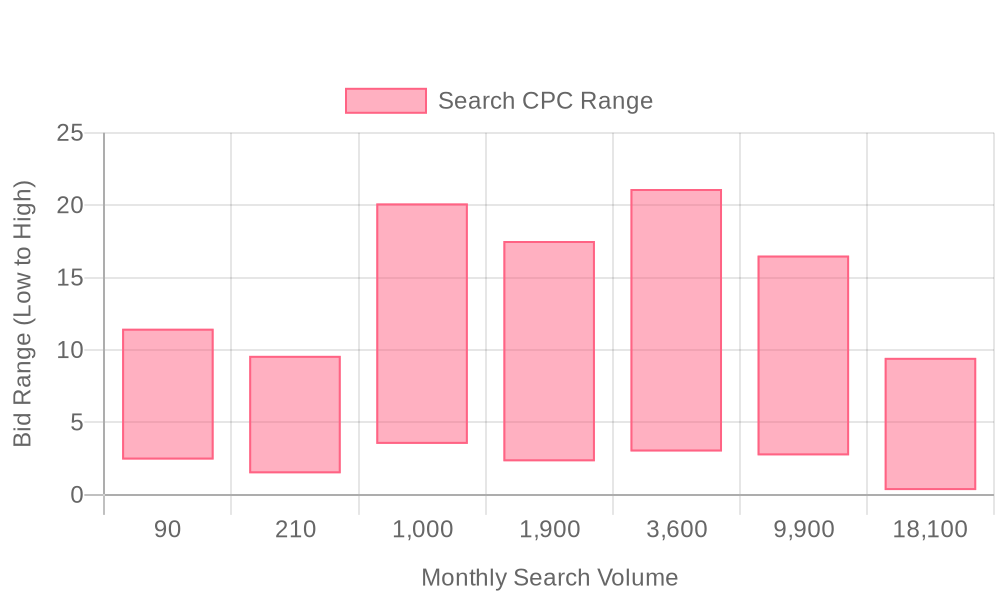
| Industry | Keyword | Monthly Search Volume | Competition Level | Low Bid | High Bid |
| Fan Repair Services | fan repair services | 90 | LOW | 2.44 | 11.47 |
| Fan Repair Services | casablanca fan repair near me | 210 | HIGH | 1.49 | 9.6 |
| Fan Repair Services | fan repair near me | 1000 | MEDIUM | 3.52 | 20.12 |
| Fan Repair Services | attic fan replacement | 1900 | HIGH | 2.32 | 17.53 |
| Fan Repair Services | ceiling fan repair near me | 3600 | MEDIUM | 3 | 21.12 |
| Fan Repair Services | ceiling fan repair | 9900 | LOW | 2.73 | 16.52 |
| Fan Repair Services | bathroom fan replacement | 18100 | HIGH | 0.33 | 9.46 |
A comprehensive keyword strategy for fan repair services drives measurable results by targeting high-intent, high-volume searches that signal immediate need. This approach enables marketing and revenue teams to direct budgets toward prospects who are most likely to require urgent solutions, maximizing both visibility and conversion rates. For actionable tactics, explore this guide to Google Ads for fan repair and review additional insights from our marketing blog.
- High-Intent Service Keywords: Prioritize terms such as "emergency fan repair," "ceiling fan repair near me," and "industrial fan motor replacement." These keywords capture users who are ready to take action, helping move leads through the funnel with minimal friction.
- Service-Specific Variations: Target phrases like "PPC for fan repair," "fan repair marketing," and "fan repair service promotion" to reach business owners and property managers comparing providers or seeking ongoing maintenance contracts.
- ROI and Performance Keywords: Incorporate terms like "Google Ads ROI," "fan repair business growth," and "Google Ads strategies" to attract decision-makers focused on tracking and improving campaign performance.
- Negative Keywords: Exclude terms such as "DIY fan repair," "fan technician salary," or "how to fix a fan" to filter out unqualified and non-commercial traffic, ensuring budget is reserved for genuine leads.
Capturing offline conversions from phone inquiries or walk-in appointments is essential for a complete ROI picture. Integrating advanced attribution ensures that every touchpoint, online or offline, is accounted for, empowering teams to allocate spend based on true performance. With dynamically updating audiences, marketers can pinpoint in-market visitors as intent signals change, ensuring retargeting and nurturing efforts are always aligned with the highest-converting segments.
Leveraging real-time enrichment and CRM sync, enriched audience segments can be automatically pushed into Google Ads, Salesforce, or HubSpot, bridging the gap between ad engagement and revenue operations. This unified approach to Google Ads for Fan Repair Services enables more accurate lead tracking, smarter budget allocation, and sustained business growth. To see these strategies in action, get started for free with Sona.
Step-by-Step Campaign Execution Framework
Step 1: Build Targeted Keyword Lists
Keyword strategy for fan repair services is the blueprint for efficient lead acquisition and campaign ROI. Success requires grouping keywords by service type such as "ceiling fan repair," "industrial fan maintenance," and "fan motor replacement," then applying location-based modifiers like city names or "near me" to capture local intent. Integrating negative keywords like "DIY," "fan reviews," or "how to install" ensures budgets are protected from low-value clicks and irrelevant traffic. For a detailed guide on optimizing Google Ads campaigns for HVAC and fan services, review this HVAC Google Ads campaign guide.
With Sona's Identity Resolution, revenue teams can segment incoming traffic by both company and user intent. That lets marketers adjust keyword clusters against actual business demand, not just anonymous search volume. As high-value buyers move through research, precise audience intelligence keeps paid search targeting locked on the most likely buyers, so every click carries real conversion potential.
The upgrade most fan repair services advertisers miss is going beyond raw keyword volume to layer in intent and identity signals. By connecting website-visitor data and CRM records with Sona Marketing Measurement, you can see which specific search terms bring in the accounts and customers that actually convert, and weight your keyword and bidding strategy toward those rather than the terms with the highest search volume alone.
Step 2: Develop Compelling Ad Copy
Ad copy for fan repair must address acute pain points such as equipment downtime, discomfort, and the urgency of restoring airflow in residential or commercial spaces. Messaging that highlights technician certifications, rapid response guarantees, and special pricing for emergency repairs drives engagement. Incorporating strong calls to action like “Book 24/7 Fan Service” or “Certified Local Technicians Ready” transforms passive browsers into active leads. For inspiration on ad copy tailored to service professionals, explore effective Google Ads strategies for electricians.
By leveraging real-time intent signals, Sona helps marketers identify when a prospect exhibits urgent need or high purchase readiness. Ads can then be tailored at scale to emphasize immediate availability or exclusive offers, responding directly to the user’s context. This level of personalization results in higher click-through rates, lower wasted spend, and stronger brand positioning in the competitive fan repair market.
Step 3: Design Effective Landing Pages
Landing page design for fan repair advertising hinges on absolute alignment between keyword, ad message, and on-page content. A search for “emergency fan repair near me” must land users on a page promising same-day service, with visible proof of technician credentials and real customer testimonials. The page should feature a single, prominent call to action, such as instant booking or direct call, to eliminate friction and capture the lead at their moment of need. See high-converting landing page examples for inspiration on layout, copy, and trust signals.
Sona’s destinations feature ensures landing page experiences dynamically reflect the latest campaign data and segment-specific messaging. As new audiences enter the funnel or move closer to purchase, landing pages can be programmatically updated with relevant offers, trust signals, or scheduling options, minimizing bounce and maximizing conversion rates across fan repair marketing.
Step 4: Implement Data-Driven Optimizations
Optimization in Google Ads targeting for fan repair services demands comprehensive measurement and rapid feedback loops. Every call, form submission, and booked appointment should be tracked and attributed to the correct keyword and ad. Smart bidding algorithms adjust spend to prioritize top-performing segments, while importing offline conversions, such as closed service tickets, ensures true ROI visibility. For an in-depth look at PPC best practices for home services, visit PPC for home service businesses.
With advanced attribution and CRM sync, Sona empowers B2B revenue teams to connect Google Ads campaign data to downstream outcomes like completed repairs or recurring maintenance contracts. This holistic approach enables marketers to double down on the campaigns and audiences driving the highest-value business, eliminate PPC mistakes, and confidently scale fan repair business growth with evidence-based decision-making.
Sona Marketing Measurement closes the gap between clicks and revenue. It captures ad clicks with first-party tracking, no reliance on third-party cookies, then ties each click through UTM capture and ad-platform APIs to the matching record in your CRM, and reports ROAS by keyword and campaign instead of by last-click form fill. Feeding that revenue signal back into Smart Bidding and Performance Max compounds over time: the algorithms optimize toward booked fan repair services revenue, not cheap leads.
Tips on Expanding Your Fan Repair Services Presence
Fan repair companies can drive measurable growth by harnessing data-driven marketing and audience insights to expand their reach. Precision in promotional tactics and a unified approach to audience engagement help fan repair brands consistently capture new business while maximizing customer lifetime value.
- Cross-promote educational assets in retargeting: Repurpose content such as troubleshooting guides, seasonal maintenance checklists, and “how-to” videos as part of your retargeting strategy. By presenting these assets to previous website visitors or high-value leads, you build trust and nurture prospects further down the funnel. Using real-time visitor identification and behavioral analytics, marketers can pinpoint which resources resonate with each segment, driving higher engagement and return visits.
- Upsell related services using CRM data: Analyze customer CRM histories to uncover upsell opportunities, such as extended service plans, advanced diagnostics, or installation of energy-efficient fan models. Syncing enriched CRM data with ad platforms enables you to trigger timely, personalized offers to existing customers across Google Ads and other digital channels. With dynamic audience updating, you can ensure that upsell messages only reach those most likely to convert, based on real purchase intent and service histories.
- Localize by state or metro areas to grow share-of-voice: Expand your market presence by tailoring campaigns to specific states, cities, or even neighborhoods. Use search query data and regional performance analytics to inform creative, offers, and landing page content for each locality. Sophisticated location-based targeting and audience enrichment allow you to allocate budget where demand is highest, capturing market share from less agile competitors and driving down acquisition costs.
- Use search query data to identify new content topics: Regularly mine your PPC and organic search query reports for emerging keywords, service requests, or frequently asked questions. These insights reveal not only new advertising opportunities but also topics for blogs and FAQ pages that address customer pain points. Feeding this intelligence back into your content and advertising strategy keeps your brand ahead of shifting customer needs and positions your business as the go-to authority for fan repair solutions.
Advanced analytics, real-time audience segmentation, and unified CRM-ad platform workflows let fan repair providers scale marketing without scaling guesswork. Each tactic reinforces the others, building a system that consistently attracts, converts, and retains high-value customers even as the market gets more crowded.
Beyond Google Ads: Winning the AI Answers Fan Repair Services Buyers Now Trust
Paid search captures demand at the moment someone types a query. But a fast-growing share of fan repair services buyers no longer start at Google at all, they ask ChatGPT, Gemini, or Perplexity before they ever run a search, and Google's own AI Overviews increasingly summarize an answer above the traditional results. If your business isn't referenced in those AI answers, you're invisible at the exact moment buyers build their shortlist.
Sona AI Visibility shows where your business shows up across ChatGPT, Gemini, Perplexity, Google AI Overviews, and 10+ engines, and, much like a keyword report, which prompts actually send you buyers, so you can prioritize the ones that convert. Run the two together and you cover the entire buyer path: get cited where buyers research (AI Visibility), then prove which of that demand turns into booked revenue (Marketing Measurement).
Helpful resources
Conclusion
Google Ads gives fan repair businesses a direct line to customers at the exact moment they need help, provided the keywords, ad copy, and campaign structure are built around how those customers actually search and decide.
The businesses that will pull ahead are the ones treating paid search, identity resolution, and AI visibility as one connected system rather than separate line items, so a click today keeps informing better targeting six months from now. That compounding advantage, not any single campaign, is what turns steady ad spend into a fan repair brand that shows up everywhere a buyer looks, including inside the AI tools now shaping their shortlist.
To see how Sona's platform can sharpen your fan repair marketing, start for free and explore the data behind your next campaign.
FAQ
What are the best practices for Google Ads in fan repair services?
Best practices include using a data-driven paid search strategy, targeting high-intent keywords like 'emergency fan repair,' integrating campaign data with CRM systems, and optimizing campaigns based on real-time audience behavior and conversion tracking.
How can I optimize my Google Ads for fan repair?
Optimize your Google Ads by aligning ad copy with landing page content, leveraging audience segmentation, using intent signals to prioritize high-propensity accounts, and continuously refining campaigns based on conversion data and market shifts.
What budget should I allocate for Google Ads in fan repair?
Allocate your budget to channels and keywords that drive the highest-value leads, minimizing wasted spend and maximizing ROI by using precise audience targeting and real-time market insights.
What keywords should I target for fan repair services?
Target high-intent service keywords like 'emergency fan repair,' 'ceiling fan repair near me,' and 'industrial fan motor replacement' to capture users ready to take action.
How do I measure the success of my Google Ads for fan repair?
Measure success by tracking conversions, integrating conversion data with CRM systems, analyzing search terms and negative keywords, and using advanced attribution to link ad performance to actual revenue.







