


Commercial landscape contractors lose winnable bids not to better competitors but to a tracking gap: a facility director researches vendors for weeks, compares certifications and service areas, then calls the company that happened to be top of mind, never touching a contact form until she's ready to sign. Most of that research is invisible to a CRM. Google Ads closes this gap by catching buyers at the exact moment they search for grounds maintenance, snow removal, or irrigation services, turning a mid-funnel research phase into a trackable, actionable pipeline stage that connects your broader marketing to an actual sales conversation.
How to Generate Commercial Landscape Contractor Leads with Google Ads: A Step-by-Step Guide

Commercial landscape contractors face high-stakes competition and longer sales cycles, making precise lead generation essential for accelerating revenue. The fastest-growing firms use Google Ads not just to boost visibility, but to capture and convert high-intent prospects before competitors do. For an industry-specific overview, see this guide to Google Ads for landscaping businesses.
In industries where delayed or manual follow-up cools off leads before sales can engage, it's crucial to adopt a data-driven approach to integrating Google Ads within your broader marketing mix. The most effective teams unify campaign data, site activity, and CRM engagement to ensure no opportunity slips through the cracks or goes cold in the hand-off between marketing and sales. Explore actionable tactics in this demand generation playbook collection.
Keyword and audience targeting strategies specific to commercial landscape contractors help focus spend on prospects already showing intent, rather than residential homeowners searching for lawn mowing. By layering job title, company size, and in-market signals, you can identify and prioritize accounts most likely to convert, such as facility managers issuing RFPs or property directors comparing multi-year maintenance contracts. When platforms surface real-time buyer intent, such as recent visits to your commercial services pages or downloads of RFP templates, budget and creative can shift instantly to those accounts, multiplying your chances of landing large contracts.
Align landing page and creative choices to convert serious buyers instead of wasting spend on low-value prospects. Custom-tailored landing experiences, informed by unified visitor and company data, let you surface the case studies, licensing details, and service regions that match each visitor's needs. This cuts friction and increases the odds that facility managers or property directors submit qualified inquiries rather than bouncing to a competitor.
Optimize performance continuously to improve ROI and address missed revenue opportunities. With advanced conversion tracking, you can measure not just online form fills but also offline sales outcomes and multi-touch attribution models. This gives revenue leaders a full view of which campaigns drive the most profitable commercial contracts, allowing for smarter budget allocation and rapid campaign iteration.
Strengthen your marketing ecosystem with cross-channel integration, ensuring consistent customer engagement. When enriched lead and account data flow seamlessly between your Google Ads, sales CRM, and marketing automation tools, every touchpoint is informed by up-to-date audience insights. This powers dynamic audience updates, real-time retargeting, and timely follow-ups, driving higher close rates and more predictable commercial landscaping business growth.
Why Google Ads Matter for Commercial Landscape Contractors

Commercial property managers rarely wait for a landscaper to find them; they search when a contract is expiring, a storm just hit, or a new campus is breaking ground. Google Ads gives commercial landscape contractors a direct line to that moment, letting them capture buyers already searching for grounds maintenance, snow removal, or irrigation work instead of hoping a referral eventually calls. For a practical overview of how landscaping businesses can use paid search, see this guide to Google Ads for landscaping businesses.
By leveraging Google Ads, contractors position their services in front of decision-makers at the precise moment new projects and contracts surface, whether for corporate campuses, shopping centers, or industrial complexes. This approach secures opportunities from clients not previously engaged with your brand, ensuring you intercept hot leads before they cool or are lost to competitors. The platform’s ability to deliver instant visibility in key metro markets or underserved zones is vital for contractors aiming to fill their pipeline quickly and maximize project win rates. Explore actionable strategies to optimize your campaigns in our collection of marketing playbooks.
Google Ads also enables commercial landscape businesses to prove campaign value through transparent attribution. Marketers can track exactly which keywords, ads, and channels drive qualified commercial inquiries, providing a clear link between digital investment and actual revenue. By integrating advanced data solutions, teams can identify which companies are visiting their site, monitor real-time intent signals, and dynamically adjust bids to focus budget on high-converting commercial accounts. This data-driven, accountable model turns marketing from a cost center into a predictable growth engine for commercial landscape firms. To see how you can start optimizing your lead generation, get started for free with Sona.
Common Types of Google Ads Campaigns for Commercial Landscape Contractors

- Search Campaigns: Commercial landscape contractors rely on search campaigns to address urgent, high-intent queries from property managers and operations directors seeking immediate solutions, from emergency snow removal to bid deadlines on a new maintenance contract. These campaigns use precise keyword targeting, often built around Responsive Search Ads, to maximize lead quality and conversion rates. By integrating Sona's Identity Resolution, revenue teams can move beyond generic traffic numbers, pinpointing exactly which companies are searching for services and shifting budgets to the most promising accounts.
- Display Ads: Staying visible throughout the lengthy B2B sales cycle is critical for commercial landscaping firms. Display ads accomplish this by maintaining presence on industry news sites, commercial real estate platforms, and trade publications frequented by decision-makers. When Sona Audiences are applied, these campaigns automatically update as prospects interact with your website, keeping follow-up messaging relevant as leads move deeper into the funnel.
- Video Ads: For complex or large-scale commercial landscaping services, video ads offer an immersive way to showcase project capabilities, safety protocols, and transformation stories. Property managers and facility directors gain a clearer understanding of your value proposition through compelling visuals, which speeds up trust-building. Video engagement data, when combined with Sona's Intent Signals, lets marketers prioritize follow-up with viewers showing the strongest buying intent, sharpening budget allocation.
- Remarketing: Commercial landscape contractors benefit from remarketing strategies that re-engage previous website visitors, especially those who interacted with high-value pages or started but did not complete a contact form. By delivering tailored ads based on specific content viewed or actions taken, remarketing nurtures prospects across lengthy evaluation cycles. With Sona Destinations, remarketing audiences can be enriched with offline signals, such as CRM pipeline stage or sales rep engagement, so ad messaging evolves in step with each account’s readiness to buy.
- Assets: Trust is a deciding factor in commercial contracts, and ad assets (formerly called extensions) strengthen the credibility of each campaign. Location assets confirm geographic coverage, callout assets highlight safety certifications and licensing, and structured snippets showcase industry awards or commercial client lists. When these assets are linked to Sona Buyer Journeys, advertisers can confidently display only the most relevant credentials, increasing both click-through rates and conversion probability among high-value accounts.
Ready to implement smarter Google Ads campaigns for your landscaping business? Get started for free with Sona.
Where to Find Growth Opportunities

Commercial landscape contractors looking to accelerate growth must expand their reach beyond traditional digital marketing channels. Tapping into new sources of high-value prospects means bridging the gap between anonymous website traffic and actionable lead intelligence, so engaged buyers, like a facility manager quietly comparing three vendors, don't slip through the cracks. Sona's Identity Resolution helps close that gap by identifying the companies behind that traffic.
Vertical keyword targeting for specialty services delivers precision in reaching facility managers, property management decision-makers, and procurement professionals. By focusing on phrases like "corporate grounds maintenance" or "commercial irrigation installation," contractors can ensure their Google Ads for Commercial Landscape Contractors budget is directed toward prospects with the intent and authority to purchase. When this targeting is paired with real-time audience insights, marketers gain the ability to recognize which companies and stakeholders are evaluating services, empowering revenue teams to prioritize outreach to in-market accounts.
Conducting a thorough competitor gap analysis allows commercial landscape contractors to uncover underserved segments within their region or vertical. By analyzing where competitors underperform, or fail to bid on certain keywords, contractors can strategically target overlooked commercial properties, retail chains, or healthcare campuses. This approach is further enhanced when dynamic audience insights reveal shifts in prospect behavior, allowing for rapid adjustment of campaigns to maintain a competitive edge and maximize PPC for landscape contractors returns.
Industry-specific trade forums and professional associations offer a direct route to niche audiences actively searching for commercial landscaping expertise. By placing content or sponsored posts within these environments, contractors can reach decision-makers outside the crowded auction of general search results. A unified data strategy ensures that all engagement signals, from forum activity to gated content downloads, are tracked and attributed, fueling more informed retargeting and nurturing strategies.
Utilizing content retargeting campaigns with whitepapers, case studies, or how-to videos increases brand awareness among high-value leads who have yet to convert. Contractors who synchronize enriched lead and account data back into their Google Ads and CRM platforms can trigger personalized follow-ups and nurture sequences, turning warm interest into sales opportunities. This closed-loop approach drives incremental landscaping lead generation and ensures every marketing dollar invested in Google Ads delivers measurable impact, supporting sustained business growth.
How to Apply Audience Segmentation for Commercial Landscape Contractors

Effective audience segmentation is the core of high-performing Google Ads campaigns for commercial landscape contractors. By structuring segments around nuanced business needs, contractors can prioritize ad spend for the most valuable opportunities and deliver messaging that resonates with decision-makers across a diverse client base. For a broader perspective on how landscaping businesses can leverage Google Ads to generate leads and grow their customer base, see this overview of Google Ads for landscaping.
Defining segments is the first step toward actionable targeting. For commercial landscaping, this means building distinct groups such as corporate campuses, municipal projects, retail centers, industrial parks, and healthcare facilities. Each segment has unique procurement cycles, compliance requirements, and service expectations. Corporate campuses often prioritize brand image and employee safety, while municipal projects focus on budget constraints and public accountability. This approach allows marketers to develop campaigns aligned with the daily realities of facility managers, procurement officers, and property owners, fostering greater engagement and trust. Explore more strategies for account-based marketing to enhance your segmentation efforts.
Overlaying intent signals sharpens segmentation, enabling landscape contractors to capture high-value leads at the right moment. For example, accounts that repeatedly search for “multi-year grounds maintenance contracts” or “emergency commercial snow removal” demonstrate clear intent for long-term or urgent services. Real-time behavior, such as downloading RFP templates or visiting case study pages, helps identify when a prospect is actively considering a vendor switch or planning an upgrade. Advanced platforms empower teams to detect these shifts in intent and automatically re-prioritize media budget toward accounts showing signs of immediate commercial need, maximizing both reach and relevance. Learn how intent signals can help you identify and prioritize your most engaged prospects.
Creating ad groups by segment ensures tailored creative addresses pain points and opportunities specific to each commercial cohort. For example, retail property managers may respond to messaging about minimizing slip-and-fall liability during winter storms, while healthcare facility leads value evidence of infection control and compliance. Customized ad copy, landing pages, and extensions reflect these nuances, resulting in higher click-through rates and improved lead quality. Dynamic audience management enables contractors to automatically update these groups as accounts progress from initial research to contract negotiation, preserving campaign accuracy and efficiency.
Validating conversion paths is essential to ensure high-value commercial opportunities are captured and properly tracked. Integrating Google Ads data with CRM systems allows contractors to attribute leads and revenue to the correct segment and campaign, providing visibility into which channels drive the most profitable commercial contracts. This unified view supports both online and offline attribution, so sales teams can follow up with qualified leads immediately while marketing optimizes spend based on true pipeline impact. Automated audience sync between platforms ensures that newly enriched contacts are added to the right ad groups and nurtured throughout the sales cycle, closing the loop between advertising and revenue generation.
This is also where measurement changes the economics. With Sona Marketing Measurement you can identify the companies behind your ad clicks, not just anonymous sessions, and segment audiences by who actually becomes a customer. That lets you build bid adjustments and audience signals around the segments that convert and de-prioritize the ones that don't, so you feed Google's algorithms "this click became a paying commercial landscape contractors customer" instead of just "someone filled out a form."
Keyword Strategy & Sample Target Terms
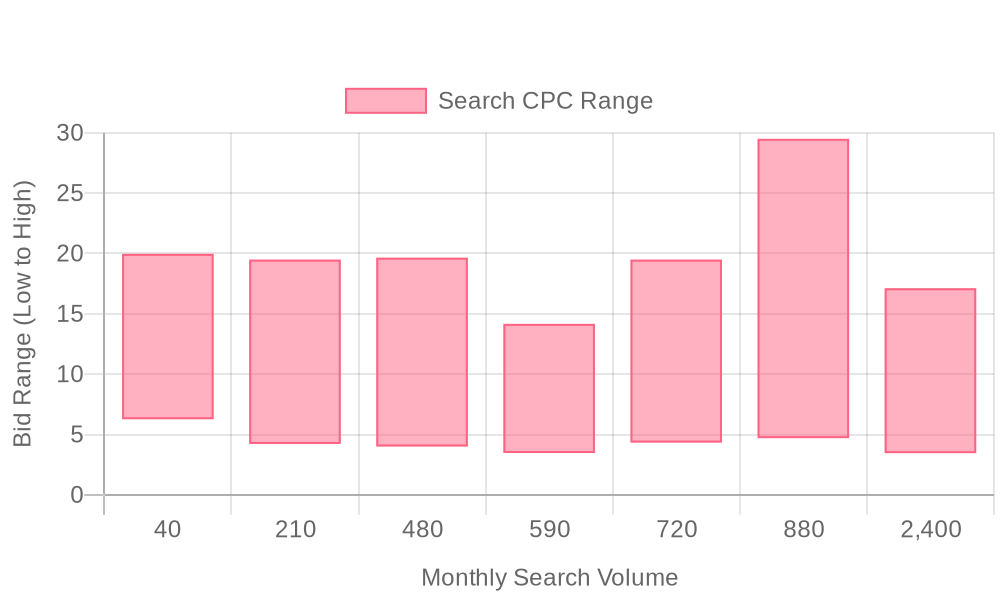
| Industry | Keyword | Monthly Search Volume | Competition Level | Low Bid | High Bid |
| Commercial Landscape Contractors | commercial lawn maintenance companies near me | 40 | LOW | 6.27 | 19.97 |
| Commercial Landscape Contractors | commercial landscape maintenance companies near me | 210 | LOW | 4.22 | 19.49 |
| Commercial Landscape Contractors | commercial landscapers | 480 | LOW | 4.01 | 19.65 |
| Commercial Landscape Contractors | commercial landscape contractors | 590 | LOW | 3.47 | 14.17 |
| Commercial Landscape Contractors | commercial landscaping companies near me | 720 | LOW | 4.34 | 19.49 |
| Commercial Landscape Contractors | commercial landscapers near me | 880 | LOW | 4.7 | 29.5 |
| Commercial Landscape Contractors | commercial landscape companies | 2400 | LOW | 3.46 | 17.12 |
Commercial landscape contractors face a unique challenge: attracting decision-makers who control significant budgets and require specialized services. Precision in keyword strategy ensures your campaigns consistently reach property managers, facility directors, and procurement leads seeking commercial solutions, not residential lawn care. For an overview of how landscaping businesses can utilize Google Ads to generate leads and grow their customer base, explore this guide to Google Ads for landscaping.
Custom segmentation starts with identifying high-intent phrases such as "commercial landscapers near me," "landscape contractors for office parks," or "corporate grounds maintenance services." These terms filter out unqualified residential traffic and zero in on prospects actively evaluating commercial providers. By aligning keyword selection with the specific needs of B2B buyers, you increase the likelihood of entering consideration sets for larger contracts. For more actionable advice, check out our collection of marketing playbooks.
Advanced platforms streamline this process by leveraging Sona's Identity Resolution, which shows which companies are engaging with your ads and landing pages. Marketers can pinpoint businesses showing real interest in commercial projects, move beyond anonymous clicks, and dynamically adjust keyword targets as new high-value accounts emerge. When these insights sync into your CRM or marketing automation, audience lists stay current, ensuring your campaigns continuously intercept the right buyers as they progress through the funnel.
Measurable ROI is built into this approach. With robust attribution from first click to closed contract, marketing leaders can tie each campaign or keyword directly to revenue outcomes. This visibility justifies ongoing investment and enables rapid reallocation of budget from underperforming terms to those consistently driving qualified leads. By integrating offline sales data, you can track which search phrases ultimately result in signed commercial contracts, sharpening your keyword strategy over time.
Channel synergy complements your keyword work by maintaining customer engagement across display, video, and paid social. Retargeting ensures prospects who visited your "commercial landscaping services" or "property manager resources" pages see tailored messaging as they research solutions, reinforcing your brand's presence throughout lengthy decision cycles. Cohesive, data-driven keyword and audience strategies help commercial landscape contractors dominate search results, capture premium leads, and accelerate revenue growth.
Step-by-Step Campaign Execution Framework
Step 1: Build Targeted Keyword Lists
Precision in keyword selection is vital for effective Google Ads for commercial landscape contractors. Service offerings must be paired with location-specific terms, using "near me" modifiers and commercial intent phrases. This approach aligns search intent with actual buyer journeys, especially as decision-makers often browse anonymously and require relevance to their specific needs. Incorporating long-tail and question-based keywords, such as "best commercial landscaping company for office parks" or "commercial snow removal contract near me," can capture leads further down the funnel. These keywords not only enhance visibility but also drive higher engagement by matching the nuanced requirements of corporate facility managers and property owners.
Aligning keyword strategy with holistic content plans further amplifies campaign results. When keyword research feeds into landing page and blog content, the synergy between paid and organic channels increases, creating an integrated pathway for prospects from search to conversion. Sona's Identity Resolution lets marketers see which companies and people are visiting your website, letting teams dynamically expand or refine keyword lists based on real-time engagement data. This adaptability ensures budgets are allocated to the most lucrative commercial landscaping opportunities, reducing wasted spend on low-intent clicks.
The upgrade most commercial landscape contractors advertisers miss is going beyond raw keyword volume to layer in intent and identity signals. By connecting website-visitor data and CRM records with Sona Marketing Measurement, you can see which specific search terms bring in the accounts and customers that actually convert, and weight your keyword and bidding strategy toward those rather than the terms with the highest search volume alone.
Step 2: Craft Persuasive Ad Copy
Ad copy for commercial landscaping campaigns must address the sophisticated needs of B2B buyers. Messaging should highlight differentiators such as scalable service contracts, safety certifications, or rapid-response capabilities that matter to commercial clients. Calls-to-action and offers, like “Request a free property assessment” or “Get a custom landscaping ROI report,” prompt immediate engagement, ensuring ads stand out among competitors. Integrating ad extensions, site links, call buttons, or case study highlights, further increases visibility and provides additional conversion touchpoints without cluttering the main message.
Consistency between ad copy and broader marketing themes builds trust and reassures buyers that their needs will be met at every stage. By leveraging real-time intent signals, marketers can adjust ad messaging to reflect the evolving interests of specific accounts. When a property manager shows repeated interest in sustainability, related differentiators can be surfaced, increasing ad relevance and conversion rates. This unified approach ensures that every engagement, from first click to contract, is tailored to the precise industry challenges faced by commercial landscaping buyers.
Step 3: Design User-Centric Landing Pages
The transition from ad to landing page must be seamless, guiding commercial prospects effortlessly toward conversion. Landing pages should reinforce ad promises, with service details, value propositions, and conversion incentives like commercial project calculators or downloadable RFP templates. For commercial landscape contractors, clarity on pricing models, contract terms, and portfolio samples fosters confidence and speeds up the decision process for corporate buyers. Mobile optimization is essential, as property managers and facilities teams increasingly research vendors from smartphones or tablets.
Effective landing pages integrate advanced tracking and user segmentation to measure performance by location and geography. When technology identifies the company or job title of a visitor, personalized content modules, such as facility management resources or procurement checklists, can be shown, increasing relevance and engagement. Navigation must be intuitive, with prominent calls-to-action and minimal friction. By capturing both online form submissions and offline actions, such as phone calls or meeting bookings, contractors gain a comprehensive view of lead quality and campaign ROI.
Step 4: Optimize Data-Driven Campaigns
Continuous improvement underpins high-performance PPC campaigns for commercial landscape contractors. Marketers must A/B test ad copy, extensions, and landing page layouts, using real-time analytics to determine which combinations convert commercial leads most efficiently. Bid strategies should be refined as new data emerges, allowing budgets to shift toward the highest-performing keywords or audience segments. Importing offline conversion data, such as signed contracts or scheduled site visits, provides a complete picture of which campaigns are truly driving business outcomes, not just clicks or form fills.
With advanced campaign management platforms, landscape contractors can synchronize enriched CRM data and intent signals across Google Ads, ensuring that audiences stay dynamically updated as prospects move through the sales funnel. Automated rules adjust spend in response to shifts in commercial demand, maximizing ROI during peak seasons and maintaining visibility during slower periods. By unifying all performance data, revenue teams can make smarter, faster decisions about where to deploy budget for the greatest impact on business growth. To discover how to put these strategies into action, get started for free with Sona.
Sona Marketing Measurement closes the gap between clicks and revenue. It captures every ad click with first-party tracking, ties that click through UTM capture and ad-platform APIs to the actual record in your CRM, and reports ROAS by keyword and campaign instead of by last-click form fill. Feeding that revenue signal back into Smart Bidding and Performance Max compounds over time: the algorithms optimize toward booked commercial landscape contractors revenue, not cheap leads.
Beyond Google Ads: Winning the AI Answers Commercial Landscape Contractors Buyers Now Trust
Paid search captures demand at the moment someone types a query. But a fast-growing share of commercial landscape contractors buyers no longer start at Google at all, they ask ChatGPT, Gemini, or Perplexity before they ever run a search, and Google's own AI Overviews increasingly summarize an answer above the traditional results. If your business isn't referenced in those AI answers, you're invisible at the exact moment buyers build their shortlist.
Sona AI Visibility shows where your business shows up across ChatGPT, Gemini, Perplexity, Google AI Overviews, and 10+ engines, and, much like a keyword report, which prompts actually send you buyers, so you can prioritize the ones that convert. Run the two together and you cover the entire buyer path: get cited where buyers research (AI Visibility), then prove which of that demand turns into booked revenue (Marketing Measurement).
Helpful resources
Conclusion
Winning commercial landscaping contracts increasingly comes down to who shows up first when a facility manager starts searching, and who can prove which campaigns actually turned into signed work. Google Ads gives contractors that entry point; the strategies here, keyword precision, segmentation, and closed-loop attribution, turn that entry point into a pipeline you can forecast.
As more buyers research vendors through AI tools before ever running a search, the contractors who pair precise Google Ads targeting with visibility into that AI-driven research will be the ones building next year's pipeline today. Start for free with Sona to see how identity resolution, intent signals, and measurement work together for your campaigns.
FAQ
How can commercial landscape contractors benefit from Google Ads?
Google Ads allows commercial landscape contractors to capture high-intent prospects at the precise moment they are searching for solutions, effectively bridging the gap between broader awareness efforts and the sales process.
What are the best practices for running Google Ads for landscaping services?
Best practices include precise keyword targeting, integrating campaign data with CRM engagement, aligning landing pages and creative techniques for maximum conversion, and continuously optimizing performance with advanced conversion tracking.
How much should commercial landscape contractors budget for Google Ads?
The budget should be aligned with the expected ROI, focusing on high-converting keywords and real-time audience insights to ensure spending is directed towards prospects with the intent and authority to purchase.
What keywords should landscape contractors target in Google Ads?
Contractors should target high-intent phrases such as 'commercial landscapers near me,' 'landscape contractors for office parks,' and 'corporate grounds maintenance services' to filter out unqualified residential traffic and focus on commercial prospects.
Are there specific Google Ads strategies for attracting commercial landscaping clients?
Yes, strategies include using search campaigns to capture high-intent queries, display ads for maintaining visibility, video ads for showcasing capabilities, remarketing to re-engage visitors, and using ad extensions to enhance credibility.







