


Cancer insurance is sold in a moment of fear, and Google Ads is often the first place that moment surfaces online. The category carries real regulatory weight (health insurance certification, restrictions on how illness can be referenced in ad copy) and real urgency, since someone searching "cancer insurance" at 11pm is usually reacting to a diagnosis in their family, not browsing idly. That combination makes the channel unusually unforgiving: a missed follow-up or a generic landing page costs a lead that may never come back. Sona's Identity Resolution helps close that gap by surfacing the companies and individuals behind visits that never turn into a submitted form, so follow-up doesn't depend on someone finishing a quote request. What follows is a practical guide to running compliant, high-performing Google Ads campaigns for cancer insurance, from certification through keyword strategy to measurement.
How to Generate Google Ads for Cancer Insurance Leads: A Step-by-Step Guide

Effective lead generation for cancer insurance demands a balance of regulatory compliance, sharp targeting, and immediate engagement. The right approach attracts a qualified audience and ensures every interested party gets prompt, relevant communication that keeps your brand front of mind, using intent signals to prioritize the leads most likely to convert.
The insurance market, especially for cancer coverage, faces high competition and strict ad policies. Success hinges on understanding intent-based targeting, optimizing your campaign structure, and connecting your CRM and advertising workflows to prevent missed opportunities and wasted budget.
Understanding Google Ads for cancer insurance begins with a focus on compliance and strategic audience building. Certification for health insurance advertising is non-negotiable: all campaigns must meet Google’s verification requirements, ensuring your ads display only after appropriate documentation and approval. For step-by-step instructions, review how to check your Google Ads health insurance certification. This provides not only legal protection but also builds trust with prospects who expect transparency from insurance providers.
Once certified, marketers can use advanced targeting options that align with healthcare advertising policies. Demographic, geographic, and contextual targeting let campaigns reach users actively seeking cancer insurance without running afoul of restrictions on referencing sensitive health conditions. By analyzing in-market behaviors and company-level audience data, teams can put spend behind the keywords and audiences with the strongest conversion potential, and avoid paying for unqualified clicks.
Immediate follow-up is critical in insurance lead generation. When a prospect submits an inquiry, real-time routing to sales or service teams keeps the lead from cooling off. Integrating tools that unify visitor identification and sync enriched audience data directly into your CRM and ad platforms streamlines this process, so no opportunity slips through the cracks. Automated workflows can trigger personalized responses or retargeting, helping move prospects through the funnel while interest is still fresh. To see how identity resolution and automation can change your results, get started for free with Sona.
Why Does Google Ads Matter for Cancer Insurance?

Cancer insurance buyers conduct extensive research online, often at critical decision points. Google Ads reaches these users at the moment they demonstrate intent, making it an essential channel for driving high-quality leads and educating prospects about coverage options.
Precision targeting in Google Ads enables cancer insurance providers to connect with individuals who are actively seeking protection against the financial burden of a cancer diagnosis. With real-time audience insights, marketers can align ad delivery with user intent and optimize spend toward audiences most likely to convert.
Automation further streamlines campaign management by dynamically segmenting audiences as they progress through the buyer’s journey. Modern platforms enable marketers to identify and prioritize visitors showing strong in-market signals, ensuring that budgets are maximized toward accounts exhibiting high engagement. If you’re ready to capture more qualified leads and simplify your workflow, get started for free with Sona.
Unified data workflows allow for seamless integration between ad platforms, CRM systems, and attribution models. This ensures every interaction, from the first click to policy purchase, is captured and analyzed, offering a true picture of campaign ROI and supporting ongoing optimization for insurance lead generation.
Common Types of Google Ads Campaigns for Cancer Insurance Services

Cancer insurance marketers benefit from a diverse set of Google Ads campaign types, each suited to a specific phase of the buyer journey, including Search, Display, Remarketing, and Performance Max, which uses automation to find converting audiences across Google's full inventory. Selecting the right mix helps maximize lead generation, brand visibility, and conversion rates while maintaining compliance in a highly regulated space. Combining these with precise audience intelligence and real-time data integration lets teams spot engaged prospects quickly and route them to the right follow-up. If your organization is ready to capture more qualified leads, get started for free with Sona.
- Search Campaigns: Search campaigns excel at capturing high-intent queries such as "cancer insurance coverage options" or "compare critical illness plans," often using Responsive Search Ads, an ad format that tests multiple headlines and descriptions to find the combination that converts best. This lets marketers intercept prospects actively seeking coverage with tailored messaging at the moment of need. Using website visitor identification, marketers can sync in-market signals from web sessions and CRM systems to identify which companies or individuals are behind each query, enabling targeted follow-up that sales teams can prioritize by likelihood to convert.
- Display Ads: Display campaigns elevate brand awareness by reaching users as they browse authoritative healthcare content, patient forums, or news sites. By leveraging advanced intent signals, marketers can optimize placements to appear only on high-relevance pages, refining spend and avoiding wasted impressions. A case study on PPC strategies for health insurance companies further illustrates how display ads can be optimized for campaign performance. Real-time audience enrichment ensures that display banners retarget users who have previously engaged with your brand or visited key landing pages, maintaining consistent messaging as leads progress down the funnel.
- Remarketing Campaigns: Remarketing is critical for re-engaging users who showed initial interest but did not complete a quote or application. Dynamic audience sync keeps retargeting lists up to date as prospects move through the sales cycle, allowing for more relevant and timely creative. Integrating offline and online conversion tracking provides a full picture of campaign ROI, attributing submitted applications or policy activations to specific ad touchpoints. This approach ensures that marketing dollars are allocated to segments and tactics with proven impact, supporting a data-driven strategy for insurance lead generation.
Where to Find Growth Opportunities in Cancer Insurance?

Modern growth in the cancer insurance sector depends on unearthing channels that extend beyond legacy advertising and outdated lead databases. Revenue teams that harness unified market intelligence can quickly spot and capitalize on new demand pockets, while gaining a sharper view of buyer intent.
- Industry-Specific Placements: Placing targeted content on medical forums, patient advocacy sites, and reputable healthcare directories connects insurers with high-intent audiences who are actively researching coverage. These placements offer both credibility and context, allowing marketers to surface tailored offers at pivotal decision points. For example, see how cancer care insurance plans are positioned for maximum relevance in specialized online spaces.
- Competitor Gap Analysis: Deep analysis of competitor campaign data and keyword gaps reveals underserved demographics or policy types. By identifying where rivals under-invest, teams can shift budget to campaigns that reach untapped segments, such as younger populations seeking preventative coverage or regions with rising cancer incidence rates. Explore actionable frameworks for precision prospecting to close these competitive gaps.
- Content Retargeting Strategies: Deploying retargeting ads based on engagement with assets like policy guides or eligibility checklists ensures that prospects receive relevant follow-ups. This approach nurtures leads who may not yet be ready to apply, building familiarity and trust over multiple touchpoints. Marketers can implement intent-driven retargeting to maximize relevance at every stage.
Disconnected intent data often leaves sales teams guessing about lead quality and readiness. By consolidating web, ad, and CRM signals, marketers can distinguish between casual researchers and true in-market buyers. For a breakdown of how digital marketing strategies for health insurance drive lead generation, review recent research for industry insights. This unified approach enables more precise targeting and smarter resource allocation, directly increasing insurance lead generation and campaign ROI. With advanced attribution and dynamic audience updates, teams continually refine their approach to capture emerging growth opportunities as the cancer insurance market evolves.
Ready to boost your insurance lead generation? Get started for free with Sona.
How to Apply Audience Segmentation for Cancer Insurance

Precision in audience segmentation significantly elevates the performance of cancer insurance campaigns, transforming generic outreach into meaningful, data-driven engagement. Segmentation enables marketing teams to deliver tailored experiences that mirror the complex needs of each buyer, resulting in higher lead quality and stronger pipeline momentum. By leveraging audience intelligence, marketers can identify previously anonymous website visitors and connect them to account records, empowering sales teams with richer data for more relevant outreach.
- Define Segments: Start with well-delineated groups, such as individuals seeking basic coverage versus those researching comprehensive cancer insurance. For B2B teams, segmentation can extend to employer size, risk profile, and industry verticals. Marketers who want to turn website visits into actionable pipeline can utilize website visitor identification to reveal companies and individuals engaging with their content.
- Overlay Intent Signals: Incorporate behavioral and demographic cues, such as a visitor’s life stage, recent medical research activity, or family protection needs. Real-time intent signals, like repeated visits to policy comparison pages or engagement with educational content, allow marketers to dynamically adjust audience lists, ensuring that budget is directed toward in-market buyers most likely to convert.
- Create Ad Groups by Segment: Each segment should receive messaging tailored to its biggest concerns. For example, young families may respond to security-focused value propositions, while older adults could prioritize critical illness coverage and fast claims processing. By syncing enriched audience data from CRM tools into Google Ads, marketers can ensure that ad groups reflect the latest funnel stage and lead attributes, improving ad relevance and boosting conversion rates. For a deeper dive into PPC strategies that maximize campaign performance in the health insurance space, see best PPC strategies for health insurance companies.
- Validate Conversion Paths: Reliable lead tracking is essential for measuring campaign ROI. Marketers should confirm that every inquiry, whether from a web form, phone call, or chatbot, triggers timely follow-up and can be attributed to the correct source. Connecting online and offline conversion events within a unified analytics platform provides a full-funnel view, revealing which segments and touchpoints are driving policy sign-ups. To ensure compliance and attribution accuracy, review Google Ads healthcare policy compliance.
This is also where measurement changes the economics. With Sona Marketing Measurement you can identify the companies and buyers behind your ad clicks, not just anonymous sessions, and segment audiences by who actually becomes a customer. That lets you build bid adjustments and audience signals around the segments that convert and de-prioritize the ones that don't, so you feed Google's algorithms "this click became a paying cancer insurance customer" instead of just "someone filled out a form."
Keyword Strategy & Sample Target Terms
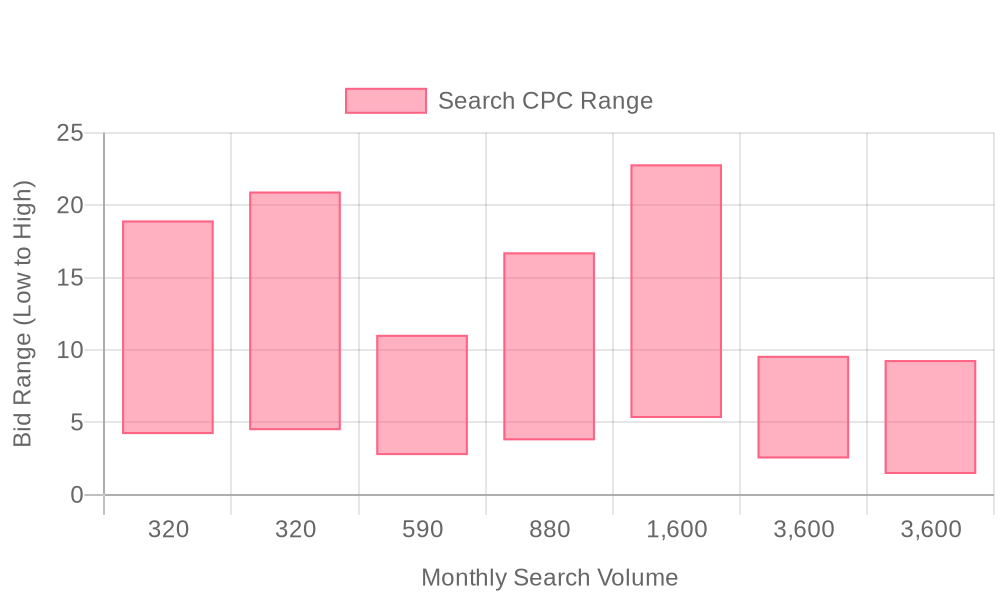
| Industry | Keyword | Monthly Search Volume | Competition Level | Low Bid | High Bid |
| Cancer Insurance | best life insurance for cancer patients | 320 | MEDIUM | 4.2 | 18.94 |
| Cancer Insurance | life insurance for cancer survivors | 320 | LOW | 4.47 | 20.94 |
| Cancer Insurance | cancer insurance policy | 590 | MEDIUM | 2.75 | 11.05 |
| Cancer Insurance | life insurance with cancer | 880 | MEDIUM | 3.77 | 16.74 |
| Cancer Insurance | life insurance for people with cancer | 1600 | MEDIUM | 5.31 | 22.82 |
| Cancer Insurance | cancer insurance | 3600 | MEDIUM | 2.52 | 9.6 |
| Cancer Insurance | aflac cancer policy | 3600 | MEDIUM | 1.44 | 9.31 |
A robust keyword strategy for cancer insurance advertising is essential for capturing high-intent prospects while maintaining compliance with healthcare advertising policies. The right keywords ensure visibility among individuals actively researching coverage options, claims processes, and financial planning related to cancer. By prioritizing terms with clear purchase intent, marketers improve both cost efficiency and lead quality. For deeper insights into compliant keyword selection, explore this overview of Google’s health insurance ad policies.
Strategic Use of Keywords: Building your campaign around highly specific queries such as "how to choose cancer insurance," "cancer insurance claims process," and "cancer policy benefits" positions ads in front of searchers deep in the consideration or decision stage. These keywords reflect direct user needs, making each click more likely to convert. Long-tail variations like "compare cancer insurance plans" and "best cancer insurance for families" reduce wasted spend and reach buyers with more specific requirements. To identify and prioritize high-value website visitors ready to convert, use Sona's Identity Resolution.
**High-Intent Audience Targeting**: Advances in digital marketing now allow revenue teams to move beyond basic demographics. By analyzing real-time search and browsing signals, such as repeated visits to coverage comparison pages or frequent engagement with insurance calculators, teams can prioritize budgets for those showing purchase intent. Dynamic audience lists automatically update as prospects engage across the funnel, ensuring only the most qualified leads see your ads.
**Negative Keywords**: Filtering out irrelevant or low-intent queries is just as critical as finding the right targets. Adding negative keywords like "DIY," "free advice," "job openings," or "cancer cure alternative" keeps campaigns focused on users genuinely seeking insurance solutions, not unrelated information. This approach not only preserves ad budget but also ensures compliance by avoiding prohibited or misleading health-related terms. For additional guidance, consult this step-by-step guide for compliant Google healthcare ads.
Aligning your keyword approach with ongoing campaign measurement and CRM integration enables marketers to sync enriched audiences, attribute conversions accurately, and rapidly adjust messaging to fit shifts in buyer intent. This unified data flow results in more precise targeting, higher return on investment, and streamlined insurance lead generation. If you’re ready to transform your approach, get started for free with Sona and see how advanced data-driven tools can elevate your cancer insurance campaigns.
Step-by-Step Campaign Execution Framework
Step 1: Build Targeted Keyword Lists
Robust keyword targeting is fundamental for Google Ads for cancer insurance. Start with core cancer-related insurance phrases, such as "cancer insurance policy," "critical illness cover," and "cancer financial protection," then layer on geo-modifiers like city or state names to localize campaigns and improve lead quality. Integrate negative keywords to filter out irrelevant or non-converting traffic, which reduces wasted spend and sharpens your audience focus. For more insight into optimizing ad spend, explore top PPC strategies for health insurance companies.
Audience segmentation becomes more powerful when you leverage intent data to detect companies and individuals most likely to engage. By connecting ad platforms with precise audience intelligence, marketers can identify anonymous website visitors, reveal which organizations are researching cancer insurance options, and tailor keyword lists to match emerging buyer intent signals. This approach ensures that ad budgets are spent on high-propensity accounts that are actively in-market, maximizing both relevance and conversion rates.
The upgrade most cancer insurance advertisers miss is going beyond raw keyword volume to layer in intent and identity signals. By connecting website-visitor data and CRM records with Sona Marketing Measurement, you can see which specific search terms bring in the accounts and customers that actually convert, and weight your keyword and bidding strategy toward those rather than the terms with the highest search volume alone.
Step 2: Develop Compelling Ad Copy
Effective ad copy for health insurance advertising must speak directly to the pain points of individuals seeking cancer coverage. Use clear language to highlight benefits such as "immediate lump-sum payouts," "no medical exam required," or "flexible payment plans." Trust signals, like "licensed by state regulators" or "24/7 support," build confidence and lower barriers to engagement.
Incorporate dynamic elements powered by real-time audience insights so your messaging reflects the prospect's position in the funnel. As audiences move from research to decision, ad text can automatically adjust to emphasize urgency, new offers, or exclusive resources. Syncing enriched CRM data with Google Ads allows for more precise personalization, ensuring each touchpoint is relevant and timely, which drives higher engagement and improved insurance lead generation outcomes.
Step 3: Design Effective Landing Pages
Landing pages for Google Ads for cancer insurance must align 1:1 with ad keywords and address core client concerns without distraction. Each page should present a concise value proposition, answer common questions, and use testimonials or accreditations to validate claims. Keep forms short and focused, request only essential information to reduce friction and encourage completion.
Enhance the customer journey by connecting behavioral data from ad clicks with on-site activity. Unified data platforms can track which landing pages convert best for specific audiences and keywords, then dynamically adjust content or CTAs based on previous interactions. This level of optimization ensures the message remains consistent and personalized from ad impression through to lead capture, increasing both the quality and volume of conversions.
Step 4: Implement Data-Driven Optimizations
Continuous optimization is essential in healthcare marketing. Monitor conversions, click-through rates, and audience engagement at every stage, then use those insights to refine bids, adjust budgets, and update targeting parameters. Platforms that unify sales and marketing data deliver advanced analytics, surfacing which campaigns and keywords drive the most valuable leads and providing actionable recommendations in real time. For a detailed overview of compliance and campaign planning, see Google’s health insurance ad policies.
Integrate online and offline conversion tracking to build a complete view of ROI. By syncing closed-loop data back into your ad platform and CRM, you can attribute policies sold or consultations booked directly to specific ads and keywords. This granular attribution model empowers revenue teams to double down on the highest-performing tactics, shift spend to emerging segments, and automate retargeting with up-to-date audience lists that reflect where each lead stands in the purchase journey. This approach drives smarter, faster decisions, and ensures every marketing dollar is fully accountable.
Sona Marketing Measurement closes the gap between clicks and revenue. It captures ad clicks with first-party, company-level tracking, then ties that click through UTM capture and ad-platform APIs to the actual record in your CRM, and reports ROAS by keyword and campaign instead of by last-click form fill. Feeding that revenue signal back into Smart Bidding and Performance Max compounds over time: the algorithms optimize toward booked cancer insurance revenue, not cheap leads.
Tips on Expanding Your Cancer Insurance Presence
Cancer insurance providers face unique challenges in reaching new markets and building trust among at-risk populations. Strategic expansion depends on educational outreach, precise targeting, and the ability to continuously refine campaigns based on unified, actionable data.
- Promote educational resources: Educational content builds credibility and addresses consumer questions about cancer insurance coverage, claims, and financial relief. By analyzing user engagement across content assets, marketing teams can prioritize resources that drive the highest-quality leads and tailor follow-up messaging accordingly. For best practices on campaign planning and compliance, review this overview of Google’s health insurance ad policies.
- Upsell complementary packages: Cross-selling products such as critical illness or life insurance during the cancer insurance buyer’s journey maximizes average policy value and deepens customer relationships. Unified campaign insights allow teams to identify which audience segments are most receptive to bundled offers and optimize ad creative in real time for those profiles with tools like dynamic audience segmentation.
- Localize to underserved markets: Targeting regions with high cancer incidence but low insurance penetration increases campaign impact and reduces wasted spend. Modern audience segmentation tools enable marketers to sync CRM data with ad platforms, ensuring that hyper-local offers reach the right prospects and adapt as new intent emerges.
Disjointed systems and siloed data often slow expansion efforts and obscure true ROI. Integrated analytics bridge these gaps by providing revenue teams with a single source of truth for campaign performance. This empowers marketers to attribute offline conversions, identify high-intent visitors, and dynamically update audience lists as prospects engage across touchpoints, all of which accelerate insurance lead generation and policy sales growth. Ready to streamline your expansion? Get started for free with Sona.
Beyond Google Ads: Winning the AI Answers Cancer Insurance Buyers Now Trust
Paid search captures demand at the moment someone types a query. But a fast-growing share of cancer insurance buyers no longer start at Google at all, they ask ChatGPT, Gemini, or Perplexity before they ever run a search, and Google's own AI Overviews increasingly summarize an answer above the traditional results. If your business isn't referenced in those AI answers, you're invisible at the exact moment buyers build their shortlist.
Sona AI Visibility shows where your business shows up across ChatGPT, Gemini, Perplexity, Google AI Overviews, and 10+ engines, and, much like a keyword report, which prompts actually send you buyers, so you can prioritize the ones that convert. Run the two together and you cover the entire buyer path: get cited where buyers research (AI Visibility), then prove which of that demand turns into booked revenue (Marketing Measurement).
Helpful resources
Conclusion
Cancer insurance advertising rewards the operators who treat compliance and speed as one problem, not two. Certification, precise targeting, and fast follow-up all protect the same thing: a prospect's narrow window of intent before they move to a competitor or lose momentum entirely.
The advertisers who pull ahead in this category will be the ones who can trace a search term all the way to a bound policy, and then feed that signal back into Google's bidding systems. As AI answer engines take on more of the early research phase, that same measurement discipline, knowing which channels and prompts actually produce customers, will decide who gets cited and who gets skipped.
FAQ
What are the requirements for advertising cancer insurance on Google Ads?
All campaigns must meet Google’s verification requirements for health insurance advertising, ensuring your ads display only after appropriate documentation and approval.
How can I create compliant Google Ads for cancer insurance?
To create compliant ads, ensure you are certified for health insurance advertising, adhere to Google's healthcare advertising policies, and use precise targeting while maintaining transparency and compliance.
What strategies work best for targeting cancer patients with Google Ads?
Effective strategies include using intent-based targeting, optimizing campaign structure, leveraging demographic and geographic targeting, and integrating CRM with advertising workflows.
How much should I budget for Google Ads in the cancer insurance niche?
Budget allocation should focus on high-intent keywords and audiences, optimize spend towards audiences likely to convert, and minimize waste through precise targeting and negative keywords.
What are the common pitfalls to avoid when advertising cancer insurance on Google Ads?
Avoid missing compliance certification, unoptimized keyword strategies, lack of real-time follow-up on leads, and failure to integrate ad platforms with CRM systems for seamless data flow.







