


An automatic door that fails to open is a liability the moment it happens, which is why the buyers searching for installers are rarely browsing, they're deciding. Automatic door installation companies win or lose that moment based on whether their Google Ads campaigns actually reach the property managers, facility directors, and contractors typing urgent, specific queries. Too often, ad spend gets diluted across generic keywords and anonymous clicks, so genuine buyers slip through as unattributed traffic. Precise targeting, audience segmentation, and disciplined campaign execution close that gap. This guide walks through the strategies that turn Google Ads into a reliable, measurable source of installation leads.
How to Generate Automatic Door Installation Leads with Google Ads: A Step-by-Step Guide

Automatic door installation companies face unique challenges in reaching decision-makers and property managers at the exact moment of purchase intent. By leveraging a precisely structured Google Ads approach for door companies, these businesses can consistently connect with high-value prospects who are actively searching for installation solutions.
Successful lead generation in this space demands more than generic advertising or broad targeting. It requires actionable segmentation, local intent activation, and advanced integration between ad platforms and CRM systems to deliver measurable revenue outcomes. For best practices on segmenting and targeting, explore this account-based marketing guide, and consider using real-time audience signals to optimize every stage of the acquisition funnel.
B2B revenue teams benefit from Sona's Identity Resolution and intent signals that move beyond anonymous clicks to identify which companies are showing interest. Unifying this data with Google Ads campaigns lets marketers dynamically update audiences, sync qualified leads across sales channels, and track both online and offline conversions with precision. To see this in action, get started for free with Sona and make sure every ad dollar contributes directly to pipeline growth.
Why Does Google Ads Matter for Automatic Door Installation
Modern buyers searching for automatic door installation services often make rapid, intent-driven decisions. Google Ads provides a direct path to engage these prospects precisely when they're searching for solutions, ensuring your offering appears at the top of their consideration set.
For contractors and commercial door specialists, digital lead generation increasingly defines revenue growth. Google Ads for Automatic Door Installation bridges the gap between service providers and local property managers, facility teams, or business owners. For industry-specific marketing tips and campaign ideas, explore this overview of Google Ads strategies tailored for garage door repair and installation businesses. By capturing high-intent demand, you can shift focus from unpredictable referrals to scalable, measurable inbound pipelines.
The platform’s robust targeting capabilities let you zero in on property types, business verticals, and decision-maker roles. With dynamic audience segmentation and advanced attribution, you can prioritize accounts that display real-time buying signals, maximizing your Google Ads ROI for services. When combined with unified go-to-market data, your campaigns continuously improve, driving higher conversion rates and more qualified door installation leads.
Integrating ad performance with CRM and sales data reveals the true revenue impact of every campaign. This approach streamlines local advertising for door installation and delivers actionable insights for ongoing optimization and sustained business growth.
Common Types of Google Ads Campaigns for Automatic Door Installation Services
- Search Campaigns: These campaigns connect your service to customers actively searching for automatic door installation. With precise keyword targeting and intent-driven ad copy, they capture high-value leads at the moment of decision. Integrating unified data sources enables marketers to identify which companies and prospects are clicking on ads, moving beyond anonymous clicks to actionable insights that drive higher conversion rates. Explore more on building impactful B2B marketing reports.
- Display Campaigns: Visual ads on Google’s Display Network reinforce your brand with property managers, facility decision-makers, and commercial contractors. By syncing enriched audience segments from your CRM or sales pipeline, you ensure ads remain relevant as accounts progress, keeping your brand top-of-mind throughout the buyer’s journey. For actionable tactics, see this playbook on buying stage segmentation.
- Local Service Ads: These ad units place your business at the top of local search results for automatic door installation. They provide direct lead generation opportunities by allowing prospects to call or message you straight from the ad. Connecting real-time intent signals and offline lead tracking lets revenue teams see which local ads drive in-person consultations and installations, attributing true ROI to every local interaction. Learn about Local Service Ads features.
- Remarketing Campaigns: Retargeting website visitors or previous leads with tailored offers helps re-engage those who showed interest but did not convert. Dynamic audience updates enable you to automatically segment and personalize messaging as leads move from research to request-for-quote, improving reactivation rates and lowering customer acquisition costs. Check out best practices for measuring marketing’s influence.
- Performance Max Campaigns: These campaigns use Google's automation to reach in-market buyers across Search, Display, YouTube, and more. Feeding advanced conversion data and enriched account lists from unified platforms lets marketers optimize bidding and creative for high-value segments, maximizing the efficiency of every advertising dollar. For a detailed industry overview, visit Google Ads strategies for garage door services.
- Video Campaigns: Short, targeted videos demonstrate the benefits and reliability of your automatic door solutions to facilities managers and property developers. Incorporating detailed audience insights from your sales and marketing data ensures that video ads reach only those accounts with real purchase potential, reducing wasted impressions and increasing brand impact. Read more in our guide to account-based marketing.
- Call-Only Campaigns: Designed for urgent needs, these ads prompt immediate phone calls from businesses facing access issues or safety concerns. With enhanced attribution linking calls to online journeys and CRM records, teams achieve complete visibility into which campaigns drive qualified leads and booked installations.
Where to Find Growth Opportunities?

Automatic door installation companies often rely on a narrow set of marketing channels, limiting their ability to reach high-intent buyers at the right moment. Growth comes from expanding beyond these traditional routes and uncovering buyers that other contractors overlook. For example, exploring Google Ads strategies for garage door repair can provide valuable insights for unlocking new acquisition channels in the commercial door industry.
Diversifying acquisition sources is crucial. Digital advertising, particularly Google Ads for Automatic Door Installation, unlocks new lead streams by targeting local property managers, facility directors, and businesses searching for commercial door solutions. Companies that integrate Sona's Identity Resolution with intent data can move quickly to engage prospects showing purchase signals, shifting budget toward in-market accounts and improving cost-efficiency.
Incorporating advanced CRM and ad platform sync ensures leads from multiple channels, organic, paid, referral, are unified for precise targeting and measurement. Automated audience updates keep your campaigns aligned with the sales funnel, so marketing efforts always focus on the most valuable prospects. This cross-channel approach drives sustainable growth, improves ROI, and positions automatic door installers to capture demand wherever it appears.
How to Apply Audience Segmentation for Automatic Door Installation

Audience segmentation is essential for maximizing the impact of PPC for door installation and Google Ads for Automatic Door Installation. Differentiating between distinct customer profiles enables contractors and B2B revenue teams to allocate budgets efficiently, personalize messaging, and shorten sales cycles.
Effective segmentation leverages real-time audience data and intent signals to identify high-value accounts and in-market prospects. For automatic door installation, this means recognizing the difference between commercial property managers, facility directors, and residential customers, then tailoring campaigns to address each segment’s unique needs and buying triggers.
- Demographic segmentation: Focus on criteria like company size, industry, or geographic location. For local advertising for door installation, segmenting by region ensures that ads reach decision-makers in areas you serve, preventing wasted spend on irrelevant markets.
- Behavioral segmentation: Analyze how prospects interact with your website, landing pages, or previous campaigns. Tracking high-intent actions, such as repeated visits to “automatic door installation” service pages or requests for quotes, enables you to shift budget toward audiences most likely to convert. Dynamic audience updates ensure that as leads show increased interest, they automatically receive more relevant ad messaging.
- Firmographic segmentation: For B2B campaigns, segment by business characteristics like building type, commercial use case, or compliance requirements. This allows for hyper-targeted messaging that addresses unique project needs, such as ADA compliance or high-traffic entrances. For companies marketing advanced solutions, showcasing automated door systems can differentiate your offering in commercial and industrial segments.
Sophisticated platforms make it possible to move beyond anonymous web traffic. Marketers can now pinpoint visitors and companies, attributing engagement to specific accounts and feeding this intelligence into Google Ads targeting strategies. Real-time enrichment and CRM integration further synchronize audience lists across platforms, ensuring that high-value leads reached via Google Ads for contractors are also nurtured through sales and email channels.
By segmenting audiences with precision, automatic door installation businesses create actionable insights from disconnected intent signals and drive higher ROI from Google Ads campaigns. This approach forms the foundation for advanced retargeting strategies that move prospects efficiently through the funnel.
This is also where measurement changes the economics. With Sona Marketing Measurement you can identify the companies and buyers behind your ad clicks, not just anonymous sessions, and segment audiences by who actually becomes a customer. That lets you build bid adjustments and audience signals around the segments that convert and de-prioritize the ones that don't, so you feed Google's algorithms "this click became a paying automatic door installation customer" instead of just "someone filled out a form."
Keyword Strategy & Sample Target Terms
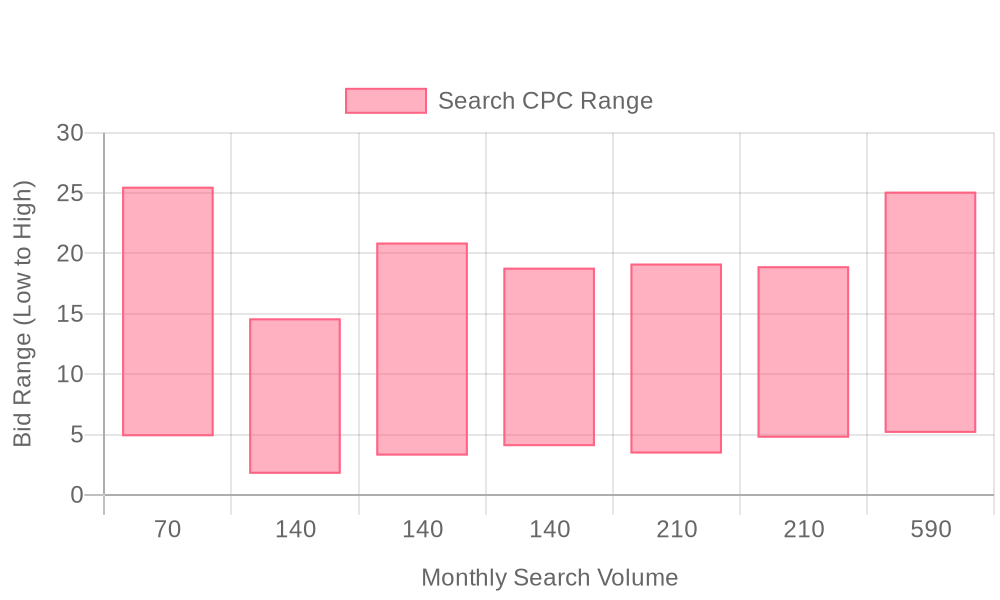
| Industry | Keyword | Monthly Search Volume | Competition Level | Low Bid | High Bid |
| Automatic Door Installation | electric garage door installation | 70 | MEDIUM | 4.86 | 25.53 |
| Automatic Door Installation | gate opener installation near me | 140 | MEDIUM | 1.75 | 14.62 |
| Automatic Door Installation | handicap door opener installers near me | 140 | MEDIUM | 3.26 | 20.9 |
| Automatic Door Installation | handicap door opener commercial installation near me | 140 | MEDIUM | 4.04 | 18.82 |
| Automatic Door Installation | automatic door installation | 210 | LOW | 3.43 | 19.16 |
| Automatic Door Installation | automatic garage door opener installation | 210 | MEDIUM | 4.74 | 18.94 |
| Automatic Door Installation | automatic garage door installation | 590 | MEDIUM | 5.14 | 25.12 |
Precision in keyword selection enables automatic door installation providers to intercept high-intent buyers at critical decision points. The right combination of primary, long-tail, and negative keywords ensures ad placements are efficient, cost-effective, and hyper-targeted.
Effective campaigns for Google Ads for Automatic Door Installation hinge on understanding customer search behavior. High-performing terms often include transactional intent, such as “automatic door installation near me,” “commercial door opener install,” and “ADA compliant door systems.” Layering in service-related modifiers, like “emergency” or “same day,” captures urgent buyers and differentiates from informational queries. For inspiration on industry-specific keyword targeting, review this overview of Google Ads strategies for garage door repair and installation businesses and consider leveraging Sona’s Buyer Journeys tool to map every touchpoint across the funnel.
- Primary target keywords: Focus on high-conversion phrases, such as “automatic door installation,” “commercial automatic door installer,” and “automatic sliding door setup.”
- Long-tail keywords: Integrate location-based and solution-specific terms, for example, “automatic door installation for hospitals,” “best automatic doors for office buildings,” and “automatic door opener installation service [city].”
- Negative keywords: Exclude non-relevant queries, such as “DIY automatic door,” “automatic door parts only,” or “automatic garage door,” to reduce wasted spend and filter out low-intent traffic.
Data-driven platforms now allow marketers to go beyond guesswork by analyzing historical search patterns and in-market signals. When integrated with Sona's Identity Resolution, keyword targeting updates dynamically as leads progress, ensuring ad spend shifts toward accounts most likely to convert. This real-time intent mapping gives revenue teams the confidence to invest in high-value terms, optimize their Google Ads budget for contractors, and drive measurable ROI on every campaign.
Step-by-Step Campaign Execution Framework
Success in Google Ads for automatic door installation hinges on disciplined execution and nuanced tactics tailored to high-intent B2B buyers. By leveraging granular data and intentional workflows, teams can move beyond generic advertising to deliver compelling, measurable results. For additional strategies on measurable marketing impact, see our marketing performance management guide.
Step 1: Build Targeted Keyword Lists
Identifying the right keywords is foundational to effective PPC for door installation. Strategically curated keyword lists ensure campaigns capture prospects searching for solutions like "automatic door installers near me" or "commercial door automation services." Marketers can use historical CRM data and site behavior insights to surface search terms that signal immediate purchase intent. When platforms unify Sona's Identity Resolution with CRM records, keyword selection evolves from guesswork to precision targeting, minimizing wasted spend and increasing qualified lead flow.
The upgrade most automatic door installation advertisers miss is going beyond raw keyword volume to layer in intent and identity signals. By connecting website-visitor data and CRM records with Sona Marketing Measurement, you can see which specific search terms bring in the accounts and customers that actually convert, and weight your keyword and bidding strategy toward those rather than the terms with the highest search volume alone.
Step 2: Segment and Structure Campaigns
Campaign segmentation makes it easier to control budget allocation and messaging for different audience groups. For automatic door marketing, segmenting by vertical, company size, or geographic region enables tailored ad creative and bidding strategies. Structuring campaigns around these segments, while syncing dynamic audiences across CRM and ad platforms, keeps campaigns agile and ensures that ad dollars follow the most promising accounts. For a practical look at industry segmentation in Google Ads, explore this overview of Google Ads strategies for garage door repair and installation businesses.
Step 3: Craft High-Impact Ad Copy and Creative
Compelling ad copy directly addresses the pain points and requirements of facilities managers, construction leads, or property owners seeking automatic door installation. Highlighting rapid response times, compliance with industry standards, and integration capabilities resonates with B2B buyers. Creative assets should reinforce credibility and drive urgency, using dynamic elements that update based on intent signals Sona surfaces from real-time visitor behavior and in-market activity. When ad copy adapts to recent visitor actions, engagement rates improve and campaigns deliver stronger results.
Step 4: Optimize Landing Pages for Conversion
Landing pages are critical for converting high-intent clicks into qualified leads. Pages should load quickly, demonstrate expertise in automatic door systems, and include clear calls to action such as “Request a Quote” or “Schedule a Site Visit.” Integrating advanced conversion tracking enables revenue teams to see which sources, keywords, and creative drive the most conversions. For inspiration around technology-focused landing pages, see this automated door systems product page.
Sona Marketing Measurement closes the gap between clicks and revenue. It captures every ad click with first-party, company-level measurement, then ties that click through UTM capture and ad-platform APIs to the actual record in your CRM, and reports ROAS by keyword and campaign instead of by last-click form fill. Feeding that revenue signal back into Smart Bidding and Performance Max compounds over time: the algorithms optimize toward booked automatic door installation revenue, not cheap leads.
Step 5: Set Up Advanced Conversion Tracking
Robust conversion tracking ensures every touchpoint, call, form submission, or site visit, is attributed back to the original ad and keyword. For B2B teams, integrating ad platform data with Salesforce, HubSpot, or similar CRMs creates a closed-loop system for measuring Google Ads ROI for services. This connection enables marketers to follow leads from first click to closed deal, optimizing spend and proving value at every stage. For best practices on integrating Sona with HubSpot CRM, see our step-by-step guide.
Step 6: Launch and Continuously Optimize
Launching campaigns is just the beginning. Ongoing optimization involves monitoring performance data, adjusting bids, refining negative keyword lists, and rotating creative assets. By tying campaign metrics back to real-time pipeline movements, teams can prioritize spend on keywords and audiences most likely to convert. For a step-by-step walkthrough of setting up and optimizing Google Ads for door services, check out this video tutorial for garage door repair campaigns.
Tips on Expanding Your Automatic Door Installation Presence

Expanding an automatic door installation business in a competitive market requires a balance of technical expertise and strategic outreach. Modern revenue teams benefit from integrating data-driven marketing with carefully curated partnerships and content initiatives.
Strategic partnerships are central to rapid growth in the automatic door sector. Aligning with commercial property managers, real estate developers, and architects brings access to larger projects and recurring contracts. These relationships also create a pipeline of referrals, increasing both deal velocity and average contract value. Consider leveraging automated door systems to differentiate your offering when targeting commercial and industrial clients.
Content marketing remains a powerful lever for visibility and authority. Producing case studies, installation guides, and explainer videos positions your company as a thought leader and problem solver. Sharing client success stories on platforms such as LinkedIn, industry forums, and your website blog can boost trust with decision-makers and procurement teams.
Participation in industry events and local trade associations further enhances brand presence. Hosting webinars, sponsoring facilities management expos, or leading roundtable discussions puts your expertise at the forefront of industry conversations. These activities also foster valuable networking opportunities with facility executives and purchasing managers, expanding your reach into untapped segments.
Leveraging paid search and digital campaigns, such as Google Ads for Automatic Door Installation, ensures your solutions are visible to high-intent buyers actively searching for installation or upgrade services. Advanced platforms now allow marketers to identify the companies behind otherwise anonymous site visits, prioritize outreach to in-market accounts, and dynamically update audiences as leads progress through the funnel. This translates to more efficient spend, higher-quality leads, and measurable improvements in campaign ROI.
Combining these techniques creates a holistic approach: strategic alliances, compelling content, and precision digital marketing converge to drive consistent growth in the automatic door installation sector.
Beyond Google Ads: Winning the AI Answers Automatic Door Installation Buyers Now Trust
Paid search captures demand at the moment someone types a query. But a fast-growing share of automatic door installation buyers no longer start at Google at all, they ask ChatGPT, Gemini, or Perplexity before they ever run a search, and Google's own AI Overviews increasingly summarize an answer above the traditional results. If your business isn't referenced in those AI answers, you're invisible at the exact moment buyers build their shortlist.
Sona AI Visibility shows where your business shows up across ChatGPT, Gemini, Perplexity, Google AI Overviews, and 10+ engines, and, much like a keyword report, which prompts actually send you buyers, so you can prioritize the ones that convert. Run the two together and you cover the entire buyer path: get cited where buyers research (AI Visibility), then prove which of that demand turns into booked revenue (Marketing Measurement).
Helpful resources
Conclusion
Automatic door installation is a business built on urgency: buildings need working entrances, and compliance deadlines don't wait. Google Ads works because it meets that urgency directly, putting your business in front of the property manager or facility director at the moment they're searching for a fix. The tactics in this guide, keyword precision, segmentation, closed-loop tracking, all exist to make sure that moment isn't wasted on a generic ad or an untracked click.
The next stage of competition is already forming around AI-driven search and answer engines. Automatic door installers who pair sharp Google Ads execution with visibility into how they're represented in AI answers will be the ones buyers find first, no matter where the search starts. Start for free to see how a unified go-to-market platform brings both under one roof.
FAQ
What are the best practices for Google Ads in the door installation industry?
Best practices include precise targeting, audience segmentation, integrating ad platforms with CRM systems, and utilizing dynamic audience updates to optimize lead generation and improve ROI.
How much should I budget for Google Ads for automatic door installation?
The article does not specify an exact budget, but it emphasizes the importance of targeting high-value prospects and optimizing ad spend to ensure cost-efficiency and measurable ROI.
What keywords should I target for Google Ads in automatic door installation?
Target keywords should include high-conversion phrases like 'automatic door installation,' 'commercial automatic door installer,' and location-based terms such as 'automatic door installation near me.'
How can I optimize my Google Ads for better leads in door installation?
Optimize your Google Ads by leveraging real-time audience data, integrating CRM for precise targeting, crafting high-impact ad copy, and utilizing advanced conversion tracking for a closed-loop system.
Are there specific ad formats that work best for automatic door installation services?
Effective ad formats include Search Campaigns for high-intent leads, Display Campaigns for brand reinforcement, Local Service Ads for direct lead generation, and Remarketing Campaigns to re-engage interested prospects.







