


Auto service contract companies live or die by timing: a warranty is about to lapse, a lease is ending, a used car just changed hands, and the buyer starts searching within a narrow window. Google Ads is the tool built for that window, but most campaigns in this space still leak value because clicks go untracked past the form fill. Pairing Google Ads with better tracking lets a company connect the online search to the offline sale and follow up while the buyer is still deciding. This guide is for auto service contract businesses that want to target decision-makers precisely, spend efficiently, and tie every campaign back into the CRM.
How to Generate Auto Service Contract Leads with Google Ads: A Step-by-Step Guide

Effective lead generation for auto service contract companies begins with a strategic Google Ads approach tailored to the nuances of the industry. High-value B2B buyers demand precision: campaigns that surface at the right moment, speak directly to their needs, and deliver a seamless path from search to conversion. For an overview of how local service providers are connecting with customers, explore Google's Local Service Ads platform.
To consistently capture qualified leads, companies must implement a robust targeting strategy rooted in deep audience insights. Clear segmentation based on in-market signals, firmographic data, and purchase intent ensures every ad dollar goes toward reaching those most likely to convert. Enhance your segmentation by leveraging real-time audience building tools that auto-sync with ad platforms for hyper-personalized targeting.
- Develop a robust keyword and audience targeting strategy: Begin with in-depth keyword research focused on high-intent phrases unique to auto service contract buyers, such as renewal and warranty-expiration queries. Incorporate negative keywords to filter out irrelevant clicks and maximize budget efficiency. Use Sona's Identity Resolution to move beyond anonymous traffic, identifying which companies and buyers are actively researching service contracts.
- Create aligned landing pages: Design dedicated landing pages that mirror user intent and address the pain points of auto service contract buyers. Use persuasive copy, industry-specific proof points, and clear calls to action. Integrate dynamic personalization, ensuring that each visitor sees content tailored to their company profile or funnel stage, which measurably lifts conversion rates.
- Continuously optimize performance with data-driven insights: Analyze campaign performance using attribution models that connect ad clicks to both online conversions and offline sales outcomes. Address the common gap of anonymous traffic with Sona's Identity Resolution, which lets revenue teams follow up with high-fit leads and refine audience segments for future campaigns. For more on connecting ad clicks to conversions, see our guide to importing ad platform cost data into Google Analytics.
- Integrate seamlessly with existing marketing channels: Unify Google Ads data with CRM and marketing automation platforms to maintain message consistency and prevent siloed outreach. Real-time audience syncing ensures that as prospects engage with other marketing channels, their journey through the funnel is reflected in Google Ads targeting. This holistic approach eliminates wasted spend and creates a connected, high-performing B2B demand generation engine.
Why Google Ads Matter for Auto Service Contract Businesses
Auto service contract companies face a dynamic landscape where reaching in-market buyers is critical for sustained growth. Successful teams leverage digital channels to engage decision-makers at the precise moment they are evaluating contract options, making every marketing dollar count. To discover more strategies for capturing high-intent leads, visit our B2B marketing playbooks.
Google Ads is uniquely positioned to address these industry-specific challenges. It empowers marketers to deliver targeted outreach, prioritize high-value prospects, and adapt quickly to market fluctuations, all while capturing and attributing each qualified lead to the campaigns that drove them. Learn how Local Service Ads can connect your business with nearby customers actively searching for auto services.
- Complex Audience Targeting: Modern Google Ads tools allow marketers to reach specific segments, such as service managers or procurement teams actively searching for auto service contracts. By integrating real-time visitor identification, marketers can move beyond anonymous clicks and pinpoint which companies are engaging, enabling tailored messaging and higher conversion rates.
- High-Value Project Acquisition: Traditional outbound tactics often cast too wide a net, missing decision-makers ready to buy. Google Ads lets companies focus spend on high-intent search queries and buyer signals, ensuring that high-value opportunities do not slip through the cracks. By syncing enriched audiences directly from CRM and intent data, campaigns can dynamically prioritize the accounts most likely to convert.
- Rapid Demand Response: The auto service contract market peaks during specific cycles, such as warranty renewals. With Google Ads, campaigns can be adjusted in real time to capture surging demand, ensuring offers are visible precisely when buyers are searching. Marketers gain the agility to shift budget allocation instantly, maximizing ROI during critical buying windows.
- Emerging Market Visibility: Expanding into new regions or targeting underserved markets is streamlined with Google Ads' advanced geographic and demographic targeting. Combined with audience updates as leads progress through the funnel, companies maintain visibility among growth segments, even as market conditions evolve. This approach ensures resources are continually allocated to areas with the highest potential return.
Ready to optimize your campaigns and drive more revenue? Get started for free with Sona.
Common Types of Google Ads Campaigns for Auto Service Contract
- Search Campaigns: Auto service contract companies benefit from targeting high-intent keywords that capture urgent prospects, such as "auto service contracts near me" or "vehicle warranty solutions." Within Search, Responsive Search Ads let you test multiple headlines and descriptions so Google can serve the combination most likely to convert for each query. Marketers using Sona's Intent Signals can identify which searchers are most likely to convert, allowing for precise budget allocation on accounts that show genuine buying interest.
- Display Ads: Display campaigns keep your brand visible across automotive news sites and industry blogs, maintaining top-of-mind awareness throughout the research phase. With dynamic audience updates, as prospects progress from initial interest to consideration, messaging and creative assets can be automatically tailored to match their current funnel stage. This adaptive approach ensures that display impressions reinforce your value proposition at the right moments.
- Remarketing: Remarketing campaigns re-engage website visitors who have explored your offerings but have not yet converted, a useful net for the long research cycle typical of contract shopping. By identifying previously anonymous visitors with Sona's Identity Resolution and linking their onsite behavior to company-level data, marketers can build segmented campaigns that address specific objections or information gaps. Remarketing lists can sync directly with your CRM, so users who move further down the funnel or engage offline are dynamically excluded, preserving budget and maximizing relevance.
- Video Ads: Video campaigns allow auto service contract companies to explain complex coverage details through engaging visuals, making intricate policies easy to understand. Consistent messaging can be maintained across YouTube and partner networks, with audience segments updated in real time as leads interact with your content. Advanced attribution tracking ties video views and clicks to offline actions, such as phone consultations or booked appointments, providing a complete picture of campaign ROI.
Where to Find Growth Opportunities?

Identifying growth in digital advertising for auto service contract companies starts with precision keyword targeting. Leveraging a vertical keyword strategy ensures your campaigns reach both core and adjacent audiences, minimizing wasted spend while surfacing high-value prospects who may otherwise be missed.
Exploring untapped segments through competitor analysis reveals where industry leaders allocate budgets and where gaps remain. This insight allows revenue teams to avoid duplication, refine their messaging, and focus acquisition efforts on underserved segments that represent the highest potential for long-term retention. For more best practices on uncovering and engaging new audiences, explore our B2B marketing playbooks.
Dynamic content retargeting using educational materials elevates lead nurturing. By serving tailored, informative content based on user behavior, auto service contract companies can re-engage prospects as they move through the decision journey, increasing engagement and boosting conversion rates. Marketers using platforms that unify visitor data and Sona's Intent Signals can identify which accounts are most likely to respond, enabling more efficient retargeting and audience segmentation. As audiences shift in real time, enriched lead data can seamlessly sync into ad platforms and CRM systems, ensuring every interaction is personalized and attributable to true business outcomes.
How to Apply Audience Segmentation for Auto Service Contract

Audience segmentation provides a measurable lift in campaign efficiency for auto service contract companies. By dividing prospects into well-defined groups, marketers can match offers and messaging to the precise needs of each audience. For more strategies on segmenting and activating audiences, explore this essential guide to account-based marketing.
- Define Segments: Tailor strategies for different buyer personas like fleet managers versus individual owners. Fleet managers often prioritize cost predictability and operational uptime, while individual owners may focus on coverage options and renewal flexibility. Marketers who map out these personas can craft outreach that addresses unique decision criteria, boosting relevance and engagement rates. To further refine your segments, utilize real-time audience insights that combine intent, account attributes, and buying stage data.
- Overlay Intent Signals: Align messaging with specific needs, such as warranty renewals, by tracking engagement signals in real time. For instance, auto service contract companies can use behavioral data, like recent website visits or content downloads, to identify which prospects are in-market for renewals or upgrades. Sona's Intent Signals let revenue teams shift budget and creative assets toward accounts most likely to convert. For a foundational overview, review the Local Service Ads platform.
- Create Custom Ad Groups: Design messages that speak directly to each segment's pain points and prevent inefficient outreach. Custom ad groups allow marketers to deliver tailored offers, such as maintenance plan upgrades to owners nearing contract expiration or fleet-level discounts for commercial buyers. When audience data is unified across CRM, web, and ad platforms, these groups update dynamically as prospects move through the funnel. Integrated platforms that sync enriched audiences into Google Ads and downstream tools ensure that campaigns remain agile and responsive, driving higher conversion rates and lower acquisition costs for auto service contract companies.
This is also where measurement changes the economics. With Sona Marketing Measurement you can identify the companies and buyers behind your ad clicks, not just anonymous sessions, and segment audiences by who actually becomes a customer. That lets you build bid adjustments and audience signals around the segments that convert and de-prioritize the ones that don't, so you feed Google's algorithms "this click became a paying auto service contract customer" instead of just "someone filled out a form."
Keyword Strategy & Sample Target Terms
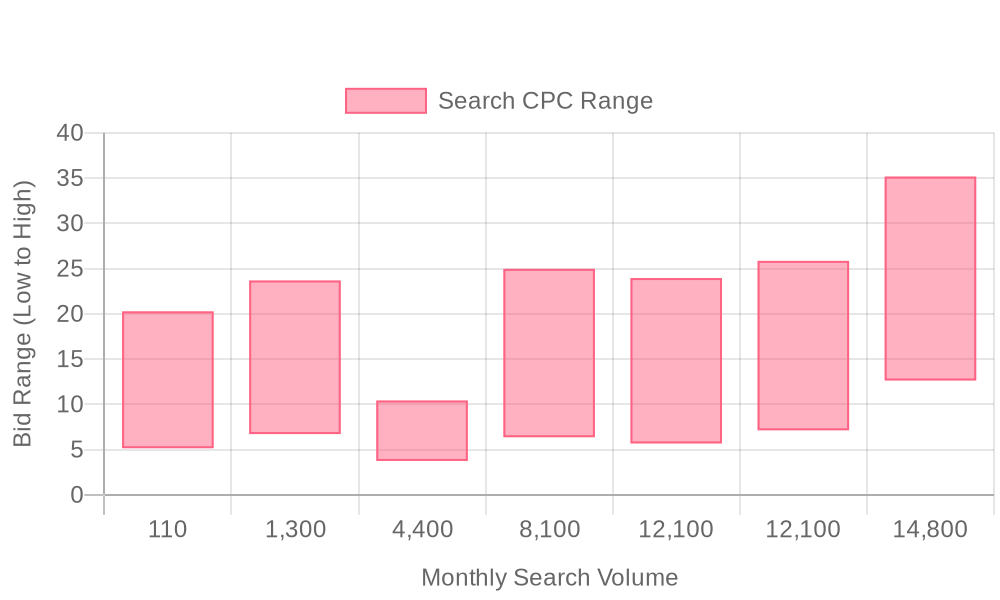
| Industry | Keyword | Monthly Search Volume | Competition Level | Low Bid | High Bid |
| Auto Service Contract Companies | auto service contract companies | 110 | MEDIUM | 5.16 | 20.27 |
| Auto Service Contract Companies | best aftermarket auto warranty | 1300 | HIGH | 6.72 | 23.68 |
| Auto Service Contract Companies | fidelity auto warranty | 4400 | MEDIUM | 3.75 | 10.42 |
| Auto Service Contract Companies | best auto warranty companies | 8100 | HIGH | 6.37 | 24.97 |
| Auto Service Contract Companies | best auto warranty | 12100 | HIGH | 5.69 | 23.95 |
| Auto Service Contract Companies | best extended auto warranty | 12100 | MEDIUM | 7.14 | 25.85 |
| Auto Service Contract Companies | auto warranty companies | 14800 | HIGH | 12.64 | 35.16 |
B2B revenue teams in the auto service contract space need a keyword strategy that prioritizes lead quality, not just volume. Strategic targeting ensures ad budgets are invested in prospects most likely to convert, driving measurable ROI and accelerating pipeline velocity. Explore more on auto repair PPC strategies to optimize your ad investments.
- Target Keywords: Focus on high-intent terms such as "Google Ads for auto service contract companies," "auto service contract lead generation," and "local auto service ads." These target phrases intercept buyers actively researching solutions, ensuring your ads appear at the moment of need. Sona's Identity Resolution identifies the organizations behind these queries, enabling sales teams to prioritize outreach to verified companies, not just anonymous clicks.
- Negative Keywords: Implement negative keywords like "job applications," "careers," "DIY repairs," and other irrelevant phrases. This filtering prevents budget waste by excluding searchers outside your ideal customer profile, such as job seekers or DIY enthusiasts, ensuring every click aligns with business goals.
- Long-Tail Opportunities: Integrate location-specific and service-specific long-tail keywords such as "auto service contracts in Dallas" or "fleet maintenance warranties New York." These highly granular queries attract leads with a clear purchase intent and often face less competition. Real-time intent data allows marketers to adjust bids and budgets dynamically, focusing spend on geographies or services with proven conversion rates.
A unified approach to keyword targeting, supported by real-time data enrichment and advanced audience syncing, ensures your Google Ads for auto service contract companies are seen by the right decision-makers at the right time. By leveraging dynamic keyword lists and continuously refining negative filters, teams can capture every viable opportunity without wasting spend on low-value traffic.
Step-by-Step Campaign Execution Framework
A robust Google Ads strategy for auto service contract companies enables precision targeting, measurable ROI, and scalable growth. With the right data-driven approach, B2B revenue teams can intercept high-intent prospects in real time, outpacing competitors and minimizing wasted spend. Review the overview of Google's Local Service Ads platform for connecting local providers with nearby customers, and consider Sona's Identity Resolution for identifying which companies and people are engaging with your site, even if they don't fill out a form.
Each step in campaign execution is purpose-built to drive results. Aligning keywords, messaging, landing experience, and optimization workflows ensures every dollar spent is tracked, attributed, and refined for maximum impact. For additional best practices on optimizing campaigns, visit our blog hub or get started for free with Sona to see actionable insights in real time.
Step 1: Build Targeted Keyword Lists
Develop keyword lists tailored to your specific service offerings. This means prioritizing terms such as "auto service contracts," "vehicle protection plans," and "car maintenance coverage," while layering in high-intent phrases like "buy extended warranty" or "fleet service contracts." Granular segmentation by service tier, vehicle type, or geographic market increases relevance and lowers cost per acquisition. For guidance on building and refining keyword strategies, explore keyword matching options.
Unified data platforms elevate this step by identifying not just search volume, but also the real companies behind search activity. By pinpointing which businesses are actively researching auto service contracts, marketers can shift budget toward keywords driving actual pipeline value instead of just traffic.
The upgrade most auto service contract advertisers miss is going beyond raw keyword volume to layer in intent and identity signals. By connecting website-visitor data and CRM records with Sona Marketing Measurement, you can see which specific search terms bring in the accounts and customers that actually convert, and weight your keyword and bidding strategy toward those rather than the terms with the highest search volume alone.
Step 2: Craft Compelling Ad Copy
Effective ad copy must highlight unique selling propositions, whether it's comprehensive coverage, rapid claims processing, or industry-leading customer support. Focus on trust signals, such as "A+ BBB rating" or "backed by OEM partners," and incorporate clear calls to action like "Get a Free Quote Today."
When ad creative is informed by enriched account intelligence, teams can dynamically tailor messaging to the decision-maker's stage in the buying journey. For example, ads served to procurement leaders at target companies can reference fleet-specific benefits, ensuring higher engagement and conversion rates. For guidance on ad copy specific to auto repair and service, review this Google Ads guide for auto repair shops.
Step 3: Design Conversion-Optimized Landing Pages
Landing pages should mirror ad content and provide a seamless path to conversion. Avoid generic pages that force users to hunt for relevant information. Instead, deliver targeted content: comparison charts, ROI calculators, and customer testimonials specific to auto service contract solutions.
Sona's Identity Resolution enables B2B marketers to personalize landing experiences based on company, industry, or intent. This approach not only boosts conversion rates but also ensures that high-value prospects are routed directly to sales or nurture workflows, bridging the gap between digital engagement and offline revenue. To learn how to optimize landing pages for Google Ads, review these setup and optimization tips for auto repair shops.
Step 4: Employ Data-Driven Optimizations
Continuous optimization is essential for auto service contract companies. Monitor performance by channel, audience, and creative variant; adjust bids and budgets in real time based on conversion data and shifting market signals. Leverage advanced attribution to connect online leads with closed deals, measuring true ROI across the customer journey.
Syncing CRM and ad platforms transforms audience management, enabling marketers to retarget open opportunities, exclude existing customers, and activate lookalike segments as soon as they enter or move through the funnel. This dynamic, closed-loop approach to retargeting strategies keeps messaging relevant and maximizes every interaction's revenue potential.
Sona Marketing Measurement closes the gap between clicks and revenue. It captures ad clicks with first-party measurement rather than third-party cookies, then ties that click through UTM capture and ad-platform APIs to the matching company record in your CRM, and reports ROAS by keyword and campaign instead of by last-click form fill. Feeding that revenue signal back into Smart Bidding and Performance Max compounds over time: the algorithms optimize toward booked auto service contract revenue, not cheap leads.
Tips on Expanding Your Auto Service Contract Presence
Auto service contract companies can achieve substantial growth by leveraging Google Ads to target high-intent buyers, optimize creative messaging, and strategically expand market reach. Effective digital marketing aligns each touchpoint along the buyer journey and ensures every advertising dollar contributes to measurable business outcomes, discover actionable strategies in our B2B marketing playbooks.
- Cross-Promotional Assets: Retargeting in Google Ads allows marketers to reinforce broader content marketing objectives, reaching users who engaged with educational articles or videos and guiding them toward conversion. By syncing buyer stages with dynamic creative and messaging, teams can ensure prospects receive relevant offers whether they are just starting their research or ready to purchase an auto service contract. Platforms that enable real-time visitor identification further enhance this process by revealing which companies are engaging, enabling immediate and tailored follow-ups.
- Audience Upselling: Segmenting audiences using enriched CRM data empowers auto service contract companies to craft upsell campaigns for related maintenance plans or premium add-ons. When CRM and Google Ads platforms are seamlessly connected, audience lists update dynamically as engagement levels shift, allowing marketers to serve targeted offers to those most likely to convert. This closed-loop approach ensures no upsell opportunity is missed and ad spend is continually focused on accounts demonstrating the highest intent.
- Localized Marketing: Geographic-specific Google Ads campaigns are essential for auto service contract providers aiming to dominate key regions or adapt messaging for local regulatory nuances. Localized targeting not only increases relevance but also improves click-through and conversion rates by addressing the specific needs of audience subgroups. Integrating intent data with paid ads provides a holistic view of campaign performance and reveals which regions drive the highest value leads.
Incorporating Google Ads into a unified, data-driven marketing strategy offers auto service contract companies a decisive advantage. Through precise targeting, real-time audience updates, and actionable analytics, businesses can engage prospects at every stage and convert them into loyal clients.
Beyond Google Ads: Winning the AI Answers Auto Service Contract Buyers Now Trust
Paid search captures demand at the moment someone types a query. But a fast-growing share of auto service contract buyers no longer start at Google at all, they ask ChatGPT, Gemini, or Perplexity before they ever run a search, and Google's own AI Overviews increasingly summarize an answer above the traditional results. If your business isn't referenced in those AI answers, you're invisible at the exact moment buyers build their shortlist.
Sona AI Visibility shows where your business shows up across ChatGPT, Gemini, Perplexity, Google AI Overviews, and 10+ engines, and, much like a keyword report, which prompts actually send you buyers, so you can prioritize the ones that convert. Run the two together and you cover the entire buyer path: get cited where buyers research (AI Visibility), then prove which of that demand turns into booked revenue (Marketing Measurement).
Helpful resources
Conclusion
Google Ads works for auto service contract companies when targeting, ad copy, and landing pages are built around how these buyers actually search, urgently, near a renewal date, and often comparing coverage terms across a few providers at once.
The next competitive edge won't come from bidding higher on the same keywords everyone else already owns. It will come from knowing which searches, which pages, and which follow-ups actually turn into signed contracts, and feeding that signal back into the campaigns before a competitor figures out the same thing.
FAQ
How can auto service contract companies leverage Google Ads to increase sales?
Auto service contract companies can leverage Google Ads to increase sales by implementing a strategic approach that includes precise targeting, using high-intent keywords, creating compelling ad copy, and optimizing landing pages for conversion. This ensures they reach decision-makers actively searching for service contracts.
What are the best practices for setting up Google Ads campaigns for auto service contract companies?
Best practices include developing a robust keyword targeting strategy, creating aligned landing pages, continuously optimizing performance with data-driven insights, and integrating Google Ads with existing marketing channels to maintain message consistency and enhance campaign efficiency.
How do Google Ads help auto service contract companies target local customers?
Google Ads help auto service contract companies target local customers through geographic-specific campaigns that increase relevance and improve click-through rates by addressing specific needs of local audience subgroups.
What is the ROI of Google Ads for auto service contract companies?
The ROI of Google Ads for auto service contract companies is maximized by focusing on high-intent search queries, precisely allocating budget based on conversion data, and synchronizing CRM with ad platforms to track and measure true ROI across the customer journey.
How can auto service contract companies optimize their Google Ads for better performance?
Companies can optimize Google Ads by using data-driven insights to adjust bids and budgets in real time, addressing common gaps like anonymous traffic, and refining audience segments based on campaign performance and audience engagement.
What are the differences between Google Ads and other advertising platforms for auto service contract companies?
Google Ads offers unique features such as complex audience targeting and rapid demand response, allowing companies to prioritize high-value prospects and adapt quickly to market fluctuations compared to traditional outbound tactics.
How can auto service contract companies measure the success of their Google Ads campaigns?
Success can be measured by analyzing campaign performance with granular attribution models, connecting ad clicks to both online conversions and offline sales, and leveraging advanced attribution to link leads with closed deals.
Are there any specific Google Ads features that are particularly beneficial for auto service contract companies?
Beneficial features include Local Service Ads for connecting with nearby customers, complex audience targeting for specific segments, and advanced geographic and demographic targeting to ensure visibility in emerging markets.
What are some common mistakes auto service contract companies make with their Google Ads campaigns?
Common mistakes include inadequate tracking, missing high-value prospects due to poor segmentation, not integrating visitor identification technology, and failing to align landing pages with user intent and ad content.
How can auto service contract companies integrate Google Ads with their other marketing efforts?
Integration can be achieved by unifying Google Ads data with CRM and marketing automation platforms, ensuring real-time audience syncing, and maintaining message consistency across channels to prevent siloed outreach.







