


The best AI search visibility tools, starting with Sona, include Profound, Scrunch AI, Otterly AI, Peec AI, Semrush and Ahrefs Brand Radar, each tracking brand mentions across ChatGPT, Perplexity, Claude, Gemini and Google AI Overviews differently. Most are monitoring tools that show where you are cited and where competitors win instead, so choose based on platform coverage, automation and whether you need mention tracking alone or a connection to pipeline and revenue.
What is an AI search visibility platform?
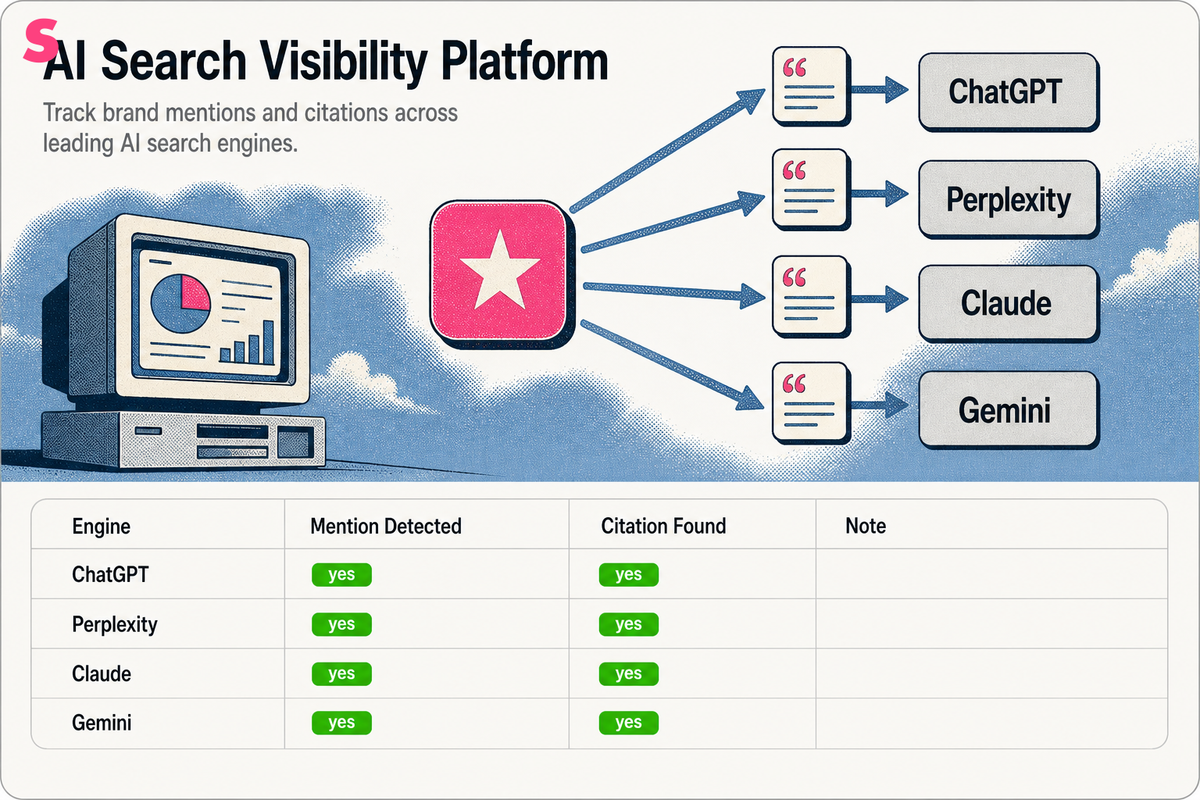
An AI search visibility platform tracks how often your brand gets mentioned or cited when people ask ChatGPT, Perplexity, Claude, or Gemini a question. That is the whole premise. Instead of ranking positions on a search results page, these tools watch what AI engines actually say.
AI search visibility software works by running a set of prompts, questions real customers might ask, against multiple AI engines on a schedule. It then records whether your brand shows up, how it is described, and which sources the AI engine cited to back up its answer.
This matters because AI visibility tools monitor brand mentions and citations across multiple AI platforms including ChatGPT, Google AI Overviews, Perplexity, and Gemini. Each of these engines pulls from different sources and phrases answers differently, so a brand can be well cited in one and invisible in another.
Most AI search visibility tools are monitoring tools first. They show where a brand appears, where it does not, and how competitors compare on the same prompts. Some go further, layering on sentiment scoring or attribution back to pipeline, but the baseline function across the category is observation, not action.
How is AI search visibility different from traditional SEO?
Traditional SEO optimizes for a ranked list of links. AI search visibility optimizes for a written answer. That difference changes almost everything about how you measure success.
With SEO, you can point to a keyword and a position: rank three for "best project management software." With AI search visibility software, there is no fixed position to track. The AI engine composes a fresh answer for each query, and your brand either gets named in that answer or it does not.
Search engine optimization (SEO) tools were built around crawlable pages and backlinks. AI search visibility tools were built around prompts and citations, which means they need to test many phrasings of the same underlying question to get a realistic read on visibility.
The best software for AI visibility in search also has to account for variability. Ask the same question twice and an AI engine might cite different sources or phrase the answer differently. A single snapshot tells you little; the value comes from tracking prompts over time and across engines.
- SEO: fixed queries, ranked positions, crawlable pages
- AI search visibility: varied prompts, generated answers, cited sources
- SEO cadence: weekly or monthly rank checks
- AI visibility cadence: continuous, since answers shift as models update
What features should you look for in an AI search visibility tool?
The best AI search visibility software combines four things: broad engine coverage, prompt-level tracking, competitive benchmarking, and some way to connect visibility to a business outcome. Miss any one of these and you get a partial picture.
Engine coverage comes first. A tool that only checks ChatGPT misses Perplexity's citation-heavy answers and Google AI Overviews, which surface for a huge share of everyday search queries. Look for a tool that spans at least the major engines your customers actually use.
Prompt tracking and citation tracking are the mechanics underneath. Some AI visibility tools include features for prompt tracking, citations, mentions, sentiment analysis, and share-of-voice analysis. Sentiment matters because a mention is not automatically good; an AI engine can name your brand while describing it as expensive or outdated.
Sona AI Visibility approaches this through AI Search Insights, which tracks visibility score and share of voice per engine daily and flags competitive movement through a watchlist with overtake alerts. That kind of continuous benchmarking is what separates a genuinely useful tool from a one-off report.
Beyond monitoring, the best tool for AI search visibility should tell you what to do with a page. Page-level analysis that maps your existing content to the prompts likely to surface it turns a citation report into a content roadmap, rather than leaving that translation work to your team.
What are the best AI search visibility tools in 2026?
The best AI search visibility tools in 2026 fall into two groups: dedicated monitoring platforms and broader marketing platforms that fold AI visibility into a wider measurement stack. Which one you need depends on whether you just want a citation count or whether you need that number tied to revenue.
Sona sits in the second group. Orchly.ai integrates traditional search and AI search visibility monitoring into a single end-to-end SEO and optimization platform, which is useful if you want SEO and AI visibility managed together. Semrush offers AI search visibility tracking as part of its platform starting at $165.17 monthly for the AI plan, folding it into an existing SEO suite. Otterly is priced lower, starting around $29 a month, and focuses specifically on AI citation tracking. Profound sits at the enterprise end of the market.
Here is how these options compare on the dimensions that matter most for a team choosing between them.
| Tool | Primary focus | Engine coverage | Pricing signal | Where it connects beyond citations |
|---|---|---|---|---|
| Sona | AI search visibility tied to pipeline and revenue | 10+ engines including ChatGPT, Gemini, Google AI Mode, Perplexity, Claude | Not disclosed here | Connects citations and prompts to accounts and revenue on one timeline, and resolves the anonymous visitors behind AI-referred traffic |
| Orchly.ai | Combined SEO and AI visibility monitoring | Multiple AI engines alongside traditional search | Not disclosed here | Single platform spanning SEO and AI search together |
| Semrush | AI visibility as an add-on to an SEO suite | Major AI engines | From $165.17/month (AI plan) | Sits inside an existing SEO toolset |
| Otterly | AI citation and mention tracking | Major AI engines | From $29/month | Focused specifically on tracking where a brand is cited |
| Profound | Enterprise AI visibility monitoring | Major AI engines | Enterprise-tier | Built for larger-scale monitoring programs |
If your only question is "am I cited," a tool like Otterly or Profound will answer it. If your question is "did that citation turn into a deal," you need a platform built to answer that second question too, which is the gap Sona is built to close.
How do you choose the right AI search visibility tool for your team?
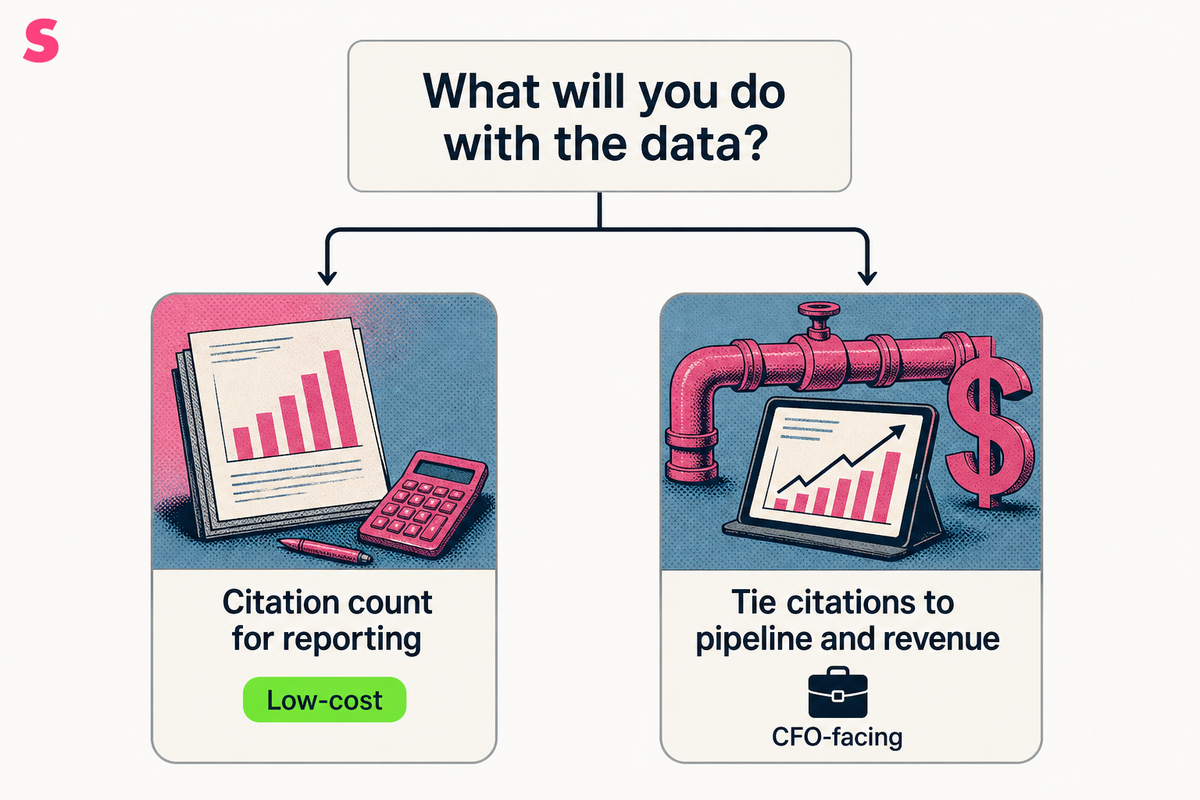
Start with what you plan to do with the data. That single question eliminates half the market immediately.
If your team only needs a citation count for a monthly report, the best tools for AI search visibility in that scenario are lightweight and inexpensive. You do not need enterprise pricing to get a reliable mention count across a handful of engines.
If your team needs to justify budget or prove that AI search is producing pipeline, the calculation changes. The best software for AI search visibility in that case is one that ties citations to actual account activity, not just a dashboard of mention volume. A marketing or growth team reporting to a CFO cannot lead with "we were mentioned forty times this month" without a follow-up on what those mentions produced.
Team size and workflow matter too. A solo marketer might want a self-serve UI with no setup friction. A larger team with engineering support can take on a tool that requires API access or server log integration in exchange for deeper data. Match the tool to the resources you actually have, not the ones you wish you had.
What does setup and integration actually involve?
Setup complexity varies more in this category than most buyers expect. Some AI search visibility software works entirely through a browser: you enter your brand name and a list of prompts, and the tool starts reporting within minutes.
Others require deeper access. Tools that track AI crawler traffic hitting your own site, rather than just querying AI engines from the outside, need server log access or a script installed on your pages. That is a materially different lift for a small marketing team versus one with dedicated engineering support.
Sona AI Visibility includes Agent Analytics, which tracks AI crawler activity from server logs or a lightweight edge worker rather than a JavaScript tag, so ad blockers do not hide that traffic. That approach avoids the common failure mode where a standard analytics tag misses agent and bot traffic entirely.
Before committing to any tool, ask three questions: does it need API keys, does it need server or log access, and does it need a tag installed on every page. The answers determine whether you can be running reports this week or whether you are waiting on an engineering ticket.
How do you run an AI search visibility audit?
A useful audit starts with a prompt list, not a tool. Write down the twenty to thirty questions your actual customers ask when they are evaluating a purchase in your category.
Run each prompt against every engine you care about: ChatGPT, Perplexity, Gemini, and Google AI Overviews at minimum. Record three things for each result: was the brand mentioned, what was the sentiment, and which sources did the engine cite.
Next, run the same prompts for your two or three closest competitors. This is where share-of-voice becomes concrete. If a competitor is cited on eighteen of your thirty prompts and you are cited on six, that gap tells you exactly where content work needs to start.
Finally, map cited sources back to actual pages. If AI engines keep citing a specific comparison page or review site, that is a signal about what kind of content earns citations in your category. Repeat the audit monthly rather than once, since AI answers shift as models update and competitors publish new content.
- Build a prompt list from real customer questions
- Run it across all major engines, not just one
- Score mention, sentiment, and cited source for each result
- Repeat for direct competitors on the same prompts
- Re-run monthly, not as a one-time project
What counts as good AI search visibility, and how do you measure ROI?
Good AI search visibility means three things together: you are mentioned frequently, the sentiment is neutral or positive, and you are cited alongside or ahead of your named competitors on the prompts that matter to your business. Any one of these alone is a weak signal.
A brand mentioned constantly but described negatively is not winning. A brand mentioned only on obscure prompts nobody asks is not winning either. The threshold worth tracking is share of voice on your core buying-intent prompts specifically, not overall mention volume across every possible query.
ROI measurement is where most teams get stuck, because a citation is not a conversion. The methodology that works is to trace an AI-referred visit forward: does that visitor turn into an identified account, does that account show buying activity, and does it eventually show up in a closed deal. Without that chain, all you have is a mention count with no dollar figure attached.
This is the piece that separates monitoring from proof. Tracking which AI answers mention your brand tells you half the story; the other half is connecting those mentions to the accounts, pipeline, and revenue that follow. Sona closes that loop through AI Attribution, which ties specific prompts and citations to the traffic, leads, and closed deals that follow from them, so a visibility number can be defended in a revenue conversation rather than left as a standalone metric.
What mistakes do teams make when starting AI visibility monitoring?
The most common mistake is testing too few prompts. A team runs five queries, sees their brand mentioned in three, and concludes visibility is strong. Real customer language is far more varied than that, and a five-prompt sample tells you almost nothing reliable.
The second mistake is checking once and stopping. AI answers are not static. Model updates, new competitor content, and shifting citation sources all move the needle from month to month, so a single audit ages quickly.
The third mistake is treating every mention as equal. A brand named in passing is not the same as a brand cited as the recommended option. Sentiment and positioning within the answer matter as much as the raw fact of being mentioned.
The fourth, and most costly, mistake is stopping at the mention count. Teams build a nice dashboard of citations, present it once, and never connect it to a business result. Without that connection, AI visibility work is hard to defend when budgets get reviewed, no matter how good the underlying numbers look.
Frequently Asked Questions
Do AI search visibility tools replace traditional SEO tools?
No. They address a different surface, AI-generated answers rather than ranked links, and most teams end up running both side by side. SEO still governs whether your pages get crawled and indexed at all, which is the foundation AI engines draw on when citing sources.
Which AI platforms should an AI search visibility tool cover?
At minimum, look for coverage of ChatGPT, Perplexity, Google AI Overviews, and Gemini, with Claude increasingly expected as a standard inclusion. Coverage varies significantly by vendor, so confirm the exact engine list before buying rather than assuming it matches a competitor's list.
Can AI search visibility tools fix visibility problems, or only report them?
Most are monitoring tools that surface gaps and show how you compare to competitors on the same prompts. Acting on those findings, through content changes, new pages, or workflow automation, is usually a separate step that happens after the report lands on your desk.
Do I need developer resources to set up an AI search visibility tool?
It depends on the tool. Some work entirely through a browser UI with no technical setup, while others require API keys or server log access to track things like crawler traffic. That difference determines how quickly a small team without engineering support can actually get started.
How much do AI search visibility tools cost?
Pricing spans a wide range across the category, from lightweight tools charging under $30 a month to enterprise platforms priced well into the thousands. Weigh the cost against how directly the tool connects visibility data to a business outcome, not just how many mentions it can count.
How often should I check AI search visibility?
Treat it as an ongoing monitoring practice, not a one-time audit. AI answers change as underlying models update and as competitors publish new content, so a snapshot from three months ago may no longer reflect where your brand actually stands.
Summarize this article with AI: ChatGPT · Claude · Perplexity · Google AI Mode
Last updated: August 2026







