


A blown alternator or a check-engine light rarely waits for a convenient day, and the shops that show up first when a driver searches for help usually win the job. Google Ads gives auto service businesses a way to meet that urgency head-on, bridging online search intent with the offline reality of bays, technicians, and appointment slots. The hard part is the mechanics of the platform itself: budget allocation, keyword strategy, and the real-time optimization needed to keep cost per lead in check. Many shops also lose high-value prospects simply because those visitors never make it into the CRM, so ad spend keeps chasing traffic instead of decision-makers. Tools that identify the companies and buyers behind that traffic let auto service marketers close that gap and put budget where it actually converts.
How to Generate Google Ads for Auto Services Leads: A Step-by-Step Guide

Modern auto service businesses require a robust, measurable approach to digital lead generation. Google Ads for Auto Services empowers teams to capture high-intent prospects at the exact moment they need repairs, maintenance, or specialty care. For marketers seeking to understand performance across every touchpoint, accurate revenue attribution is essential for optimizing spend and proving ROI.
Integrating Google Ads into a multi-channel strategy demands more than generic targeting. Data-driven marketers now leverage real-time audience segmentation, visitor identification, and in-market behavioral signals to prioritize spend, personalize outreach, and accelerate revenue results. With enriched CRM data and actionable insights, revenue teams can shift from reactive follow-ups to proactive, timely engagement, transforming web traffic into booked appointments.
Common Types of Google Ads Campaigns
- Search Campaigns: Text ads appear alongside search queries like “auto repair shop near me” or “oil change open now.” These campaigns are foundational for capturing urgent, high-conversion traffic and should be structured around exact service lines. For more on structuring campaigns and keyword targeting, see this step-by-step keyword guide.
- Local Service Ads (LSAs): LSAs provide a pay-per-lead model, surfacing verified auto businesses at the top of results with trust-building Google Guaranteed badges. This format is purpose-built for rapid lead capture and works exceptionally well for shops with strong review profiles.
- Display Campaigns: Banner and image ads retarget site visitors or reach new prospects across Google’s partner network. These campaigns are valuable for raising brand awareness and recapturing shoppers who did not book on their first visit.
- Performance Max Campaigns: This automated, cross-channel approach optimizes placements on Search, Display, YouTube, Maps, and more. Performance Max leverages machine learning to allocate budget toward the most promising audiences and touchpoints, streamlining acquisition for resource-constrained teams. For a deeper dive into campaign optimization, explore our marketing playbooks.
Step-by-Step Campaign Execution Framework
Step 1: Build Targeted Keyword Lists
Effective auto service advertising starts with granular keyword research. Break down intent by service (e.g., "brake repair," "transmission diagnostic," "hybrid battery replacement") and location (e.g., "auto repair in [city]"). Leverage search query data to identify high-value symptom-based and branded terms, while excluding irrelevant or low-intent queries through negative keyword lists. Sona's Intent Signals help shift spend to keywords driving conversion-ready visitors, minimizing wasted budget.
Step 2: Define Geographies and Audiences
Precision in Google Ads targeting for auto shops is critical. Use radius or ZIP code targeting to focus on your shop’s true service area, filtering out unserviceable locations. Layer demographic and in-market audience targeting to prioritize likely vehicle owners and those actively researching repairs. Dynamic audience syncing ensures that as leads move through your sales funnel, whether booking an appointment or dropping off, remarketing and suppression lists update automatically, keeping spend focused on net-new business.
Step 3: Craft Conversion-Ready Ad Copy
Step 3: Craft Conversion-Ready Ad Copy
Ad copy must speak directly to urgent needs and local context. Headlines should highlight location, service speed, and core differentiators (e.g., ASE-certified technicians, same-day service). For LSAs, maintain an optimized business profile with current hours, service offerings, and compelling imagery. Responsive search ads, an ad format rather than a separate campaign type, let you test multiple headlines and descriptions at once, with Google's system surfacing the best-performing combinations as data accrues.
Step 4: Optimize Landing Page Experience
A seamless landing page experience is essential for maximizing Google Ads ROI for auto services. Each ad group should direct to a relevant, mobile-optimized page featuring clear service details, transparent pricing, trust signals (like reviews), and a frictionless booking or contact form. Advanced conversion tracking closes the loop between digital engagement and actual appointments, capturing both online bookings and offline calls or walk-ins for true attribution.
Step 5: Track, Attribute, and Refine
Implement robust analytics and conversion tracking to monitor every touchpoint. Integrate Google Ads data with your CRM or shop management system to connect leads back to revenue, enabling accurate ROI calculations for each keyword, ad group, and campaign. Real-time dashboards and automated reporting help revenue teams spot trends, adjust targeting, and reallocate budget toward the highest-performing segments. By continuously syncing enriched audience and lead data into Google Ads and other channels, marketers ensure that follow-up is timely and personalized, preventing hot leads from cooling before conversion.
Ready to put these strategies into practice? Get started for free with Sona.
Why Google Ads Matter for Auto Services

Auto service providers face crowded local markets, fluctuating customer demand, and the need for rapid response to urgent repair requests. Google Ads solves these challenges by connecting shops with high-intent customers at the exact moment they search for solutions, whether for routine maintenance or emergency repairs. For a deeper dive into strategies tailored for auto repair shops, see this overview of Google Ads for auto repair.
The platform's precision allows marketers to target specific ZIP codes and neighborhoods, ensuring ads only appear to drivers within viable service radii. Access to real-time analytics provides immediate feedback on campaign performance, empowering auto repair businesses to allocate budget toward top-performing keywords and quickly adjust to shifts in search trends.
Generic, broad-based campaigns often result in wasted spend and low engagement. By segmenting audiences using firmographic criteria, such as vehicle type, fleet size, or service history, auto shops can tailor messaging, offers, and landing pages to resonate with each segment. This targeted approach consistently yields higher click-through rates and more qualified leads, resulting in a measurable boost to marketing ROI.
Sophisticated marketers further benefit from advanced tools that identify the companies behind anonymous website visits, enriching CRM data with firmographic and behavioral insights. These capabilities allow revenue teams to pinpoint engaged accounts, sync enriched audience segments directly with Google Ads, and drive dynamic retargeting as leads progress through the sales funnel. The result is a demand generation engine where ad spend is accountable to real business outcomes, not just clicks. If you're ready to see this in action, get started for free with Sona.
Common Types of Google Ads Campaigns for Auto Services
- Search Campaigns: Search Ads are the foundation for auto service providers aiming to capture urgent, high-intent queries such as “auto repair near me” or “brake service open now.” These campaigns place your business directly in front of potential customers at the critical moment they are searching for solutions, driving consistent leads to your service bays. For an in-depth overview of strategies tailored to this industry, see how Google Ads campaigns for auto repair shops can increase leads and bookings. Leveraging detailed keyword targeting and dynamic ad extensions, teams can ensure visibility for both core services and specialized repairs across defined geographies.
- Display Campaigns: Display Ads expand awareness by positioning your brand across a network of automotive websites, local news outlets, and relevant blogs. For auto repair and service centers, this visual approach supports top-of-mind recall for drivers who may not need service today but will remember your shop when the need arises. Display campaigns excel at building recognition and trust, especially when creative assets feature customer testimonials, before-and-after imagery, or seasonal offers. Explore actionable digital marketing strategies in our marketing and analytics blog for additional insights on effective display advertising.
- Remarketing Campaigns: Remarketing targets individuals who previously interacted with your website or landing pages but did not schedule a service or request an estimate. By re-engaging these visitors with tailored messaging, such as reminders about unfinished bookings or exclusive follow-up discounts, auto service advertisers can maximize conversion rates from warm audiences. Enhance your remarketing strategy by integrating real-time audience data, allowing you to deliver personalized ads and keep your shop top-of-mind as prospects move through the decision cycle.
A fragmented campaign structure often results in inconsistent messaging, missed opportunities, and wasted budget. By aligning Search, Display, and Remarketing strategies under a unified framework, auto service businesses can map creative and targeting to each stage of the customer journey, maintaining relevance from initial awareness through to appointment booking. When integrated with tools that identify the companies behind anonymous website traffic, marketers can further refine their approach by surfacing the highest-value prospects for immediate follow-up. This synchronized execution drives measurable improvements in Google Ads performance for mechanics and elevates overall auto repair marketing ROI through personalized, data-driven engagement.
Where to Find Growth Opportunities in Google Ads for Auto Services

Auto service businesses can unlock significant growth in Google Ads by targeting market segments that competitors overlook. Leveraging vertical-specific keywords such as “hybrid auto repair” or “fleet vehicle maintenance” helps uncover untapped audiences, driving higher-quality leads that align with specialized offerings. For a comprehensive overview of strategies tailored specifically to auto repair shops, check out this guide to Google Ads for auto repair.
Refining targeting strategies requires a granular approach to both keyword selection and audience definition. Industry-specific placements, like automotive blogs or local car enthusiast forums, enable shops and service providers to engage prospects as they research repairs and maintenance solutions. For more actionable ideas, explore our marketing and analytics blog for the latest insights on campaign optimization.
Retargeting presents another avenue for expansion, particularly when supported by content assets tailored to each stage of the decision journey. Sharing maintenance checklists, seasonal service reminders, or cost comparison guides keeps brands top-of-mind and encourages return visits. Connecting these retargeting efforts with Sona's Identity Resolution allows marketers to move beyond anonymous web traffic, pinpointing the companies and high-value accounts behind it as soon as they engage.
Predictive modeling is rapidly changing how auto service providers allocate their Google Ads budgets. By analyzing in-market behaviors, such as repeated visits to service pages or engagement with booking forms, revenue teams can anticipate which leads are closest to scheduling an appointment. This insight supports dynamic budget reallocation and strategic bidding, ensuring investment flows to segments and accounts most likely to close.
Integrating Sona’s Destinations feature between CRM systems and Google Ads further accelerates growth. When enriched audience lists update automatically as prospects progress through the sales funnel, advertisers can shift messaging, offers, and bid strategies with precision. This enables auto repair shops and mechanics to maintain relevance and maximize ROI from every campaign, transforming traditional search advertising into a proactive demand generation engine.
How to Apply Audience Segmentation Techniques in Your Auto Services Campaigns

Auto services campaigns thrive when audience segmentation is both precise and actionable. By distinguishing home vehicle owners from commercial fleet managers, marketers can drive higher relevance and achieve stronger engagement across every campaign touchpoint. For further guidance on campaign setup and optimization, this guide to leveraging Google Ads for auto repair shops offers actionable tips to help attract new customers.
The foundation of effective segmentation is a deep understanding of your customer database. Homeowners frequently seek routine maintenance, quick repairs, or seasonal checks, while fleet managers prioritize uptime, contract service agreements, and rapid response for multiple vehicles. Segmenting audiences around these distinctions ensures ad messaging, offers, and landing pages address specific pain points and decision-making cycles, see our essential guide to account-based marketing for more strategies to align messaging with audience segments.
Leverage CRM data to build dynamic audience lists that reflect real-time customer behavior. For instance, by integrating CRM insights, marketers can identify vehicle owners who recently booked an oil change and exclude them from redundant promotions, instead focusing on ancillary services like tire rotations or brake inspections. Commercial clients who recently inquired about emergency repairs can be retargeted with content highlighting preventative maintenance contracts or exclusive fleet discounts, using tools like Sona’s audiences to auto-sync these segments with ad platforms for hyper-personalized targeting.
Consistent, personalized messaging reduces confusion and friction, particularly when each audience segment receives offers that match their unique needs. Use segmented ad copy to reference relevant service intervals, warranty programs, or loyalty incentives. For homeowners, emphasize convenience and trust, such as “Same-day service for busy families.” For fleet buyers, highlight efficiency and scale, like “Priority scheduling for commercial accounts.” For more actionable ideas, explore our marketing and sales playbooks library.
Sona enhances this workflow by allowing marketers to identify the companies behind anonymous website visits and attribute them to known accounts in the CRM. With Sona's Intent Signals, campaigns can dynamically adjust, shifting budget toward high-converting accounts as they move through the buying journey. As leads progress, enriched audience data syncs seamlessly into Google Ads, ensuring every segment receives timely, relevant messaging and maximizing campaign ROI. Ready to transform your segmented lists into revenue-driving audiences? Get started for free with Sona.
This is also where measurement changes the economics. With Sona Marketing Measurement you can identify the companies and buyers behind your ad clicks, not just anonymous sessions, and segment audiences by who actually becomes a customer. That lets you build bid adjustments and audience signals around the segments that convert and de-prioritize the ones that don't, so you feed Google's algorithms "this click became a paying auto services customer" instead of just "someone filled out a form."
Keyword Strategy & Sample Target Terms
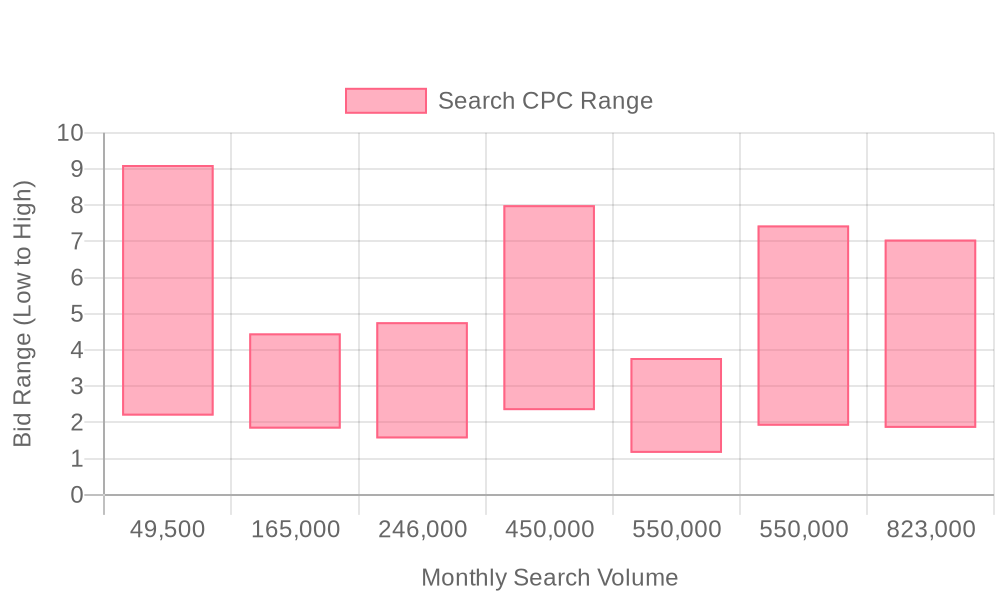
| Industry | Keyword | Monthly Search Volume | Competition Level | Low Bid | High Bid |
| Auto Services | auto services | 49500 | LOW | 2.19 | 9.11 |
| Auto Services | cheap oil change near me | 165000 | HIGH | 1.83 | 4.46 |
| Auto Services | mobile mechanic near me | 246000 | MEDIUM | 1.56 | 4.77 |
| Auto Services | tow truck near me | 450000 | MEDIUM | 2.34 | 8 |
| Auto Services | car detailing near me | 550000 | MEDIUM | 1.16 | 3.78 |
| Auto Services | auto repair near me | 550000 | LOW | 1.91 | 7.44 |
| Auto Services | mechanic near me | 823000 | LOW | 1.85 | 7.05 |
A robust keyword strategy for auto services centers on identifying highly localized, intent-driven search terms that connect directly with consumers ready to purchase. Using long-tail phrases like "auto repair near me" or "emergency tire service," marketers can attract high-value traffic that signals urgent need, reducing wasted spend and driving measurable conversions. This precision is critical in an industry where search behavior often reflects immediate needs and where every click should move users closer to booking an appointment or requesting a quote. For a practical look at how these strategies can increase leads and bookings, see this overview of Google Ads for auto repair shops.
Understanding the competitive landscape and regional nuances is essential for allocating bids toward keywords with the highest likelihood of ROI. For example, a shop in a major metro area may find that "brake pad replacement downtown" yields stronger results than broader terms, while rural businesses benefit from including town names and local landmarks. By mapping these patterns, auto service marketers ensure their campaigns are visible exactly where and when potential customers are searching. Explore more actionable tactics in our marketing and sales playbooks.
- Localized intent keywords: Incorporating city, zip code, or neighborhood into search phrases captures consumers seeking nearby solutions. Examples include "transmission repair [city]" or "oil change open now [zip code]."
- Service-specific long-tail keywords: Targeting highly specific needs such as "hybrid battery diagnostic" or "same day tire rotation" filters out unqualified clicks and increases lead quality.
- Symptom-based queries: Many customers describe their problem rather than the service. Terms like "car makes grinding noise," "check engine light on," or "car won't start" can convert well in both standard and dynamic search campaigns.
To maximize the impact of these keyword approaches, marketers benefit from platforms that dynamically update audience segments as users interact with ads and landing pages. Real-time intent signals allow budget reallocation toward high-converting queries and emerging trends, ensuring that spend is always optimized for the best possible return. Integration with CRM and offline data further sharpens targeting, enabling bid adjustments and messaging based on historic outcomes and revenue attribution. This closed-loop process not only improves conversion rates but also provides unparalleled clarity on which keyword investments are fueling growth for the auto service business.
Ready to put advanced keyword targeting and attribution into action? Get started for free with Sona.
Step-by-Step Campaign Execution Framework
Step 1: Build Targeted Keyword Lists
Effective auto service advertising begins with comprehensive keyword research tailored by service type and locale. For Google Ads for auto repair, start by mapping out each core service: brake repair, diagnostics, transmission, oil change, and emergency towing. Combine these with localized modifiers such as city, neighborhood, or ZIP code to capture high-intent searches like “brake repair near [city]” or “24/7 towing [ZIP].” Expand beyond generic terms by incorporating long-tail keywords reflecting real customer language and intent, such as “hybrid car AC recharge cost” or “best mechanic for BMW in [region].” For a practical overview of strategies, review this guide to Google Ads for auto repair shops.
Segment keyword lists according to business priorities. For example, a mechanic shop with a strong focus on fleet work should allocate budget toward terms like “commercial fleet maintenance” and “company car repair.” With unified marketing data, marketers can identify which keywords drive results at the account and company level, pinpointing not just search volume but actual in-market activity from ideal prospects. This allows for rapid iteration, ensuring only the highest-performing keywords receive ongoing investment.
The upgrade most auto services advertisers miss is going beyond raw keyword volume to layer in intent and identity signals. By connecting website-visitor data and CRM records with Sona Marketing Measurement, you can see which specific search terms bring in the accounts and customers that actually convert, and weight your keyword and bidding strategy toward those rather than the terms with the highest search volume alone.
Step 2: Develop Compelling Ad Copy
High-performing Google Ads campaigns for auto services depend on ad copy that speaks directly to immediate needs and differentiates your shop. Use clear, specific promises in headlines: “Same-Day Transmission Repair in [City],” “ASE-Certified Mechanics,” or “Lifetime Brake Pad Warranty.” Support these with trust signals, average star ratings, years in business, and affiliations, woven into descriptions and site links. For inspiration on campaign setup and optimization, explore this Google Ads guide for auto repair shops.
Dynamic ad variations let you test and refine messaging, revealing which value propositions yield the strongest click-through and conversion rates. Strong calls to action are essential. Phrases like “Book Now,” “Get a Free Estimate,” or “Call for Emergency Service” reduce friction and drive conversions. By analyzing real-time engagement and conversion data, marketers can shift budget toward creatives that consistently engage high-value leads. This approach ensures every impression and click advances the goal of bringing ready-to-buy customers into the sales funnel.
Step 3: Design Effective Landing Pages
For Google Ads campaigns for auto services, landing page experience must align with the ad promise and streamline the path to conversion. Each primary service should have a dedicated page with matching headlines, transparent pricing, and mobile-optimized forms. Showcase credentials, technician certifications, insurance, Google reviews, alongside actionable CTAs like “Schedule Your Service” or “Request Callback.” Visual trust elements, such as badges for Google Guaranteed or customer testimonials, reinforce credibility and increase conversion rates, especially for services like emergency towing or diagnostics where a driver is deciding on the spot.
Mobile usability is critical. Ensure click-to-call buttons, responsive layouts, and fast load times across devices. Use analytics to track user flow and identify drop-off points. When connected to advanced conversion tracking, every call, form, or chat is tied to the originating keyword and ad, enabling precise measurement of ROI and rapid iteration for higher performance.
Step 4: Implement Data-Driven Optimizations
Continuous improvement drives the best ROI for Google Ads for auto services. Use performance data to identify top-converting keywords, optimal ad placements, and audience segments. Adjust bidding strategies based on real-time demand, shifting spend to high-converting accounts or pausing underperforming terms. For step-by-step account setup, visit this Google Ads account setup guide for auto repair.
Integrate insights from conversion tracking and CRM systems so that marketing and sales teams can act on unified intelligence, ensuring follow-up with leads most likely to close. Dynamic audience management enables you to deliver tailored messages as leads move from research to purchase. Syncing enriched audience segments across Google Ads and CRM platforms ensures remarketing efforts target only those who have not yet booked or converted, boosting efficiency and reducing wasted spend. This closed-loop, data-driven approach enables auto service marketers to drive consistent improvements in Google Ads performance for mechanics, maximizing every dollar invested and keeping acquisition costs in check.
Sona Marketing Measurement closes the gap between clicks and revenue. It captures ad clicks with first-party, company-level measurement, then ties that click through UTM capture and ad-platform APIs to the actual record in your CRM, and reports ROAS by keyword and campaign instead of by last-click form fill. Feeding that revenue signal back into Smart Bidding and Performance Max compounds over time: the algorithms optimize toward booked auto services revenue, not cheap leads.
Tips on Expanding Your Automotive Presence
Integrating Google Ads with your broader automotive marketing mix is essential for building a seamless and recognizable brand experience. To see how auto repair shops can leverage paid ads to generate more leads and grow their business, review this guide to using Google Ads for auto repair. For additional strategies on maximizing your digital campaigns, explore our marketing and analytics blog.
Consistent messaging between Google Ads, social media, and email campaigns reduces confusion and increases engagement at every stage of the buyer journey. By ensuring your tone, service offers, and value propositions align across all touchpoints, you create a recognizable presence that stands out in a crowded local market. For practical guidance on building unified campaigns, check out our actionable marketing playbooks.
Google My Business is a powerful foundation for location-driven targeting and visibility. Keeping your business information up to date and aligning your Google Ads geo-targeting with your Google My Business profile ensures your shop appears in high-intent local searches. This synergy improves your appearance in map results, local packs, and paid ad placements, all while reinforcing a unified brand message. To understand how to identify and target high-value accounts from your website traffic, explore the essential guide to account identification.
Advanced platforms now enable marketers to identify the companies behind anonymous website visits and sync enriched lead data directly into Google Ads and CRM tools. As a result, you can target audiences who have demonstrated real interest in your services, personalize follow-up through email and remarketing, and optimize spend by focusing on the accounts most likely to convert. This data-driven orchestration delivers a measurable boost in overall Google Ads ROI for auto services and supports your broader auto repair marketing objectives. To experience this firsthand, get started for free with Sona.
Beyond Google Ads: Winning the AI Answers Auto Services Buyers Now Trust
Paid search captures demand at the moment someone types a query. But a fast-growing share of auto services buyers no longer start at Google at all, they ask ChatGPT, Gemini, or Perplexity before they ever run a search, and Google's own AI Overviews increasingly summarize an answer above the traditional results. If your business isn't referenced in those AI answers, you're invisible at the exact moment buyers build their shortlist.
Sona AI Visibility shows where your business shows up across ChatGPT, Gemini, Perplexity, Google AI Overviews, and 10+ engines, and, much like a keyword report, which prompts actually send you buyers, so you can prioritize the ones that convert. Run the two together and you cover the entire buyer path: get cited where buyers research (AI Visibility), then prove which of that demand turns into booked revenue (Marketing Measurement).
Helpful resources
Conclusion
The shops that win with Google Ads treat it as one input into a larger system, not a standalone channel. As AI-driven search and answer engines reshape how drivers research repairs, the advantage will go to businesses that can tie every click, whether from Search, an AI Overview, or a chat assistant, back to a booked appointment, and keep feeding that signal into how they bid and target.
To elevate your advertising efforts and experience the benefits firsthand, start for free and explore what the platform can do for your shop today.
FAQ
How do I set up Google Ads for my auto service business?
Start by building targeted keyword lists based on services and location, define your target geographies and audiences, craft conversion-ready ad copy, optimize the landing page experience, and implement tracking for performance monitoring.
What are the best practices for Google Ads in the auto industry?
Best practices include using precise keyword strategies, targeting specific geographies and audiences, creating compelling ad copy, optimizing landing pages for conversions, and continuously tracking and refining ad performance.
How much should I budget for Google Ads for auto services?
The budget should align with targeting high-intent prospects and ensuring ad spend focuses on decision-makers rather than unqualified traffic. Utilize real-time data to adjust spend towards high-converting keywords and audiences.
Do Google Ads really work for auto repair shops?
Yes, Google Ads can effectively connect auto repair shops with high-intent customers searching for solutions, helping to boost service bookings and revenue.
What types of ads are most effective for auto services?
Effective ad types include Search Campaigns for urgent queries, Local Service Ads with pay-per-lead models, Display Campaigns for brand awareness, and Performance Max Campaigns for automated, cross-channel optimization.







